Giorgio de Chirico
Blue-chipEgon research · Artist market profile
The market, in context.
Explore Giorgio de Chirico’s auction history alongside the exhibitions, collections and gallery relationships behind the market.
Institutional research
Collections & exhibitions
Read holdings, exhibition history and their qualifications in context.
Read the institutional research →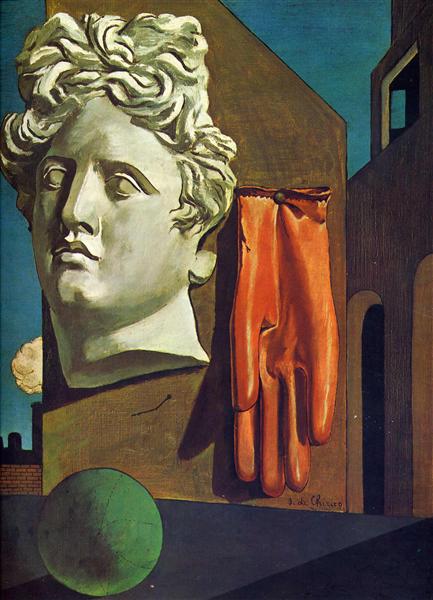







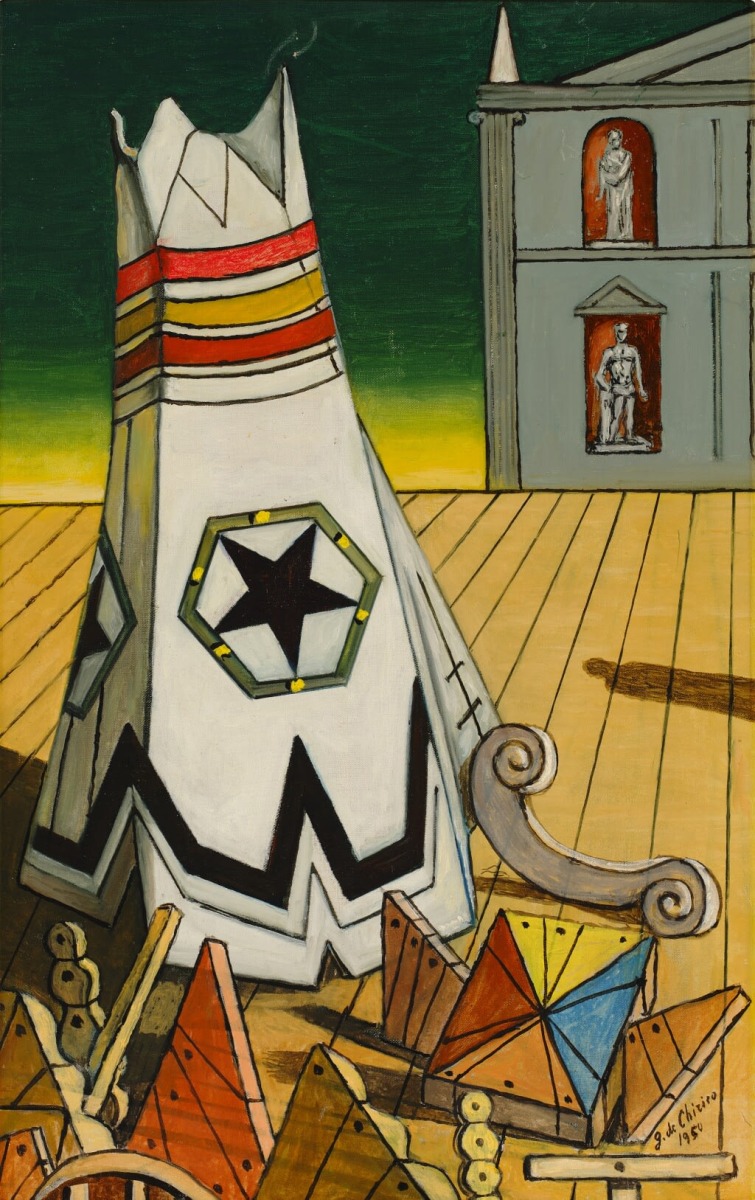


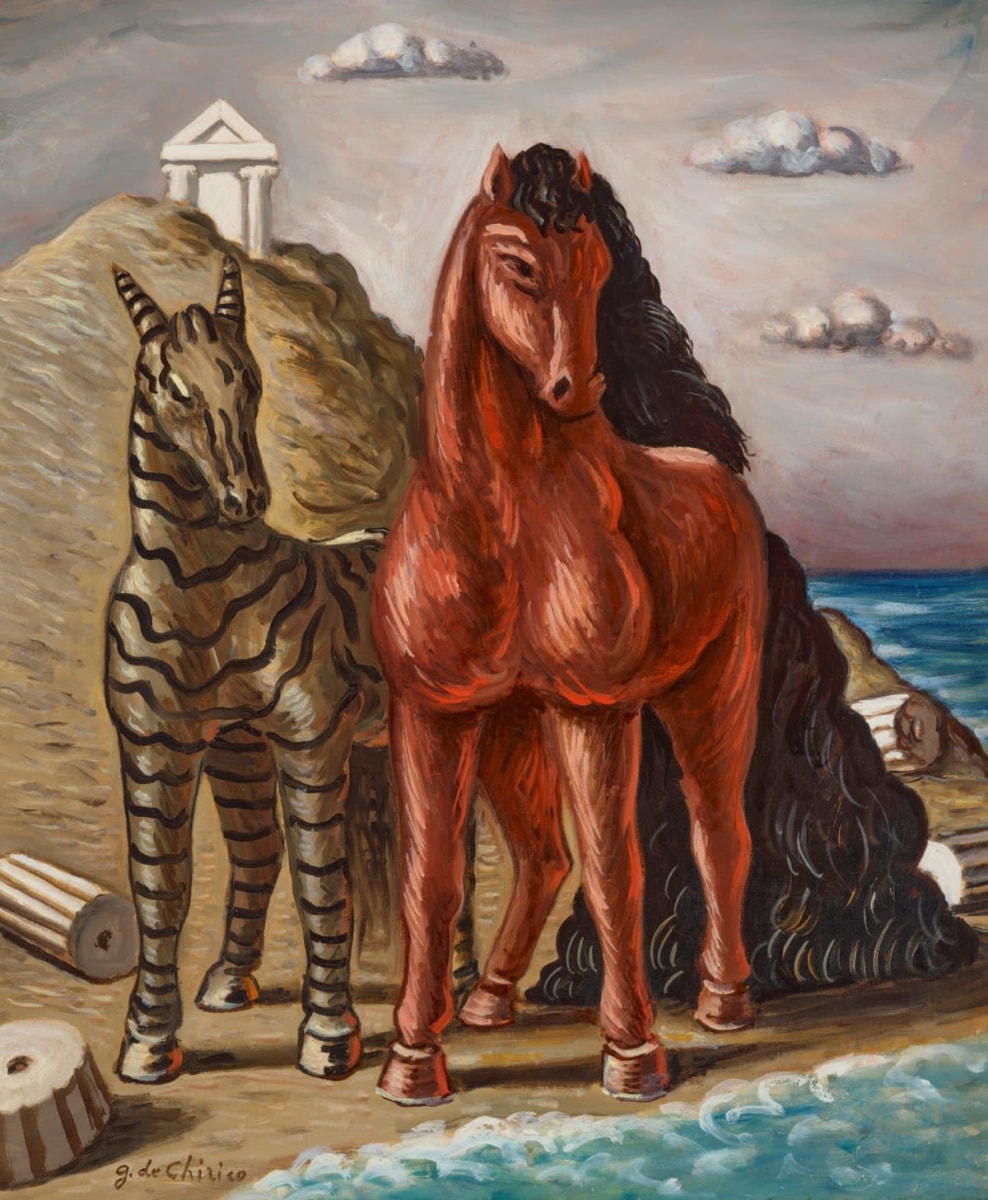


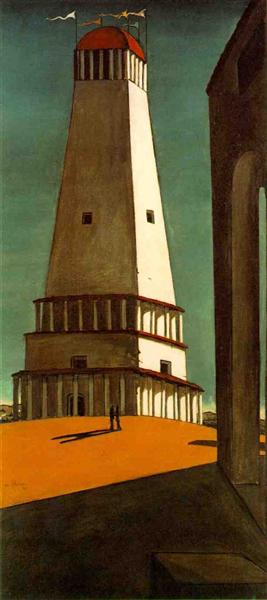
Egon investment scores
Market position
Research updated
Recent auction highlight
A result from Egon’s tracked auction sales; historical auction records are researched separately. Price including buyer’s premium.
Auction highlights
Scroll horizontally if needed →
| Work | Result | Venue and date |
|---|---|---|
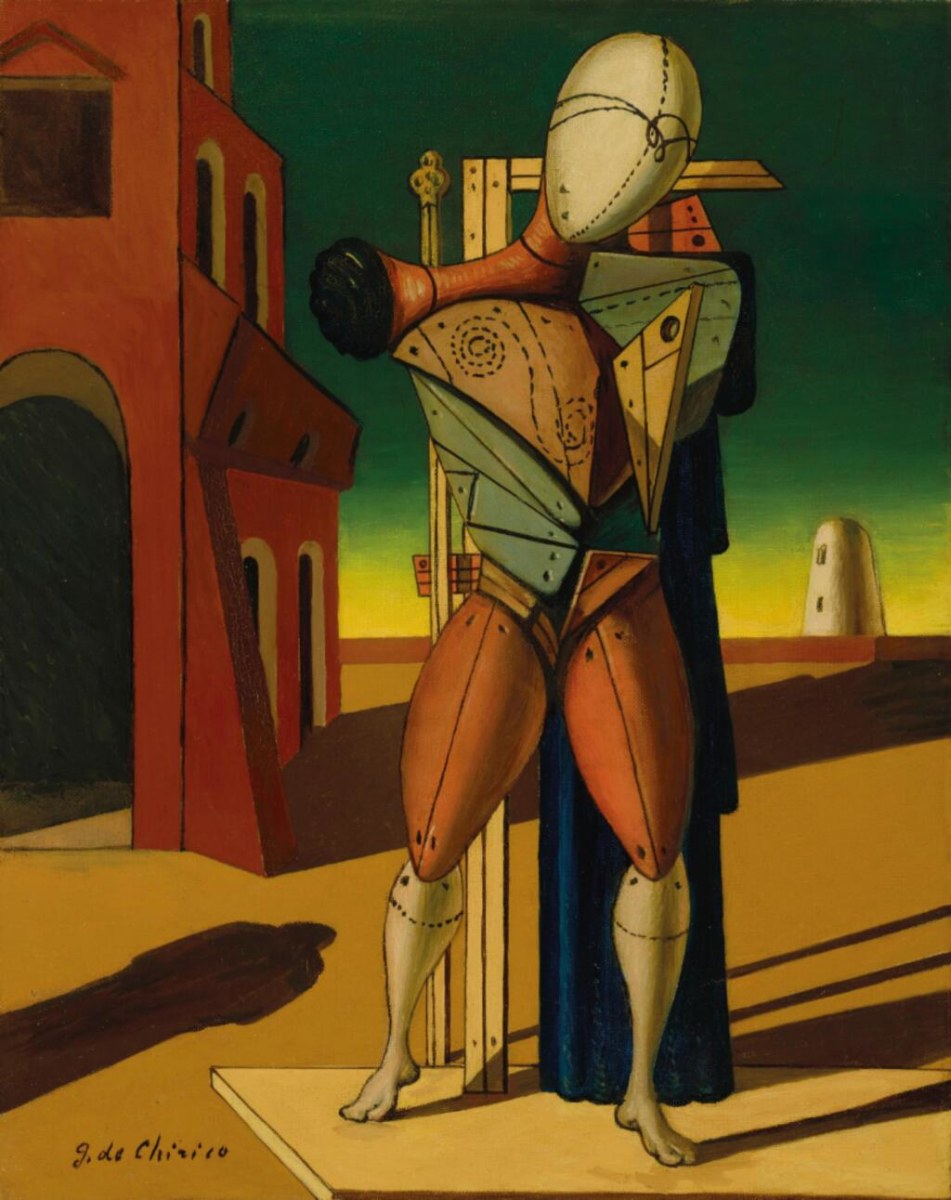
| Il trovatore | $863,600 | Christie's, November 2025 |
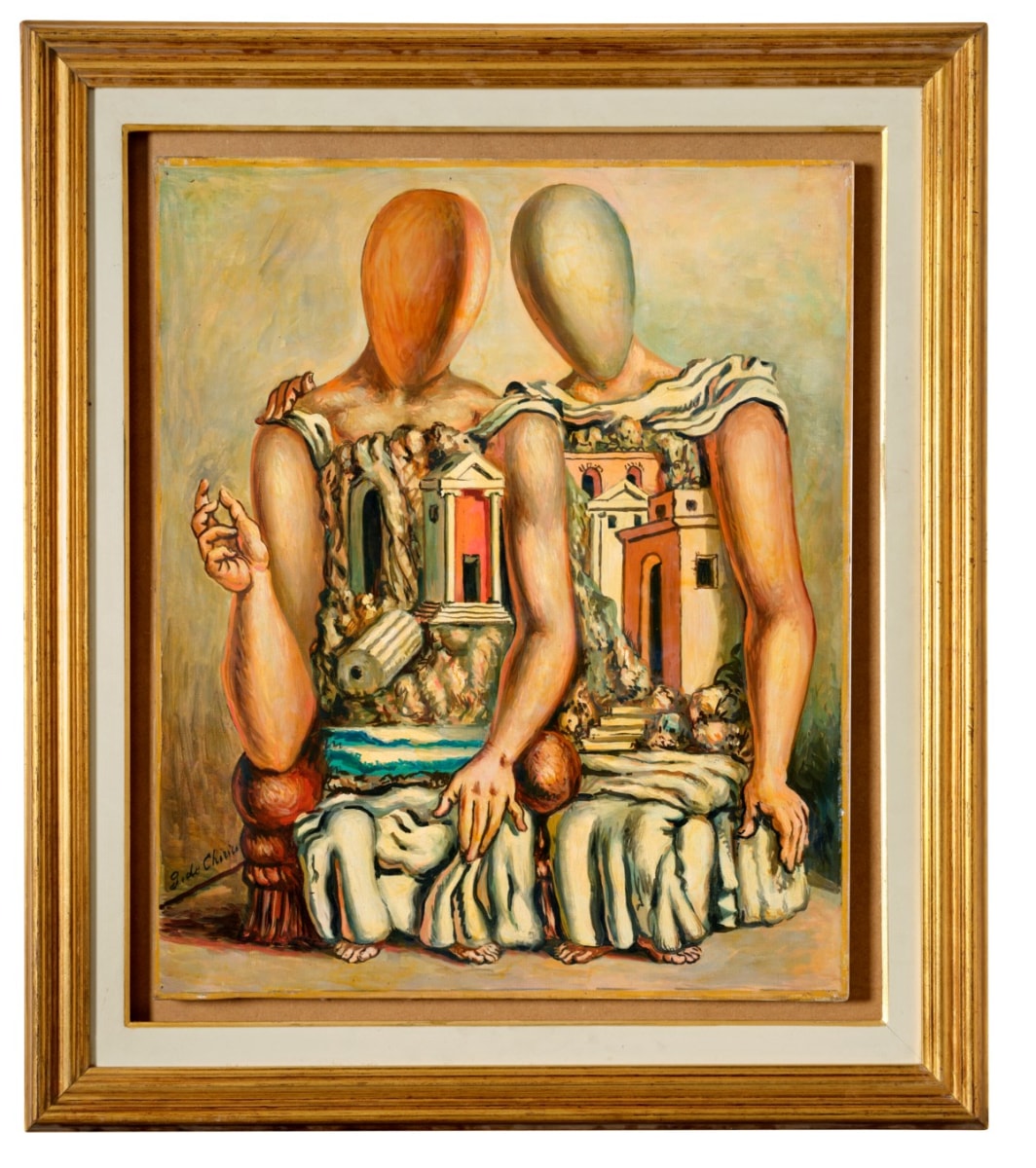
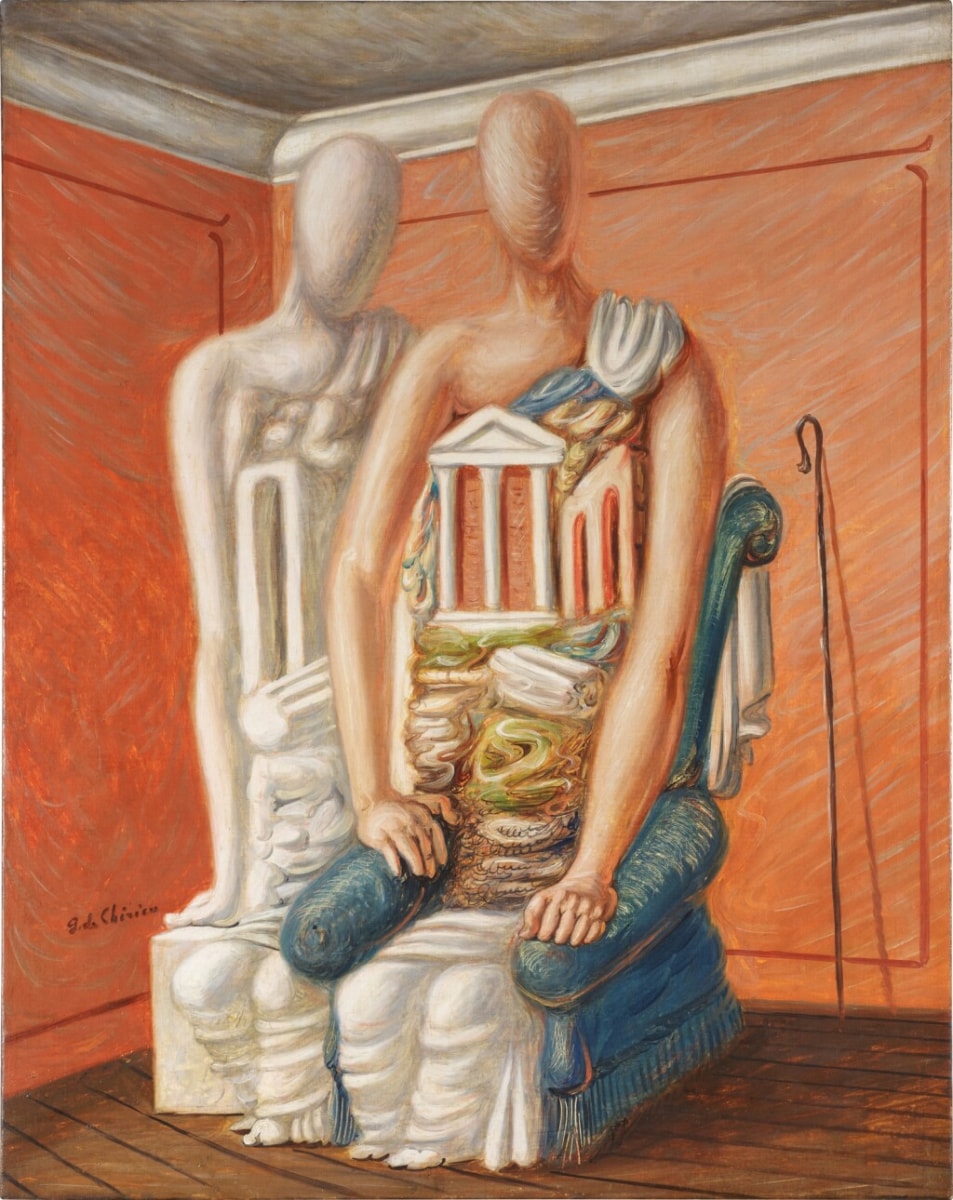
| Archeologi | $31,750 | Christie's, October 2025 |
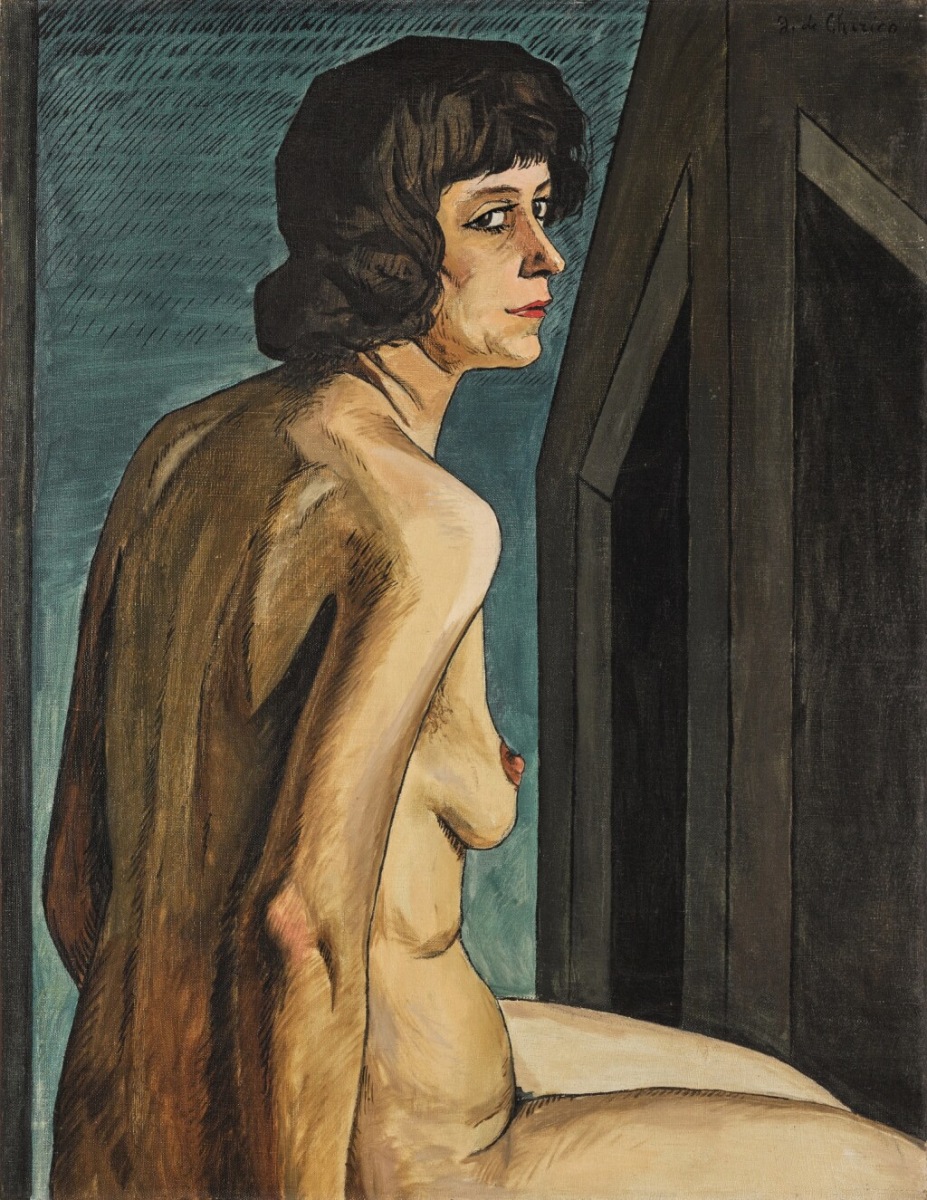
| Rose | $114,300 | Christie's, October 2025 |
3 further auction entries on record for Giorgio de Chirico — inside Egon.
Pricing
Price ranges by medium
Sculpture
- Note
- Small bronze sculptures from 1960s-1970s
- Range
- $5,000 - $50,000
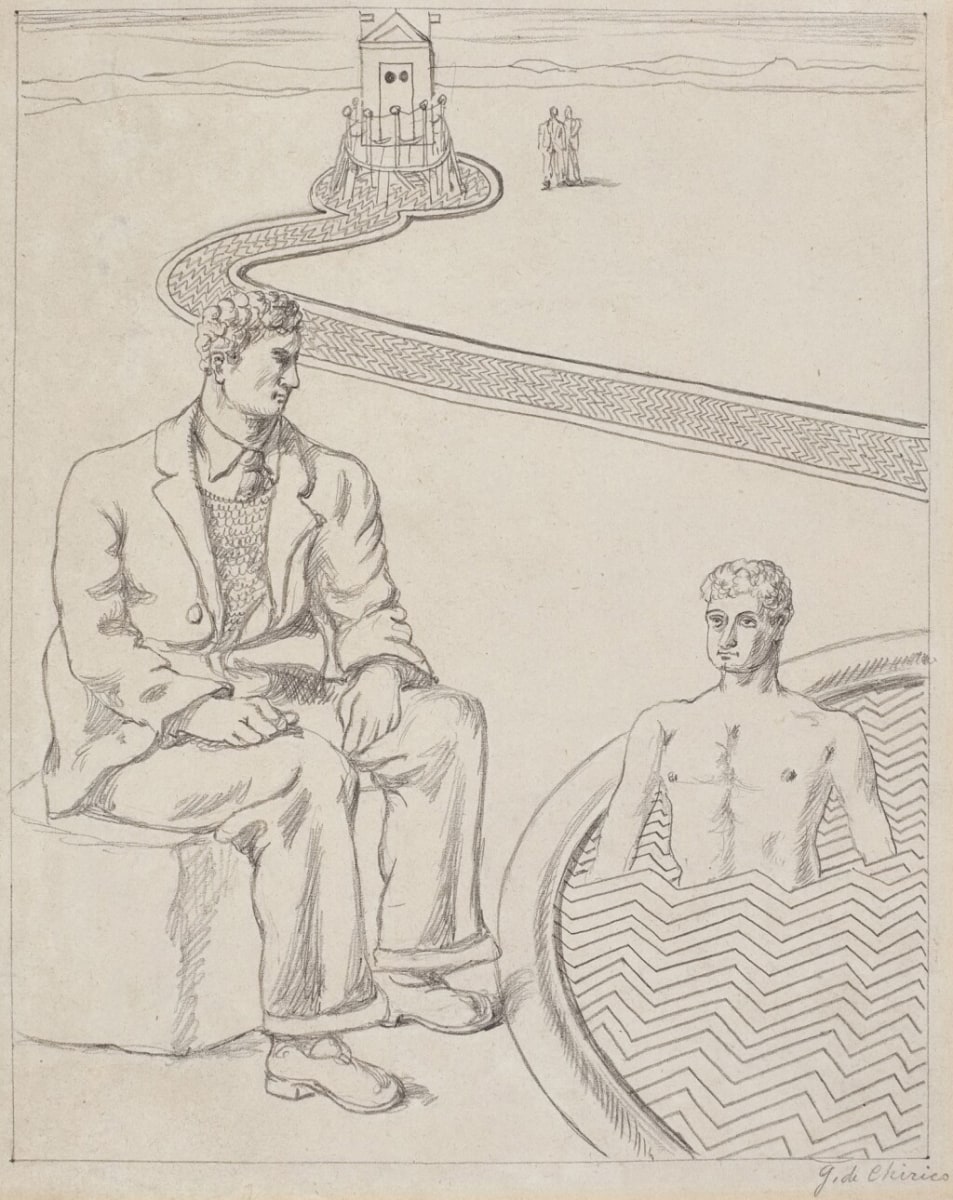
Works on paper
- Range
- $13 - $50,000+
- Average 12 months
- $22,955
Prints lithographs
- Notable
- Metamorphoses (1929) sets sold for £15,724 (2001), £13,550 (2005); Calligrammes (1930) set sold for £15,089 (2017)
- Complete sets
- up to $15,000
- Individual prints
- $3,000 - $10,000
Paintings later periods
- Note
- Neo-baroque (1920s-1960s) and neo-metaphysical (1968-1978) less valued than early work
- Range
- $30,000 - $500,000
Paintings metaphysical period 1910s
- Note
- Most valuable period, works from 1909-1919 command highest prices
- Range
- $100,000 - $15,890,400
Liquidity
- Liquidity
- Active secondary market with 50+ lots annually at major houses
- Seasonal patterns
- Autumn typically strongest period for Modern European art sales
Geographic strength
- Italy (Milan, Rome) - traditional strength
- New York - strong results for museum-quality works
- London - consistent demand
- Paris - historical importance, steady market
Auction history
- Work
- Il Pomeriggio di Arianna (Ariadne's Afternoon)
- Sale date
- October 2020
- Amount USD
- $15,890,400
- Year created
- 1913
- Auction house
- Sotheby's New York
Previous record
- Work
- Il Ritornante
- Sale date
- 2009
- Amount USD
- $14,100,000
- Provenance
- Yves Saint Laurent and Pierre Bergé collection
- Year created
- 1918
- Auction house
- Christie's
Market performance
- Annual lots sold
- 55 (past 36 months average)
Price trajectory
Steady demand for early metaphysical works; record set in 2020 after 11 years; recent years show increasing appreciation for influence on Surrealism
- Sell through rate
- 33.3% (past 36 months)
- 12 month painting average
- $281,731
- Total auction results recorded
- 5,083+ artworks, 8,648+ price results
Authentication complexity
Challenges
- Artist created 'verifalsi' (true fakes) - backdated copies of early works throughout career
- Estimated 40-140 backdated paintings exist
- Artist deliberately denounced some authentic early works as forgeries
- One of top 10 most forged artists in history (2005 ARTnews survey)
- Multiple competing authentication bodies historically
- Market trust
- Market 'absolutely trusts the foundation' per Christie's; backdated works treated as later works and priced accordingly
- Current authentication
- Fondazione Giorgio e Isa de Chirico (Rome) - market standard; Archive for Metaphysical Art (Paolo Baldacci) - alternative scholarly authority
Market position
- Tier
- Blue-chip
Market positioning
- Segment
- Impressionist & Modern Art / Surrealism
- Comparables
- Precursor to Dalí, Magritte, Ernst - considered foundational to Surrealism but trades at lower multiples than major Surrealists
- Market note
- Christie's deputy chairman states artist 'still undervalued in relation to Surrealism movement'
- Collector profile
- Institutional buyers, serious collectors of Surrealism and Italian Modernism, academic collections
Investment outlook
Risks
- Authentication complexity due to artist's own practices
- Period-dependent pricing (1910s works vastly more valuable)
- Lower sell-through rate (33%) compared to top blue-chips
- Forgery concerns
Strengths
- Blue-chip status with $15.9M auction record
- Deep institutional validation (MoMA, Tate, major museums)
- Founder of major art movement (Metaphysical Art)
- Strong historical importance and influence
- Active, liquid market
Opportunities
- Undervalued relative to Surrealist peers
- Growing recognition of influence on contemporary art
- Strong print market for accessible entry points
Institutional presence
Research updated
Museum collections
Tier 1 museums
Museum of Modern Art (MoMA), New York
Notable works
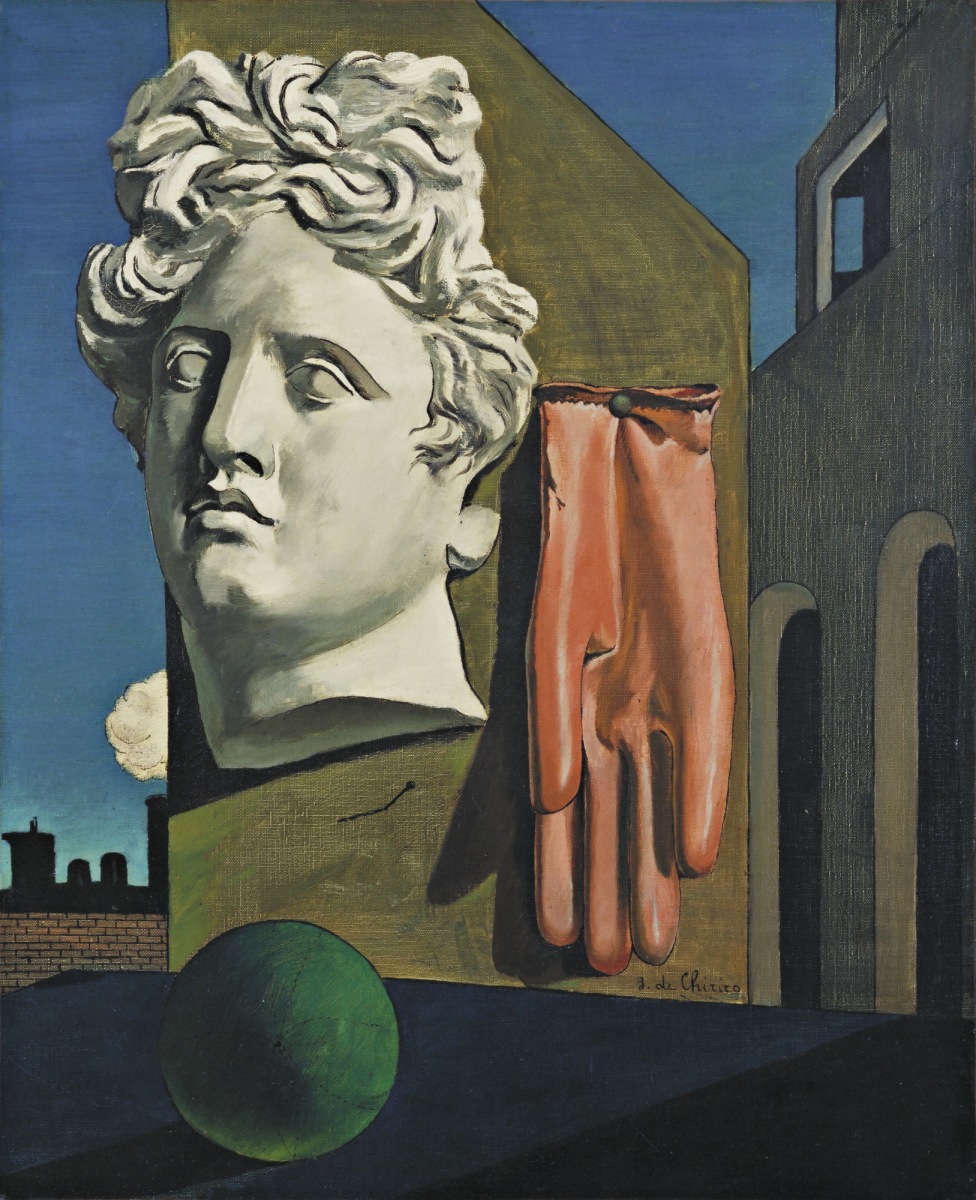
- The Song of Love (1914)
- The Enigma of a Day (1914)
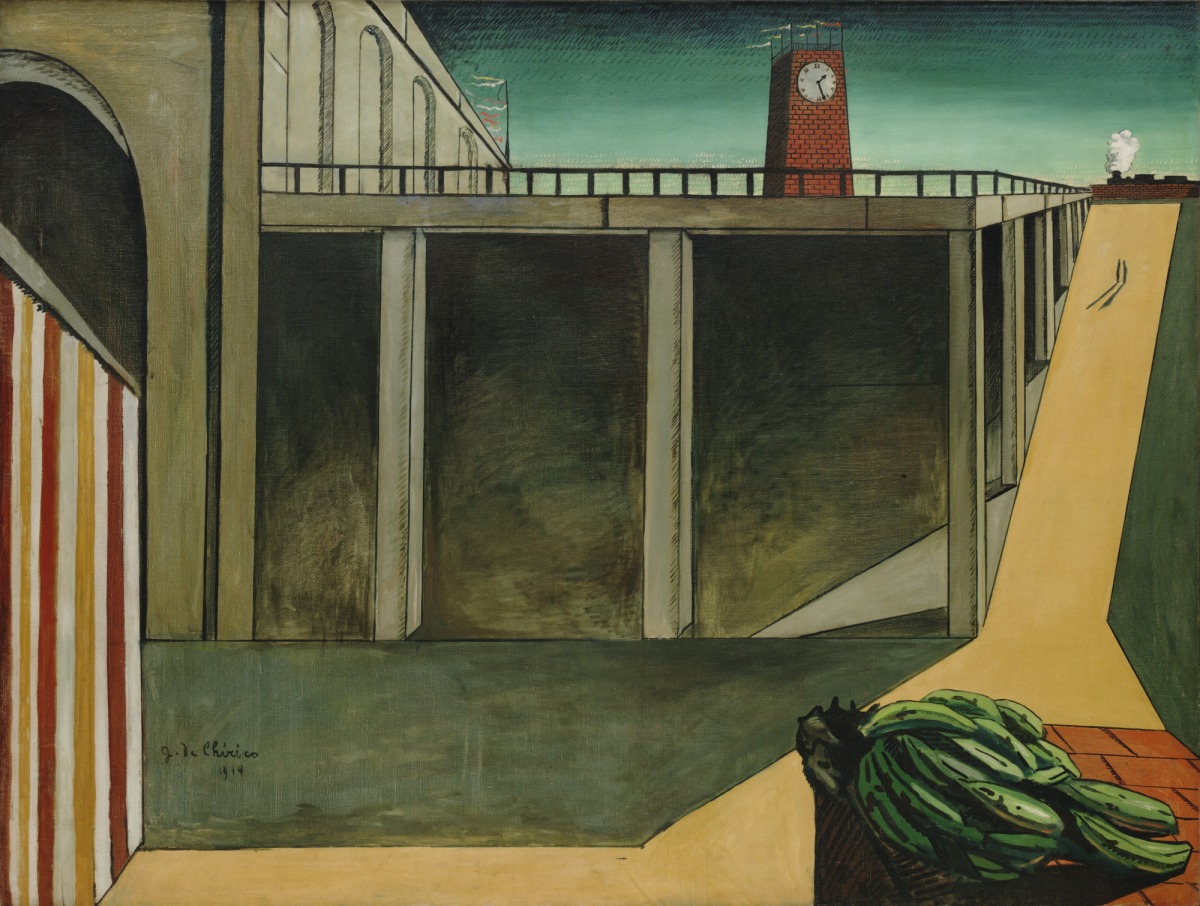
- Gare Montparnasse (The Melancholy of Departure) (1914)
- The Duo (1914-15)
- The Seer (1914-15)
- The Serenity of the Scholar (1914)
- Acquisition history
- Major holdings from James Thrall Soby bequest (1979), Nelson Rockefeller bequest (1979)
Tate Gallery, London
- Status
- Permanent collection
- Exhibitions
- Major retrospective 1982
Peggy Guggenheim Collection, Venice
- Status
- Permanent collection
Art Institute of Chicago
- Status
- Permanent collection with prints from Metamorphosis series
Metropolitan Museum of Art, New York
Centre Pompidou, Paris
- Provenance
- Acquired from Yves Saint Laurent and Pierre Bergé collection, 2009
Notable works
- Il Ritornante (1918)
National Gallery of Art, Washington DC
Works
- Conversation among the Ruins (1927)
- Via Appia Antica (c.1945/1950)
Exhibition history
Major retrospectives
- Venue
- Museum of Modern Art, New York
Years
- 1955 (James Thrall Soby)
- 1982 (William Rubin)
- Significance
- Definitive American retrospectives
- Note
- Traveled from MoMA
- Year
- 1982
- Venue
- Tate Gallery, London
Giorgio de Chirico 1888-1978
- Year
- 1981
- Venue
- Galleria Nazionale d'Arte Moderna, Rome
La Metafisica - Museo documentario
- Year
- 1981
- Venue
- Palazzo Massari, Ferrara
Giorgio De Chirico: Metaphysical Journey
- Year
- 2024
- Venue
- Tokyo Metropolitan Art Museum
Giorgio de Chirico. Metaphysical painting
- Year
- 2019-2020
- Venue
- Musée de l'Orangerie, Paris
Biennial participation
- Note
- Regular participant
- Event
- Venice Biennale
- First participation
- 1924
Recent major exhibitions 2024 2026
Metafisica/Metafisiche
- Dates
- January 28, 2026 onwards
- Venue
- Multiple Milan venues (Palazzo Reale, Museo del Novecento, Grande Brera, Gallerie d'Italia)
- Significance
- 400+ works, Milan Cortina 2026 Winter Olympics cultural program
- Dates
- February 2024 - January 2026
- Venue
- Galleria d'Arte Moderna e Contemporanea, Bergamo
De Chirico and the Theatre
- Dates
- March 14 - August 17, 2025
- Venue
- Serlachius Museums, Mänttä, Finland
Giorgio de Chirico. The Mechanics of Thought
- Dates
- November 29, 2025 - April 6, 2026
- Venue
- Municipal Gallery, Monfalcone
Giorgio de Chirico. The Last Metaphysics
- Dates
- December 29, 2025 - January 5, 2026
- Venue
- Modena
Note on validation
Highest tier institutional presence with works in MoMA, Tate, Centre Pompidou, major international museums. Subject of major retrospectives and ongoing scholarly cataloguing projects.
Tier 2 major museums
- Smithsonian Institution
- Cleveland Museum of Art
- Victoria & Albert Museum
- Solomon R. Guggenheim Museum
- Galleria Nazionale d'Arte Moderna, Rome
- MART (Museum of Modern and Contemporary Art of Trento and Rovereto)
- Kunsthaus Zürich
- National Gallery of Victoria, Melbourne
- Osaka City Museum of Modern Art
- Musée d'Art Moderne de la Ville de Paris
- Estorick Collection of Modern Italian Art, London
- Saint Louis Art Museum
- Staatsgalerie, Stuttgart
- Barnes Collection, Philadelphia
Permanent house museum
- Name
- Giorgio de Chirico House Museum
- Opened
- November 20, 1998 (20th anniversary of death)
- Location
- Piazza di Spagna 31, Rome
- Collection
- 600+ works (paintings, sculptures, works on paper, theatre costumes)
- Foundation
- Fondazione Giorgio e Isa de Chirico established 1986 by widow Isabella Pakszwer Far
- Description
- Artist's apartment where he lived and worked 1948-1978
Awards and recognition
Academic recognition
Monographs
Years
- 1941 (The Early Chirico)
- 1955 (Giorgio de Chirico)
- Author
- James Thrall Soby
- Publisher
- MoMA
De Chirico
- Year
- 1982
- Author
- William Rubin
- Publisher
- MoMA
De Chirico: The Song of Love
- Year
- 2014
- Author
- Emily Braun
- Publisher
- MoMA
Catalogues raisonnes
Catalogo generale (original)
- Years
- 1971-1987
- Editor
- Claudio Bruni Sakraischik
- Volumes
- 8
- Publisher
- Electa, Milan
Catalogue raisonné of the work of Giorgio de Chirico
- Scope
- Volume 1: Late Romantic and Early Metaphysical Work (October 1908-February 1919)
- Status
- Multi-volume project ongoing
- Editors
- Paolo Baldacci, Gerd Roos
- Publisher
- Umberto Allemandi
Giorgio de Chirico - Catalogue of Works
- Note
- Works not included in Bruni Sakraischik catalogue
- Sponsor
- Fondazione Giorgio e Isa de Chirico
Volumes
- Vol. 1 (2014): 450 works from 1912-1976
- Vol. 2 (2015)
- Vol. 3 (2016)
- Vol. 4 (2018): 451 works from 1913-1975
- Publisher
- Maretti Editore
- Total works
- 1,831 works catalogued across 4 volumes
Scholarly publications
- Metafisica. Quaderni della Fondazione Giorgio e Isa de Chirico (academic journal, most recent issue 22-23, 2023)
- Nature journal article on technical analysis of metaphysical palette (May 2022)
Career & Biography
Research updated
Identity
Birth
- Date
- July 10, 1888
- Context
- Born to Italian parents (Genoan mother, Sicilian father who was a railway engineer working in Greece)
- Location
- Vólos, Greece
Death
- Age
- 90
- Date
- November 20, 1978
- Location
- Rome, Italy
Family
Spouses
- Raissa Gurievich Kroll (m. 1925, divorced)
- Isabella Pakszwer Far (m. 1930, until death 1978)
Siblings
- Alberto Savinio (brother, composer and artist)
Key locations
- Athens (childhood)
- Munich (1906-1909)
- Florence (1909-1910)
- Turin (1911, brief but transformative visit)
- Paris (1911-1915)
- Ferrara (1915-1918, military service)
- Rome (1918-1925)
- Paris again (1925-1932)
- New York (1936-1938)
- Rome (1944-1978, Piazza di Spagna 31 from 1948)
Alternative names
- Giorgio di Chirico
- G. de Chirico
- De Chirico, Giorgio
Major life events
Scroll horizontally if needed →
| Year | Event |
|---|---|
| 1905 | Father's death, family relocates to Munich |
| 1911 | Transformative visit to Turin, inspired metaphysical period |
| 1911 | Moved to Paris, joined brother Andrea Savinio |
| 1913 | First sale: 'The Red Tower' to Pablo Picasso |
| 1914 | Signed contract with art dealer Paul Guillaume |
| 1915 | Enlisted in Italian army, stationed at Ferrara |
| 1917 | Founded Scuola Metafisica with Carlo Carrà |
| 1919 | Published 'The Return of Craftsmanship', rejected modernism |
| 1925 | Married Russian ballet dancer Raissa Gurievich Kroll |
| 1929 | Published novel 'Hebdomeros'; designed for Diaghilev's ballet 'Le Bal' |
| 1930 | Met second wife Isabella Pakszwer Far |
| 1948 | Purchased apartment at Piazza di Spagna 31, Rome (now House Museum) |
| 1974 | Elected to French Académie des Beaux-Arts |
Professional roles
- Painter
- Writer (novelist, essayist, art theorist)
- Scenographer (stage and costume designer for ballet and opera)
- Printmaker (lithographer)
- Sculptor (primarily late career, 1960s-1970s)
- Illustrator
Artistic context
Artistic influences
- Arnold Böcklin (Symbolist painter)
- Max Klinger
- Classical Greek mythology and architecture
Philosophical influences
- Friedrich Nietzsche
- Arthur Schopenhauer
- Otto Weininger
Artistic Profile
Research updated
Style
Signature style elements
- Artistic signature
- Typically signed 'g. de Chirico' in various styles across career; often included dates (though reliability questioned due to backdating practice)
Immediately recognizable
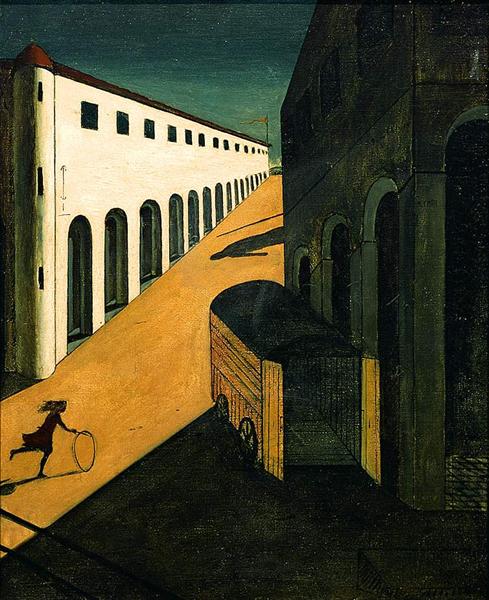
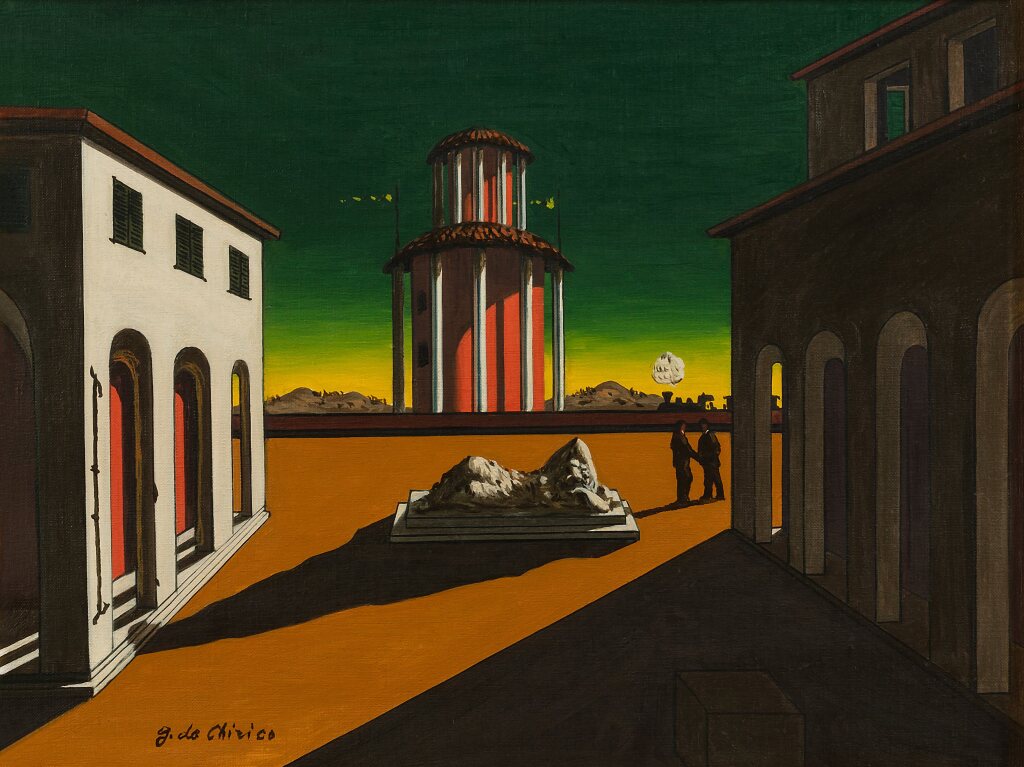
- Empty piazzas with long shadows
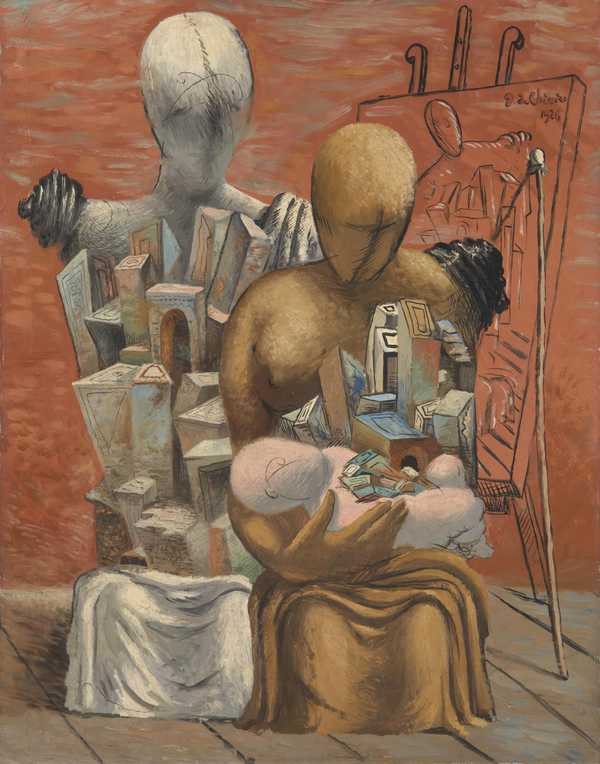
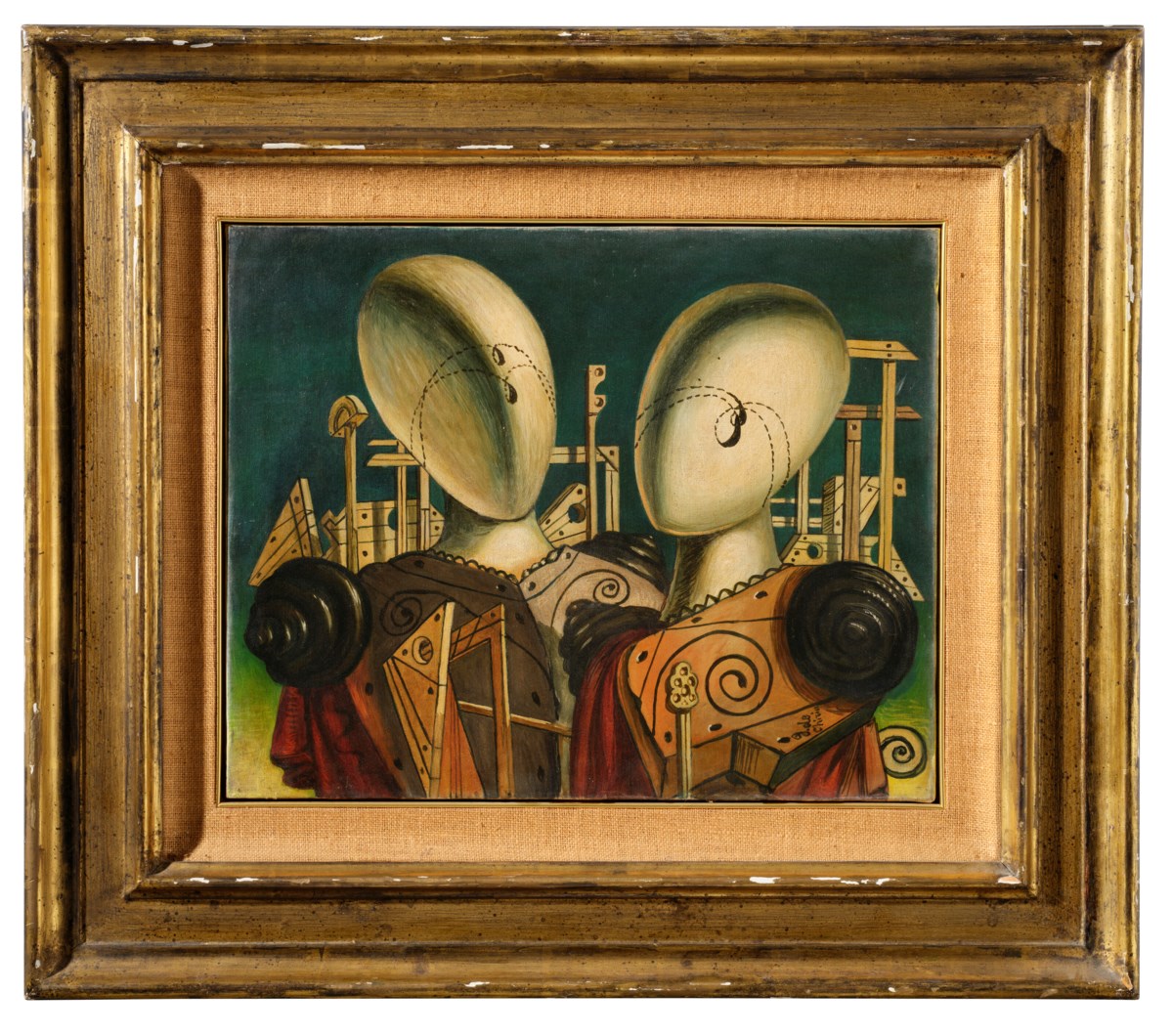
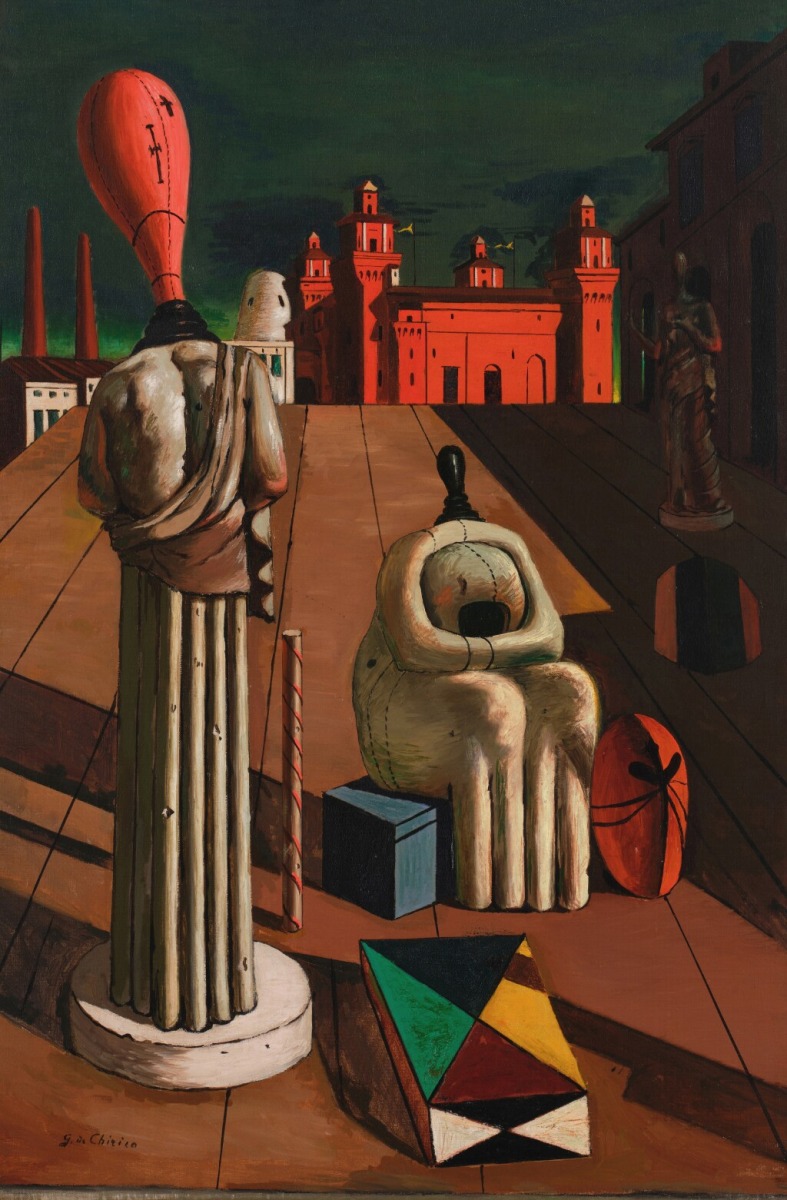
- Mannequin figures
- Trains in impossible urban contexts
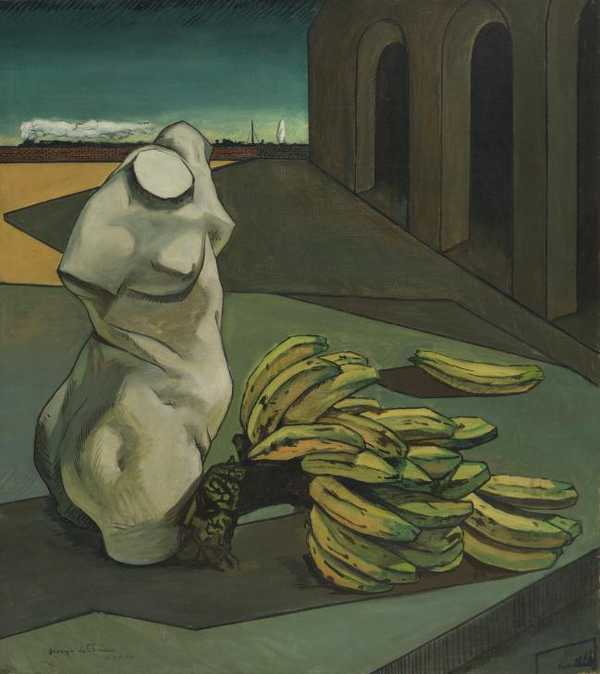
- Classical statuary in modern settings
- Exaggerated perspective
- Eerie, dreamlike atmosphere
- Arcaded buildings
- Enigmatic juxtapositions
Evolution
Critical reception evolution
- 1910s
- Revolutionary; praised by Apollinaire; admired by Picasso; foundational to emerging modernism
- 1920s
- Controversy over stylistic changes; Surrealists initially supportive then critical; market success for early work
- 1970s
- Continued commercial success for metaphysical works; artist productive until death at 90
- 1930s-1960s
- Early work remained in demand; later work comparatively dismissed; artist resented preference for early period
1980s-present
Revival of interest in late work; recognition of influence on Neo-classicism; authentication complexities dominate discourse; sustained institutional and market interest
Themes and subjects
Recurring subjects
- Empty piazzas and deserted squares
- Classical architecture (arcades, porticos, towers)
- Mannequins and faceless figures
- Classical statues (Ariadne, gods, heroes)
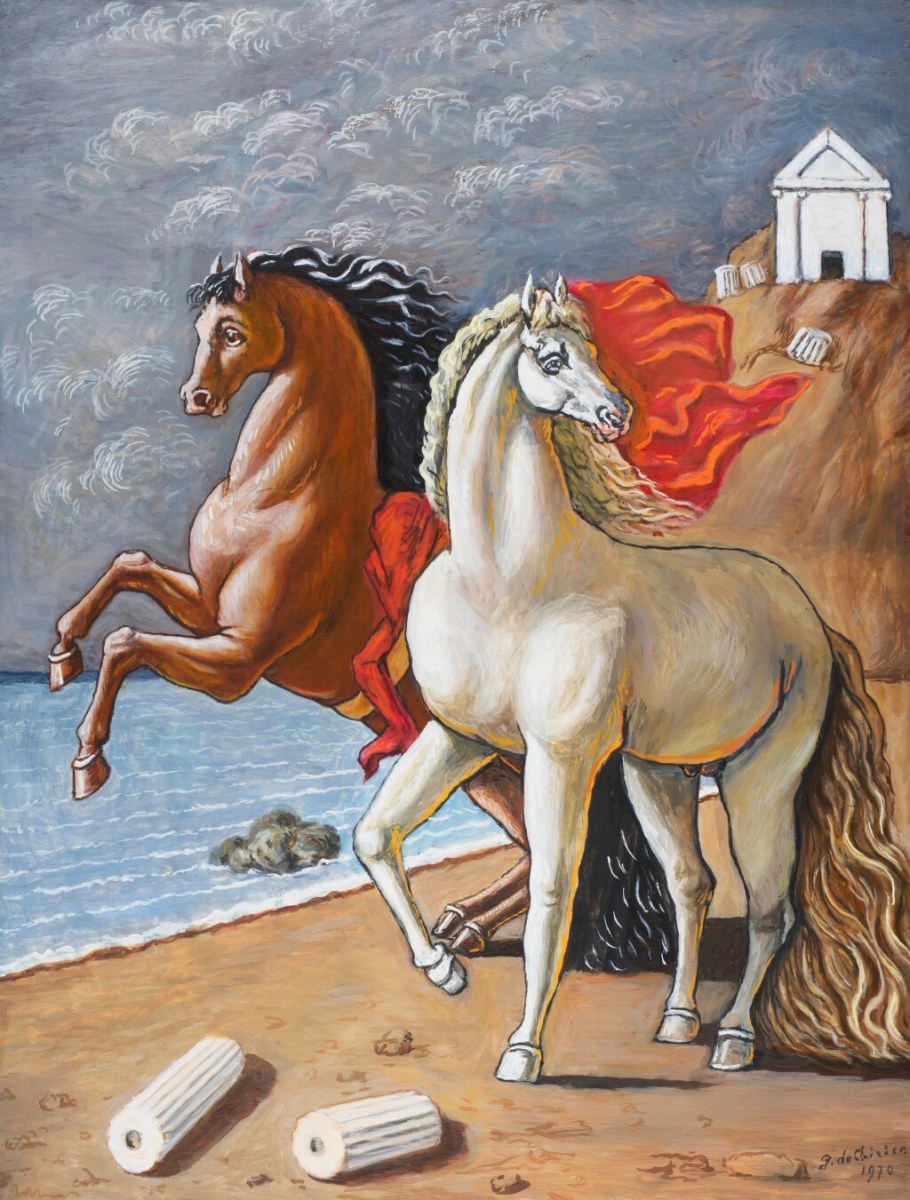
- Horses (mythological and classical)
- Trains and locomotives
- Long, irrational shadows
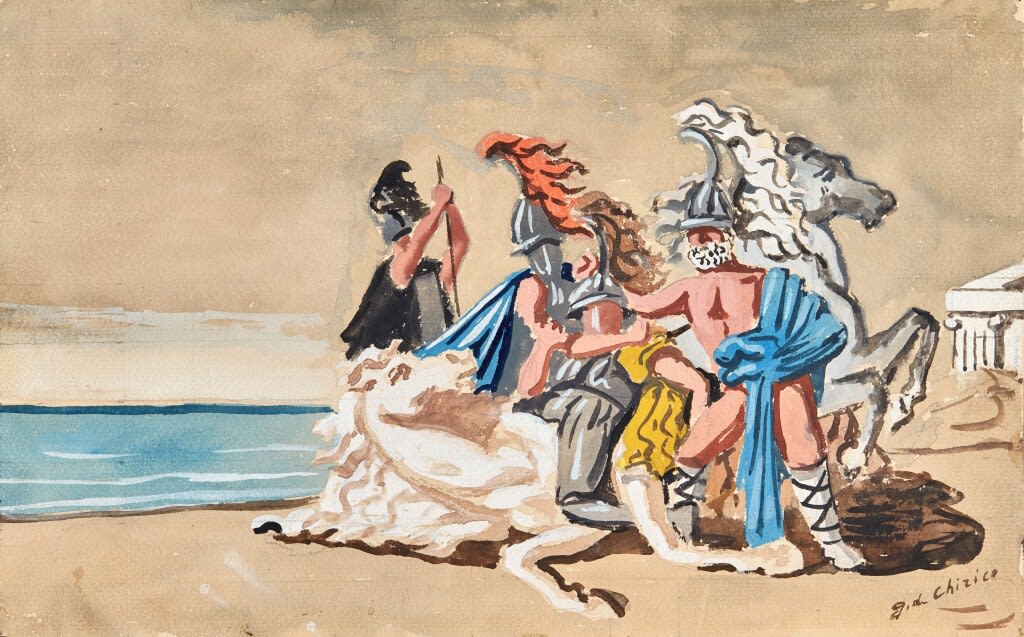
- Gladiators and ancient warriors
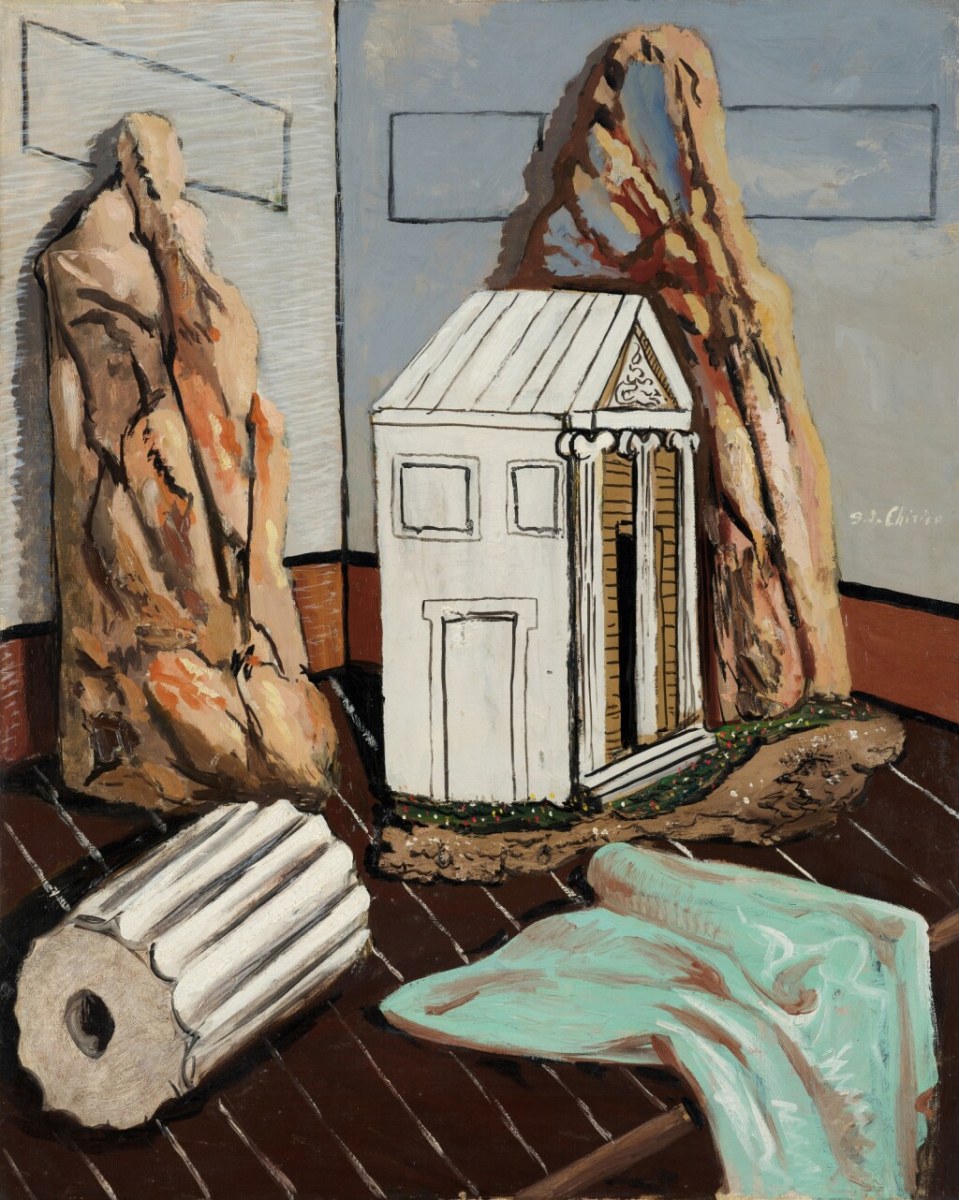
- Archaeological fragments
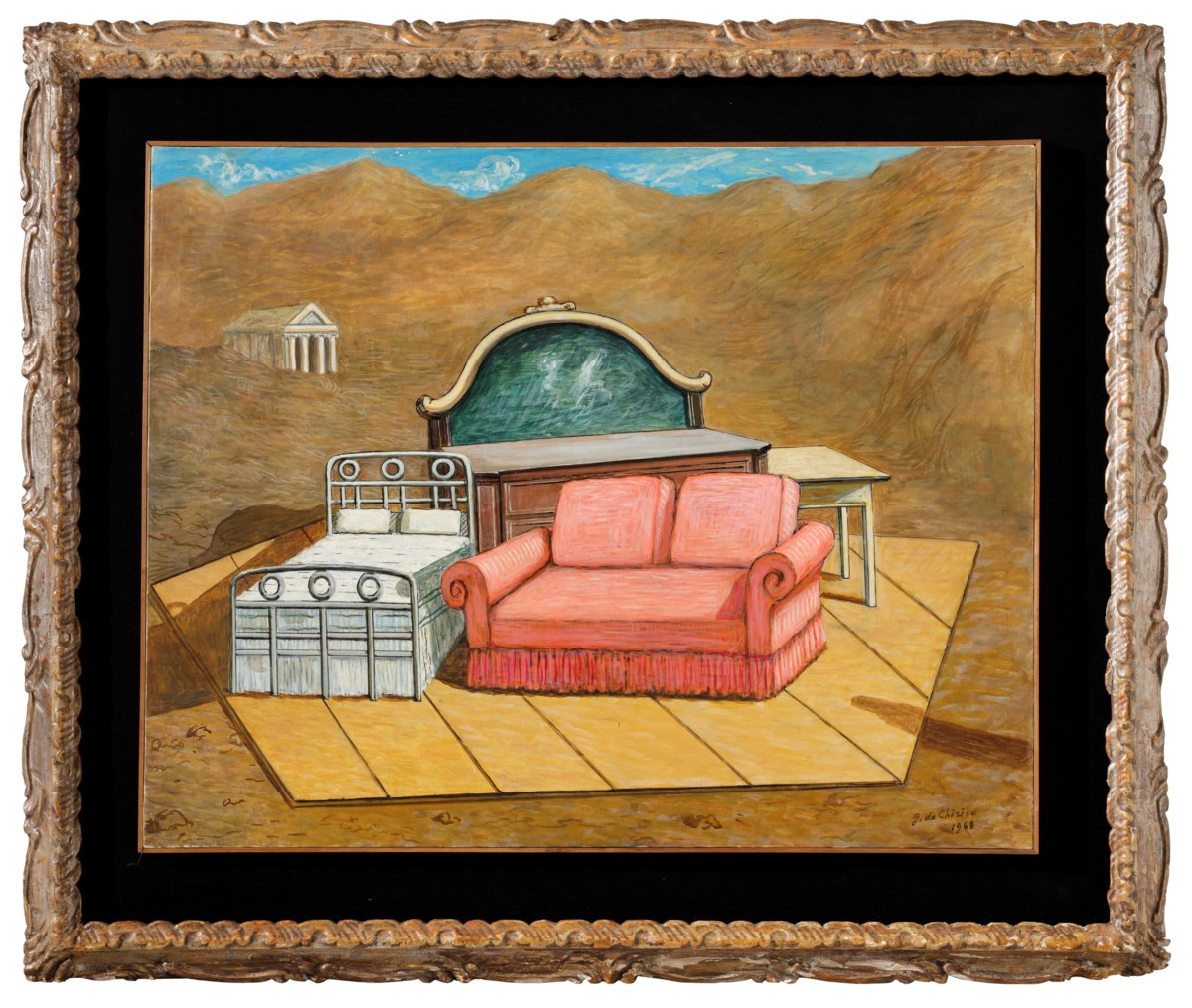
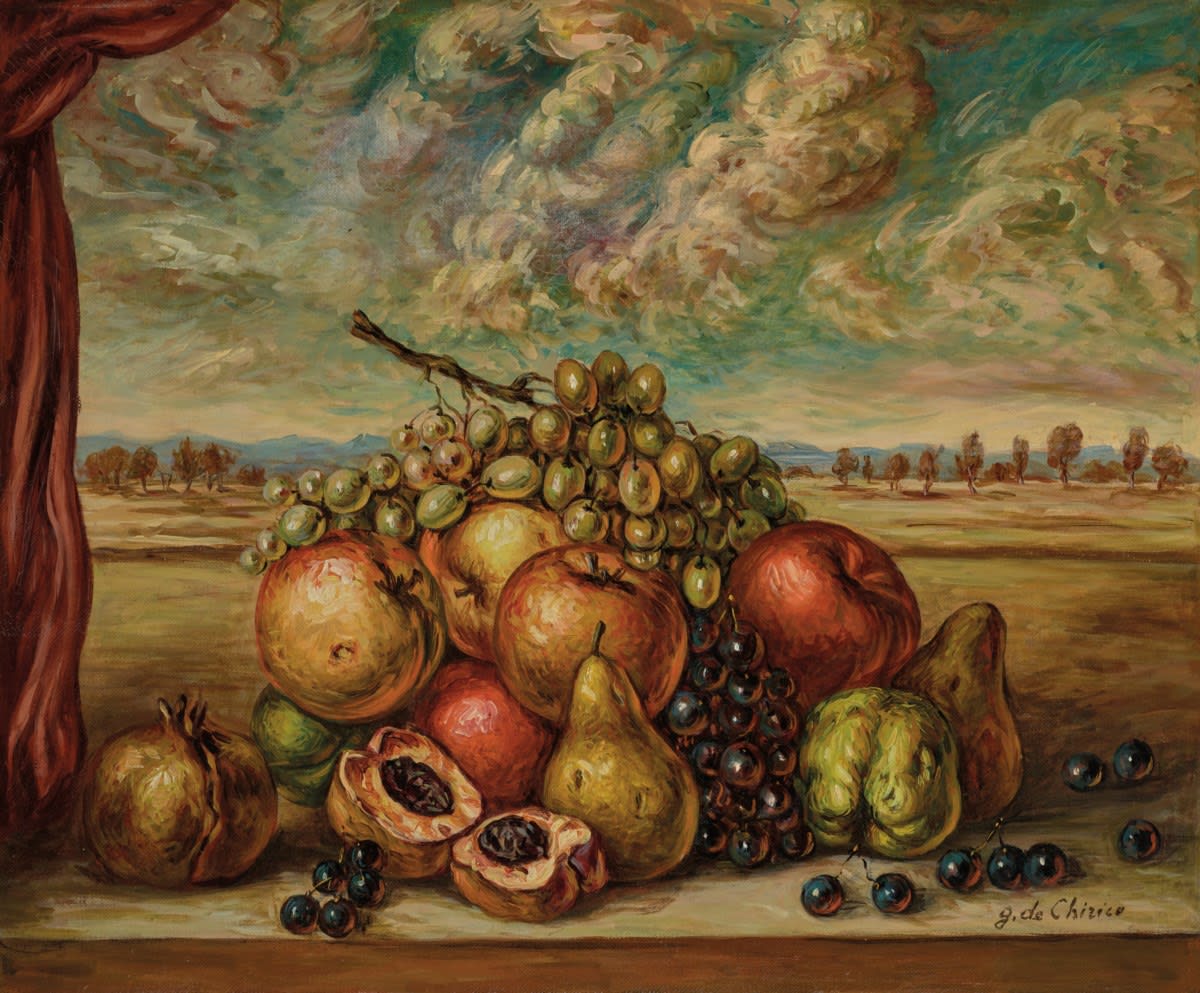
- Still lifes with enigmatic objects
- Biscuits, gloves, geometric instruments
- Italian piazzas and cityscapes
Philosophical themes
- Enigma and mystery of existence
- Metaphysical insight beyond appearances
- Time suspension and immobility
- Nostalgia and loss
- Memory and dreams
- Solitude and estrangement
- Classical mythology meeting modern world
- Tense expectation and silence
Techniques and mediums
- Color
- Early work: melancholic greens, ochres, deep shadows; Ferrara period: brighter colors; Late work: vibrant, playful palette
- Technique
- Oil on canvas primarily; tempera; watercolor; drawing; lithography; studied and documented traditional painting techniques in treatises
- Composition
- Flat, anonymous surfaces; sharp contrasts; geometric clarity; careful architectural construction
Innovations
- Created Metaphysical painting movement combining everyday reality with mythology
- Pioneered use of mannequins as human substitutes in fine art (influenced by brother Savinio)
- Developed concept of 'metaphysical insight' into reality behind appearances
- Anticipated Surrealist exploration of subconscious by years
- Challenged concepts of originality and artistic authorship through 'verifalsi'
- Perspective
- Exaggerated one-point perspective; illogical, contradictory, drastically receding perspectives; distorted spatial relationships
Pigments documented
- Zinc white (early work)
- Lead white
- Naples yellow
- Chrome yellow
- Cadmium yellow
- Vermilion (metaphysical period)
- Veronese green
- Prussian blue
- Cassel earth
- Vine black
- Ochre
- Burnt umber
Critical Reception
Research updated
Critical reception
Research focus
- Metaphysical period iconography and philosophy
- Influence on Surrealism
- Technical analysis of painting methods
- Authentication and dating issues
- Theatre and costume design
- Literary works (Hebdomeros novel)
- Relationship to classical antiquity and mythology
Online discourse
- Digital presence
- Strong online presence across museum databases, auction platforms, scholarly resources
- Authentication debates
- Active online discussion of forgeries, 'verifalsi', authentication controversies
- Academic interest
- Sustained high-level scholarly attention; subject of ongoing cataloguing projects, technical analysis, exhibition catalogues
Critical position
Critical controversy
- Rejection of modernism in 1919 essay 'The Return of Craftsmanship' disappointed Surrealists and avant-garde
- Later work (neo-Baroque, neo-classical styles) criticized during lifetime
- Surrealists attacked him for abandoning metaphysical style
- Contemporary scholars struggle with authentication due to artist's 'verifalsi' practice
- Historical significance
- Founder of Metaphysical Art movement (Scuola Metafisica, 1917); precursor and major influence on Surrealism
Contemporary reassessment
- Late works experiencing revival since 1980s with Neo-classicism interest
- Influence acknowledged by diverse artists including Andy Warhol
- Neo-metaphysical late period (1968-1978) receiving renewed scholarly attention
- Recognized as architect of urban space and influence on Situationists
Contemporary reception 1910s
- Discovered and championed by Guillaume Apollinaire (1913): 'The art of this young painter is an inner and cerebral one'
- Noticed by Pablo Picasso
- Praised by André Breton, Paul Éluard, Jean Paulhan
Writings by artist
Hebdomeros, the Metaphysician
- Type
- Novel
- Year
- 1929
- Significance
- Considered one of finest examples of Surrealist literature despite artist's rejection of Surrealism
The Return of Craftsmanship
- Type
- Essay
- Year
- 1919
- Significance
- Denounced modernism, advocated return to classical techniques
Petit traité de technique de peinture
- Year
- 1928
- Content
- Technical treatise on painting methods, pigments, grounds
Memorie della mia vita
- Type
- Autobiography
- Year
- 1945 (Part 1)
- English
- The Memoirs of Giorgio de Chirico (1971)
- Note
- Extensive writings on art theory, poetry, criticism throughout career
Influence on other artists
Direct influence
- Carlo Carrà (co-founder Scuola Metafisica)
- Giorgio Morandi
- Filippo de Pisis
- Alberto Savinio (brother)
Surrealist influence
- André Breton (called him 'torchbearer of new modern mythology')
- Salvador Dalí
- René Magritte
- Max Ernst
- Yves Tanguy
Contemporary influence
- Andy Warhol (admired kitsch quality and repetition)
- Edward Hopper (compared for empty spaces, shadows, silence)
- Situationists and Lettrists (urban vision)
- Contemporary sculptors: Juan Muñoz, Katharina Fritsch (statue placement concepts)
Publications and media
Documentary coverage
- Films
- Various documentaries on Metaphysical Art and Surrealism feature his work
- Exhibition films
- Major retrospectives accompanied by film documentation
Major publications about artist
- Coverage
- Regular coverage of authentication issues and market analysis
- Publication
- Art Newspaper
- Status
- Featured artist
- Publication
- FAD Magazine
- Status
- Featured artist
- Publication
- MOUSSE Magazine
- Recent
- November 2025 article on auction presence
- Publication
- ArtDaily
- Coverage
- Extensive artist profile, market analysis, authentication features
- Publication
- Artsy
- Historical
- Luigi Barzini 1970 article on authentication battles; various contemporary reviews
- Publication
- New York Times
- Coverage
- 2005 survey identified as one of top 10 most forged artists
- Publication
- ARTnews
Gallery & Representation
Research updated
Representation
- Status
- Historical artist (died 1978)
- Copyright
- Managed by SIAE (Società Italiana degli Autori ed Editori)
- Estate management
- Fondazione Giorgio e Isa de Chirico, Rome
Historical dealers
Galerie Paul Guillaume, Paris
- Period
- 1914-1920s
- Significance
- First major dealer, contract signed 1914
Pierre Matisse Gallery, New York
- Period
- 1930s-1940s
- Significance
- Major US representation
Léonce Rosenberg's Galerie l'Effort Moderne, Paris
- Year
- 1925
Galerie Jeanne Bucher, Paris
- Year
- 1927
Arthur Tooth Gallery, London
- Year
- 1928
Valentine Gallery, New York
- Year
- 1928
Auction house presence
Major houses
- Christie's (Impressionist & Modern Art department)
- Sotheby's (Impressionist & Modern Art department)
- Phillips
- Bonhams
Regional strength
- Dorotheum, Vienna
- Italian regional houses (Finarte, Farsetti Arte, etc.)
- Fair participation
- Historical presence at major fairs through galleries representing estate and secondary market
Secondary market galleries
Gagosian
- Note
- Has featured de Chirico's work
- Location
- New York (980 Madison Avenue)
Plazzart
- Focus
- Prints and editions
Galerie Orlando
- Focus
- Prints from 1920s
Tornabuoni Art
- Focus
- Various periods
Geographic reach
- Prints
- 43 galleries currently listing works on major platforms; edition sizes typically 50-100 prints
- Authentication
- Required for any transaction; market relies on Fondazione certification
- Primary market
- Not applicable (deceased artist)
Secondary market
Active market with regular auction offerings; prints and editions most available; major metaphysical paintings rare ('come up once every five years or so' per Christie's)
Sources & research notes
Egon’s artist research combines historical auction records, recent sales, institutional history, critical reception and gallery information. Researched auction records and auction highlights are identified separately.
Read prices with their work, sale date, currency and stated basis. Egon’s market assessments are distinct from reported auction results.
Reference: Egon, “Giorgio de Chirico: Market Intelligence & Investment Profile.”
Research updates by section
These dates show when Egon’s research sections were updated. Source retrieval dates, where supplied above, refer to individual evidence notes.
Ranking updated . Research sections follow their own update dates.
This is what the market knows about Giorgio de Chirico. What Egon can also tell you: whether Giorgio de Chirico fits your portfolio — based on your existing holdings, budget, and investment timeline.
Get personalized analysisActive market signals
Inside Egon
Signal timeline & strength analysis
Gallery moves, auction records, institutional acquisitions, price milestones — tracked over 90 days
Full signal timeline, strength analysis, and alert configuration for Giorgio de Chirico.
Collector demographics & buyer analysis
Geographic distribution, institutional vs. private buyers, collector profiles, and secondary market activity
Who is collecting Giorgio de Chirico? Geographic distribution, institutional vs. private buyers, and collector profile analysis.
Personalized acquisition strategy
Optimal entry points, comparable pricing analysis, timing recommendations, and portfolio fit assessment
Personalized acquisition strategy for Giorgio de Chirico based on your budget, timeline, and collection goals.
Go deeper with personalized intelligence
You now have Egon's market assessment of Giorgio de Chirico. The next question is personal: does this artist belong in your collection? Egon analyzes collection fit based on your aesthetic thesis, existing holdings, budget, and investment goals — delivering acquisition strategies no public index can provide.