Beatriz González
Value#52
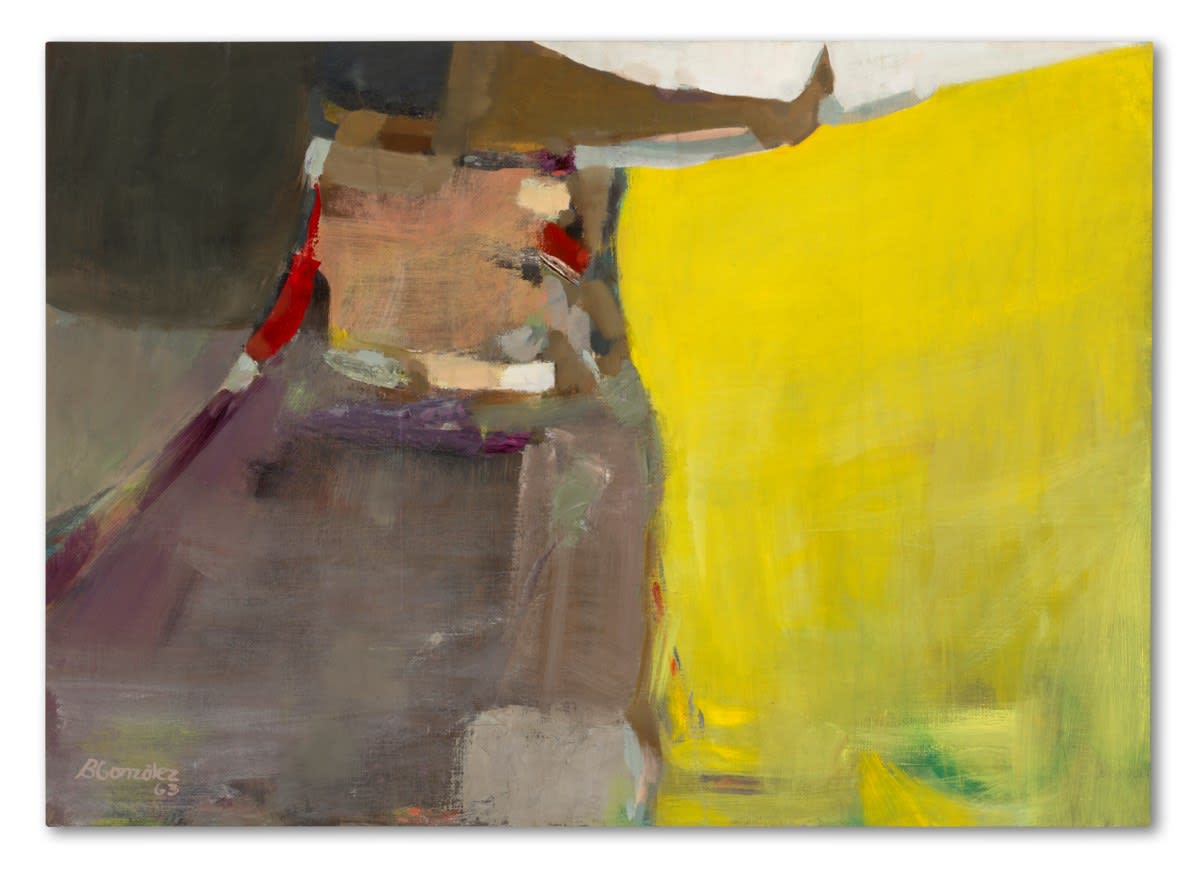

Egon Investment Scores
Liquidity
4/10
How easily works can be bought and sold at auction
Institutional
9/10
Museum collections, biennials, and institutional recognition
Momentum
8/10
Recent price trends, gallery moves, and market buzz
Discovery
4/10
Undervaluation opportunity relative to peer artists
Risk
2/10
Investment risk factors — higher means more volatile
Market Position
Recent Sales Highlights
| Work | Price | Venue & Date |
|---|---|---|
| Desplazamiento anverso y reverso (2017) | $127,000 | September 30, 2025 |
| Historias Wiwa I (2015) | — | June 7, 2025 |
| Sueño dorado (Meditación), 1968 | — | May 19, 2023 |
- Collector Base
- Private Collector Profile
- Mix of Latin American private collectors (primarily Colombian/regional), international contemporary art collectors drawn to politically engaged works, and growing European interest driven by Barbican retrospective.
- Collector Intelligence Gap
- Named private collectors not disclosed in public sources — consistent with gallery-controlled primary market. Contact Casas Riegner for collector intelligence.
- Known Institutional Collectors
- Banco de la República (Bogotá) — significant collection shaped by González for 40+ years; Museo Nacional de Colombia; Art Institute of Chicago (45 works — largest confirmed single-institution holding); MoMA; Tate Modern; Reina Sofía; MFAH Houston; De Pont Museum
- Auction History
- Overview
- Approximately 25 recorded auction lots on Artnet spanning at least 2019–2025, across paintings, prints/multiples, works on paper, and sculpture. Market was historically thin and primarily gallery/primary-market controlled. Significant acceleration post-2021, with major works appearing in Christie's Latin American Art sales and Sotheby's Contemporary Day auctions. Market is now entering a critical estate-repricing window following death in January 2026.
- Egon Database Sell Through
- 100% (1/1 in database — September 2025)
- Total Artnet Lots Recorded
- ~25 (across paintings, prints/multiples, works on paper, sculpture)
- Market Liquidity
- Market Depth
- Shallow but growing. Works distributed across Christie's Latin American Art and Contemporary sales, and Sotheby's Contemporary Day.
- Sell Through Rate
- Limited data available but positive; Christie's Latin American Art 2022 overall sale was 82% by lot, and González's lot sold. No confirmed buy-ins in reviewed data.
- Annual Trading Volume
- Historically 3–6 lots/year across all houses — thin secondary market. Post-death volume expected to increase to 8–15 lots/year during estate window.
- Primary vs Secondary Split
- Historically primary-market-dominant (Casas Riegner / Peter Kilchmann). Secondary market developing but remains a fraction of total market activity.
- Pricing by Period
- 2025
- September 2025 Christie's: $127,000 (below estimate). Market softness pre-posthumous news cycle noted.
- 2020 to 2022
- Accelerating market interest; major paintings and large prints reaching $120,000–$180,000 estimate range. Christie's 2022: Vermeeriana I sold at $138,600.
- 2022 to 2024
- Sotheby's Contemporary Day placements confirm growing acceptance alongside global contemporary artists at $80,000–$200,000+ range for significant canvases. Works on paper and prints likely $20,000–$60,000.
- Note on Pricing
- Primary market pricing through Casas Riegner and Peter Kilchmann is not publicly disclosed. Contact galleries for current pricing. Estate management pricing strategy will be determinative for 2026–2027.
- Paintings Major
- Benchmark paintings: $100,000–$300,000. Flagship institutional-scale works (e.g., Auras Anónimas-related, large Decoración series) could reach $300,000–$600,000 in active estate market.
- Prints Multiples
- ~10 recorded print lots on Artnet — estimated $10,000–$50,000 range for editions and linocuts.
- Pre 2020 Historical
- Limited auction activity; prints, multiples, and smaller works likely below $50,000. Market was largely primary-market controlled through Casas Riegner.
- 2026 Onwards Estate Window
- Post-death repricing window active. With Barbican retrospective driving European demand and Astrup Fearnley extending through October 2026, significant works could test $200,000–$500,000+ range within 12–18 months.
- Investment Outlook
- Risks
- Secondary market historically very thin — price discovery limited; volatility risk on illiquid lots
- September 2025 Christie's lot sold below estimate — some market softness prior to posthumous momentum
- Latin American art segment subject to broader EM macro pressures
- Estate management and supply control approach not yet publicly known
- No confirmed record above $200,000 — reclassification to 'Growth' or 'Blue-chip' depends on breakthrough lots in 2026–2027
- Key Catalysts
- Barbican Centre retrospective (February 25 – May 10, 2026) — first UK solo show driving European collector awareness
- Astrup Fearnley Museet retrospective (June 12 – October 11, 2026) — extending European visibility through autumn
- Tate Modern confirmed holdings — Tier 1 UK institutional validation at right moment
- MoMA, Reina Sofía, AIC (45 works) validate international standing
- UN Human Rights recognition elevates non-art-market profile
- Supply extreme scarcity: only ~25 auction lots documented across entire career
- Peer Comparables
- González is Colombia's most institutionally validated artist alongside Fernando Botero. Botero auction records exceed $4M; González pricing remains significantly below Botero despite equivalent or superior contemporary institutional validation (MoMA, Tate, Reina Sofía vs. Botero's more traditional market base). Marta Minujín (Argentina) offers another Latin American woman peer. The pricing gap relative to institutional standing is the central 'Value' thesis.
- Estate Window Active
- True
- Estate Window Trigger
- Death on January 9, 2026
- Estate Window Duration
- 12–24 months (through approximately January 2027–January 2028)
Institutional Presence
- Awards Prizes
- Second prize, 17th Salón de Artistas Nacionales (Colombia), 1965 — for Los suicidas del Sisga
- Second prize, 1st Salón de Pintura (Cali), 1965
- Special mention, 33rd Salón Nacional de Artistas de Colombia, 1990
- Exhibition History
- Solo Major Chronological
Title Year Dates Venue First solo exhibition — Encajeras series 1964 — Museo de Arte Moderno de Bogotá Solo exhibition 2018 — Museo Nacional Centro de Arte Reina Sofía, Madrid (Palacio Velázquez) Solo exhibition 2018 — KW Institute for Contemporary Art, Berlin First major U.S. retrospective 2019 — Pérez Art Museum Miami → Museum of Fine Arts Houston Guerra y Paz: una poética del gesto — 2023–2024 Museo Universitario de Arte Contemporáneo (MUAC), Mexico City The Image in Transit (~150 works) — August 30, 2025 – February 1, 2026 Pinacoteca de São Paulo Beatriz González (posthumous UK retrospective — first ever UK solo, ~150 works) — February 25 – May 10, 2026 Barbican Centre, London Beatriz González (retrospective — Oslo) — June 12 – October 11, 2026 Astrup Fearnley Museet, Oslo - Major Group Shows Biennials
Year Event 1971 11th Bienal de São Paulo 1976 38th Venice Biennale 2014 8th Berlin Biennale 2015 World Goes Pop 2017–2018 Radical Women: Latin American Art 1960–1985 2017 Documenta 14
- Museum Collections
- Tier 1 Usa
Institution Location Notes Status Tier Art Institute of Chicago Chicago, USA Largest single-institution holding identified — 45 works is an exceptional institutional commitment reflecting deep collection investment 45 works confirmed via primary museum API data Tier 1 USA Museum of Fine Arts, Houston (MFAH) Houston, USA Hosted first major U.S. retrospective, 2019 Confirmed collection holdings Tier 1 USA - Tier 1 Global
Institution Location Notes Status Tier Museum of Modern Art (MoMA) New York, USA — Confirmed — artist page on MoMA.org Tier 1 Global Tate Modern London, UK Tate artist page; works specifically noted as on furniture supports. Tate World Goes Pop (2015) was key acquisition/exhibition context. Confirmed — at least two works on mass-produced furniture supports Tier 1 Global Museo Nacional Centro de Arte Reina Sofía Madrid, Spain Hosted solo show at Palacio Velázquez, 2018; ongoing collection relationship Confirmed collection holdings Tier 1 Global - Tier 2 International
- Tier
- Tier 2 European
- Notes
- Noted on Peter Kilchmann artist page
- Status
- Confirmed collection holdings
- Location
- Tilburg, Netherlands
- Institution
- De Pont Museum
- National and Regional
Institution Location Notes Status Museo Nacional de Colombia Bogotá, Colombia Most important national institutional relationship; Los suicidas del Sisga III confirmed in collection Significant holdings; González served as Chief Curator 1989–2003 Banco de la República (collection) Bogotá, Colombia Death formally announced by the Banco de la República, underscoring centrality of this relationship Significant confirmed holdings — González shaped collection for 40+ years
- Publications Catalogues
- Artforum
- Multiple Artforum features and critical reviews, including first-person essay on artistic development and Juan José Santos review of Pinacoteca retrospective
- Art Journal Open
- Scholarly essay 'Context, Cursilería, and Sorrow: Beatriz González' (Art Journal Open / College Art Association) — extended catalogue analysis with essays by Ostrander and Ramirez; historical texts from ICAA digital archive (1964–2005)
- Documentary Film
- Documentary film about González screened at The Shed, New York (2019)
- Barbican Catalogue
- Major retrospective catalogue co-published for Pinacoteca/Barbican/Astrup Fearnley touring exhibition (2025–2026)
- Icaa Digital Archive
- Critical texts 1964–2005 preserved at Inter-American Cultural Authority (ICAA) archive — significant scholarly paper trail
- Documenta 14 Publication
- Essay on González in Documenta 14 official publication (2017)
Career & Biography
- Identity
- Gender
- Female
- Full Name
- Beatriz González
- Birth Date
- 16 November 1932
- Death Date
- 9 January 2026
- Birth Place
- Bucaramanga, Colombia
- Death Place
- Bogotá, Colombia
- Nationality
- Colombian
- Primary Location During Career
- Bogotá, Colombia
- Education
- Key Mentors
- Marta Traba (Argentine art critic and historian — most influential mentor; introduced González to critical theory and Latin American art discourse at Los Andes)
- Joan Miró (Spanish painter — encountered during studies at Los Andes)
- Printmaking
- Rijksakademie van Beeldende Kunsten, Amsterdam — advanced printmaking studies (year unconfirmed)
- Architecture
- Enrolled in architecture school late 1950s; withdrew within a few years
- Fine Arts Degree
- Universidad de los Andes, Bogotá — BFA Fine Arts, graduated 1962
- Career Timeline
- 1958
- Returned to Bucaramanga after withdrawing from architecture school
- 1962
- Graduated BFA from Universidad de los Andes, Bogotá
- 1964
- First solo exhibition at Museo de Arte Moderno de Bogotá — Encajeras (Lacemakers) series, after Vermeer; establishes core method of canonical appropriation
- 1965
- Los suicidas del Sisga series wins second prize at 17th Salón de Artistas Nacionales; second prize at 1st Salón de Pintura (Cali)
- 1971
- Participated in 11th Bienal de São Paulo
- 1975
- Telón de boca para un almuerzo — landmark large-scale acrylic painted curtain
- 1976
- Participation in 38th Venice Biennale
- 1985
- Major stylistic shift — moves from political satire to collective mourning/grief imagery; palette darkens
- 1990
- Special mention at 33rd Salón Nacional de Artistas de Colombia
- 2009
- Auras Anónimas — monumental public installation at Central Cemetery, Bogotá; 8,977 silhouettes of shrouded displacement victims on iron banisters; most iconic public work
- 2014
- Participated in 8th Berlin Biennale
- 2017
- Documenta 14 (Athens and Kassel) — European breakthrough moment; also included in Radical Women: Latin American Art 1960–1985 (Hammer Museum, Brooklyn Museum, Pinacoteca do Estado de São Paulo)
- 2018
- Major solo exhibitions at Museo Reina Sofía (Madrid) and KW Institute for Contemporary Art (Berlin)
- 2019
- First major U.S. retrospective at Museum of Fine Arts Houston (after Pérez Art Museum Miami debut)
- 2025
- The Image in Transit retrospective opens at Pinacoteca de São Paulo (August 30, 2025 – February 1, 2026) — ~150 works
- 2026 Jan 9
- Died at age 93 at her home in Bogotá. Death announced by Banco de la República
- 2026 Feb 25
- Posthumous UK retrospective opens at Barbican Centre, London (running February 25 – May 10, 2026) — first-ever UK solo show, ~150 works
- 2026 Jun 12
- Retrospective travels to Astrup Fearnley Museet, Oslo (June 12 – October 11, 2026)
- 1978 Onwards
- Began systematic use of tabloid press photographs (El Tiempo, Vanguardia Liberal) as primary source imagery
- 1978 to 1983
- Coordinated educational programs at Museo de Arte Moderno de Bogotá
- 1989 to 2003
- Chief Curator of Museo Nacional de Colombia, Bogotá — transformative role reshaping national collection and Colombian art historiography
- 2023 to 2024
- Guerra y Paz: una poética del gesto at MUAC, Mexico City (co-curated by Cuauhtémoc Medina)
- Artistic Influences
- Mentors
- Marta Traba — introduced González to critical theory and Latin American art discourse
- Old Masters
- Johannes Vermeer, Diego Velázquez, Édouard Manet — canonical European painting as primary source for ironic appropriation, especially in early career
- Contemporaries
- Fernando Botero (Colombia), Marta Minujín (Argentina), Alejandro Obregón (Colombia); broader Latin American modernist/conceptual generation
- Movement Context
- Colombian/Latin American Pop Art — González developed a distinctly postcolonial variant diverging from Anglo-Saxon Pop: engagement with Third World kitsch and vernacular imagery rather than consumerist spectacle
- Sociopolitical Context
- La Violencia (1948–1958 Colombian civil war), FARC conflict (1964–2016), chronic political violence and displacement formed the experiential bedrock of her practice
- Institutional Roles
- Banco De La Republica
- Over four decades of decisive influence on the institution's cultural mission and vast art collection; death formally announced by the Bank
- Museo Nacional Colombia
- Chief Curator, 1989–2003 — reshaped national collection; exceptional dual role as artist and national art historian
- Museo Arte Moderno Bogota
- Coordinated educational programs, 1978–1983
- Political Social Engagement
- González was profoundly shaped by Colombia's decades of political violence. Her practice evolved from ironic political satire (1960s–70s) to documentation of mass grief and mourning (post-1985). Auras Anónimas (2009) — 8,977 silhouettes of shrouded bodies painted onto the iron banisters of the Central Cemetery, Bogotá — became her most iconic public work and a direct response to Colombia's displaced conflict victims. The UN Human Rights Office cited her legacy of making 'visible the victims of the armed conflict in Colombia.'
Artistic Profile
- Primary Themes
- Political violence and its visual representation in mass media
- Colombian national identity and social stratification
- Collective mourning, grief, and commemoration of conflict victims
- Kitsch and popular taste as cultural critique and postcolonial commentary
- Appropriation and re-signification of canonical European art in Third World contexts
- The role of images in mediating and constructing political reality
- Power, spectacle, and media representation of authority (politicians, popes, celebrities)
- Techniques Mediums
- Painting
- Oils and acrylics on canvas — dominant medium throughout career
- Sculpture
- ~3 recorded sculpture lots on Artnet; assemblage works combining furniture and painted surfaces
- Installation
- Large-scale public installations — most famous: Auras Anónimas (2009), Central Cemetery, Bogotá
- Curtain Works
- Large-scale acrylic on fabric/curtain supports — Telón de boca para un almuerzo (1975) shown at Venice Biennale 1978
- Enamel on Metal
- Enamel on metal sheet (e.g., Mutis por el foro, 1973) — deliberately industrial quality
- Prints Multiples
- Linocuts, serigraphs/screenprints — used for large-scale wallpaper and multiple editions; ~10 recorded print lots
- Furniture Assemblage
- Painted imagery transferred onto mass-produced furniture (beds, nightstands, bookshelves) — signature practice from 1970s; conceptually loaded objects
- Drawing Works on Paper
- Ink drawings especially early career (tabloid-source crime imagery); ~4 recorded works on paper lots
- Stylistic Evolution
- Phase 1 1960s
- Traditional painting → canonical appropriation — Vermeer/Velázquez reimagined through Colombian provincial color and deliberate 'bad quality' sensibility. First articulation of the kitsch critique.
- Phase 3 Post 1985
- Dramatic shift to collective mourning imagery — darker and more austere palette, newspaper photographs of massacres and victims, death and displacement as primary subject. Critics cite this as González's deepest and most significant contribution to art history.
- Phase 4 2000s to 2020s
- Large-scale public installations (Auras Anónimas), continued refinement of mourning/displacement imagery; growing international engagement without compromise to her distinctive visual language; the Paisajes elementales late series continues until the end of active practice.
- Phase 2 1970s to Mid 1980s
- Full development of kitsch strategy — furniture paintings, tabloid appropriation, political satire; enamel on metal; large-scale prints and curtain works. Señor presidente series in this mode.
- Style Visual Language
- Overview
- González developed a distinctive graphic style characterized by bold, flat areas of saturated color, simplified and deliberately 'crude' figuration, and large-scale formats. Her palette — vivid yellows, greens, electric blues — consciously references Colombian provincial life (shop windows, sunsets) rather than international art world conventions. She described these colors as 'deliberately out of tune.' The apparent crudeness is strategic — what she called 'bad quality' is a sophisticated critical position.
- Key Characteristics
- Bold, flat color fields — graphic rather than painterly in traditional sense
- Deliberate 'bad quality' / simplified figuration — provincialism as intellectual strategy
- Large scale — many works designed for architectural or monumental presence
- Appropriation of mass-media imagery — newspapers, tabloids, magazines, postcards as source
- Reworking of canonical Western art (Vermeer, Manet, Velázquez) through Colombian provincial lens
- Painted imagery transferred onto mass-produced furniture and everyday objects (beds, nightstands, shelves)
- Late-career shift to austere, darker palette emphasizing grief and mourning
- Public installations incorporating industrial materials (iron banisters, metal sheets, enamel on metal)
- Movements Associations
- Latin American Pop Art (associated but self-differentiated)Conceptual art in Colombian/Latin American traditionArte político (politically engaged art)Post-colonial art practiceArte povera-adjacent material strategies (use of industrial/vernacular supports)
- Key Series Bodies of Work
Title Year Description Encajeras (Lacemakers) 1964 First solo series; appropriation of Vermeer's Lacemaker through Colombian visual sensibility. Established the core method of canonical European appropriation. Los suicidas del Sisga (The Sisga Suicides) 1965 Colorful reinterpretation of black-and-white newspaper photograph of couple who drowned at the Sisga Dam. Breakthrough work — won national prize. Paradigmatic example of 'bad quality' as critical strategy. Collected by Museo Nacional de Colombia. Vermeeriana 1960s Series re-imagining Vermeer works through Colombian kitsch lens. Vermeeriana I is among the most auction-recorded works in this series ($138,600 at Christie's 2022). Establishes the canonical/provincial dialectic that drives her early career. Furniture paintings 1970s–1980s Painted images of popes, politicians, and celebrities transferred onto mass-produced furniture. Pope's face on nightstands references Colombian devotional household objects. Decoración de interiores (1981) in this vein — monumental scale linocut on canvas at 235 x 339 cm. Press/tabloid imagery series 1978 onwards Systematic use of Colombian press photographs (El Tiempo, Vanguardia Liberal) as primary source. Marks shift from Old Master appropriation to direct engagement with Colombia's contemporary political violence. Telón de boca para un almuerzo 1975 Large-scale acrylic painted on curtain — found in Bogotá shop window, inspired by degraded Manet magazine reproduction. Exhibited at Venice Biennale 1978. Exemplary work of postcolonial image theory. Auras Anónimas (Anonymous Auras) 2009 Most iconic public installation: 8,977 silhouettes of shrouded figures painted onto iron banisters of Central Cemetery, Bogotá. Direct response to displacement and mass casualties of Colombian armed conflict. Redefines the scope of González's practice into monumental public commemoration. Paisajes elementales (Elemental Landscapes) 2017–2019 Late-career series including Fuego en la Sierra and Tierra en Barranca — continued engagement with Colombian landscape, conflict, and displacement through monumental formats. Desplazamiento anverso y reverso (2017) is the confirmed $127,000 Christie's lot.
Critical Reception
- Academic Discourse
- Icaa Archive
- Texts spanning 1964–2005 preserved in ICAA digital archive — significant scholarly paper trail spanning entire career
- US Academic Attention
- Growing U.S. scholarly interest following 2019 MFAH retrospective and Radical Women inclusion
- Latin American Studies
- González's work increasingly central to Latin American art history curricula; dual role as curator/artist provides unique archival and methodological resources for scholars
- Documenta 14 Scholarship
- Documenta 14 publication includes contextualizing essay on her practice vis-à-vis political art tradition
- Critical Reception
- Overall Standing
- Universally recognized as one of the most important Latin American artists of the 20th–21st century. Critical consensus positions her as Colombia's most significant visual artist alongside Fernando Botero, and as a pioneer of a distinctly Latin American form of Pop Art that is politically, socially, and culturally differentiated from Anglo-Saxon Pop. ArtReview described her as 'one of Latin America's most prominent contemporary art figures.' The Art Newspaper called her an 'indefatigable force in Colombian art.'
- Key Critical Voices
Critic Publication Statement Marta Traba (mentor and leading Latin American art critic) — Called González 'a tireless investigator of kitsch' — framing her vernacular visual strategy as rigorous intellectual practice Cuauhtémoc Medina (prominent international curator/critic; co-curator of MUAC retrospective 2023) — — Juan José Santos Artforum — Shirley Reyes / Ramirez Art Journal Open — Luis Caballero (artist) — Called her 'The only one who has been able to paint the Colombians' - Publications Coverage
- Artforum (multiple features, critical reviews, first-person essay by the artist)ArtReview (obituary, retrospective coverage 2025–2026, 2016 interview republished February 2026)The Art Newspaper (obituary January 2026)Art Journal Open / College Art Association (peer-reviewed scholarly essay)Artsy (Vanguard 2019 feature)HyperallergicOculaTate website (artist profile and video interview content)City Paper BogotáEl Tiempo and Vanguardia Liberal (Colombian press — decades of coverage)
- Art Historical Positioning
- Posthumous Legacy
- Death on January 9, 2026 described by UN Human Rights Office in Colombia as loss of a voice that made 'visible the victims of the armed conflict.' Major touring retrospective (Pinacoteca → Barbican → Astrup Fearnley) ensures sustained critical attention through October 2026. Critical reassessment and art-historical canonization process now accelerating.
- Exceptional Dual Role
- González occupies a rare position in art history as both a practicing artist and an institutional architect — serving as Chief Curator of the Museo Nacional de Colombia for 14 years while simultaneously being a central figure within the national art narrative she was constructing. This dual role is historically exceptional.
- Theoretical Framework
- Kitsch theory and aesthetic of 'bad taste' as cultural critique
- Postcolonial image theory — re-signification of European canonical art in 'Third World' contexts
- Semiotics of mass media and journalistic photography
- Thanatopolitics and collective mourning (late career focus post-1985)
- Colombian national identity construction and historiography
- Movement Classification
- Latin American Pop Art — pioneer and central figure; González herself resisted the 'Pop Art' label, preferring to emphasize the distinctiveness of her postcolonial, province-centered practice from Anglo-American Pop
Gallery & Representation
- Gallery History
- Career-long primary association with Casas Riegner (Bogotá). European representation added via Peter Kilchmann (Zurich) as international profile grew materially through Documenta 14 (2017) and subsequent European museum shows (Reina Sofía 2018, KW Berlin 2018). This dual-gallery Latin America/Europe model is characteristic of established LatAm artists building international secondary markets.
- Art Fair Presence
- Confirmed Fairs
- Art Basel (Galerie Peter Kilchmann)Art Basel Miami BeachArtBO (Bogotá Art Fair)Zona Maco (Mexico City)
- Geographic Reach
- Latin America (primary/established), Europe (established via Kilchmann/Documenta/Barbican), USA (established via MFAH, PAMM, MoMA, AIC)
- Current Representation
- Primary Bogota
- Tier
- Tier 1 Latin American — leading Colombian gallery with strong international connectivity; represents major Colombian and Latin American artists
- Gallery
- Casas Riegner
- Location
- Bogotá, Colombia
- Relationship
- Long-standing primary representation; co-presents international exhibitions; expected to manage estate in coordination with family
- Primary Europe
- Tier
- Tier 2 European — respected mid-tier gallery with strong Latin American program
- Gallery
- Galerie Peter Kilchmann
- Location
- Zurich (and Basel operations), Switzerland
- Relationship
- Joint exhibition presentations with Casas Riegner; introduced González to European market; active presence at Art Basel
- Estate Management Status
- Post-death (January 2026) — estate management expected through Casas Riegner in coordination with family and Banco de la República. Orderly estate management anticipated given long-standing gallery relationships. Supply control likely to remain disciplined.
Beatriz González's fundamentals are strong. But is the timing right for your collection? Egon analyzes fit against your aesthetic thesis, risk tolerance, and portfolio gaps.
Get Personalized AnalysisActive Market Signals
Signal Timeline & Strength Analysis
Gallery moves, auction records, institutional acquisitions, price milestones — tracked over 90 days
Collector Demographics & Buyer Analysis
Geographic distribution, institutional vs. private buyers, collector profiles, and secondary market activity
Personalized Acquisition Strategy
Optimal entry points, comparable pricing analysis, timing recommendations, and portfolio fit assessment
Go Deeper with Personalized Intelligence
You now have Egon's market assessment of Beatriz González. The next question is personal: does this artist belong in your collection? Egon analyzes collection fit based on your aesthetic thesis, existing holdings, budget, and investment goals — delivering acquisition strategies no public index can provide.