Martin Parr
Blue-chipEgon research · Artist market profile
The market, in context.
Explore Martin Parr’s auction history alongside the exhibitions, collections and gallery relationships behind the market.
Institutional research
Collections & exhibitions
Read holdings, exhibition history and their qualifications in context.
Read the institutional research →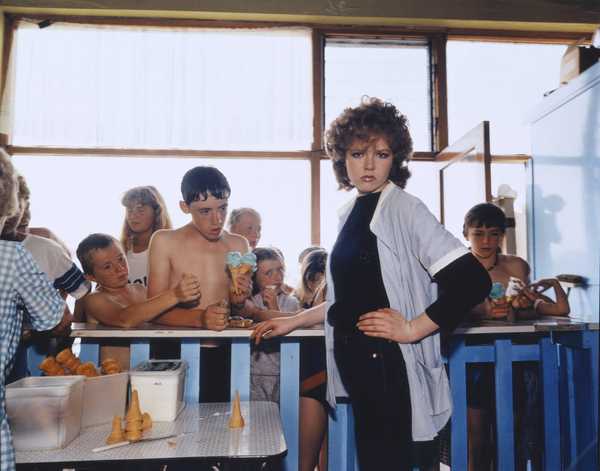

Egon investment scores
Market position
Research updated
Auction highlights
Four Photographs from the series 'Common Sense'
- Result
- $13,970
- Venue and date
- Sotheby's, January 2026
Pricing
- Print types
- Vintage C-prints, chromogenic prints (printed later), Magnum editions, limited editions, photobooks
Market context
Photography market generally: prints range from low thousands to tens of thousands depending on edition size, vintage vs. later prints, series importance, and provenance
Primary market note
During lifetime: Rocket Gallery (UK exclusive representative since 1997); Magnum Photos store; Martin Parr Foundation; international galleries including Huxley Parlour, Kamel Mennour (Paris), Janet Borden (NYC)
- Recent range 2025 2026
- $13,970 (documented sale, likely vintage prints or editions)
Liquidity
Assessment
Moderate to good liquidity; regular auction offerings across multiple houses globally; works available through galleries and Magnum Photos; photobooks widely distributed
- Auction frequency
- Multiple lots per year across Christie's, Sotheby's, Phillips, and European houses
Collector base
- Accessibility
- Prints available at various price points; photobooks accessible to broad collector base; vintage prints command premium
- Market segments
- Photography collectors, documentary photography specialists, British art collectors, photobook collectors, Magnum collectors
- Institutional collectors
- Major museums globally (see institutional_data)
Auction history
Historical context
Regular secondary market presence since mid-1980s; works sold at international and national auction sales; database coverage from 1985-present (Artnet), 1989-present (updated daily)
Auction house presence
Christie's (25 lots tracked), Phillips (21), Sotheby's (15), Bonhams (9), plus extensive sales through European houses: Dreweatts, Grisebach, Artcurial, Lyon & Turnbull, Piasa, and others
Database coverage note
EGON database shows limited data (2025+); comprehensive auction history available from 1985 onward through Artnet, Artprice, and major auction houses
Market position
- Tier
- Blue-chip photography
- Comparables
- Diane Arbus, William Eggleston, Saul Leiter, Stephen Shore, Garry Winogrand (per Artnet); positioned alongside other Magnum masters
Market characteristics
Established secondary market with regular auction presence; museum-validated; extensive commercial and editorial work alongside fine art practice; photobooks highly collectible
Investment outlook
Strengths
Museum validation across tier-1 institutions; Magnum Photos affiliation; prolific photobook publication (100+); established critical reputation; unique position in British photography; Foundation ensuring legacy preservation
Considerations
Large body of work may affect scarcity premium; distinction between commercial/editorial and fine art work; various edition types and sizes; photography market generally more accessible than painting
- Estate management
- Martin Parr Foundation and Magnum Photos collaborating to preserve and share legacy (announced Dec 2025); organized estate with clear provenance
Posthumous market dynamics
- Death date
- 6 December 2025
- Immediate impact
- Significant media coverage and tributes from global photography community; two major posthumous exhibitions announced for 2026
Expected trajectory
Blue-chip status established pre-death; posthumous market likely to see increased demand for vintage prints and important series (The Last Resort, Common Sense, Small World); photobooks may appreciate; estate management through Martin Parr Foundation and Magnum Photos
Institutional presence
Research updated
Exhibitions
Landmark exhibitions
- The Last Resort - Serpentine Gallery London (1986)
- The Last Resort - Open Eye Gallery Liverpool (1985)
- Strange and Familiar - Barbican (2016, curated by Parr)
- ParrWorld - international touring exhibition
Major retrospectives
Martin Parr Photoworks 1971-2000
- Year
- 2002-2005
Venues
Barbican Arts Centre London (2002); National Museum of Photography Film & Television Bradford (2002); Kunsthal Rotterdam (2003); Museo Nacional Centro de Arte Reina Sofía Madrid (2003); National Museum of Photography Copenhagen (2003); Deichtorhallen Hamburg (2004); Maison européenne de la photographie Paris (2005)
Only Human: Photographs by Martin Parr
- Year
- 2019
- Venue
- National Portrait Gallery, London
Short & Sweet
- Year
- 2024
- Venues
- Archaeological Civic Museum of Bologna; MUDEC Milan; Fotografiska Shanghai
Posthumous exhibitions 2026
Global Warning
- Dates
- 30 January - 24 May 2026
- Scope
- Major retrospective, ~180 works spanning 50 years, curated with Parr before death, themed around climate change and overtourism
- Venue
- Jeu de Paume, Paris
- Significance
- First major posthumous exhibition; planned in collaboration with artist
The Last Resort
- Dates
- 20 February - 24 May 2026
Scope
40th anniversary exhibition of seminal series; full set of photographs from 1986 photobook; archival materials, contact sheets, original Plaubel Makina 67 camera, unseen images
- Venue
- Martin Parr Foundation, Bristol
Group exhibitions highlights
Euro Visions, Centre Pompidou Paris (2005); Making History: Art and Documentary in Britain from 1929 to Now, Tate Gallery Liverpool (2006); Street & Studio, Tate Modern (2008); Performing for the Camera, Tate Modern (2016); Britain in Focus: A Photographic History, Bradford (2017)
Publications
Major books
- Bad Weather (1982)
- The Last Resort (1986, self-published Promenade Press)
- The Cost of Living (1989)
- Small World (1995)
- Common Sense (1999)
- Autoportrait (2000)
- Think of England (various editions)
- Fashion Faux Parr (2024)
- Utterly Lazy and Inattentive (memoir, 2025)
Photobook legacy
Champion of the photobook as critical medium; held Guinness World Record for largest simultaneous photography exhibition (Common Sense shown at 41 galleries worldwide, 1 April 1999)
- Photobook output
- Around 100 solo photobooks published; edited 30+ books including 'The Photobook: A History' (3 volumes, 2004-2014, co-authored with Gerry Badger)
Museum collections
Tier 1 museums
- Museum of Modern Art (MoMA), New York
- Tate Modern/Tate Gallery, London
- Centre Pompidou, Paris
- Victoria & Albert Museum, London
- J. Paul Getty Museum, Los Angeles
- Smithsonian Institution, Washington DC
- Art Institute of Chicago
- National Portrait Gallery, London
- Los Angeles County Museum (LACMA)
- Museo Nacional Centro de Arte Reina Sofía, Madrid
- Special collections
- Martin Parr photobook collection (12,000+ volumes) acquired by Tate galleries in 2017
Tier 2 and regional
- Irish Museum of Modern Art, Dublin
- National Museum Wales, Cardiff
- Manchester Art Gallery
- The Hepworth Wakefield
- Bibliothèque Nationale, Paris
- Australian National Gallery, Canberra
- Stedelijk Museum, Amsterdam
- National Centre for Contemporary Arts, Moscow
- High Museum of Art, Atlanta
- Minneapolis Institute of Arts
- Santa Barbara Museum of Art
- M+, Hong Kong
- Government Art Collection, UK
- Arts Council of Great Britain
Awards and recognition
Honors
- CBE (Commander of the Order of the British Empire), 2021 Birthday Honours for services to photography
- Outstanding Contribution to Photography prize, Sony World Photography Organisation, 2017
- Eric Solomon Award for photojournalism, Photokina
- Royal Photographic Society's Centenary Award
- Honorary Fellow of the Royal Photographic Society (HonFRPS), 2005
- Recognition for Significant Contribution in the Field of Visual Arts, Royal Academy of Arts, 2016
Academic positions
- Professor of photography, University of Wales Newport, 2004
- Visiting professor of photography, University of Ulster, 2013
- Honorary degrees: University for the Creative Arts (2006); Manchester Metropolitan University Doctor of Arts (2008)
Career & Biography
Research updated
Career
- Education
- Manchester Polytechnic (now Manchester Metropolitan University), 1970-1973, studied photography
Career timeline
- 1987
- Moved to Bristol with wife, base for remainder of life
- 1988
- Joined Magnum Photos as associate member
- 1994
- Full Magnum membership (controversial, passed by one vote)
- 2004
- Guest curator, Rencontres d'Arles festival
- 2010
- Artistic director, Brighton Photo Biennial
- 2015
- Founded Martin Parr Foundation (charity)
- 2017
- Martin Parr Foundation opened physical premises in Bristol
- 2021
- Appointed CBE (Commander of the Order of the British Empire) for services to photography
- 2024
- Documentary 'I Am Martin Parr' by Lee Shulman released
- 2025
- Published memoir 'Utterly Lazy and Inattentive' (September); died December 6
- 1970s
- Black-and-white documentary work in Hebden Bridge, West Yorkshire (The Non-Conformists series, 1975-1982)
- 1980-1982
- Moved to Ireland, photographed rural life and abandoned Morris Minors
- 1983-1985
- Breakthrough series 'The Last Resort' at New Brighton - switch to saturated color photography
- 1987-1989
- The Cost of Living series - middle-class Britain under Thatcherism
- 1987-1994
- Small World series - critique of mass tourism globally
- 1995-1999
- Common Sense series - global consumerism
- 2013-2017
- President of Magnum Photos
- 1999-onward
- Fashion photography for Vogue, Gucci, Paul Smith, Louis Vuitton, Agnès B.
Early influences
Grandfather George Parr (amateur photographer and Fellow of the Royal Photographic Society); Tony Ray-Jones (introduced by Bill Jay at Manchester); American color photographers William Eggleston, Stephen Shore, Joel Meyerowitz; British photographer John Hinde
Studio and methods
Based in Bristol from 1987; known for use of medium-format Plaubel Makina 67 camera, saturated color film, ring flash/daylight flash; underwater camera for Bad Weather series; obsessive documentation of everyday life
Identity
- Dates
- 23 May 1952 – 6 December 2025
- Family
- Survived by wife Susie Parr (Susan Mitchell), daughter Ellen Parr, sister Vivien, and grandson George
- Full name
- Martin Parr CBE
- Nationality
- British (English)
- Death context
- Died at home in Bristol on 6 December 2025 at age 73 from myeloma (diagnosed May 2021)
Artistic context
Legacy
One of the most influential photographers of his generation; published over 100 photobooks; featured in 90+ exhibitions worldwide; established Martin Parr Foundation to preserve British and Irish photography; photobook collection of 12,000+ volumes acquired by Tate in 2017
Position
Leading figure in contemporary documentary photography; revolutionized British photography by shifting from black-and-white social realism to bold, colorful documentation of the mundane
Cultural impact
Changed how Britain sees itself; fired up the economy of the photobook; led global movement for documentary photography; curated major festivals that shaped photographic discourse
Artistic Profile
Research updated
Style
Visual signature
Highly saturated colors; ring flash/daylight flash creating lurid, hyper-real effect; close-up compositions; medium-format detail; artificial/advertising aesthetic; garish colors; esoteric composition
Technical approach
Medium-format camera (Plaubel Makina 67); color film; flash photography in daylight; underwater camera for rain shots; focus on food, consumption, bodies, tourist tat, clothing
Formal characteristics
Full-bleed images in photobooks; no captions or minimal text; deadpan humor; apparent snapshot aesthetic masking careful composition; seriality and accumulation
Evolution
- 1970s
- Black-and-white social documentary, rural communities, Methodist chapels, working-class life (The Non-Conformists)
- 1980-1982
- Ireland period, abandoned Morris Minors, economic transition
- 1983-1985
- Breakthrough to saturated color (The Last Resort), flash photography, British working class at leisure
- 1987-1989
- Middle-class focus (The Cost of Living), Thatcherite affluence
- 1987-1994
- Global tourism critique (Small World), international travel
- 1995-1999
- Apex of color saturation and consumerism critique (Common Sense), Guinness World Record exhibition
- 1999-onward
- Fashion photography, editorial work, diverse subjects maintaining core themes
- 2000s-2020s
- Photobook projects, curatorial work, foundation building, continued documentation with environmental subtext
Influences
- Cultural
- British satirical tradition, seaside postcards, advertising imagery, kitsch, vernacular photography, photo booths
- Theoretical
- Anthropological approach to culture; documentary as social mirror; photography as therapy
- Photographic
- Tony Ray-Jones, William Eggleston, Stephen Shore, Joel Meyerowitz, John Hinde, Henri Cartier-Bresson (early), Diane Arbus (implied comparison)
Major series
- Bad Weather 1982
- Rain and snow in northern England and Ireland; underwater camera to capture falling rain; flash making weather visible
- Autoportrait 2000
- 57 portraits of Parr taken by others (studio photographers, street photographers, photo booths); questioning portraiture; deadpan humor
- Small World 1987 1994
- Mass tourism globally; tourists with cameras; tourist tat; gap between sublime destinations and packaged leisure; Cartier-Bresson's objections
- Common Sense 1995 1999
- Global consumerism at apex; apocalyptic vision; full-bleed photobook; Guinness World Record simultaneous 41-gallery exhibition 1999
The Last Resort 1983 1985
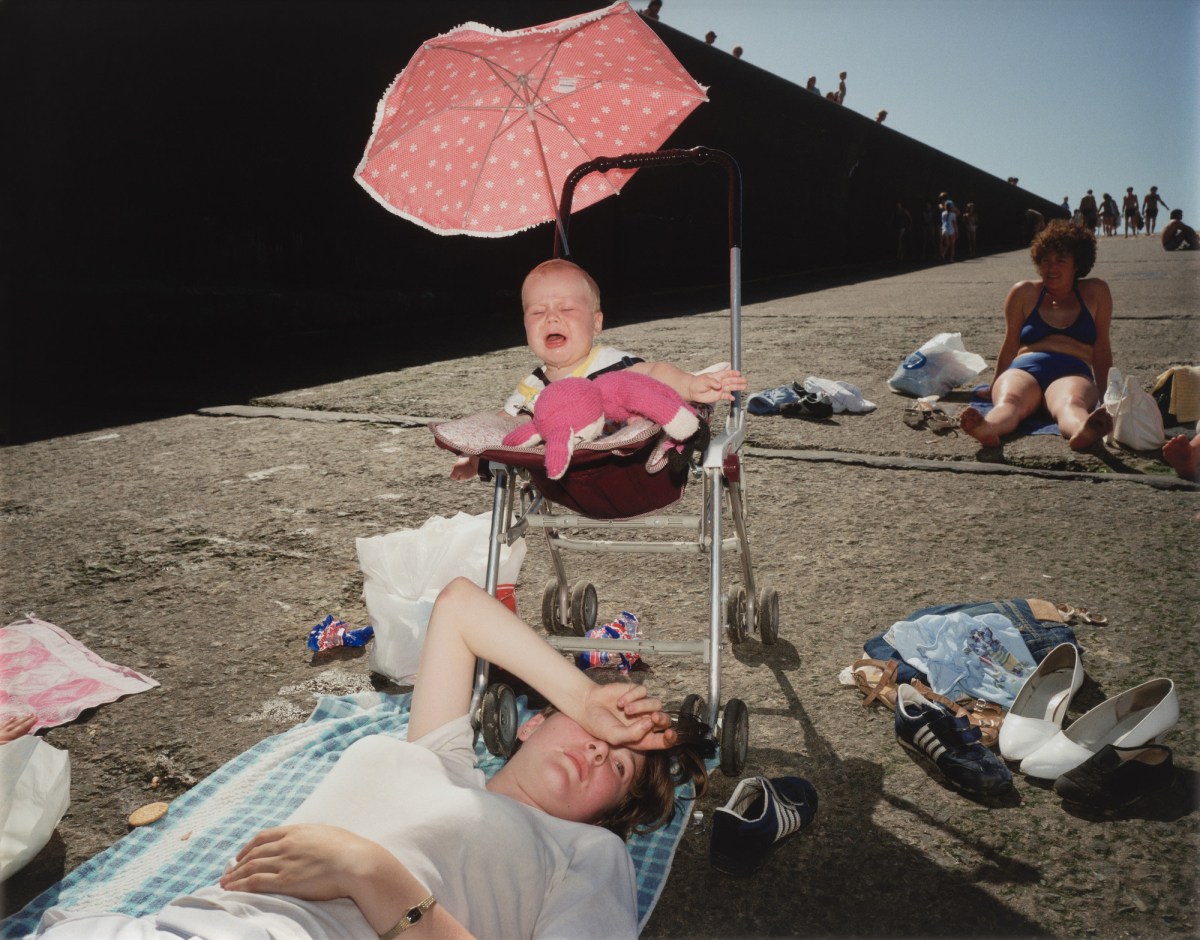
New Brighton seaside, working-class holidaymakers; breakthrough color work; controversial; Serpentine Gallery 1986; seismic shift in British photography
- The Cost of Living 1987 1989
- Middle-class Britain under Thatcher; shopping, dinner parties, garden parties, conspicuous consumption
- The Non Conformists 1975 1982
- Black-and-white documentation of Methodist and Baptist chapels in Hebden Bridge and rural Yorkshire; elegiac, celebratory
Visual language
Approach
Satirical yet affectionate; anthropological observation; 'subjective documentary'; ironic and witty; grotesque and crassness; focus on 'low' culture; democratic gaze (middle and working classes treated equally)
Ambiguity
Deliberately opaque politics; work can be read as both celebration and critique; 'love-hate relationship' with subjects; raises questions without condemning
Humor and satire
British tradition of satire (Hogarth, Swift); deadpan humor; visual puns; bathos and shortfall between sublime and mundane; 'practical joke' photography
Themes and subjects
Subjects
Beachgoers, tourists, shoppers, food consumption, garden parties, sporting events, religious gatherings, supermarkets, car boot sales, seaside resorts, global tourist sites
Core themes
- Leisure and tourism (beaches, holidays, mass tourism)
- Consumption and consumerism (food, shopping, material culture)
- Class (working-class and middle-class Britain)
- British identity and social customs
- Globalization and homogenization
- Communication and technology
- Climate change and environmental degradation (reframed posthumously)
- Gap between mythology/aspiration and reality
Movements and periods
- Classification
- Documentary photography, contemporary realism, color photography, British New Photography movement
Influence received
Tony Ray-Jones (British documentary); American color photographers (William Eggleston, Stephen Shore, Joel Meyerowitz); John Hinde (British color photographer, seaside postcards); Henri Cartier-Bresson (early influence, later rejected)
Historical position
Bridge between traditional black-and-white British social documentary (Tony Ray-Jones, Chris Killip, Bill Brandt) and contemporary color documentary; parallels American New Color Photography (Eggleston, Shore, Meyerowitz)
Techniques and mediums
- Formats
- Medium-format photography, photobooks, exhibition prints, editorial/fashion photography, film/documentary work
- Early work
- Black-and-white photography (1970s-early 1980s, The Non-Conformists series)
- Primary medium
- Color photography (C-prints, chromogenic prints)
- Technical innovation
- Revolutionary use of color in British documentary context; flash in outdoor daylight; color saturation inspired by advertising and postcards
Critical Reception
Research updated
Critical legacy
Key assessments
- Grayson Perry: Parr had 'needle-sharp eye for the material culture of our times' and 'changed the way we look'
- Sean O'Hagan (Guardian): 2004 Arles festival 'remains the standard by which all subsequent Rencontres have been judged'
- Aperture: 'He changed how Britain sees itself and changed the way the story of photography is told'
- Mark Sealy (Autograph ABP): 'He treated people through his lens with a sense of equality'
- Val Williams: 'Parr's photography is essentially a reflection of intense curiosity'
Tributes on death
Joel Meyerowitz: 'a legend in the world of photography'; David Turnley (Pulitzer winner): 'his work will live forever'; widespread tributes from global photography community December 2025
Critical reception
Critical evolution
Initially controversial, now widely celebrated as revolutionary; recognized for transforming documentary photography through color, satire, and anthropological approach
Magnum controversy
1994 full membership vote was divisive; Philip Jones Griffiths circulated plea to reject him; Henri Cartier-Bresson opposed, saying Parr came 'from a totally different planet'; passed by one vote (66.6%); accused of lacking empathy between photographer and subject; called 'Margaret Thatcher's favorite photographer' by critics
Breakthrough controversy
The Last Resort (1986) brought both acclaim and harsh criticism; accused of mocking working-class subjects; color photography seen as radical departure from British documentary tradition
Critical consensus current
One of the most influential photographers of his generation; leading figure in contemporary documentary photography; changed how Britain sees itself; expanded audience for documentary photography
Scholarly attention
Academic analysis
Subject of scholarly articles in Third Text, art history departments; analyzed through postcolonial lens; compared to 19th-century photographer John Thomson; studied for revolutionary use of color in documentary photography
Influence on field
Pioneered color documentary photography in Britain; influenced generation of photographers; established photobook as critical medium; shaped how documentary photography circulates and is understood; led global movement for documentary photography
Publications and media
- Documentary
- 'I Am Martin Parr' (2024, directed by Lee Shulman, Dogwoof Films) - explores life and photographic career
Critical themes
Satire and humor in tradition of Hogarth and Swift; class and consumption; tourism and globalization; British identity; documentary vs. critique; color as political statement; 'subjective documentary'; gap between mythology and reality
Major critical texts
- Val Williams monograph 'Martin Parr' (comprehensive retrospective with critical essays)
- Third Text article 'Martin Parr and the Legacy of British Colonial Photography' (2023, postcolonial reading)
- Quentin Bajac, 'Parr by Parr: Discussions with a Promiscuous Photographer' (2010)
- Extensive coverage in The Guardian, ARTnews, Artforum, ArtReview, The Art Newspaper, Aperture, CNN
Gallery & Representation
Research updated
Fair presence
- Photo london
- Regular exhibitor
- International fairs
- Works shown through Magnum Photos and gallery partners at major photography and art fairs globally
Representation
International galleries
- Huxley Parlour Gallery, London
- Galerie Kamel Mennour, Paris
- Galerie Clémentine de la Féronnière, Paris
- Galerie du jour Agnès B., Paris
- Janet Borden Gallery, New York (implied)
- Rose Gallery (implied)
- OstLicht Gallery for Photography, Vienna
- Institutional representation
- Martin Parr Foundation, Bristol (founded 2015, opened 2017) - manages archive and estate
Primary representation lifetime
Rocket Gallery, London (exclusive UK representative since 1997, founded by Jonathan Stephenson); Magnum Photos (member 1994-2025, president 2013-2017)
Geographic reach
- Primary markets
- UK (London, Bristol), France (Paris), United States (New York), Germany, Italy, Spain, Netherlands
- Exhibition history
- Exhibitions across Europe, North America, Asia (Japan, China, Hong Kong, India, UAE), Australia, South America
Commercial partnerships
- Magazines
- Amica (Italian magazine, fashion photography from 1999), extensive editorial work
- Editorial fashion
- Vogue, Gucci, Paul Smith, Louis Vuitton, Galerie du jour Agnès B., Madame Figaro, Urban Outfitters
Sources & research notes
Egon’s artist research combines historical auction records, recent sales, institutional history, critical reception and gallery information. Researched auction records and auction highlights are identified separately.
Read prices with their work, sale date, currency and stated basis. Egon’s market assessments are distinct from reported auction results.
Reference: Egon, “Martin Parr: Market Intelligence & Investment Profile.”
Research updates by section
These dates show when Egon’s research sections were updated. Source retrieval dates, where supplied above, refer to individual evidence notes.
Ranking updated . Research sections follow their own update dates.
This is what the market knows about Martin Parr. What Egon can also tell you: whether Martin Parr fits your portfolio — based on your existing holdings, budget, and investment timeline.
Get personalized analysisActive market signals
Inside Egon
Signal timeline & strength analysis
Gallery moves, auction records, institutional acquisitions, price milestones — tracked over 90 days
Full signal timeline, strength analysis, and alert configuration for Martin Parr.
Collector demographics & buyer analysis
Geographic distribution, institutional vs. private buyers, collector profiles, and secondary market activity
Who is collecting Martin Parr? Geographic distribution, institutional vs. private buyers, and collector profile analysis.
Personalized acquisition strategy
Optimal entry points, comparable pricing analysis, timing recommendations, and portfolio fit assessment
Personalized acquisition strategy for Martin Parr based on your budget, timeline, and collection goals.
Go deeper with personalized intelligence
You now have Egon's market assessment of Martin Parr. The next question is personal: does this artist belong in your collection? Egon analyzes collection fit based on your aesthetic thesis, existing holdings, budget, and investment goals — delivering acquisition strategies no public index can provide.