George Wilson Bridges
Value#97
Egon Investment Scores
Liquidity
3/10
How easily works can be bought and sold at auction
Institutional
9/10
Museum collections, biennials, and institutional recognition
Momentum
4/10
Recent price trends, gallery moves, and market buzz
Discovery
3/10
Undervaluation opportunity relative to peer artists
Risk
3/10
Investment risk factors — higher means more volatile
Market Position
- Pricing
- Historical Price Range
- Note
- Specific realized prices from 2009-2017 auctions found but individual lot prices not disclosed in public databases
- Context
- 19th century calotypes - rare, unique historical documents
- Individual Calotype Negatives
- Several thousand pounds (GBP) each
- Auction History
- Market Trends
- Recent Context
- Major auction houses continue featuring 19th century photography; Sotheby's noted bringing important 19th century photographs to market in 2023
- 19th Century Photography Market
- Strong institutional and specialist collector interest; rare early works command premium; provenance critical
- Collector Market
- Liquidity
- Low - very specialized market for 19th century calotypes
- Market Activity
- Sporadic; appears at specialized photography auctions every few years
- Notable Provenance
- Harold White Collection, Gilman Paper Company Collection, Marie-Thérèse and André Jammes (prominent photo collectors), Maurice Sendak, Hans P. Kraus Jr. Fine Photographs (major dealer)
- Primary Collectors
- Historical photography specialists, institutional collectors, photography historians
- Price References
- Negatives can achieve several thousand pounds each at auction (per Wikipedia, citing historical sources)
- Lots with Results
- 9
- Comparative Market
- Peer Photographers
- Contemporary early calotypists: Calvert Richard Jones, Roger Fenton, Maxime Du Camp (early travel photographers); daguerreotypists of same era
- Daguerreotype Comparison
- Daguerreotypes from same period (1840s-1850s) range $2,500-$195,000+ depending on subject, condition, rarity; important historical daguerreotypes (e.g., Franklin expedition) achieved £445,500 (Sotheby's 2023)
- Total Lots Tracked
- 11
- Primary Auction Houses
- Sotheby's (6 lots)Christie'sPhillips
- Geographic Concentration
- United Kingdom (7 sales), international houses
- Most Recent Recorded Sale
- November 10, 2017 - Christie's
- Market Position
- Market Positioning
- Rarity Factor
- Very high - calotype negatives are unique; poor printing success means many works exist only as negatives or faded salt prints
- Publication History
- Limited commercial success during lifetime; attempted publications never widely distributed
- Condition Challenges
- Many negatives over-exposed or faded; printing inadequate; most surviving work are seriously faded salt prints
- Historical Importance
- Significant - earliest photographs of major archaeological sites; contemporary with photography's invention
Institutional Presence
- Exhibitions
- Major Exhibitions
Title Dates Venue Significance The Waking Dream: Photography's First Century, Selections from the Gilman Paper Company Collection — — Major traveling exhibition of early photography Paradise of Exiles: Early Photography in Italy March 13–August 13, 2017 Metropolitan Museum of Art Documented spread of calotype photography to Italy Along the Nile: Early Photographs of Egypt September 11–December 30, 2001 Metropolitan Museum of Art Contextualized early Egyptian photography - Scholarly Context
- Works regularly featured in museum exhibitions on early photography; strong curatorial interest in pioneering travel photography
- Museum Collections
- Tier 1 Museums
Institution Collection Status Specific Details Metropolitan Museum of Art (New York) Confirmed - multiple works — J. Paul Getty Museum (Los Angeles) Confirmed - multiple works — Smithsonian Institution Confirmed Works present but specific titles not detailed in search Cleveland Museum of Art Confirmed Holdings confirmed in museum API data Victoria & Albert Museum (London) Confirmed Major British photography collection includes Bridges works National Gallery of Art (Washington, D.C.) Confirmed — - Tier 2 Institutions
Institution Holdings National Media Museum (Bradford, UK) Calotype negatives including negative for 'Benedictine Convent, Catania' (1937-2138) Griffith Institute Archive (University of Oxford) Bound volume album: 'Selections from Seventeen-Hundred Genuine Photographs' (45 x 28 x 7.5 cm); contains salted paper prints of Palestine, Greece, Constantinople, Egypt, Malta, Sicily, Italy, Algiers; transferred from Ashmolean Museum; formerly in office of Donald Benjamin Harden George Eastman Museum Copies of photograph albums/selections mentioned Museums Victoria (Australia) Works documented in collection records Science Museum Group Collection (UK) —
- Awards and Recognition
- Historical Status
- Recognized as pioneering early photographer; first to use calotype in Greece
- Posthumous Recognition
- Significant scholarly and curatorial attention; described by Met as 'virtually unknown' contributor despite importance
- Contemporary Acknowledgment
- Limited commercial success during lifetime; publications never achieved financial success
Career & Biography
- Identity
- Verified Info
- Gender
- male
- Ulan Id
- 500036877
- Full Name
- Reverend George Wilson Bridges
- Birth Year
- 1788
- Death Year
- 1863
- Nationality
- British
- Alternative Names
- George Wilson BridgesBridges, George Wilson, ReverendBridges, Reverend George WilsonGeorge BridgesRev. George Bridges
- Professional Roles
- photographerAnglican clericwritertraveller
- Biographical Expansion
- Death
- Died 1863 in Beachley, Gloucestershire; buried with wife Elizabeth (died 1862) beneath rock inscribed in memory of lost daughters
- Education
- Oxford-educated, member of Trinity College, Oxford; published as member of Oxford University in 1814
- Early Career
- Born to banker and merchant George Bridges and wife Mary Bridges; eloped to Scotland with pregnant Elizabeth Raby Brooks, married 1815; toured Europe 1814 (France, Holland, Flanders, Germany, Switzerland)
- Later Career
- Secretary to Bishop of Bristol James Monk (1852); Vicar of Beachley, Gloucestershire (final parish); published various works including 'Palestine as it is: In a Series of Photographic Views' (J. Hogarth, 1858); 'Selections from Seventeen-Hundred Genuine Photographs' (issued in installments from 1852); signed works as 'A Wayworn Wanderer'
- Canada Period
- Built octagonal/pentagonal wooden tower house called Wolf Tower at Rice Lake, Ontario; lived there 1837-1843; lent house to author Catharine Parr Traill in 1846
- Jamaica Period
- Invited to Jamaica 1816 by Governor, reportedly paid very well; Rector of St Dorothy (1817), Manchester parish (1817-1823), St Ann parish (1823-1837); earned over £1000 annually by 1823; published pro-slavery treatises against William Wilberforce (1823); involved in controversial flogging of enslaved person (1830 parliamentary inquiry)
- Personal Tragedy
- Wife Elizabeth left him in 1834, taking son Henry; lost four daughters in boating accident at St Ann's Bay, Jamaica (1837); fled to Canada with surviving son William Somerset
- Financial Support
- Received £60 annually from Jamaican government for 25 years' service; £40 annually for Beachley parish duties
- Photographic Journey
- 1846-1852: followed son's Navy ship around Mediterranean; produced approximately 1,700 calotype negatives documenting Malta, Sicily, Greece, Turkey, Egypt, Algeria, Palestine, Constantinople, Italy, North Africa; photographed Mount Etna erupting; many earliest extant photographs of these sites
- Photography Training
- Returned to England 1843; son William enlisted in Navy; became curate in Gloucestershire (St Giles Church, Maisemore); met William Fox Talbot through mutual friend in 1846; learned calotype process from Nicolaas Henneman (Talbot's printer) in December 1845; commissioned state-of-the-art camera from Parisian optician Charles Chevalier
- Historical Significance
- Pioneer of travel photography; first photographer to use calotype process in Greece; produced some of earliest successful photographs in Mediterranean, Middle East, and North Africa; documented sites shortly after their archaeological reconstruction; embodies early Victorian photography's documentary aspirations
- Artistic Context
- Artistic Influences
- Patronage
- Countess of Ellesmere (patroness to whom 'Palestine as it is' was dedicated)
- Primary Influence
- William Henry Fox Talbot - inventor of calotype process, provided direct instruction and ongoing support
- Working Arrangement
- Sent one copy of each exposure to Fox Talbot for development in exchange for prepared photographic paper
- Technical Collaborators
- Nicolaas Henneman (Talbot's printer), Calvert Richard Jones (fellow calotypist), Christopher Rice Mansel Talbot (Talbot's cousin)
Artistic Profile
- Influences
- Influences and Legacy
- Influenced by
- William Henry Fox Talbot (technical and philosophical influence); tradition of Grand Tour documentation; emerging archaeological scholarship; biblical illustration tradition
- Influence on Others
- Part of pioneering generation establishing travel photography; work demonstrated potential of calotype for field documentation; contemporary with and parallel to work of Maxime Du Camp in Egypt
- Art Historical Context
- Member of 'Circle of Talbot' - group using and promoting calotype process; documented critical moment when photography was replacing drawing for scientific/archaeological documentation; embodied Victorian intersection of religion, colonialism, and emerging photography
- Contemporary Significance
- Personal story of using photography for psychological healing after tragedy; eccentric figure representative of early photography's diverse practitioners
- Themes and Subjects
- Key Themes Subjects
- Primary Subjects
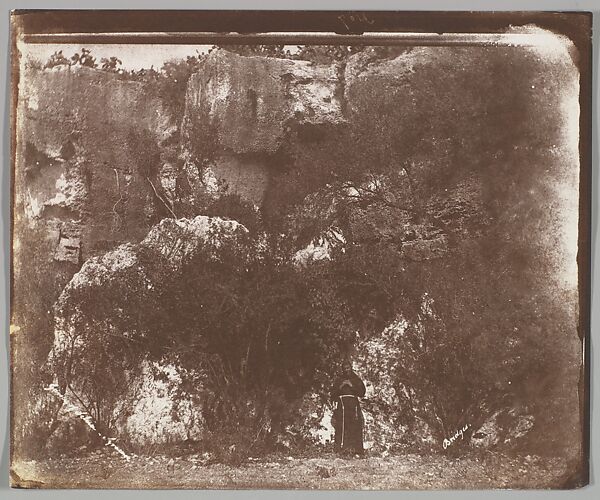
- Archaeological sites and ancient monuments (Acropolis, Pyramids, Colosseum, temples)Mediterranean landscapes and seascapesHoly Land biblical sites (Rachel's Grave, Jews' Wailing Wall, Bethlehem)Architectural documentation (monasteries, convents, churches)Natural phenomena (Mount Etna erupting)Portraits and group studies (Benedictine monks at Catania)
- Documentary Intent
- Intended for publication to illustrate travels and biblical sites; tourist and educational market; embodied Talbot's vision of photography as useful illustrative tool
- Geographic Coverage
- Malta, Sicily, Greece, Turkey, Egypt, Algeria, Palestine, Constantinople, Italy, North Africa, Britain (late works)
- Movements and Periods
- Late Period
- 1852-1863: Attempted publication and dissemination of photographs while serving as parish priest
- Aesthetic Qualities
- Composition
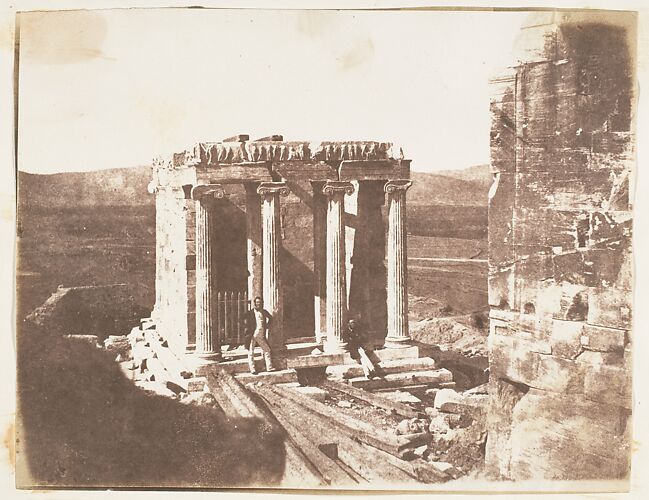
- Documentary approach; careful framing of architectural subjects; inclusion of human figures for scale
- Authenticity
- Unique paper negatives; each print unique due to contact printing process
- Historical Value
- Many earliest extant photographs of sites; documented archaeological reconstructions shortly after completion (e.g., Temple of Athena Nike reconstructed only 5 years before photographing)
- Image Characteristics
- Soft, atmospheric quality typical of calotypes; less sharp than daguerreotypes but capable of multiple prints; many with fading and deterioration
- Photographic Period
- 1846-1852: Intensive Mediterranean and Near East documentation project
- Pre Photographic Period
- 1788-1845: Anglican cleric, writer, controversial figure in Jamaica
- Techniques and Mediums
- Process
- Calotype (paper negative process invented by William Fox Talbot)
- Materials
- Photographic paper supplied by William Fox Talbot; salted paper prints
- Innovations
- First photographer to use calotype process in Greece; photographed down into active volcanic vent of Mount Etna
- Working Method
- Sent one copy of each exposure to Talbot for development in exchange for prepared paper; extensive field work under challenging conditions
- Camera Equipment
- State-of-the-art camera custom-made by Parisian optician Charles Chevalier (1846)
- Technical Challenges
- Poor printing skills; many over-exposed negatives; most surviving works are faded salt prints; never achieved adequate printing from negatives
Critical Reception
- Critical Reception
- Catalogue Raisonne
- Status
- None published
- Documentation
- Approximately 1,700 negatives produced 1846-1852; attempted publication 'Selections from Seventeen-Hundred Genuine Photographs' issued in installments but never commercially successful; 'Palestine as it is' (1858) published but not successful; many works survive only as negatives or faded prints making comprehensive cataloging challenging
- Controversial Legacy
- Photography achievements overshadowed by pro-slavery activism and documented violence against enslaved persons in Jamaica
- Technical Assessment
- Mastered calotype negative despite not being 'a scientific man'; printing skills inadequate resulting in faded salt prints; many negatives over-exposed
- Historical Assessment
- Metropolitan Museum: 'important contribution of this early prolific practitioner and wayworn wanderer...remains virtually unknown'; 'many of them the earliest extant photographs of the sites'
- Contemporary Reception
- Limited commercial success; publications failed to achieve financial viability; attempted to sell works to tourists in Sicily with little profit
- Photography History Position
- Recognized as significant pioneer of travel photography and calotype process; member of William Fox Talbot's circle; documented sites at critical historical moment
- Publications and Media
- Wikipedia
- Comprehensive article with detailed biography and photographic career
- Museum Databases
- Extensive presence: Met, Getty, NGA, V&A, Smithsonian, Science Museum Group, Museums Victoria
- Auction Databases
- Artnet (16 results), Invaluable, LotSearch, MutualArt
- Scholarly Resources
- Luminous-Lint (detailed photographer biography), Google Arts & Culture
- Scholarly Publications
- Major References
- Year
- 1987
- Author
- Larry J. Schaaf
- Publisher
- Hans P. Kraus Jr. Fine Photographs
- Publication
- Sun Pictures, Catalogue Four: The Harold White Collection of Historical Photographs from the Circle of Talbot
- Significance
- Catalog of major Bridges collection
- Year
- 1993
- Authors
- Maria Morris Hambourg, Pierre Apraxine, Malcolm Daniel, Virginia Heckert, Jeff L. Rosenheim
- Publisher
- Metropolitan Museum of Art
- Publication
- The Waking Dream: Photography's First Century, Selections from the Gilman Paper Company Collection
- Significance
- Major exhibition catalog featuring Bridges works
- Year
- 1988
- Authors
- Robert E. Lassam and Michael Gray
- Location
- Florence
- Publisher
- Alinari
- Publication
- The Romantic Era: La Calotipia in Italia 1845–1860
- Significance
- Documented calotype photography in Italy including Bridges' work
- Note
- Includes Bridges entry
- Editor
- George Hannavy
- Publication
- Encyclopaedia of Nineteenth Century Photography
- Doi
- 10.1093/ref:odnb/109524
- Year
- 2016
- Entry
- Bridges, George Wilson (1788–1863), Anglican Clergyman, Defender of Slavery, and Photographer
- Author
- Catherine Hall
- Publication
- Oxford Dictionary of National Biography
- Academic Scholarship
- Year
- 2002
- Pages
- 101-2
- Author
- Catherine Hall
- Publisher
- University of Chicago Press
- Publication
- Civilising Subjects: Colony and Metropole in the English Imagination, 1830–1867
- Year
- 2011
- Pages
- 87-108
- Author
- D. A. Dunkley
- Chapter
- The Life of Rev. George Wilson Bridges: The Jamaican Experience
- Publisher
- Lexington Books
- Publication
- Readings in Caribbean History and Culture: Breaking Ground
- Article
- 'The influence of Melody upon man in the wild state of nature': Enslaved Parishioners, Anglican Violence, and Racialized Listening in a Jamaica Parish
- Journal
- Journal of the Society for American Music
- Significance
- Examines Bridges' controversial activities in Jamaica
Gallery & Representation
- Fair Presence
- Status
- N/A - Historical works typically sold through auctions or private dealer sales rather than fairs
- Representation
- Secondary Market
- Availability
- Very limited - rare works appear sporadically at auction
- Sales Venues
- Major auction house photography sales; occasional specialized 19th century sales
- Market Structure
- Institutional acquisition dominant; private collectors typically museum-quality specialists
- Specialist Dealers
- Major Dealers
- Role
- Major historical photography dealer; handled significant Bridges works including pieces now in Met, Getty collections
- Dealer
- Hans P. Kraus Jr. Fine Photographs (New York)
- Activity
- Active sales in 1980s-1990s including 1987 Harold White Collection catalog, 1994 sale to Maurice Sendak
- Auction Houses
- Sotheby's, Christie's, Phillips - specialized photography departments
- Primary Gallery Representation
- Note
- No contemporary gallery representation; works traded through specialized historical photography dealers
- Status
- N/A - Historical artist (1788-1863)
George Wilson Bridges's fundamentals are strong. But is the timing right for your collection? Egon analyzes fit against your aesthetic thesis, risk tolerance, and portfolio gaps.
Get Personalized AnalysisActive Market Signals
Signal Timeline & Strength Analysis
Gallery moves, auction records, institutional acquisitions, price milestones — tracked over 90 days
Collector Demographics & Buyer Analysis
Geographic distribution, institutional vs. private buyers, collector profiles, and secondary market activity
Personalized Acquisition Strategy
Optimal entry points, comparable pricing analysis, timing recommendations, and portfolio fit assessment
Go Deeper with Personalized Intelligence
You now have Egon's market assessment of George Wilson Bridges. The next question is personal: does this artist belong in your collection? Egon analyzes collection fit based on your aesthetic thesis, existing holdings, budget, and investment goals — delivering acquisition strategies no public index can provide.