Hajime Namiki
Value#98


Egon Investment Scores
Liquidity
4/10
How easily works can be bought and sold at auction
Institutional
7/10
Museum collections, biennials, and institutional recognition
Momentum
5/10
Recent price trends, gallery moves, and market buzz
Discovery
2/10
Undervaluation opportunity relative to peer artists
Risk
3/10
Investment risk factors — higher means more volatile
Market Position
Auction Record
$1,188
Tree Scene 114
Skinner, Marlborough, 2022
- Pricing
- Current Trend
- Steady collector interest; consistent gallery representation suggests sustained demand
- Price Factors
- Size, subject matter (tree scenes most desirable), date (earlier works sometimes command premium), edition number, condition, gold/silver leaf backgrounds add value
- Historical Context
- Prices have remained relatively stable in $100-$1,200 range at auction since tracking began in 2016
- Collector Base
- Demographics
- Japanese print collectors, decorative arts collectors, institutional collections
- Collecting Motivation
- Aesthetic appreciation of nature themes, technical innovation within traditional medium, affordable entry to institutional-quality Japanese prints
- Geographic Distribution
- Strong presence in United States (especially West Coast), Japan, international Japanese art collectors
- Primary Market
- Availability
- Works actively produced and available through galleries; strong secondary market presence
- Edition Sizes
- Typically 150-500 prints per edition, hand-signed and numbered
- Gallery Pricing
Note Gallery Gallery represents artist's latest works with museum-quality framing Art House SF (San Francisco) Established gallery pricing for contemporary works Tokaido Arts (San Francisco) Retail prices significantly higher than auction realizations Various Japanese print dealers (eBay, specialized dealers)
- Auction History
- Liquidity
- Moderate - consistent but modest auction activity; works regularly available through specialized Japanese print galleries
- Price Range
- Note
- Based on realized auction prices since 2016
- Low USD
- 65
- High USD
- 1188
- Recent Sales
Work Year Date Result Auction House Edition Tree Scene 116 2004 March 2025 Sold Leonard Joel 108/200 Tree Scene 94C (Upward View, Blue Trunk) 1999 December 2024 Sold Concept Art Gallery 61/200 Tree scene 2022 November 2024 Sold Chiswick Auctions 62/200 Tree Scene 151 2018 September 2024 Sold Blue Box Auction Gallery 8/200 - Record Price
- Date
- 2022
- Work
- Tree Scene 114
- Amount USD
- $1,188
- Auction House
- Skinner, Marlborough
- Market Segment
- Secondary market predominantly through regional auction houses; works appear regularly at smaller galleries and estate sales
- Recent Performance
- Period
- Past 12 months (2024-2025)
- Average Price USD
- $312
- Total Lots Tracked
- 63+ works offered at auction historically
- Market Position
- Market Positioning
- Established contemporary sosaku-hanga artist with institutional validation; positioned in accessible segment of Japanese print market below major shin-hanga and historical ukiyo-e masters but above emerging contemporary printmakers
Institutional Presence
Art Institute of Chicago
Chicago, Illinois, USALos Angeles County Museum of Art (LACMA)
Los Angeles, California, USASmithsonian Institution, National Museum of Asian Art
Washington, DC, USALibrary of Congress
Washington, DC, USAThe White House
Washington, DC, USAMuseum of Fine Arts
Houston, Texas, USANew Orleans Museum of Art
New Orleans, Louisiana, USAUniversity of Wisconsin
Wisconsin, USAKenosha Public Museum
Kenosha, Minnesota, USAMuskegon Museum of Art
Muskegon, Michigan, USAHewlett Packard Center
Palo Alto, California, USA- Exhibitions
Year Period Venue Location Significance Type — 1987-1998 College Women's Association of Japan (CWAJ) Print Exhibitions Tokyo, Japan Prestigious international showcase for Japanese contemporary prints Annual group exhibitions — 1994, 1997, 1998, 1999, 2001, 2006 Hendricks Art Collection Bethesda, Maryland, USA Annual solo shows organized by Kappy Hendricks, leading authority on Japanese prints Solo exhibitions 1999 — Castle Fine Arts San Francisco, USA — Solo exhibition — 2000-2005 College Women's Association of Japan Tokyo, Japan — Group exhibitions 2007 — Library of Congress — Major institutional recognition Online exhibition 2024 — Art House SF San Francisco, USA Contemporary gallery representation revival Solo exhibition 2025 (April) — Art House SF San Francisco, USA Continuation of annual exhibition tradition Solo exhibition - Museum Collections
- Institutional Validation Notes
- Strong institutional presence in US museums, particularly Art Institute of Chicago with 22 works. White House collection adds prestige. However, limited presence in European or Asian museums outside Japan. Validation is solid but regional (US-focused).
- Awards and Recognition
- Curatorial Recognition
Significance Achievement Direct pathway to institutional collections through respected expert Works promoted to American museums by Kappy Hendricks (1935-2016), world's foremost authority on contemporary Japanese prints Works included in prestigious collection auction with $400-600 estimates Featured in Turner Auctions 'Kappy Hendricks Collection of Japanese Prints' (November 2018) Substantial representation in major US museum 22 works in Art Institute of Chicago permanent collection
Career & Biography
- Career
- Identity
- Current Age
- 79
- Still Active
- True
- Current Location
- Tokyo, Japan
- Education and Training
- Focus
- Architectural sculpture and woodcarving
- Period
- 1965-1978
- Teacher
- Shigeru Ogura (renowned sculptor)
- Institution
- Private mentorship
- Artistic Context
- Major Influences
- Post-war Tokyo transformation, traditional Japanese woodblock printing heritage, sosaku-hanga movement, nature and environmental conservation, early training in sculpture
Artistic Profile
- Style
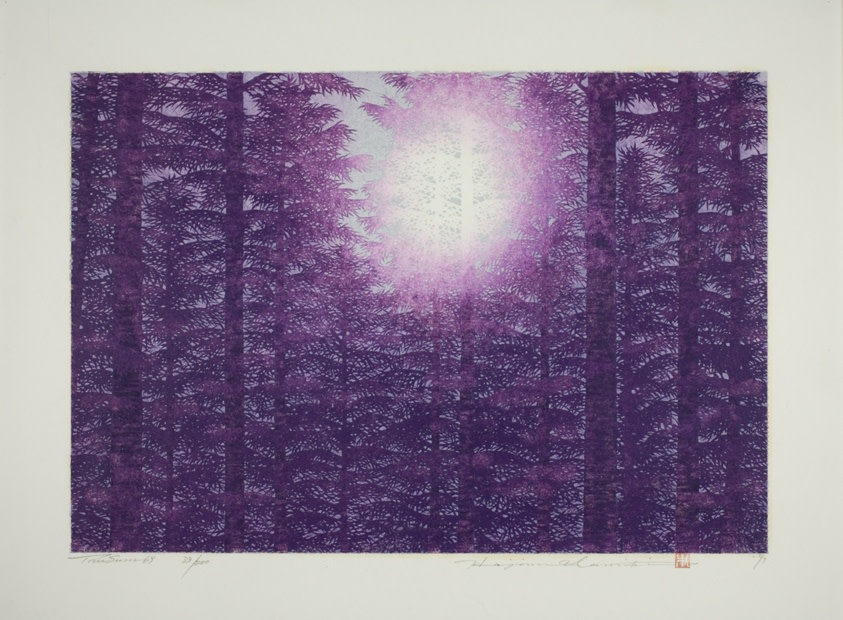
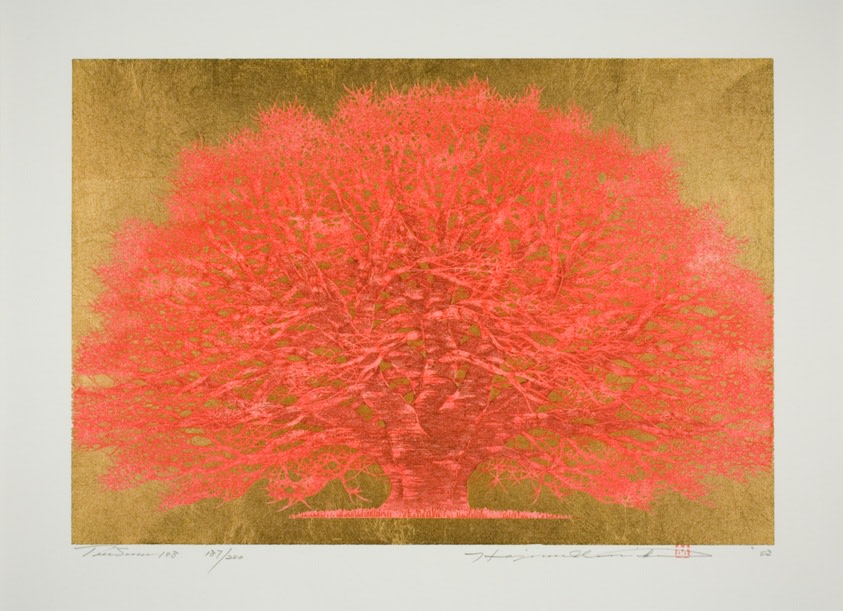
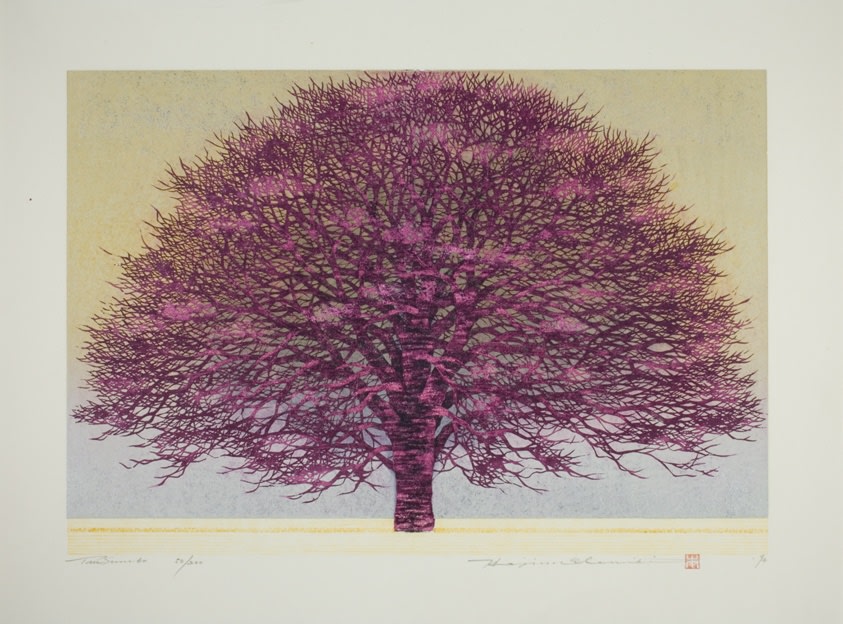
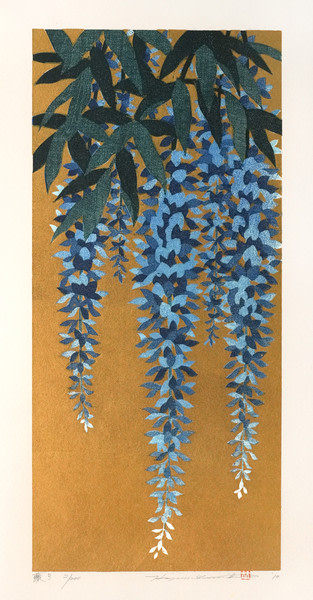
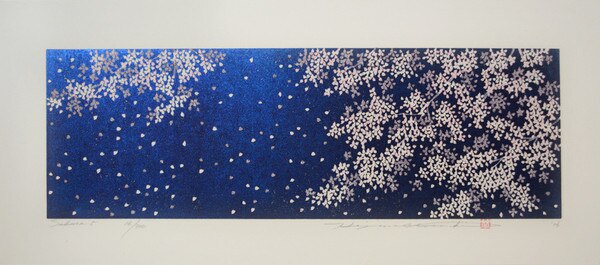
- Highly recognizable luminous tree portraits on metallic leaf backgrounds; contemplative compositions emphasizing individual tree character; limited color palettes with rich tones; precise detail balanced with minimalist composition; distinctive use of light and reflective surfaces
- Evolution
- Movement from sculptural bird carvings to two-dimensional prints; increasing abstraction and reduction of detail while maintaining precision; consistent refinement of metallic leaf technique; gradual expansion of subject range while maintaining focus on nature
- Influences
- Influences and Influenced
- Influenced by
- Shigeru Ogura (sculpture mentor)Traditional ukiyo-e masters (technical heritage)Sosaku-hanga pioneers (Kōshirō Onchi, Un'ichi Hiratsuka)Post-war Japanese transformation and cultural reconnectionJapanese spirituality and reverence for nature
- Artistic Context
- Part of late 20th/early 21st century sosaku-hanga continuation; contemporary of other nature-focused printmakers; positioned between traditional Japanese aesthetics and modern minimalism
- Parallel Artists
- Joichi Hoshi (1911-1979, known for tree prints), Tadashi Nakayama (gold leaf technique), other sosaku-hanga artists focusing on landscape
- Themes and Subjects
- Subjects
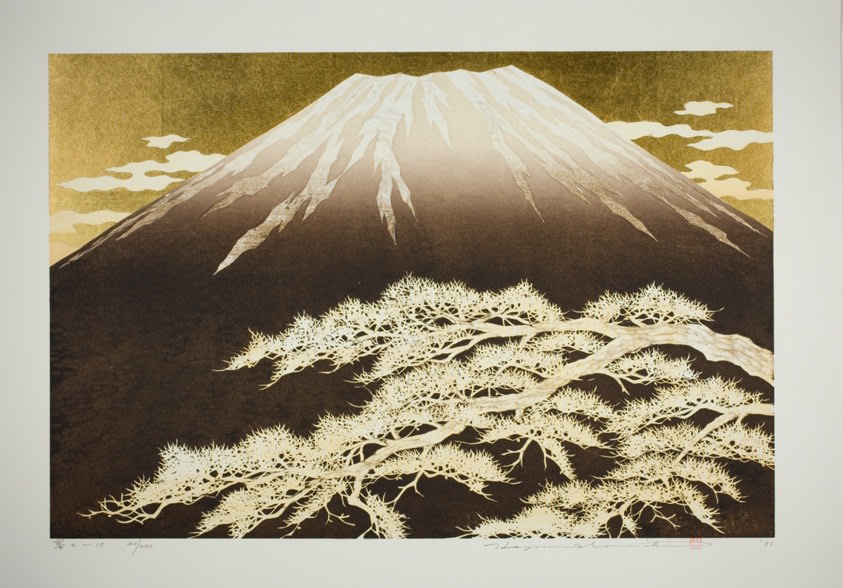
- Tree portraits - individual ancient or notable trees visited and sketched on locationCherry blossoms (sakura)DogwoodMagnoliaMaple leaves (momiji)Forest scenesPeonies (early works)Irises (early works)Dragons (occasional)Mt. Fuji (occasional)
- Movements and Periods
- Technical Characteristics
- Sosaku-hanga method - complete control over design, carving, and printing
- Cherry wood blocks imported from Canada
- Silver and 24-carat gold leaf backgrounds creating luminous, reflective surfaces
- Oil-based pigments rather than traditional watercolors for richer tones and longevity
- Handmade Japanese Gampi paper with natural sheen and strength
- Intricate carving detail enabled by sculpture background
- Limited editions typically 150-500 prints
- All works hand-signed, dated, titled, and numbered with artist's red seal (chop)
Critical Reception
- Critical Reception
- Overview
- Consistently positive reception within Japanese print collecting community; recognized for technical innovation within traditional medium
- Key Themes
- Technical mastery combining sculpture background with printmakingInnovative use of gold/silver leaf and oil pigmentsDeep connection to nature themes, particularly treesEmbodiment of sosaku-hanga principles of complete artistic controlAccessibility and contemplative quality of work
- Academic Papers
- Limited scholarly literature; primarily documented in dealer and gallery materials
- Catalogue Raisonne
- No catalogue raisonné published
- Critical Positioning
- Positioned as contemporary master within sosaku-hanga tradition; respected for technical innovation but not subject of major critical discourse in mainstream contemporary art publications
- Exhibition Catalogues
- Library of Congress 'On the Cutting Edge' exhibition (2007)
- Critical Validation Notes
- Solid reputation within specialized Japanese print community but limited presence in broader contemporary art critical discourse. No major art magazine features (Artforum, Art in America, etc.). Validation comes primarily from dealers, collectors, and specialist community rather than academic or mainstream critical establishment.
- Critical Validation Score
- 5
- Publications and Media
- Major Publications
Content Type Recognized for blending tradition with innovation; noted for use of gold/silver leaf and oil-based pigments Gallery/dealer analysis Described as 'contemporary Japanese Woodblock Master' whose sosaku-hanga work combines Japanese spirituality, minimalism, and immaculate aesthetics Gallery documentation Described as 'extremely popular artist who creates stunning images of groves and single trees' by Kappy Hendricks, leading authority Gallery/expert endorsement Described as 'prominent figure in contemporary Japanese woodblock printmaking' whose works 'beautifully merge traditional techniques with modern aesthetic' Specialist dealer analysis
Gallery & Representation
- Representation
- Market Presence
- Online Presence
- Strong visibility on specialized Japanese print dealer websites; active eBay market
- Gallery Exhibitions
- Regular solo and group shows, particularly through Art House SF continuing Hendricks tradition
- Art Fair Participation
- Not documented in major international fairs (Art Basel, Frieze, etc.); likely participates in specialized Japanese art fairs
- Representation History
Period Significance Gallery 1990s-2016 Critical partnership that secured museum acquisitions and US market presence; annual solo exhibitions 1994-2006 Hendricks Art Collection (Kappy Hendricks) 2024-present Revival of annual exhibition tradition; active promotion of new works Art House SF - Gallery Tier Assessment
- Tier 2-3 galleries specializing in Japanese prints; no Tier 1 international gallery representation (Gagosian, Zwirner, etc.); strong presence in specialized Japanese print market
- Geographic Reach
- Works readily available through multiple dealers; consistent supply at auction and in galleries; new editions regularly released
Hajime Namiki's fundamentals are strong. But is the timing right for your collection? Egon analyzes fit against your aesthetic thesis, risk tolerance, and portfolio gaps.
Get Personalized AnalysisActive Market Signals
Signal Timeline & Strength Analysis
Gallery moves, auction records, institutional acquisitions, price milestones — tracked over 90 days
Collector Demographics & Buyer Analysis
Geographic distribution, institutional vs. private buyers, collector profiles, and secondary market activity
Personalized Acquisition Strategy
Optimal entry points, comparable pricing analysis, timing recommendations, and portfolio fit assessment
Go Deeper with Personalized Intelligence
You now have Egon's market assessment of Hajime Namiki. The next question is personal: does this artist belong in your collection? Egon analyzes collection fit based on your aesthetic thesis, existing holdings, budget, and investment goals — delivering acquisition strategies no public index can provide.