Matthias Weischer
Value#94

Egon Investment Scores
Liquidity
5/10
How easily works can be bought and sold at auction
Institutional
7/10
Museum collections, biennials, and institutional recognition
Momentum
4/10
Recent price trends, gallery moves, and market buzz
Discovery
1/10
Undervaluation opportunity relative to peer artists
Risk
3/10
Investment risk factors — higher means more volatile
Market Position
- Pricing
- Works on Paper
- Historical range $2,000-$15,000; recent 2024-2025 activity shows smaller works
- Prints Multiples
- Lithographs typically $2,000-$8,000
- Temporal Context
- Significant price compression from 2008 peak; current market more selective
- Price Distribution
- Most artworks sell between $100,000-$500,000 according to LotSearch analysis
- Primary Market Current
- König Galerie Berlin and GRIMM Amsterdam pricing €40,000-€150,000 for paintings (contact gallery)
- Current Range 2024-2025
- $6,000-$35,000 based on recent auction results
- Historical Peak Range 2005-2008
- $200,000-$600,000 for major paintings during market peak
- Liquidity
- Annual Volume
- Historically 10-20 lots annually during peak; current activity lower
- Auction Houses
- Christie's (38 lots most frequently), Sotheby's, Phillips; German regional houses
- Sell Through Rate
- 67% in 2025 database; historical sell-through varied
- Geographic Concentration
- 60 lots sold in UK (most frequently), significant German market activity
- Collector Base
- Major Collectors
- Rubell Family Collection Miami (major early supporter - 'Life After Death' exhibition 2004-2008)Susan and Michael Hort, New YorkThomas Olbricht Collection, EssenFrieder Burda CollectionBlake Byrne Collection
- Collector Profile
- Attracted sophisticated international collectors interested in contemporary German painting; strong appeal during New Leipzig School phenomenon
- Institutional Collectors
- Museums acquiring works: MOCA LA, LACMA, Kunstmuseum Den Haag, Museum der bildenden Künste Leipzig
- Primary Market
- Galleries
- König Galerie (Berlin, Seoul, Vienna); GRIMM (Amsterdam, London, New York)
- Gallery Transition
- Currently König Galerie and GRIMM after cooperating with EIGEN + ART
- Pricing Availability
- Contact galleries for current primary market pricing; works available through both galleries
- Former Representation
- Galerie Kleindienst Leipzig, Anthony Wilkinson London, EIGEN + ART Leipzig/Berlin (2004-present in historical records)
- Auction History
- 2013 Record
- Fernsehturm (Television Tower) diptych (2004) - MutualArt records as 2013 record
- Artnet Database
- 419 auction results recorded on Artnet
- Major Sales 2008
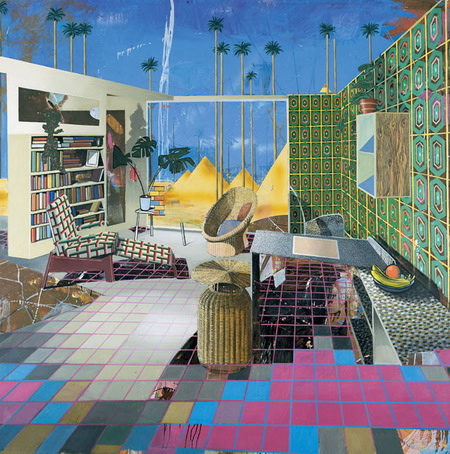
- Egyptian Room (2001) sold for £288,500 (€377,347) at Phillips London February 2008, exceeding high estimate by 44%
- Market Correction
- New Leipzig School market hype held steady until 2009; prices collapsed after 2008 financial crisis though works by well-known painters still in demand
- Auction Record 2008
- $571,344 (£337,250) at Sotheby's London October 2008 for 'Untitled' - highest price observed
- Historical Peak 2006
- In 2004, new paintings priced around $20,000; by late 2005 Christie's auction: Weischer fetched $370,000, Tim Eitel brought $212,000
- Market Momentum
- Current Trend
- Stabilized after 2009 correction; selective market for quality works
- Demand Indicators
- Continued gallery representation at major galleries; ongoing museum exhibitions
- Market Challenges
- Market saturation from 2000s boom; shifting collector tastes; critics noted 'hype' element
- Comparative Performance
- New Leipzig School overall experienced correction but maintained institutional relevance
- Market Position
- Market Segment
- Mid-career contemporary German painter; strong institutional validation but moderate secondary market
- Collecting Demographic
- Strong interest from private collectors; Rubell Family Collection major early supporter
- Comparison to Neo Rauch
- Neo Rauch senior member of New Leipzig School, recent sales near $1 million (2006); Weischer positioned as second-tier within movement
- Leipzig School Hierarchy
- Among key figures with Tim Eitel, David Schnell, Christoph Ruckhäberle; all experienced similar market trajectory
- Investment Outlook
- Risks
- Market correction from peak, secondary market liquidity concerns, potential oversupply from boom period
- Strengths
- Strong institutional validation, significant museum collections, quality gallery representation, technical mastery
- Opportunities
- Potential value play - strong fundamentals with prices well below historical peaks; museum quality available at accessible levels
- Recent Auction Activity 2025
- Upcoming Lots
- 1 lot scheduled in database
- Sell Through 2025
- 67% (2 of 3 lots sold)
- Phillips Sept 2025
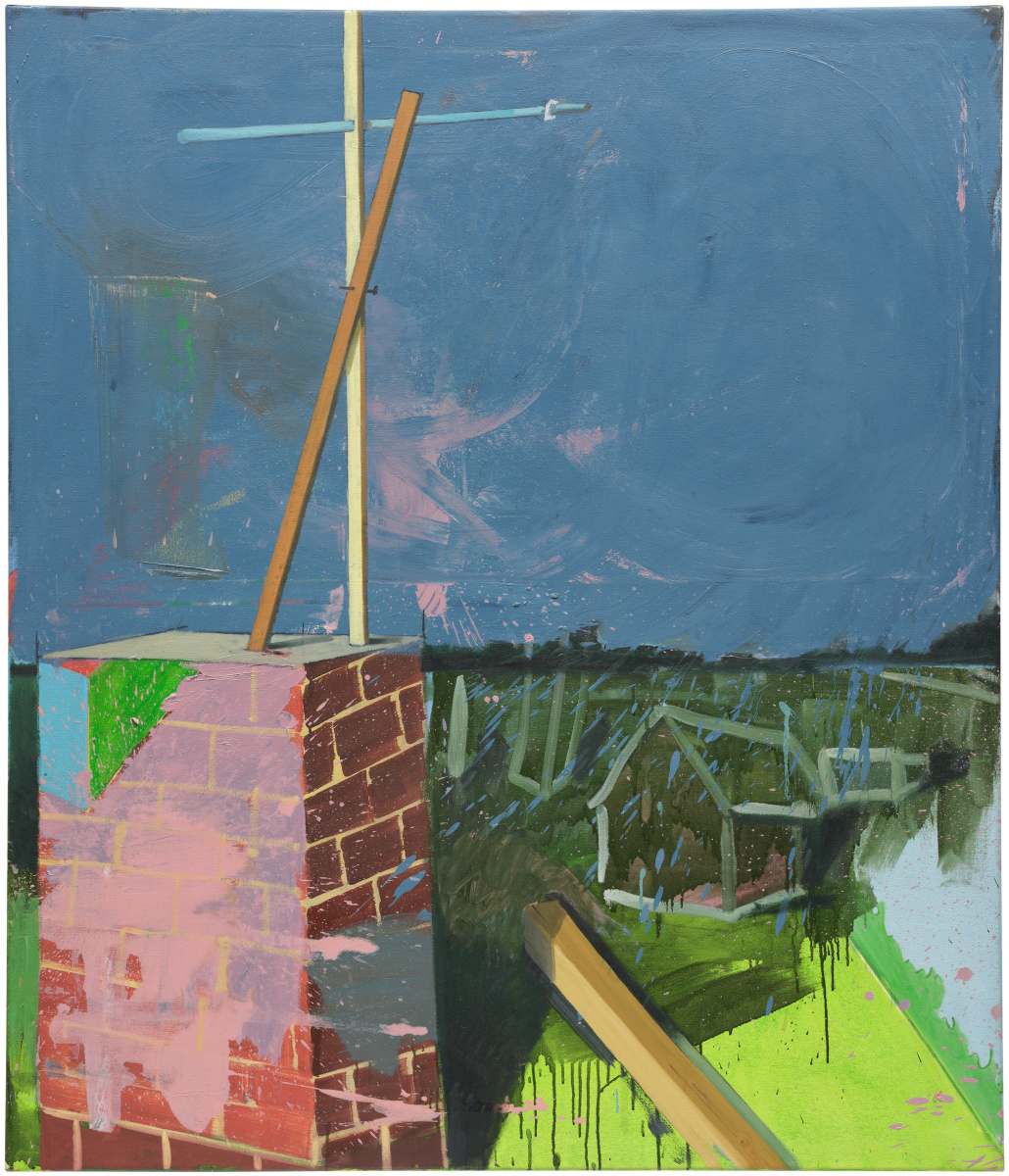
- Sockel: $6,450 (below estimate)
- Phillips March 2025
- Two works Untitled: $32,258 (exceeded high estimate)
Institutional Presence
- Major Exhibitions
- Fair Presence
- Frieze London (recent GRIMM booth participation), international art fairs through König and GRIMM
- Major Group Exhibitions
- 51st Venice Biennale, 2005
- Prague Biennial 2, 2005
- The Triumph of Painting Part 3, Saatchi Gallery London, 2005
- Life After Death: New Leipzig Paintings from Rubell Family Collection, 2004-2008 (toured: Miami, MASS MoCA, SITE Santa Fe, Katzen Arts Center DC, Frye Art Museum Seattle)
- Donation Florence et Daniel Guerlain, Centre Pompidou Paris, 2013
- The Leipzig Phenomenon, Műcsarnok Kunsthalle Budapest, 2008
- New Leipzig School, Cobra Museum Amstelveen, 2008
- Germania contemporanea, MART Trento e Rovereto, 2008
- Solo Exhibitions Recent
- Off Target, GRIMM London, 2025Mirrors and Things, König Galerie Seoul, 2022Spiegels, GRIMM Amsterdam, 2021Stage, GRIMM New York, 2020Bühne, Drents Museum Assen, 2020König Tokyo, 2020Traces to Nowhere, Lehmann Maupin Hong Kong, 2015Kunstmuseum Den Haag, 2008 (landscapes)Room with a View, Kunsthalle Mainz, 2009In the Space Between, CAC Málaga, 2008
- Solo Exhibitions Historical
- Museum der bildenden Künste Leipzig, 2005-2006 (traveled to Aachen Ludwig Forum)Museum zu Allerheiligen Schaffhausen, 2007Kunsthalle Mannheim, 2007Gemeentemuseum Den Haag, 2007Obra nueva, Museo de Arte de Ponce, Puerto Rico, 2011
- Museum Collections
- Tier 1 Museums
- Museum of Contemporary Art (MOCA), Los Angeles, CAMuseum für Moderne Kunst (MMK), Frankfurt am MainGemeentemuseum Den Haag / Kunstmuseum Den Haag, The Hague, Netherlands
- Tier 2 Museums
- Museum der bildenden Künste (MdbK), LeipzigArken Museum of Modern Art, DenmarkRubell Museum, Miami FL and Washington DCWeserburg Museum für moderne Kunst, Bremen
- International Collections
- AmC Collezione Coppola, Vicenza, ItalyArario Collection, KoreaEssl Museum - Kunst der Gegenwart, Klosterneuburg, AustriaG2 Kunsthalle, LeipzigMuseum Voorlinden, Wassenaar, NetherlandsDrents Museum, Assen, NetherlandsPinault Collection, ParisSammlung Goetz, MünchenTelegraph Foundation, Olomouc, Czech RepublicZabludowicz Collection, LondonSmithsonian Institution (1 work confirmed)Cleveland Museum of Art (exhibition context)SØR Rusche Sammlung Oelde/BerlinFundació Sorigué, Lleida, SpainAkzoNobel Art Foundation, Amsterdam
- Private Institutional Collections
- Franks-Suss Collection, LondonScharpff Collection, Bonn
- Critical Milestones
- Touring Exhibitions
- Works toured extensively in US 2004-2008 via Rubell Collection
- Acquisition Highlight
- Recent acquisition by AkzoNobel Art Foundation of 'Van Doesburg (2)' (2021)
- Institutional Validation
- Solo exhibition at major Dutch museum (Kunstmuseum Den Haag) 2008; multiple German museum shows
- International Breakthrough
- 2005-2006 period with Venice Biennale, Saatchi Gallery, major US museum tour
Career & Biography
- Identity
- Name
- Matthias Weischer
- Birth
- 1973 in Elte, North Rhine-Westphalia, Germany
- Gender
- male
- Studio
- Leipzig Cotton Mill
- Nationality
- German
- Current Location
- Leipzig, Germany
- Education
- Period
- 1995-2001 (studied painting), MA received 2003
- Teacher
- Professor Sighard Gille (master class)
- Institution
- Hochschule für Grafik und Buchkunst (HGB) Leipzig
- Significance
- Part of venerable Leipzig art academy with strong figurative painting tradition
- Awards and Honors
- 2001
- Junge Kunst Scholarship, Kunsthaus Essen
- 2003
- Stiftung Kunstfonds Scholarship for Promotion of Contemporary Visual Arts, Bonn
- 2004
- Rolex Mentor and Protégé Arts Initiative - mentored by David Hockney
- 2005
- August Macke PrizeArt Award Leipziger Volkszeitung
- 2007
- Deutsche Akademie Rom Villa Massimo Scholarship, Rome
- 2012
- Civitella Ranieri Foundation Scholarship
- 2017
- Eduard Arnhold Scholarship
- Career Milestones
- Movement
- New Leipzig School - third generation figurative painters post-reunification
- Breakthrough
- Rose to international prominence early 2000s alongside Neo Rauch as part of Leipzig phenomenon
- Early Career
- Co-founded artist-initiated gallery LIGA in Berlin (2002-2004) with 11 former HGB students including Christoph Ruckhäberle, Tim Eitel, David Schnell
- Artistic Evolution
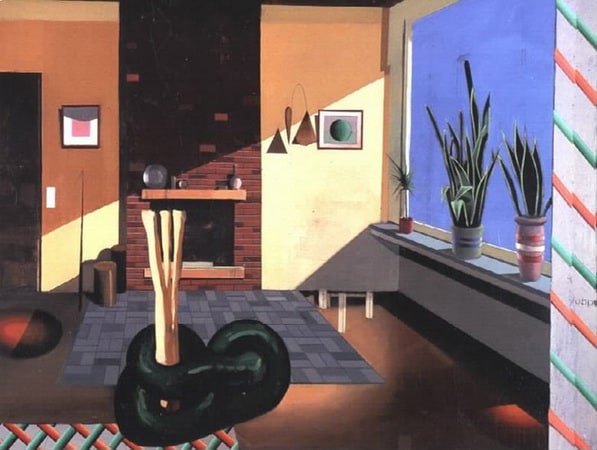
- Painted deserted interiors 2001-2006; shifted to landscapes after 2007 Rome residency; returned to interiors with figures in recent work
- International Recognition
- Exhibited worldwide since 2001 including Venice Biennale 2005, museum shows across Europe, US, Asia
- Artistic Philosophy
- Describes paintings as 'places where the perceptual and the possible meet'; focuses on spatial construction and illusory experimentation; states 'My paintings are made of mistakes, there are many layers in each painting, many pictures are built up to produce one final picture'
Artistic Profile
- Evolution
- Phase 1 2001 2006
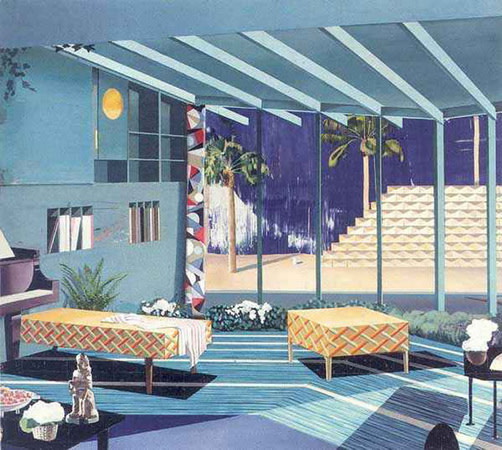
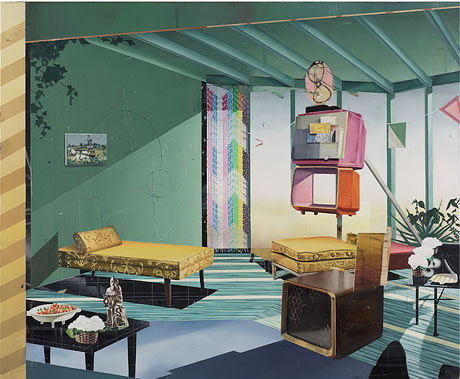
- Deserted interiors with abstract elements, collage-like appearance, stage-set quality, 1950s-60s furniture and ornament
- Phase 2 2007 2015
- Shift to landscapes after Villa Massimo Rome residency; drawing and nature studies; lighter colors, smaller formats, works on paper
- Thematic Continuity
- Consistent focus on space as subject; exploration of perception and illusion; investigation of painting's relationship to representation
- Phase 3 2015 Present
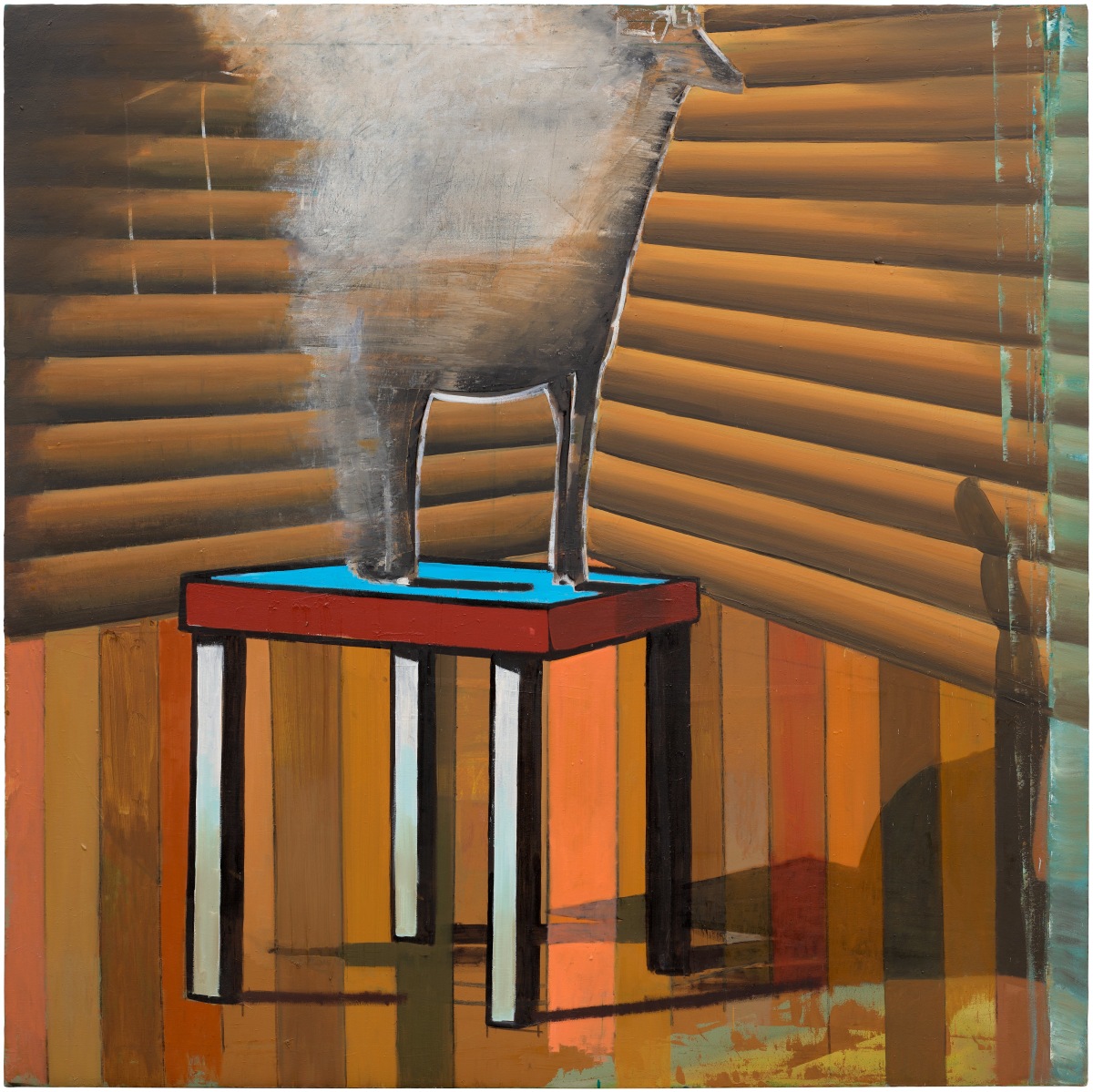
- Return to interiors incorporating figures and domestic elements; series depicting similar spaces with subtle variations; renewed attention to painting surface; more spontaneous gestural approach
- Technical Development
- From graphic, linear style to more painterly technique; from heavy impasto to lighter touch; experimentation with pulp painting and sculptural elements
- Visual Language
- Spatial Paradoxes
- Rooms that couldn't exist in reality; ceiling-less apartments removing boundary between internal/external; truncated spaces spilling beyond boundaries
- Decorative Elements
- Wallpaper motifs, mosaic floors, window sills, furniture, loose bricks, ornamental patterns from different eras
- Compositional Structure
- Almost architectural construction; layering transparent paint to build walls; impasto objects; collage-like painted elements
- Theatrical Presentation
- Square-on auditorium view; viewer as fourth wall; stage-like settings especially in early interiors
- Style and Technique
- Color Palette
- Early work: 1950s-60s furniture catalog colors; after 2007 Rome residency: softer tones inspired by medieval Italian frescos; recent work includes lighter range
- Surface Quality
- Rich textural surfaces; collage-like appearance; boards intersect at non-flush angles; sculptural quality in recent work
- Signature Approach
- Oscillates between abstract and figurative painting; creates illusory spatial constructions that challenge architectural norms
- Painterly Technique
- Builds thick layers of pigment; over-painting and rewrites; visible process including drips, smudges, masking tape; 'pulp painting' using oil paint mixed with cotton-fibre papier-mâché
- Spatial Manipulation
- Explicitly shows inconsistencies of perspective; creates impossible shadows, unrealistic architecture; foregrounds appear flat while backgrounds jut out
- Themes and Subjects
- Primary Subjects
- Deserted interior spaces (2001-2006), landscapes (2007-2015), interiors with figures (2015-present)
- Narrative Absence
- Deliberately avoids clear narrative; cryptic one-word titles; impossibility of fixed meaning; empty of human presence (early work)
- Landscape Approach
- Constructed from memory, filling gaps with various motifs; playful composites of natural elements; shift occurred during 2007 Villa Massimo Rome residency
- Psychological Dimension
- Melancholic nostalgia, uncanny atmosphere, post-reunification disillusionment, 'fragile containers of the past', abandoned petit-bourgeois world
- Interior Characteristics
- Stage-like rooms, theatrical fourth-wall perspective, sparsely furnished, unoccupied, claustrophobic spaces, furniture from 1950s-60s
- Mediums and Materials
- Paper Focus
- Since 2007 Rome residency, predominantly works on and with paper in smaller formats
- Printmaking
- Lithography, color lithographs; explores different printing techniques
- Primary Medium
- Oil on canvas
- Works on Paper
- Drawings, watercolors, charcoal, Jaxon pastel-wax crayon, pencil, graphite
- Sculptural Experiments
- Three-dimensional sculptural arrangements; dimensional stucco borders around canvases; pulp painting technique
- Movements and Periods
- Post Movement
- Movement declared 'dead' by Arno Rink 2009 after teaching changes; Weischer continued evolving independent practice
- Primary Movement
- New Leipzig School (Neue Leipziger Schule) - third generation post-reunification figurative painters
- Art Historical Context
- Part of broader German figurative painting tradition; continuation of Leipzig School established by Tübke, Mattheuer, Heisig; student generation of Sighard Gille and Arno Rink
- Relationship to Movement
- Key member alongside Neo Rauch (senior figure), Tim Eitel, David Schnell, Christoph Ruckhäberle, Tilo Baumgärtel; co-founder of LIGA gallery that first branded movement
- Influences and References
- Peers
- Neo Rauch, Tim Eitel, David Schnell, Christoph Ruckhäberle - all Leipzig School colleagues
- Teachers
- Professor Sighard Gille (master class teacher); mentored by David Hockney (2004 Rolex initiative)
- Art Historical
- Dutch Baroque (Rembrandt, Pieter de Hooch, Jan Vermeer), Surrealism (René Magritte), M.C. Escher, Anselm Kiefer, Richard Hamilton, Pop Art
- Design References
- 1950s and 1960s furniture catalogues, modernist design, 19th-century salons, medieval Italian frescos (post-2007)
Critical Reception
- Critical Reception
- Critical Consensus
- Recognized for technical skill and sophisticated handling of space/perspective; praised for layered construction and illusion; some critics skeptical of New Leipzig School marketing/branding
- Major Publications
- Frieze - Sally O'Reilly review noted 'paintings are result of over-painting, rewrites and Frankensteinian construction'
- New York Times Magazine - Arthur Lubow 'The New Leipzig School' January 2006 - major feature
- H-Net scholarly reviews - detailed analysis of exhibition catalogues
- Washington Post - Blake Gopnik questioned New Leipzig School as 'hype', noted lack of shared agenda among artists
- Key Critical Themes
- Spatial manipulation and impossible architectureRelationship between abstraction and representationNostalgia and melancholy in deserted interiorsPost-reunification German identity and disillusionmentHomage to art historical predecessors (Dutch Baroque, Magritte, etc.)
- Scholarly Attention
- Exhibition catalogues with essays by Markus Stegmann, Rudij Bergmann; academic analysis in art history journals; MoMA curator Joachim Pissarro called Leipzig phenomenon 'suddenly the hottest thing on earth' (2006)
- Critical Positioning
- Critical Evolution
- Early enthusiasm (2004-2008) followed by more measured assessment; critics recognized market hype element while acknowledging quality
- Contemporary Context
- Part of figurative painting revival in 2000s; contrasted with conceptual/minimal art dominance of 1990s
- Critical Ambivalence
- Washington Post noted 'nothing especially wrong' but questioned whether works 'deserve to be shown or bought or talked about as some novel phenomenon'
- Art Historical Comparisons
- Associations with Dutch Baroque (Vermeer, De Hooch), Surrealism (Magritte), Pop Art, Dada collage, M.C. Escher, Richard Hamilton, Anselm Kiefer
- Publications and Media
- Monographs
- 'Auf der Bühne: 15 Gespräche – ein Porträt des Malers Matthias Weischer' by Michael Hametner, Mitteldeutscher Verlag 2016
- 'Kunstwerkstatt Matthias Weischer', Prestel Verlag Munich 2011
- Exhibition catalogue 'Matthias Weischer: Malerei/Painting' 2007
- Bibliography
- Comprehensive international art criticism addressing Weischer's work documented in exhibition catalogues
- Critical Essays
- Featured in major art magazines including Frieze, Artforum context, New York Times Magazine, multiple scholarly publications
- Exhibition Catalogues
- Obra nueva/New work, Museo de Arte de Ponce 2011Room with a View, Kunsthalle Mainz 2009In the Space Between, CAC Málaga 2008Der Garten/The Garden Works on Paper, 2007Simultan, Künstlerhaus Bremen 2004
Gallery & Representation
- Dealer Support
- Key Gallerist
- Gerd Harry Lybke (EIGEN + ART) - instrumental in launching New Leipzig School internationally, compared to Saatchi's role with YBAs
- Market Strategy
- Focus on museum-quality works, institutional placement, carefully managed primary market
- Current Positioning
- König and GRIMM actively promoting through solo exhibitions, art fair participation, publications
- Geographic Reach
- Primary Markets
- Germany, Netherlands, UK, USA
- Emerging Markets
- Asia (König Tokyo, Tang Contemporary Art involvement)
- Exhibition History Geography
- Shown in Leipzig, Berlin, Amsterdam, London, Paris, New York, Miami, Hong Kong, Tokyo, Seoul, Puerto Rico
- Primary Representation
- Gallery Tier
- Established international contemporary galleries; König specializes in brutalist St. Agnes church space Berlin; GRIMM expanding with new London location
- Current Galleries
- König Galerie (Berlin, Seoul, Vienna) - since approximately 2015
- GRIMM (Amsterdam, London St. James's - opened 2025, New York)
- Historical Representation
- Mid Career
- Anthony Wilkinson, LondonEIGEN + ART, Leipzig/Berlin (represented from 2004)Marianne Boesky Gallery, New York (early 2000s exhibitions)
- Early Career
- Galerie Kleindienst, Leipzig (2001-2004)
- Gallery Evolution
- Progressed from regional Leipzig gallery to international representation with top-tier galleries
Matthias Weischer's fundamentals are strong. But is the timing right for your collection? Egon analyzes fit against your aesthetic thesis, risk tolerance, and portfolio gaps.
Get Personalized AnalysisActive Market Signals
Signal Timeline & Strength Analysis
Gallery moves, auction records, institutional acquisitions, price milestones — tracked over 90 days
Collector Demographics & Buyer Analysis
Geographic distribution, institutional vs. private buyers, collector profiles, and secondary market activity
Personalized Acquisition Strategy
Optimal entry points, comparable pricing analysis, timing recommendations, and portfolio fit assessment
Go Deeper with Personalized Intelligence
You now have Egon's market assessment of Matthias Weischer. The next question is personal: does this artist belong in your collection? Egon analyzes collection fit based on your aesthetic thesis, existing holdings, budget, and investment goals — delivering acquisition strategies no public index can provide.