Max Ernst
Blue-chip#24





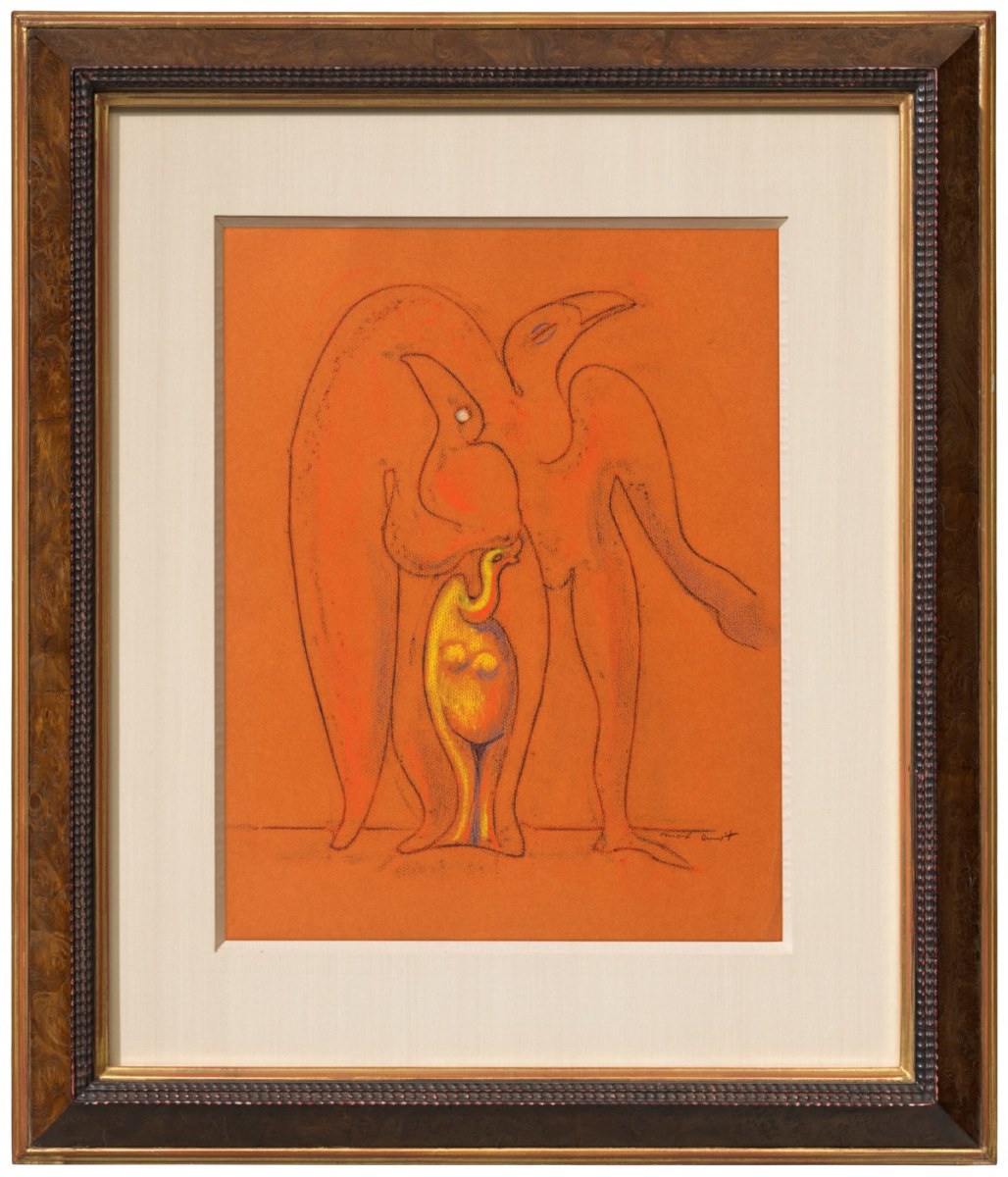
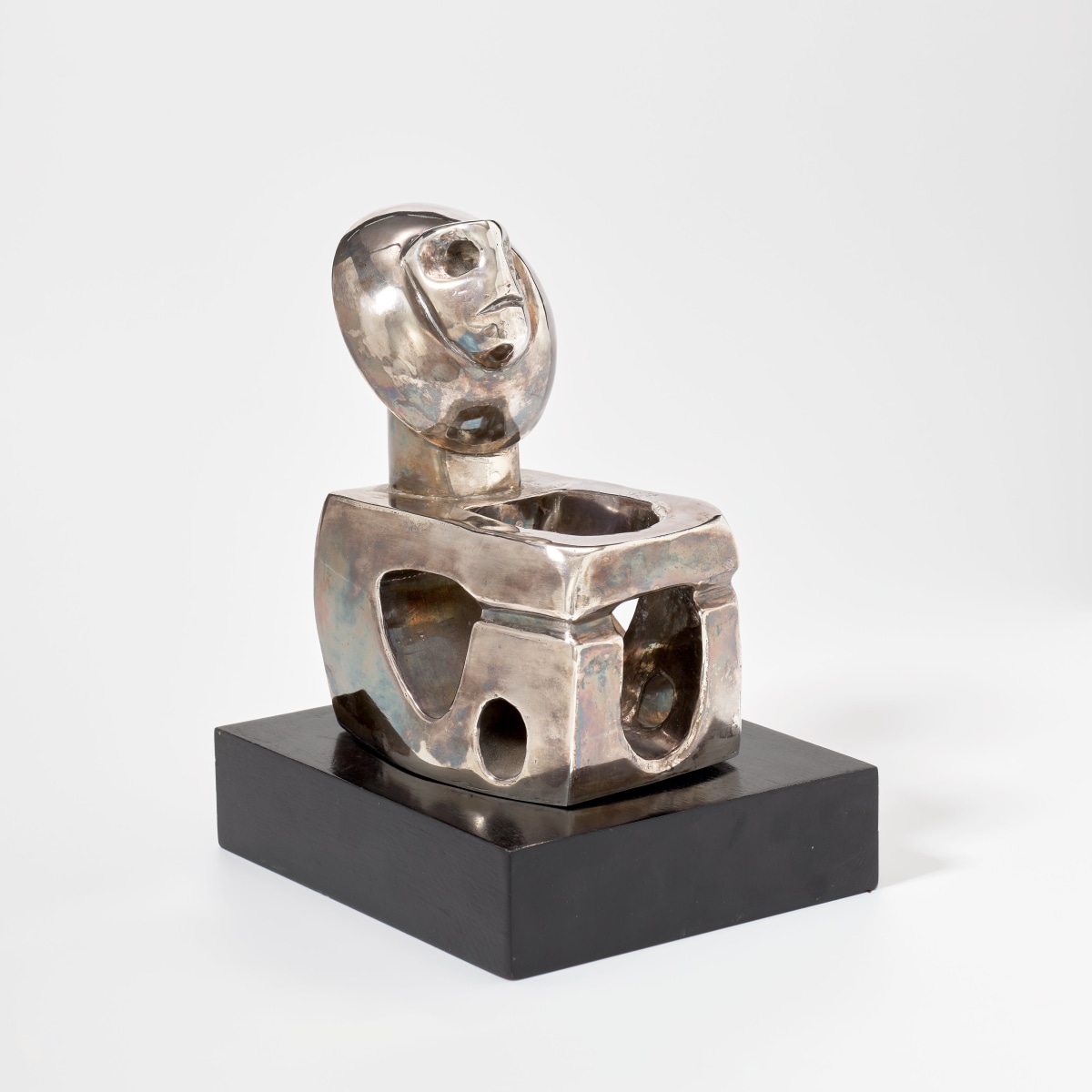
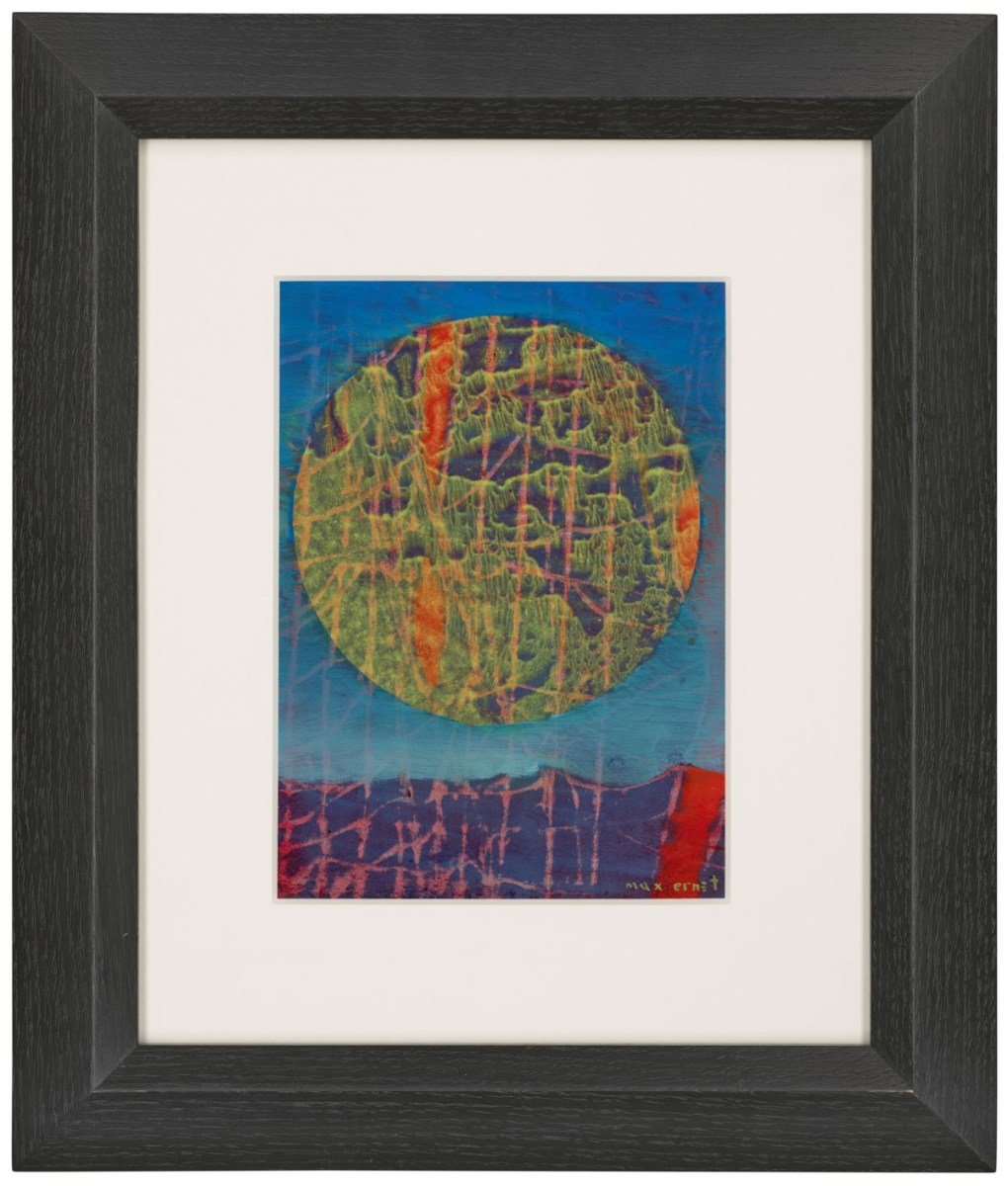
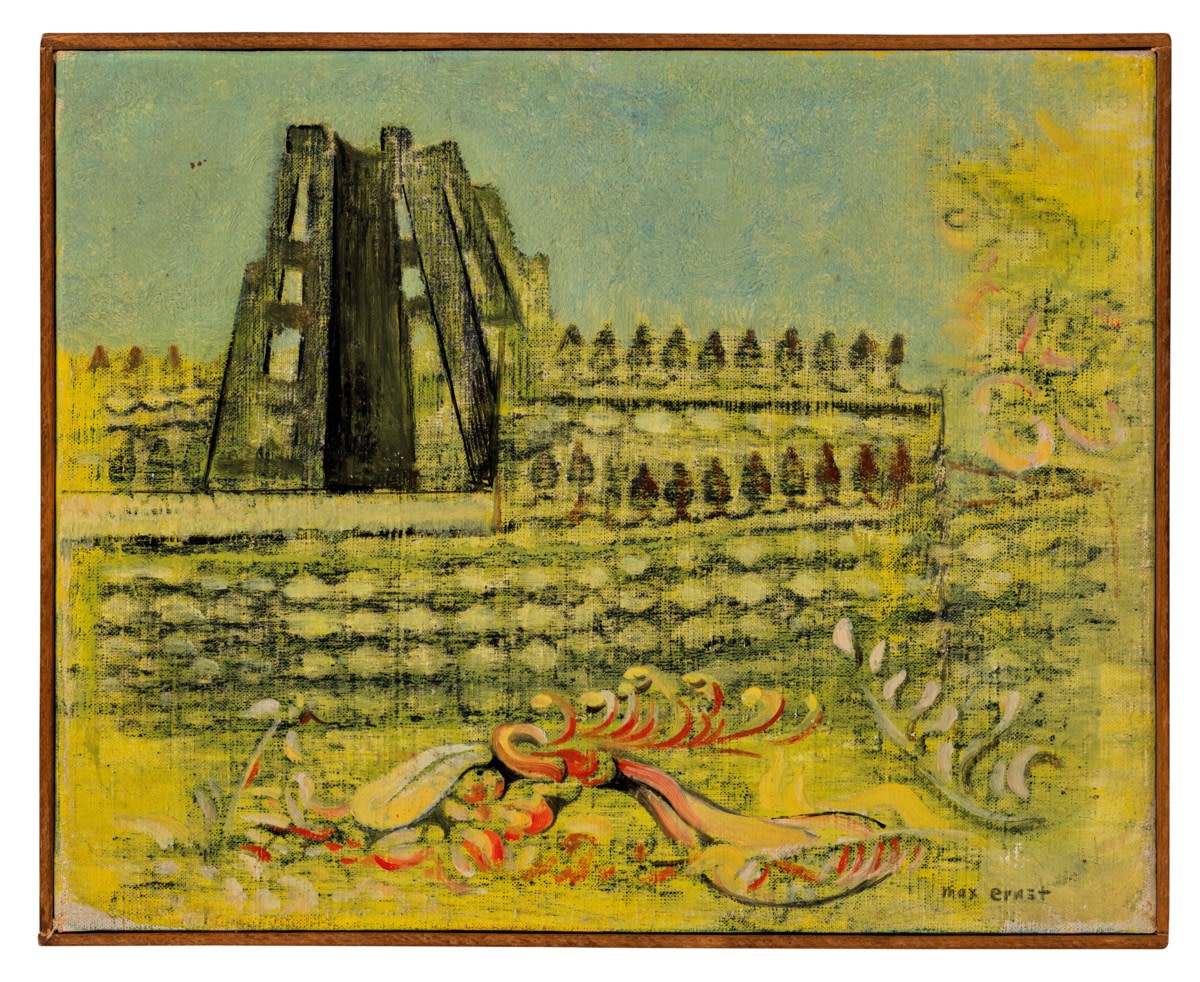

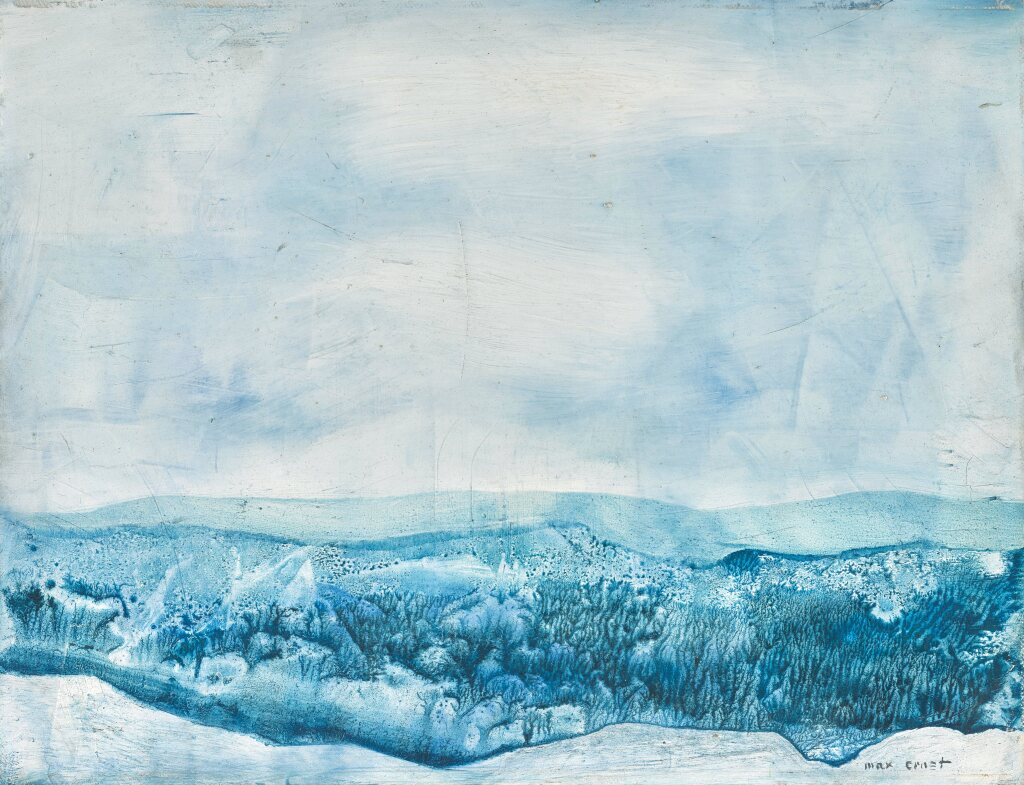
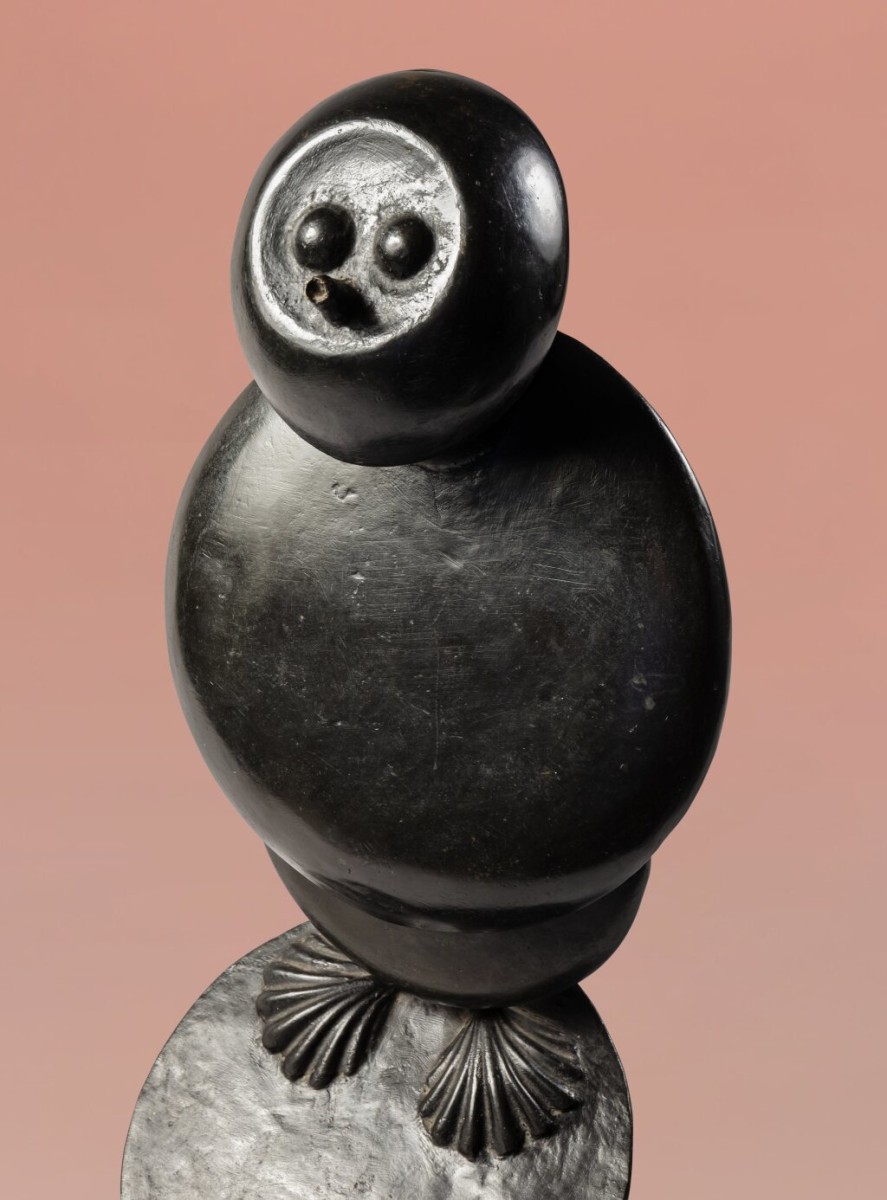
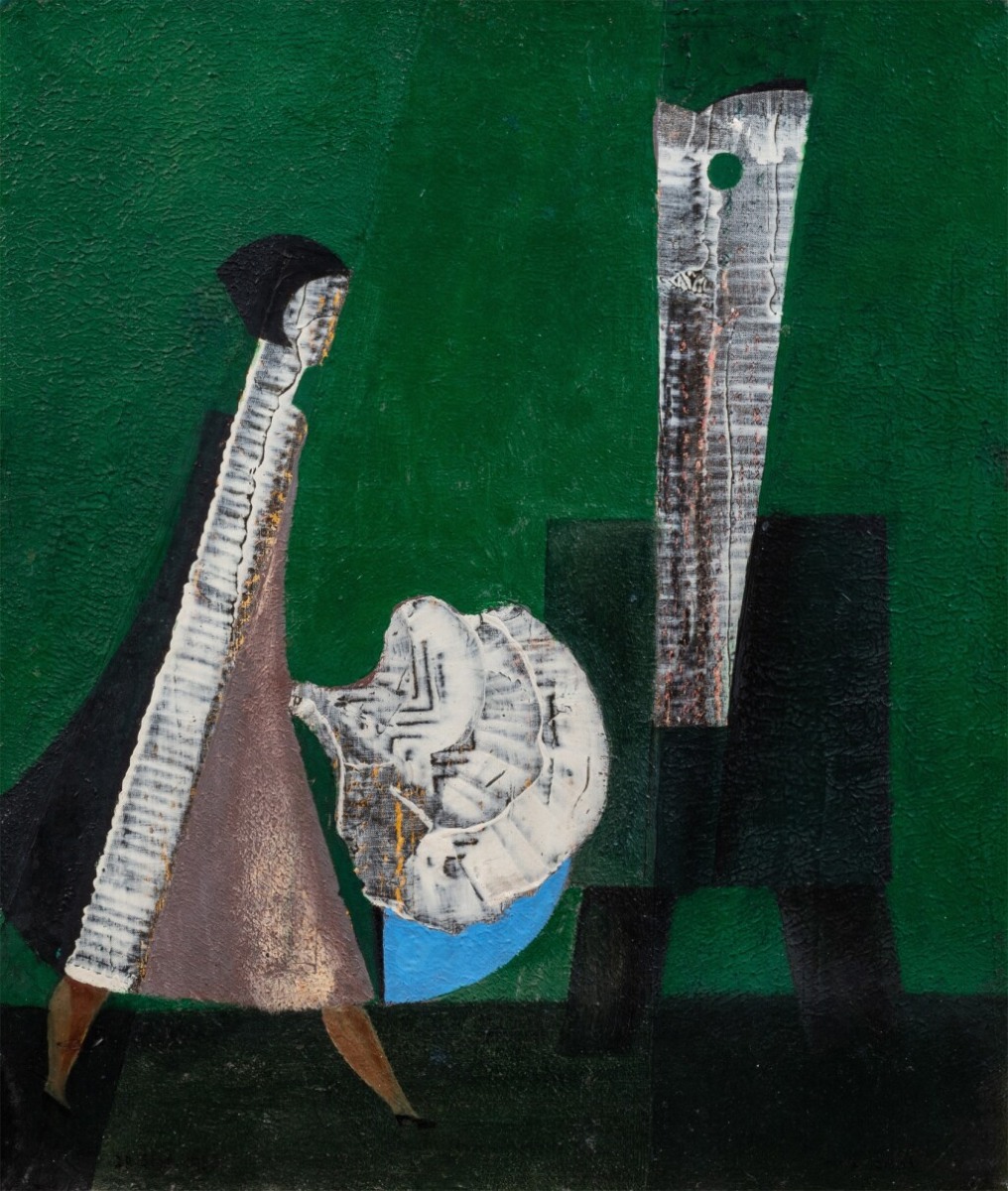
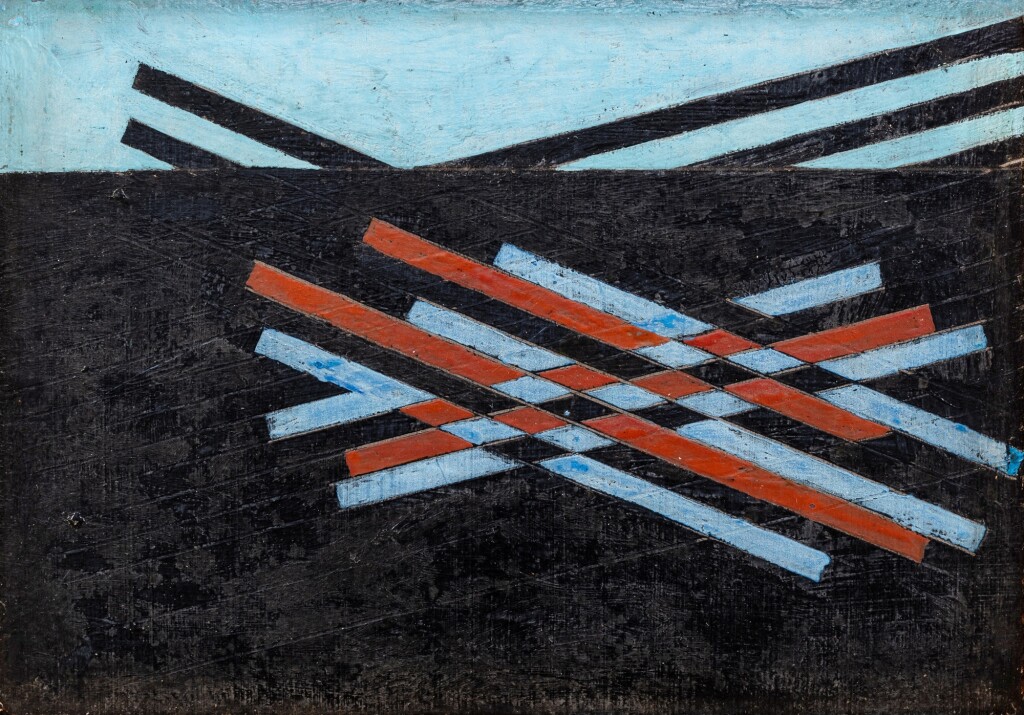






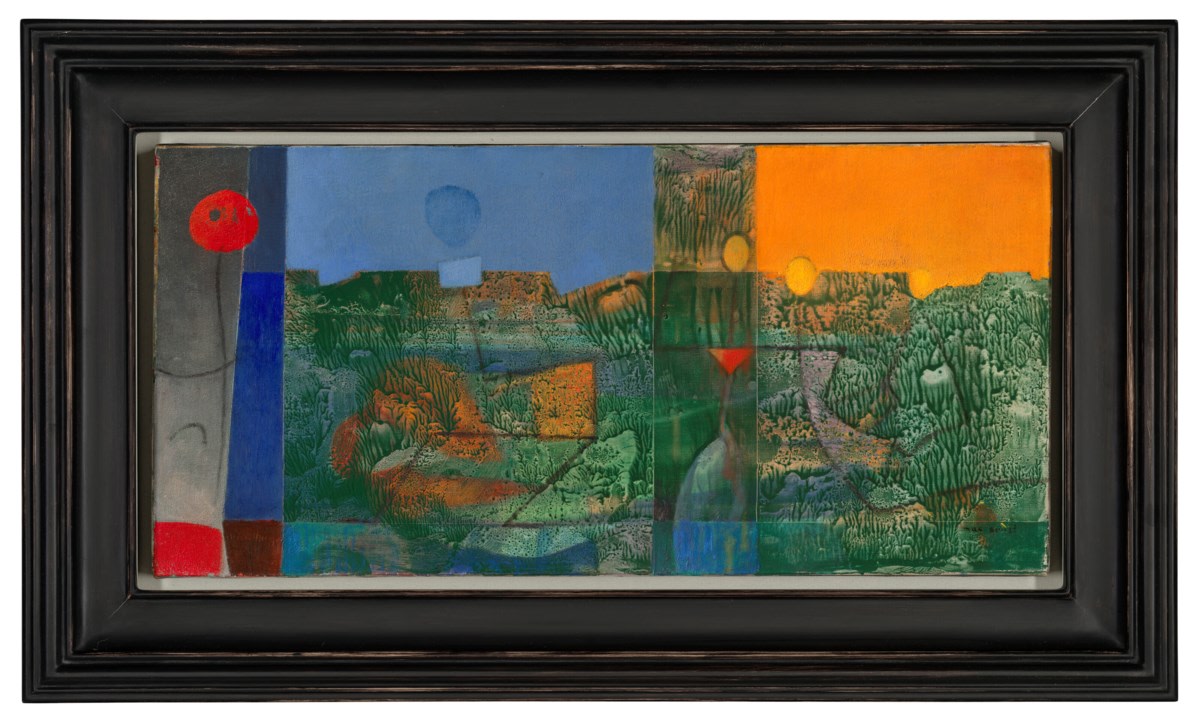
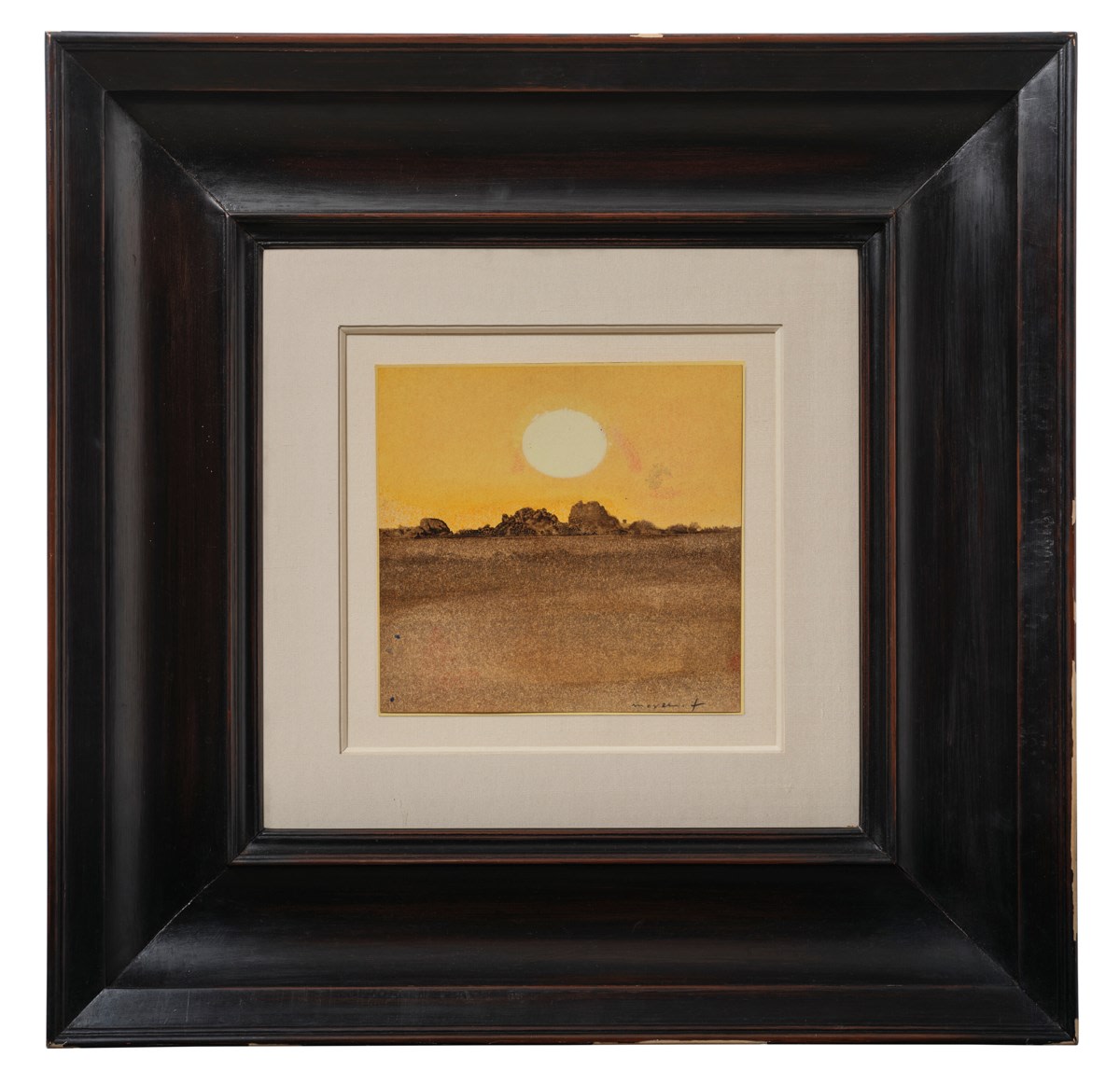
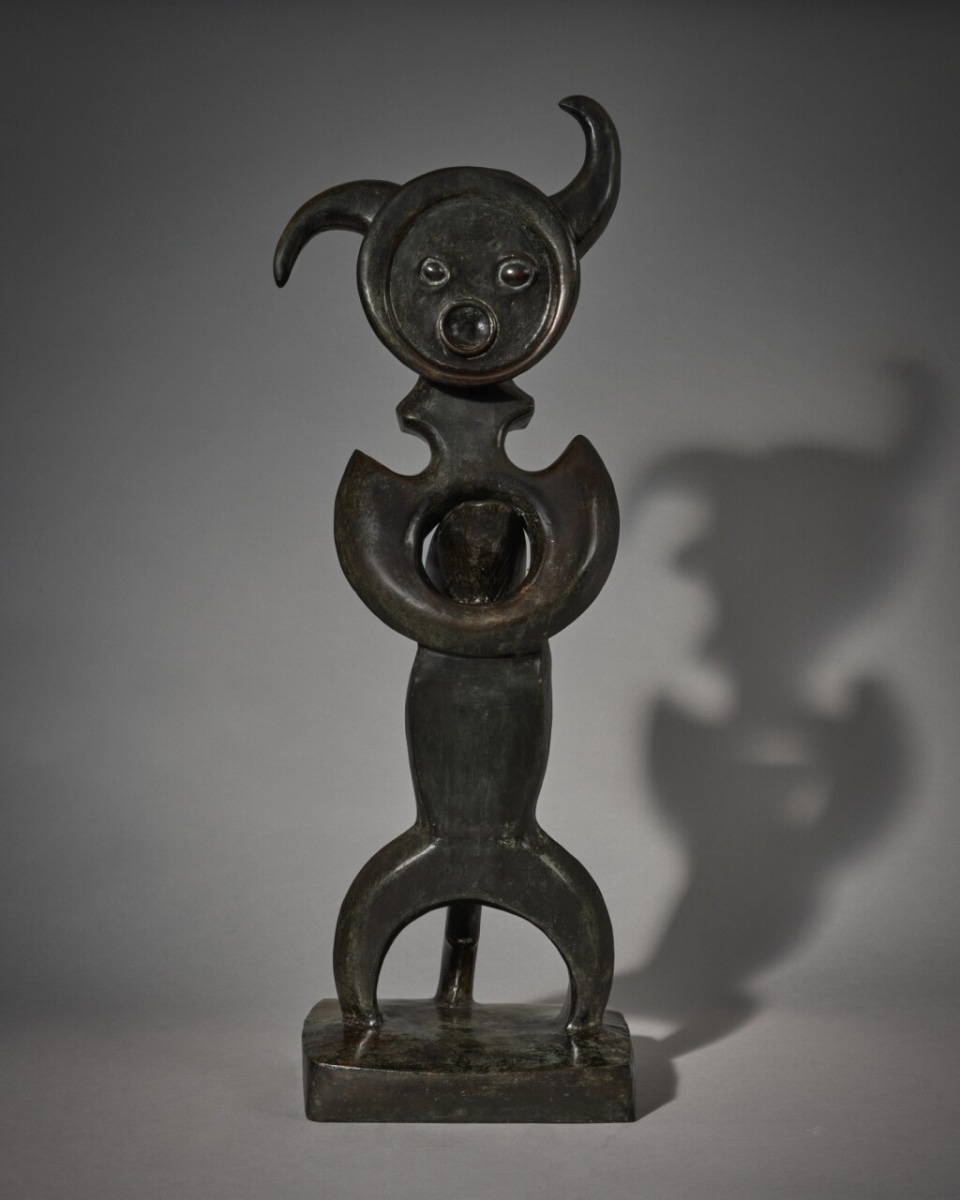
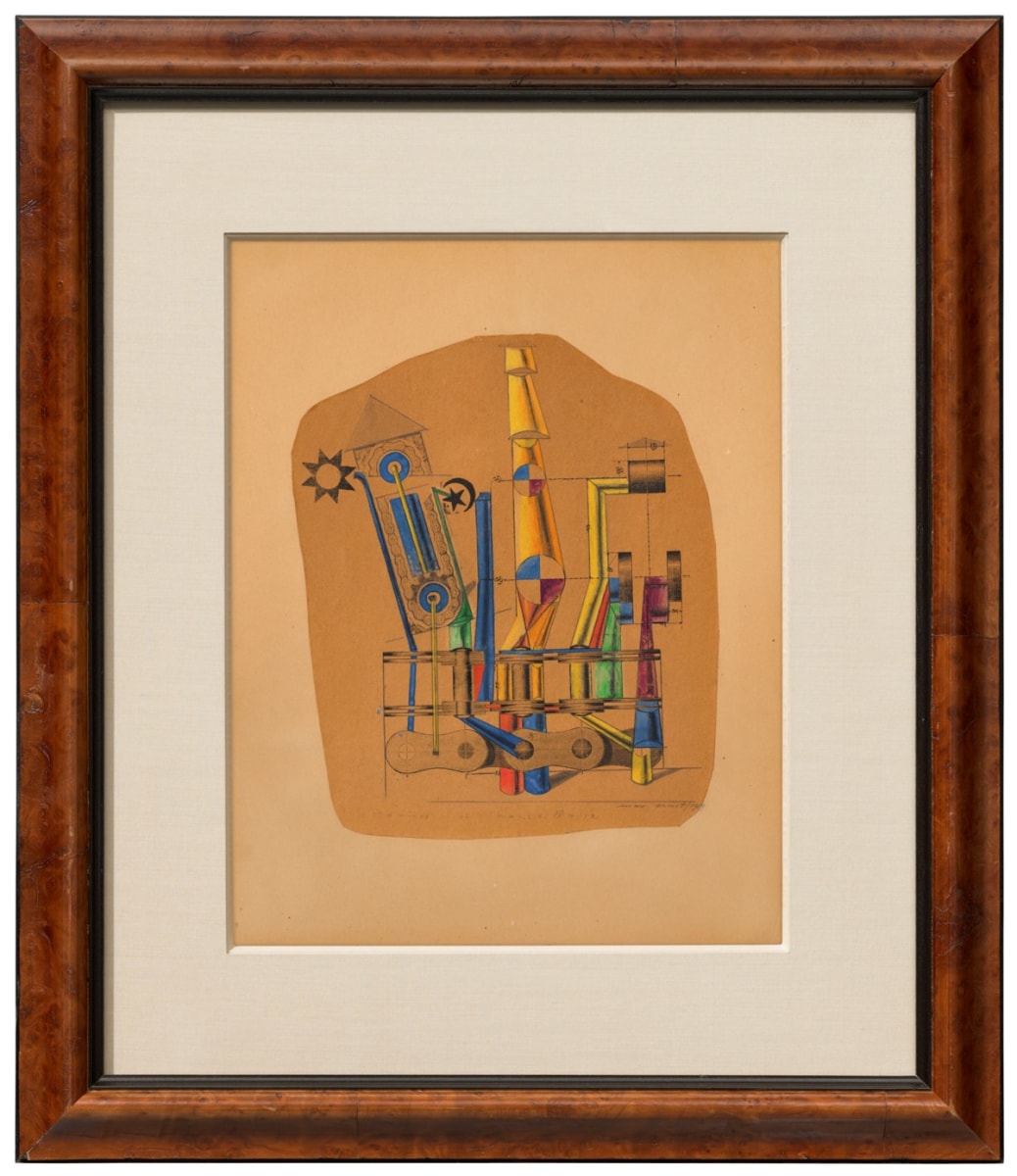
Egon Investment Scores
Liquidity
10/10
How easily works can be bought and sold at auction
Institutional
10/10
Museum collections, biennials, and institutional recognition
Momentum
9/10
Recent price trends, gallery moves, and market buzz
Discovery
1/10
Undervaluation opportunity relative to peer artists
Risk
1/10
Investment risk factors — higher means more volatile
Market Position
Recent Sales Highlights
| Work | Price | Venue & Date |
|---|---|---|
| Leonora in the Morning Light | $7,000,000 | Sotheby's, 2012 |
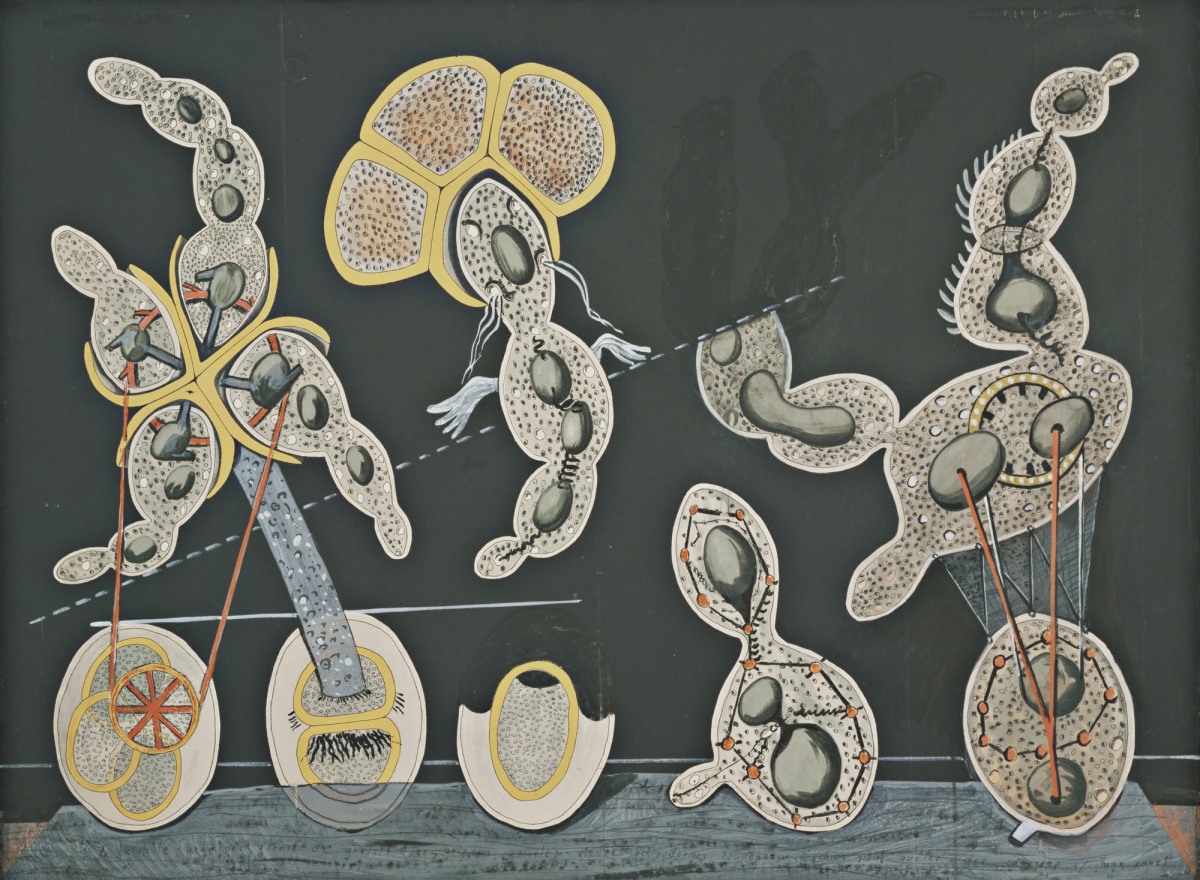
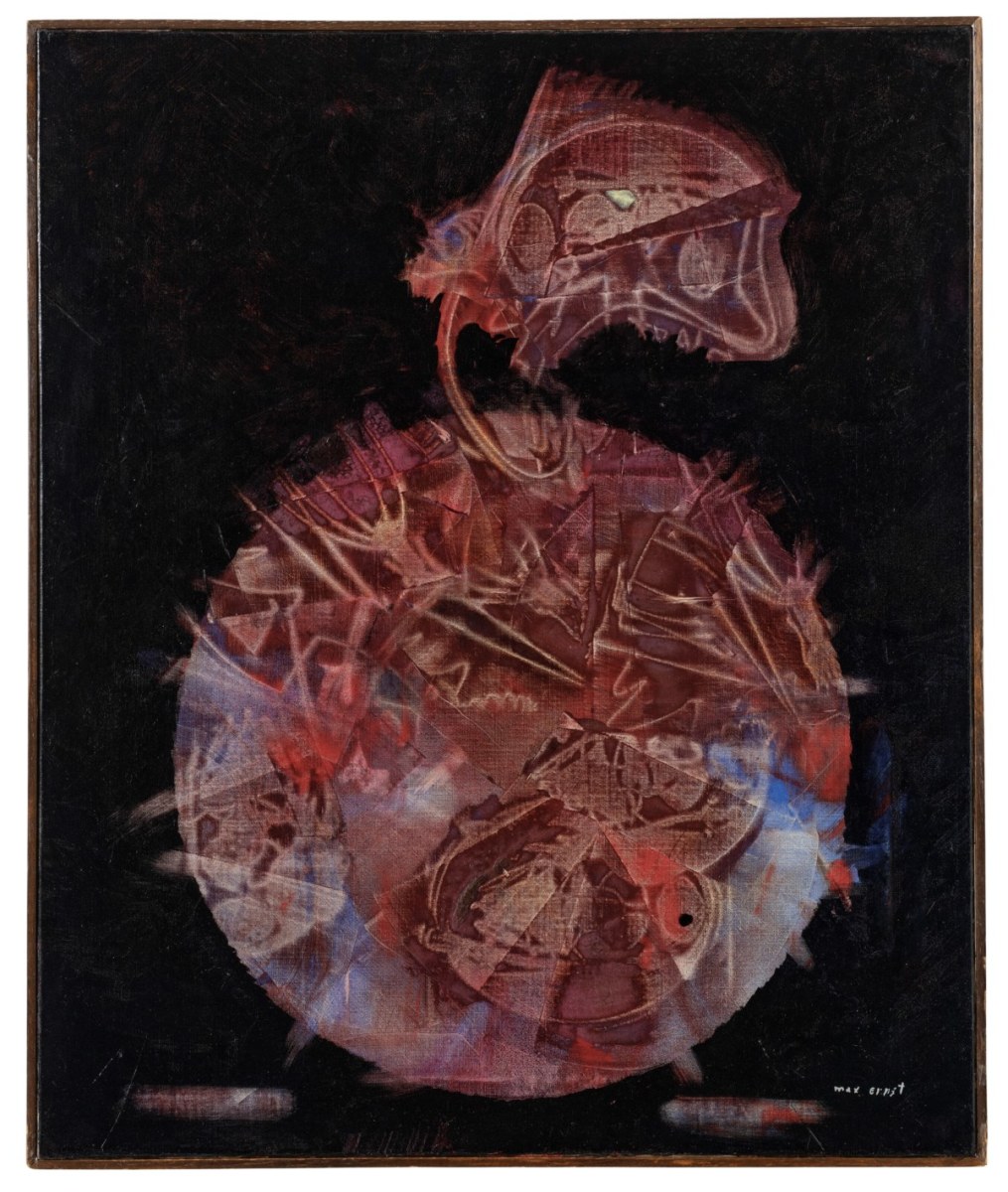
| The Phases of the Night | $5,500,000 | Christie's New York, 2017 |
- Pricing
- Price Ranges by Period
- Historical Context
- Max Ernst (1891-1976) is a deceased Blue-chip master with established market
- Works on Paper Prints
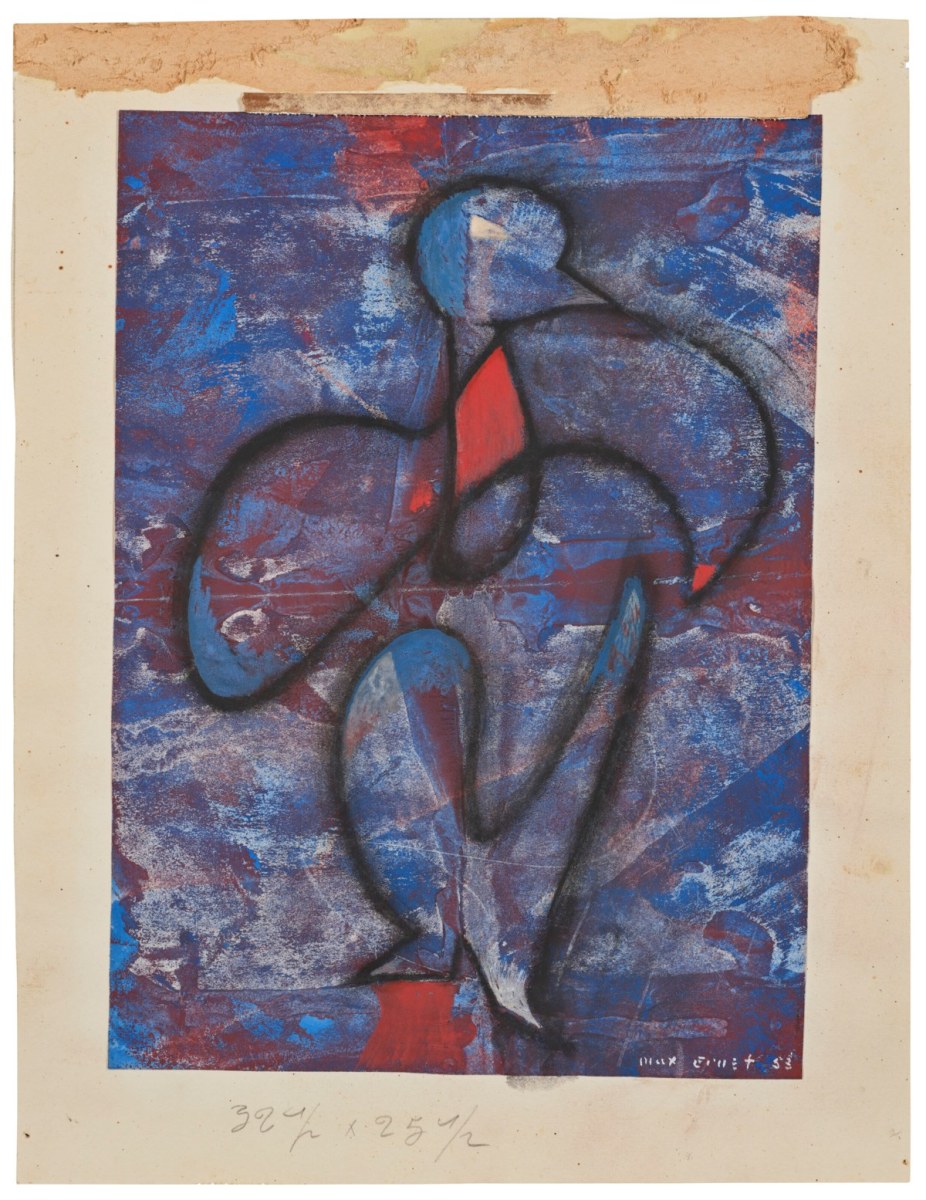
- $666-$837 USD for prints (recent 2024-2025 sales of 'Oiseaux en Peril' series)
- 2020-2025 Paintings Average
- $298,480 USD
- 2020-2025 Sculptures Average
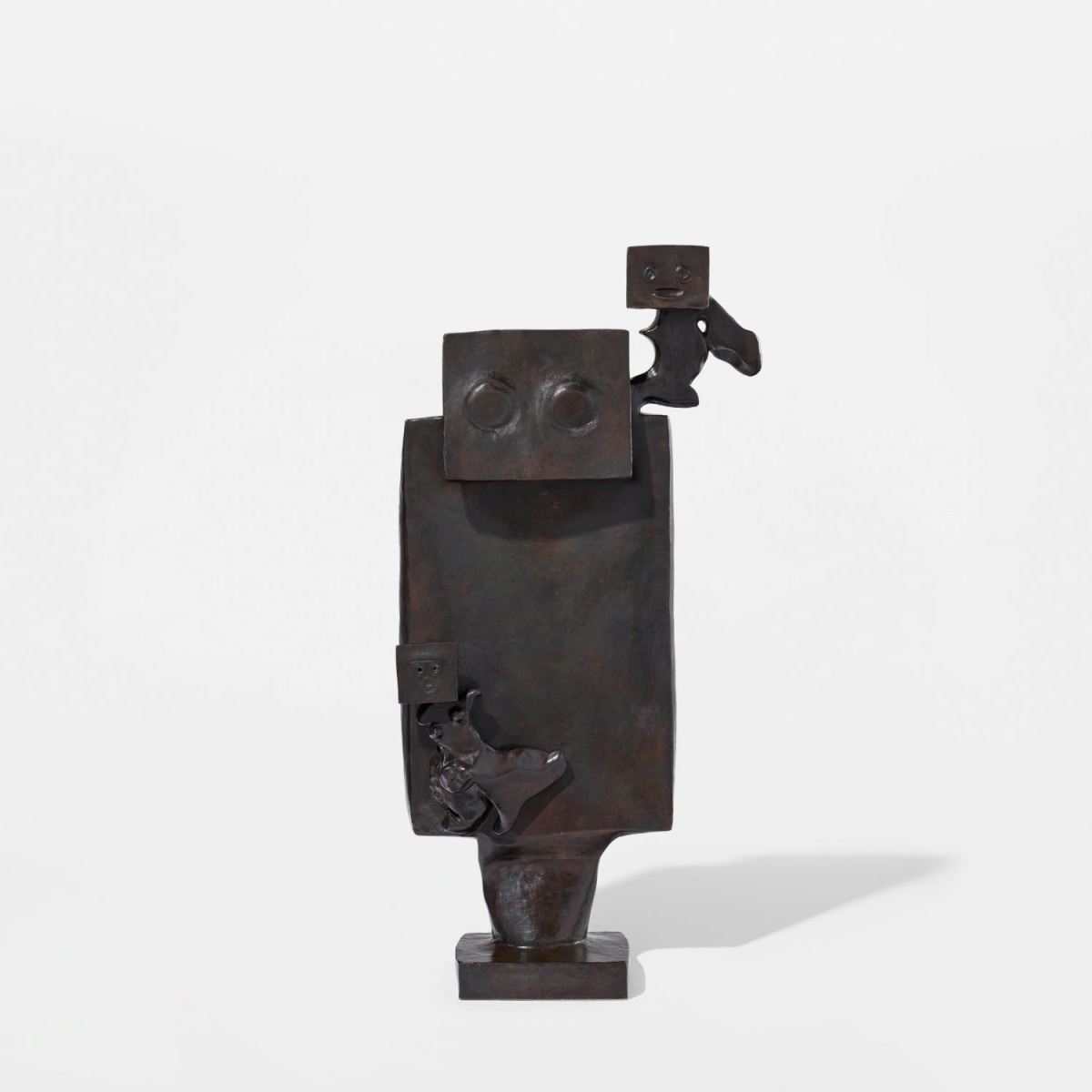
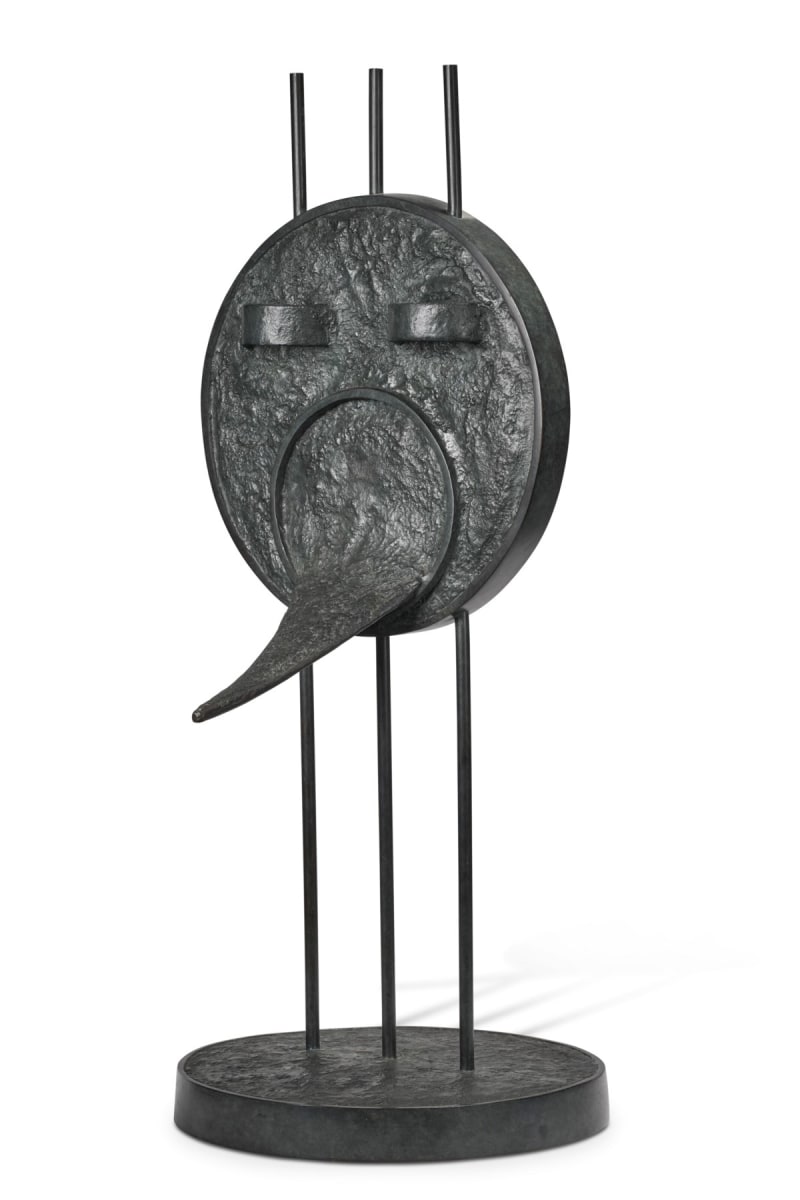
- $144,031 USD
- Liquidity
- High liquidity; regular appearances at Christie's, Sotheby's, Phillips, Bonhams; strong representation across price points from prints to museum-quality paintings
- Auction History
- Note
- Achieved almost 200% of high estimate; previously sold for £10.8 million in 2017
- Work
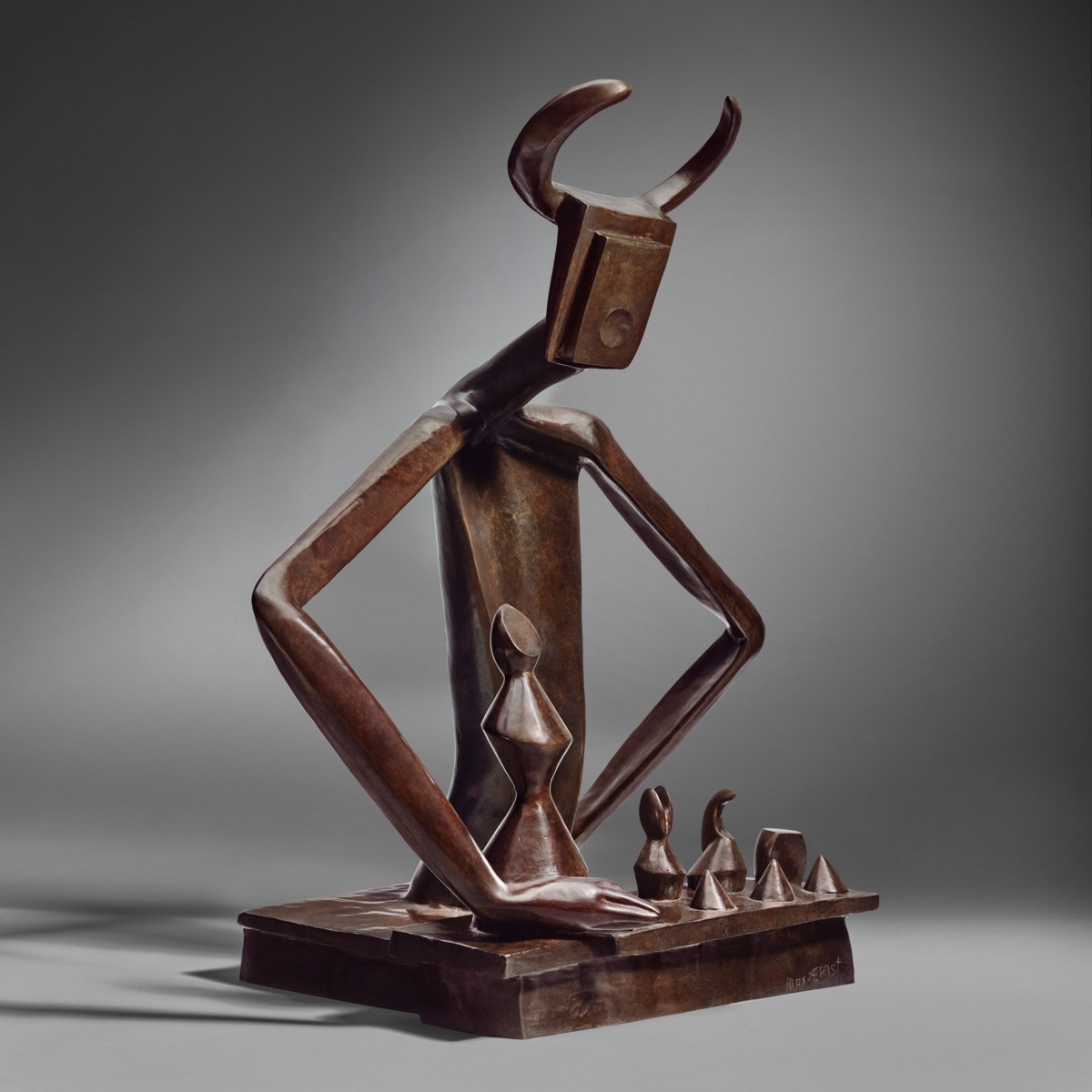
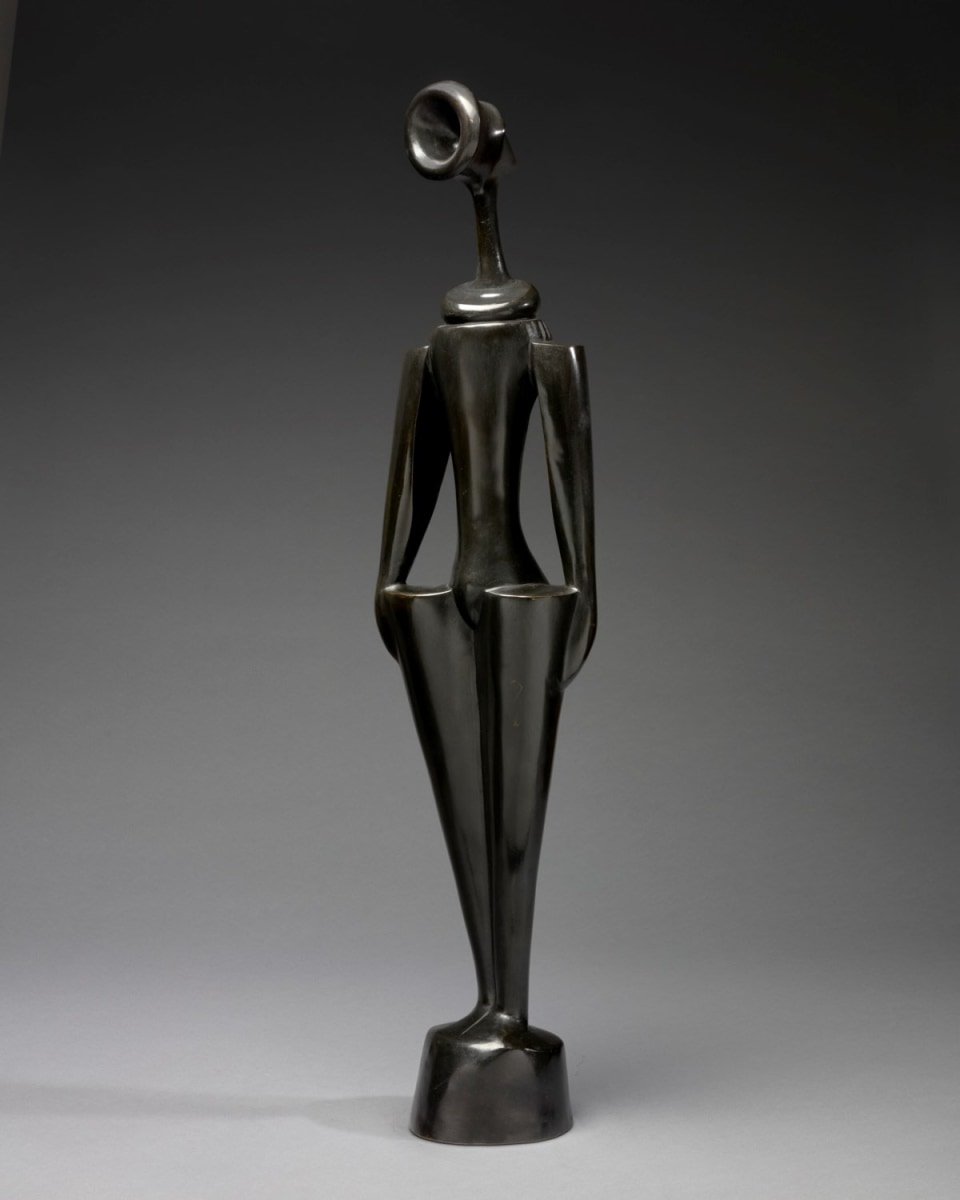
- Le Roi Jouant Avec La Reine (The King Playing with the Queen)
- Medium
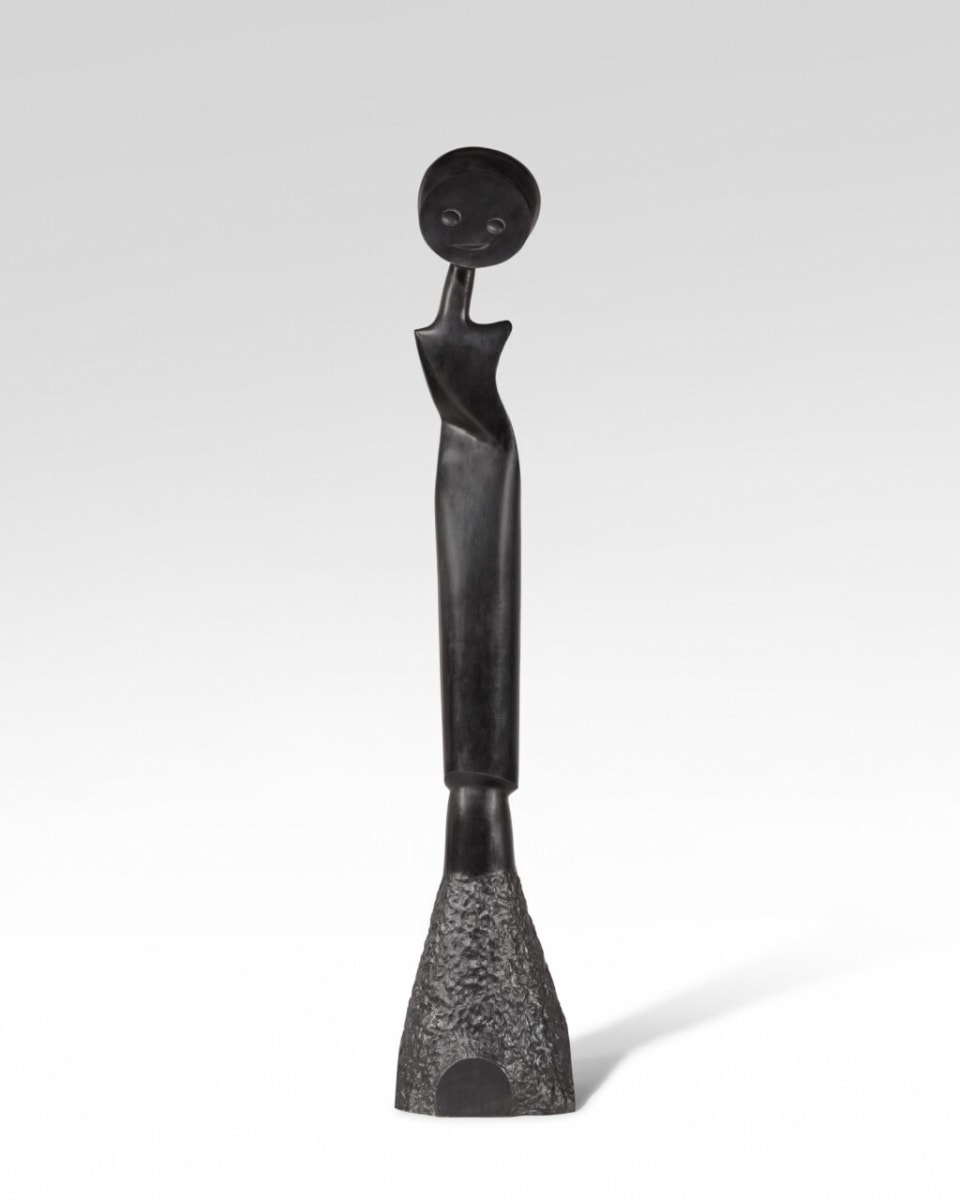
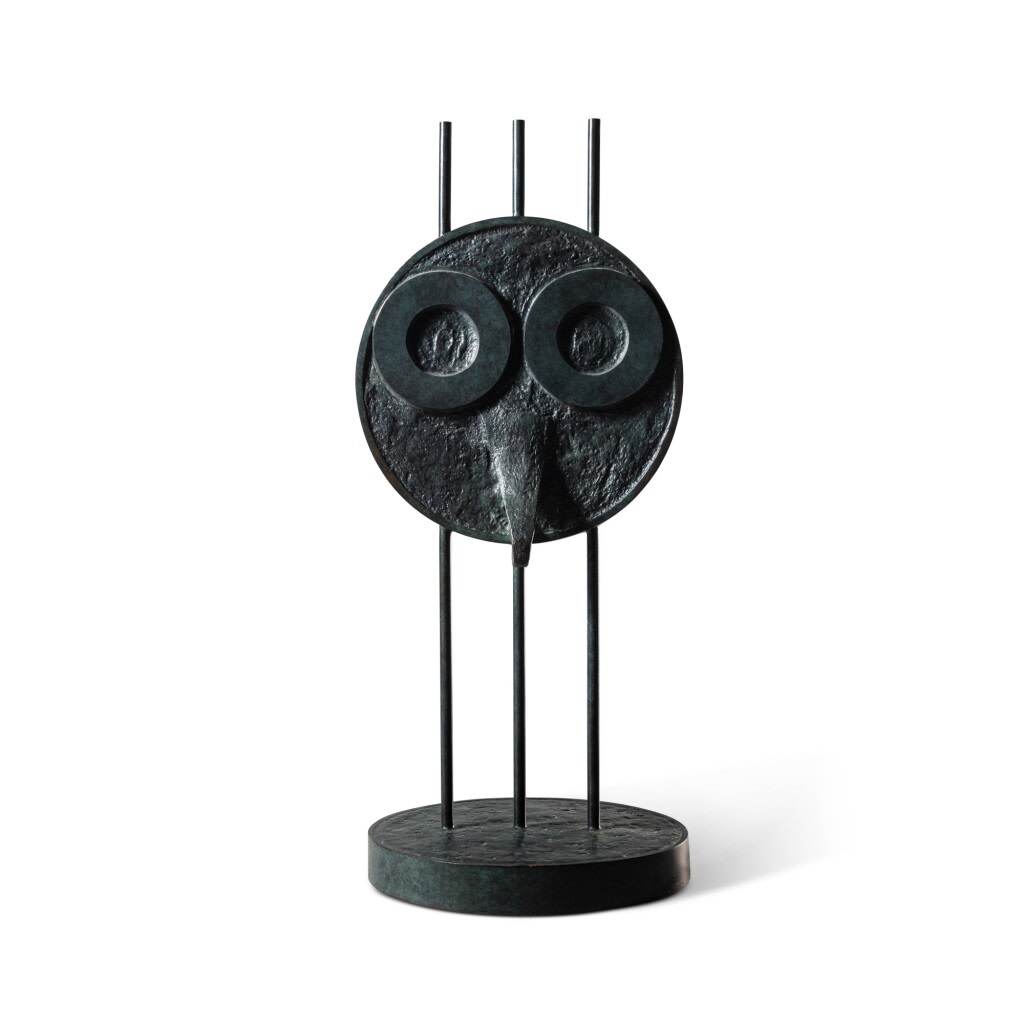
- Bronze sculpture
- Sale Date
- November 2022
- Amount USD
- $24,435,000
- Year Created
- 1944
- Auction House
- Christie's New York
- Auction Volume
- Artsy Database
- 4,027 auction results
- Annual Activity
- Highly active secondary market with major auction house representation
- Mutualart Database
- 6,610 artworks at auction
- Total Lots Tracked
- Over 12,229 auction results (LiveAuctioneers database)
- Price Range All Time
- $2 USD to $24,435,000 USD
- Market Trajectory
- Strong upward trajectory; auction record set in 2022 shows 126% increase from 2017 sale of same work; sustained collector interest across all price levels; particular strength in works from 1920s-1940s featuring innovative techniques (frottage, grattage, decalcomania)
- Estate Representation
- Estate represented by Paul Kasmin Gallery (now Kasmin Gallery), New York; estate carefully manages primary and secondary market
- Market Range by Work Type
- Collages
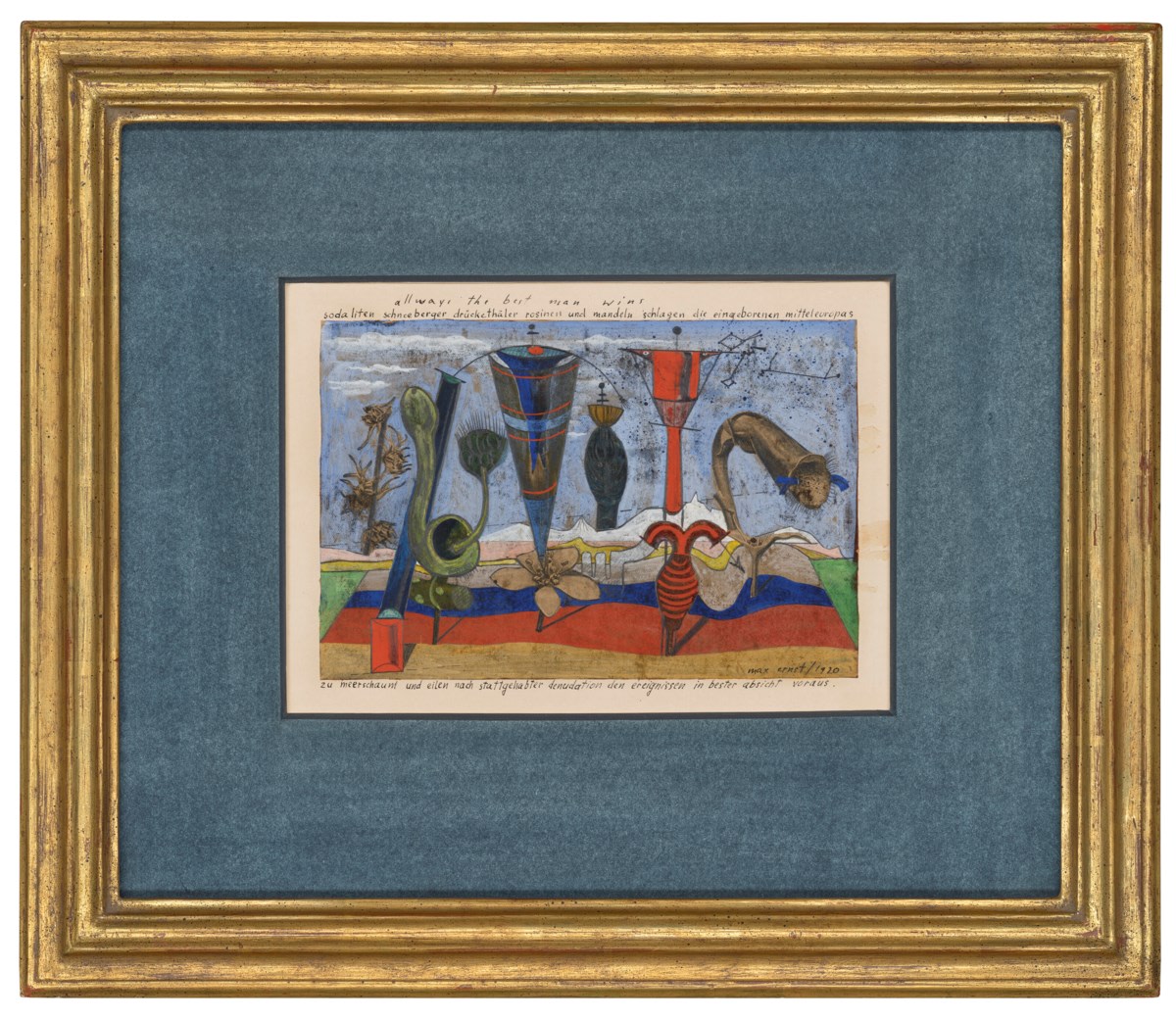
- $50,000 - $500,000
- Sculptures
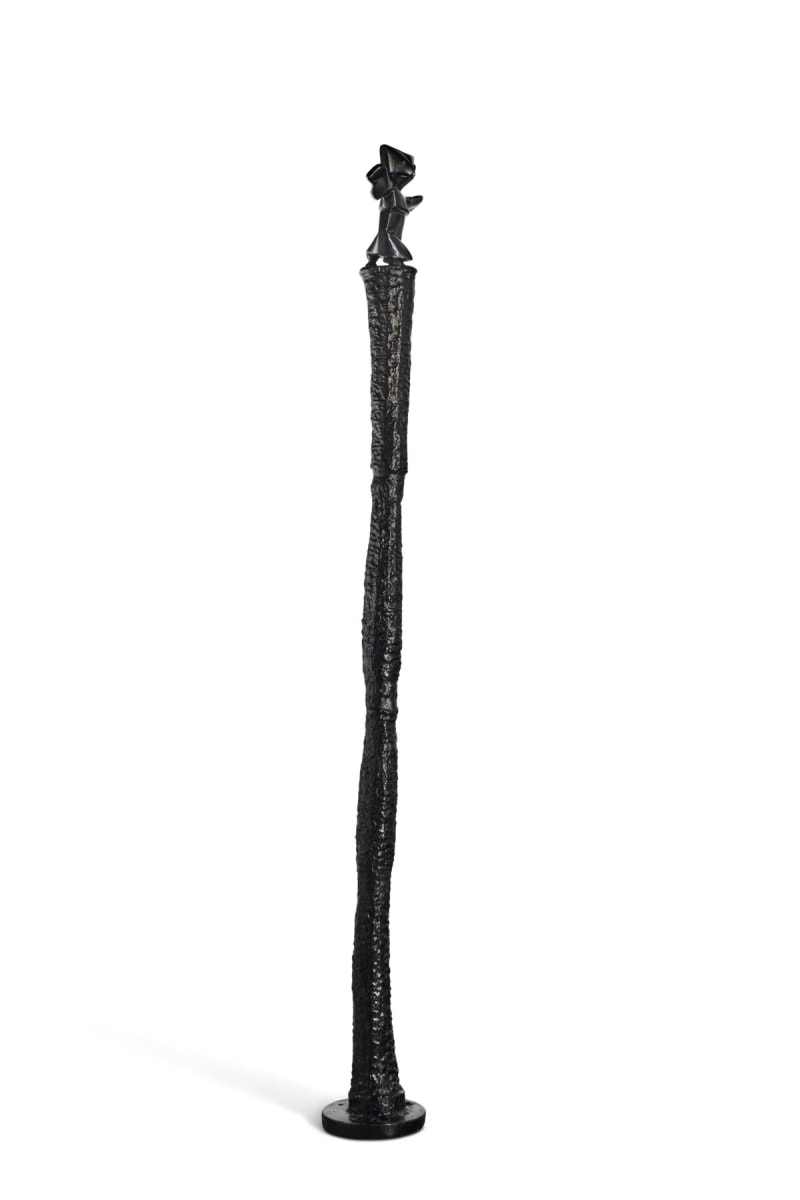
- $100,000 - $24,435,000 (record)
- Works on Paper
- $1,000 - $100,000
- Major Paintings
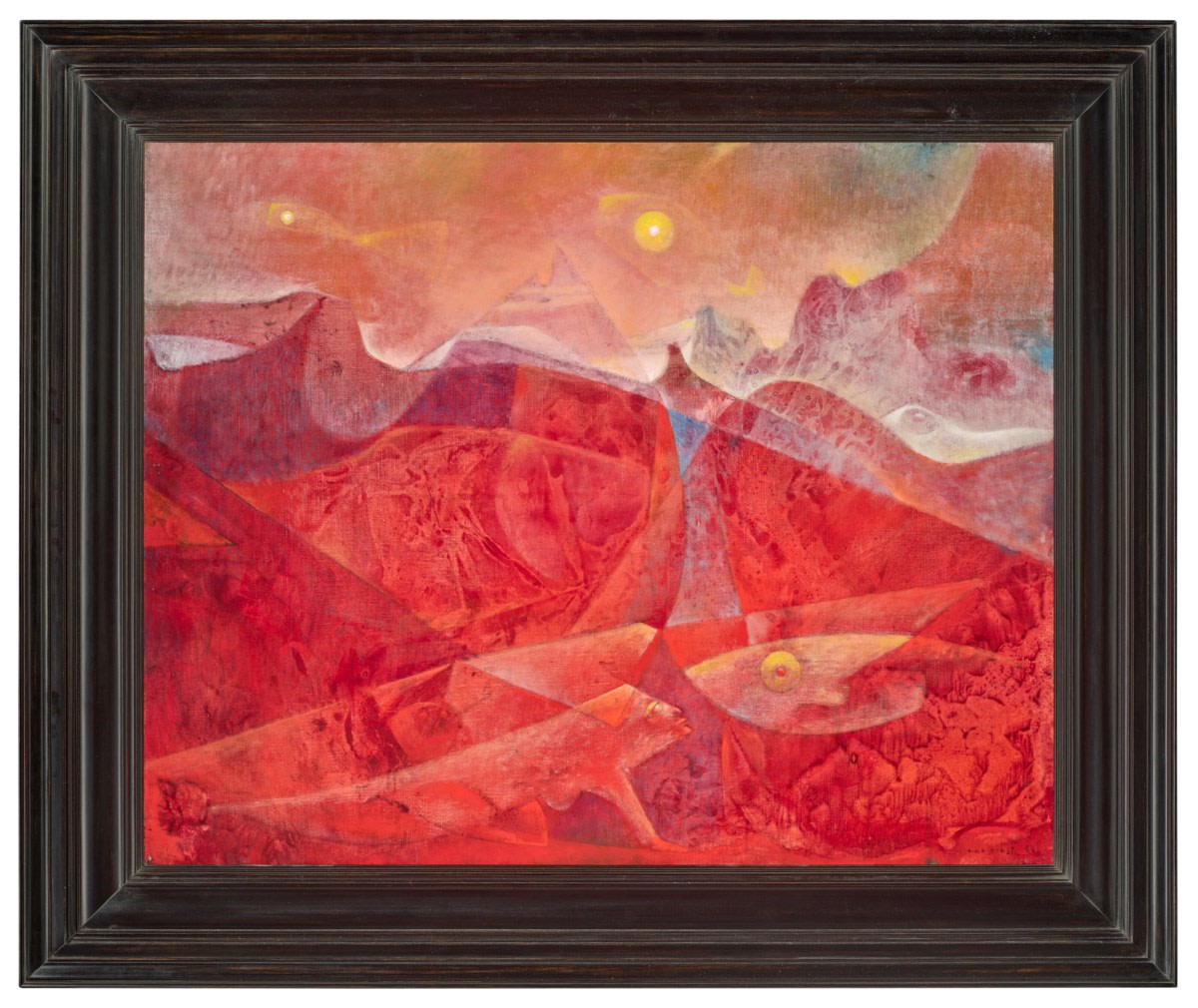
- $500,000 - $7,000,000+
- Prints Multiples
- $500 - $10,000
Institutional Presence
- Exhibitions
- Major Retrospectives
Title Dates Venue Significance Max Ernst March 1 - May 7, 1961 Museum of Modern Art, New York — Max Ernst: Dada and the Dawn of Surrealism 1991-1993 The Menil Collection, Houston / MoMA Major centennial retrospective; approximately 180 paintings, collages, drawings, prints; focused on 1912-1927 period Max Ernst: A Retrospective April 2005 The Metropolitan Museum of Art First major US retrospective in 30 years; comprehensive scholarly catalogue by Werner Spies and Sabine Rewald Max Ernst: Beyond Painting September 23, 2017 - January 1, 2018 Museum of Modern Art, New York — Major Guggenheim Museum retrospective 1975 — One year before artist's death - Exhibition History Note
- Over 140 exhibitions listed on MoMA records; consistently exhibited from 1912 through posthumous presentations; represented in landmark exhibitions including 'Fantastic Art, Dada, Surrealism' (MoMA, 1936)
- Current Upcoming Exhibitions
Title Dates Venue Significance Max Ernst to Dorothea Tanning: Networks of Surrealism October 17, 2025 - March 1, 2026 Neue Nationalgalerie, Berlin (Staatliche Museen zu Berlin) 100th anniversary of First Surrealist Manifesto (1924); focuses on Surrealism's international networks Max Ernst: Surrealism, Art and Cinema December 5, 2024 - May 4, 2025 Círculo de Bellas Artes, Madrid (Sala Goya) Reveals connection between Ernst's work and cinema throughout career FOTOGAGA: Max Ernst and Photography — Museum für Fotografie, Berlin (Kunstbibliothek – Staatliche Museen zu Berlin) First exhibition exploring intersection between Ernst's work and photography; Surrealism centenary commemoration; works from Würth Collection
- Museum Collections
- Major Museum Holdings
- Tier 1 Museums
- The Museum of Modern Art (MoMA), New York - 235 works online
- The Metropolitan Museum of Art, New York - significant holdings
- Solomon R. Guggenheim Museum, New York - major holdings
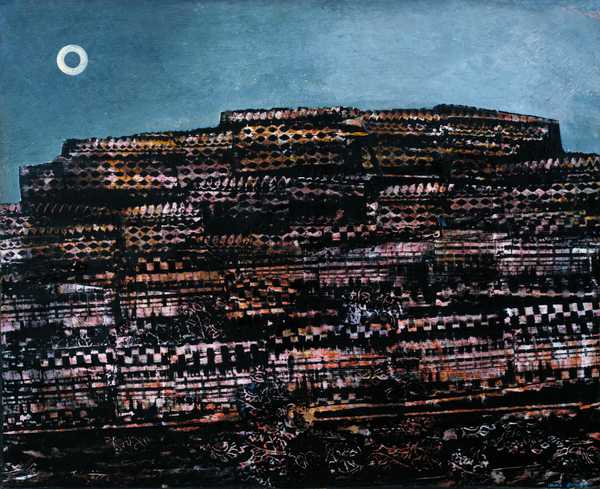
- Peggy Guggenheim Collection, Venice - 6+ major paintings including 'Attirement of the Bride' (1940), 'The Antipope' (1941-42), 'The Kiss' (1927), 'Zoomorphic Couple' (1933), 'Garden Airplane Trap' (1935-36), 'The Entire City' (1936-37)
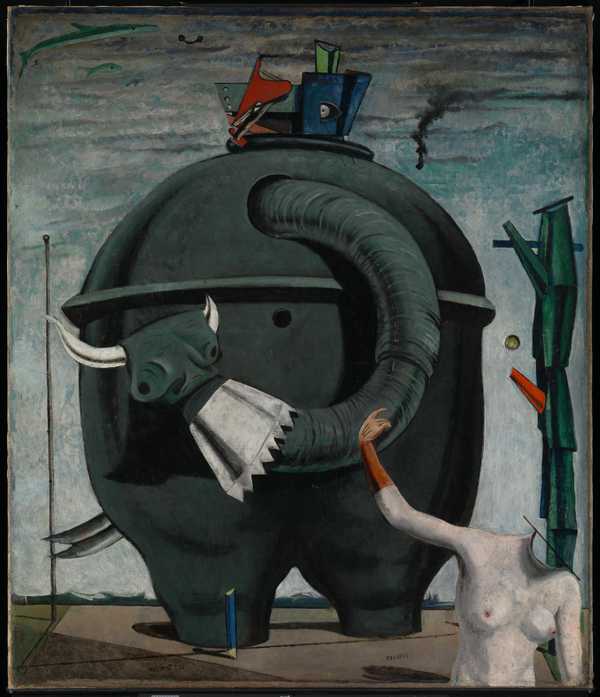
- Tate Modern/Tate Gallery, London - including 'The Elephant Celebes' (1921), 'Pietà or Revolution by Night'
- Centre Pompidou, Paris
- National Gallery of Art, Washington, D.C.
- Art Institute of Chicago
- Smithsonian Institution
- Cleveland Museum of Art
- Victoria & Albert Museum, London
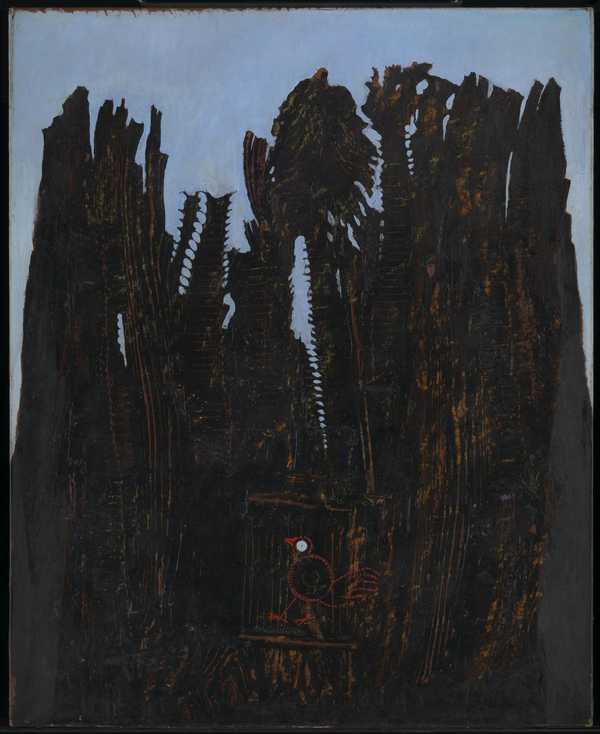
- National Museum Cardiff, Wales - 'The Wood'
- J. Paul Getty Museum, Los Angeles
- Max Ernst Museum, Brühl, Germany - comprehensive collection with 70 years of career spanning paintings, drawings, frottages, collages, entire lithographic works, over 70 bronze sculptures, 700+ documents
- Museum Data Summary
- Represented in 250+ works across major museums per API data; comprehensive museum presence spanning tier 1 institutions globally
- Additional Institutions
- Fondation Beyeler, BaselHamburger Kunsthalle, HamburgMildred Lane Kemper Art Museum, St. LouisStädel Museum, FrankfurtEuropean museums via Europeana network
- Awards and Recognition
Institution Year Award 27th Venice Biennale 1954 Grand Prize for Painting Paris Museum of Modern Art 1959 Grand Prix National des Arts
Career & Biography
- Career
- 1909-1914
- Early career: Began painting while at University of Bonn; joined Die Rheinischen Expressionisten group (1911); first exhibitions in Cologne (1912-1913); influenced by Picasso, van Gogh, Gauguin at Sonderbund exhibition (1912)
- 1914-1918
- WWI service: Served four years on Western and Eastern fronts as artillery engineer; traumatic experience that profoundly influenced his art; met Hans Arp (1914)
- 1919-1922
- Cologne Dada period: Co-founded Cologne Dada movement with Johannes Theodor Baargeld and Hans Arp (1919); created first collages; married art historian Luise Straus (1918); son Jimmy Ernst born (1920)
- 1922-1941
- Paris Surrealism: Moved illegally to Paris (1922); founding member of Surrealism movement (1924); first named in First Surrealist Manifesto; invented frottage technique (1925) and grattage technique (1926); published collage novels 'La Femme 100 têtes' (1929), 'A Little Girl Dreams of Taking the Veil' (1930), 'A Week of Kindness' (1934); married painter Marie-Berthe Aurenche (1927); relationship with Leonora Carrington (1937-1941); works confiscated by Nazis and shown in 'Degenerate Art' exhibition (1937); interned as 'enemy alien' in France (1939-1941)
- 1941-1953
- American exile: Fled to New York with Peggy Guggenheim (July 1941); married Guggenheim (December 1941); influenced emerging Abstract Expressionists including Jackson Pollock; met and married artist Dorothea Tanning (1946); moved to Sedona, Arizona (1946-1953); became American citizen (1948)
- 1953-1976
- Return to Europe: Settled permanently in France (1953); became French citizen (1958); awarded Grand Prize for Painting at Venice Biennale (1954); major retrospectives at MoMA (1961), Metropolitan Museum (2005, posthumously), Guggenheim Museum (1975); moved to Seillans, France (1964); died in Paris studio one day before 85th birthday (April 1, 1976)
- Studio Locations
- Brühl (1891-1914), Cologne (1918-1922), Paris suburbs Saint-Brice and Eaubonne (1922-1941), 22 rue Tourlaque studio in Paris (1925), New York (1941-1946), Sedona, Arizona (1946-1953), France (1953-1964), Seillans, France (1964-1976)
- Identity
- Birth Death
- April 2, 1891 (Brühl, Germany) – April 1, 1976 (Paris, France)
- Significant Relationships
- Family
- Son Jimmy Ernst (1920-1984) became prominent Abstract Expressionist painter
- Artistic
- Hans Arp (lifelong friend from 1914), André Breton (Surrealist leader), Paul Éluard (poet and patron), Joan Miró (collaborator), Marcel Duchamp, Giorgio de Chirico (major influence), Paul Klee
- Romantic
- Luise Straus (first wife, 1918-1927), Marie-Berthe Aurenche (second wife, 1927-1936), Leonora Carrington (partner, 1937-1941), Peggy Guggenheim (third wife, 1941-1946), Dorothea Tanning (fourth wife, 1946-1976)
- Artistic Context
- Pursued 'effects of the unavailable' through automatism; believed in accessing the unconscious through radical techniques; rejected rationality and bourgeois culture post-WWI; described collage as 'alchemy of the visual image'; sought to make art that appeared to 'evade human fabrication'
Artistic Profile
- Influences
- Influenced
- Jackson Pollock (drip technique, automatism, Native American sand painting interest)Mark Rothko (exploration of unconscious)Willem de Kooning (gestural abstraction)Abstract Expressionism generally (automatism, psychology of creation)Contemporary artists engaging with collage and appropriationSurrealist cinemaHis son Jimmy Ernst (Abstract Expressionist painter)
- Received From
- Giorgio de Chirico (dream imagery, fantastical scenes)Vincent van Gogh and Paul Gauguin (post-Impressionist color, expression)Pablo Picasso (Cubist fragmentation)Paul Klee (automatic drawing, playfulness)Sigmund Freud (dream theory, unconscious)Art of mentally ill (primal emotion, unfettered creativity)Indigenous art (African, Oceanic, Pre-Columbian, Native American)19th-century engravings and scientific illustrations
- Themes and Subjects
- Birds
- Loplop (alter ego bird figure) appears throughout work; bird as symbol of freedom and transformation
- Forests
- Dark, impenetrable forests as 'shadowy borderland between known and unknown'
- Apocalypse
- Post-WWI trauma; WWII devastation ('Europe After the Rain' series)
- Childhood Trauma
- Mining childhood memories and experiences
- Religion Blasphemy
- Subversive treatment of Christian iconography
- Sexuality Eroticism
- Provocative imagery challenging bourgeois morality
- Alchemy Transformation
- Alchemical symbolism central to worldview
- Psychology Unconscious
- Application of Freudian dream theory; automatism
- Movements and Periods
- Signature Visual Elements
- Imagery
- Hybrid creatures, fossilized landscapes, caged birds, chess pieces, anthropomorphic forms, apocalyptic scenarios
- Texture
- Emphasized through frottage and grattage; layered surfaces; scraped and revealed forms
- Composition
- Irrational juxtapositions; dreamlike spatial relationships; figures in barren landscapes; mechanical/organic hybrids
- Color Palette
- Early work: earthy tones; later work: both muted and vivid palettes; use of traditional pigments (vermillion, carbon black) evolving to synthetic industrial pigments
- Techniques and Mediums
- Key Techniques
- Collage
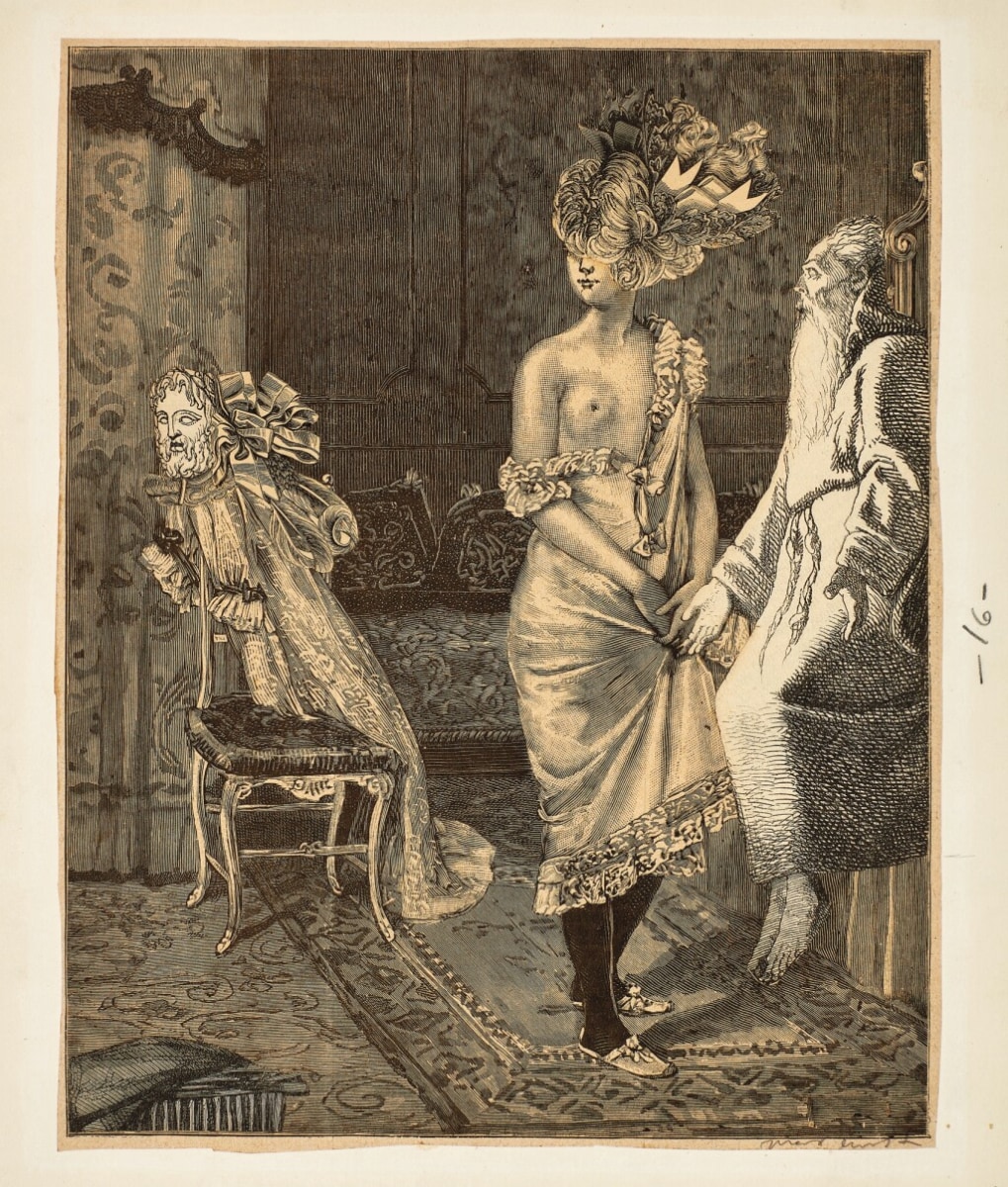
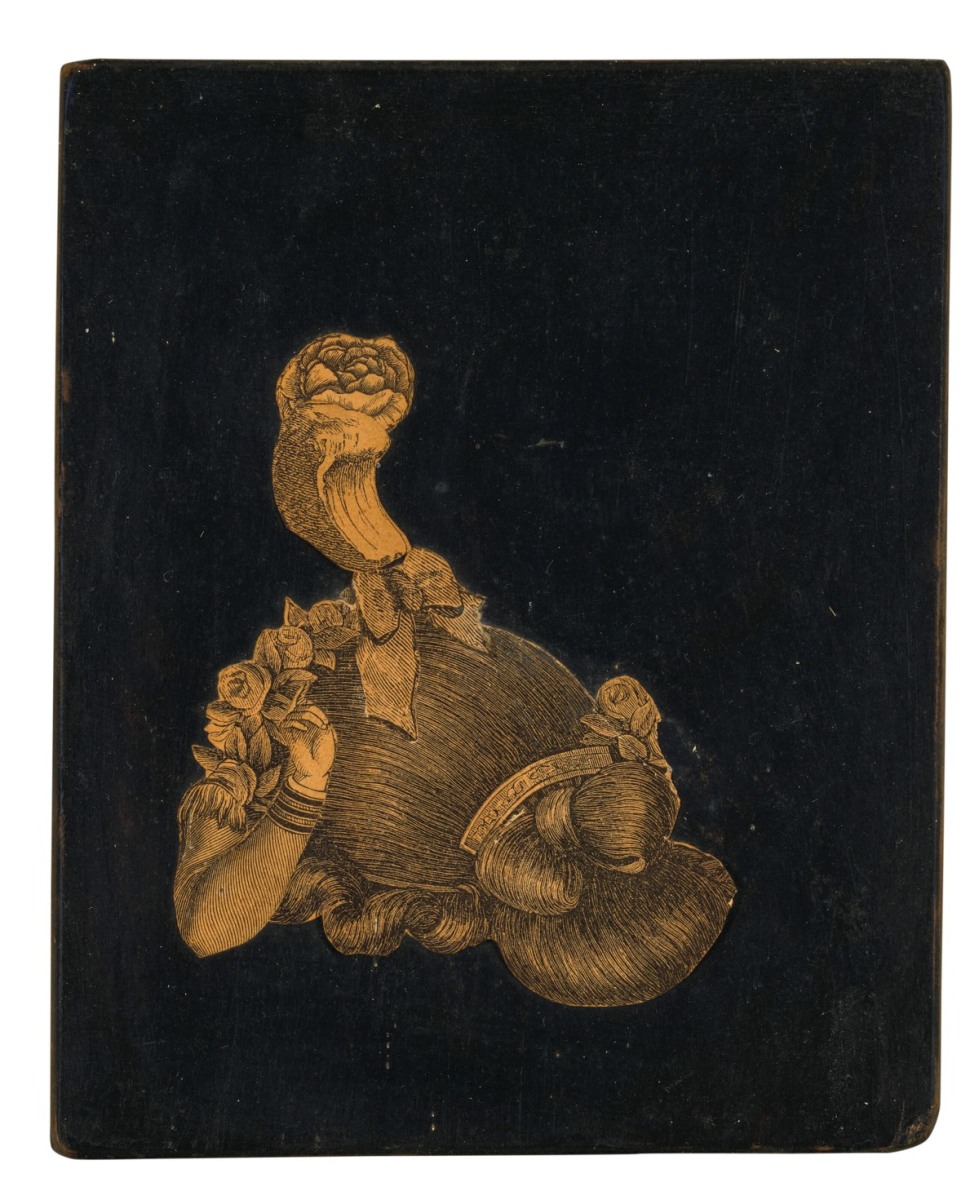
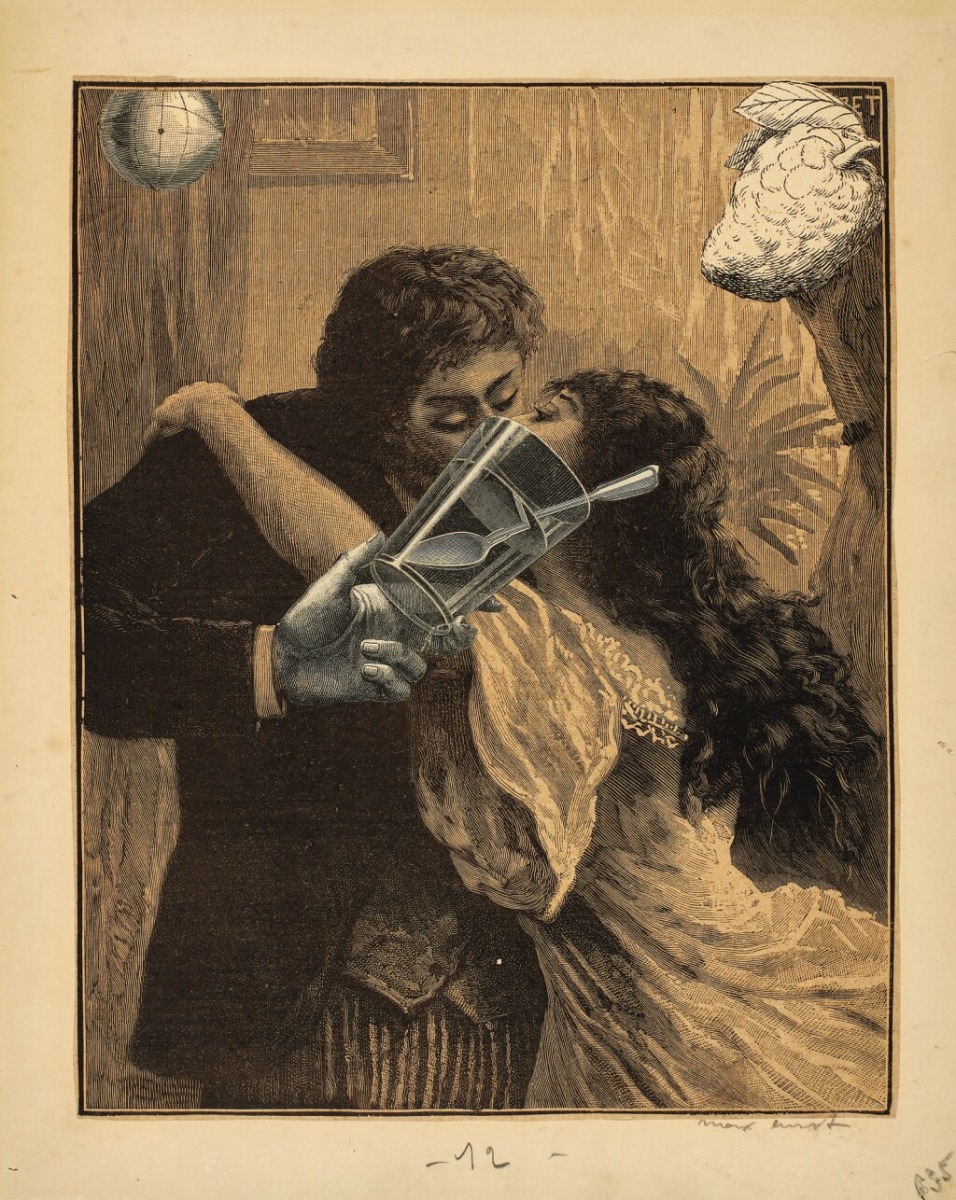
- Method: Using found printed reproductions from scientific manuals, catalogues, 19th-century engravings; Period: 1919 onwards; Innovation: Collage novels - sequences of illustrations creating narratives; Significance: Ernst considered this 'alchemy of the visual image'
- Frottage
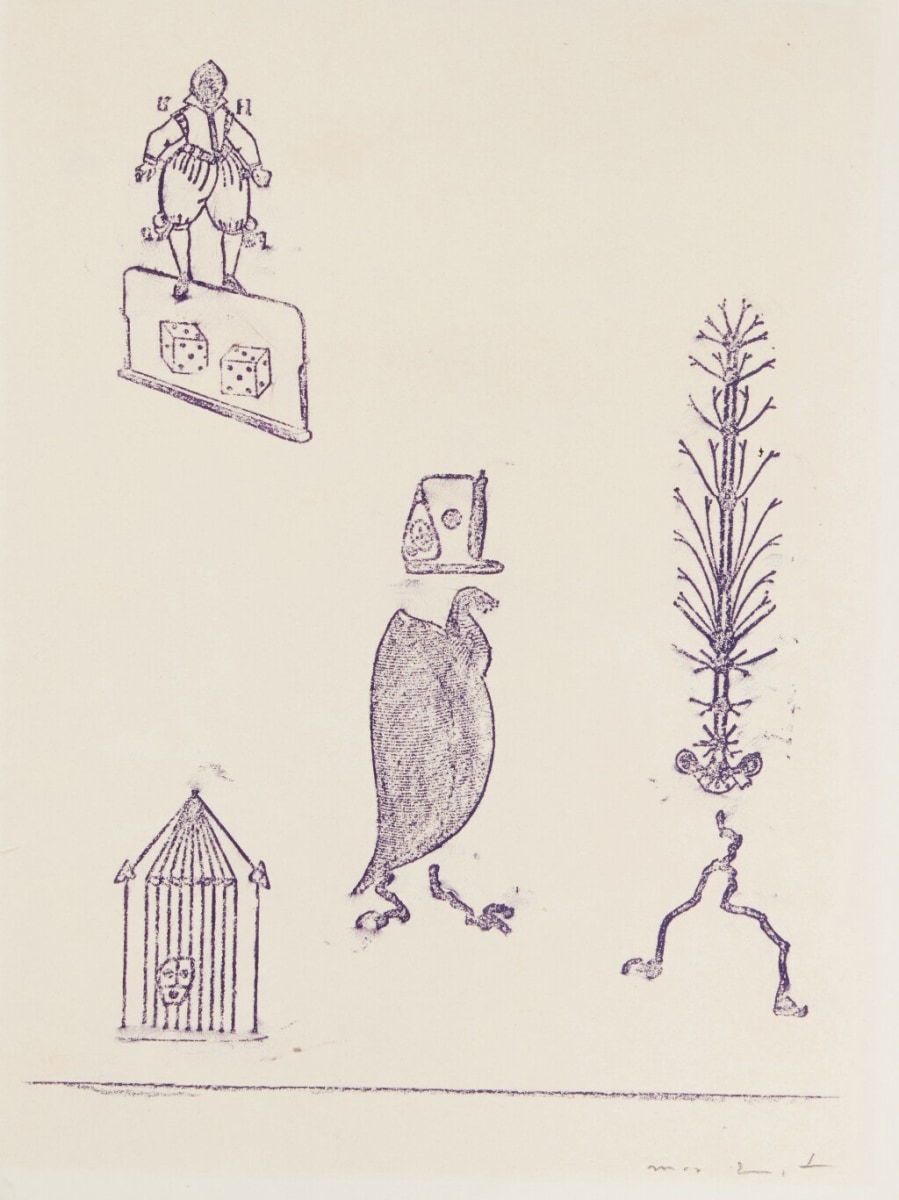
- Method: Pencil rubbings of textured objects and relief surfaces to create images; Invented: 1925; Published: 'Histoire naturelle' portfolio (1926); Significance: Automatist technique accessing unconscious
- Grattage
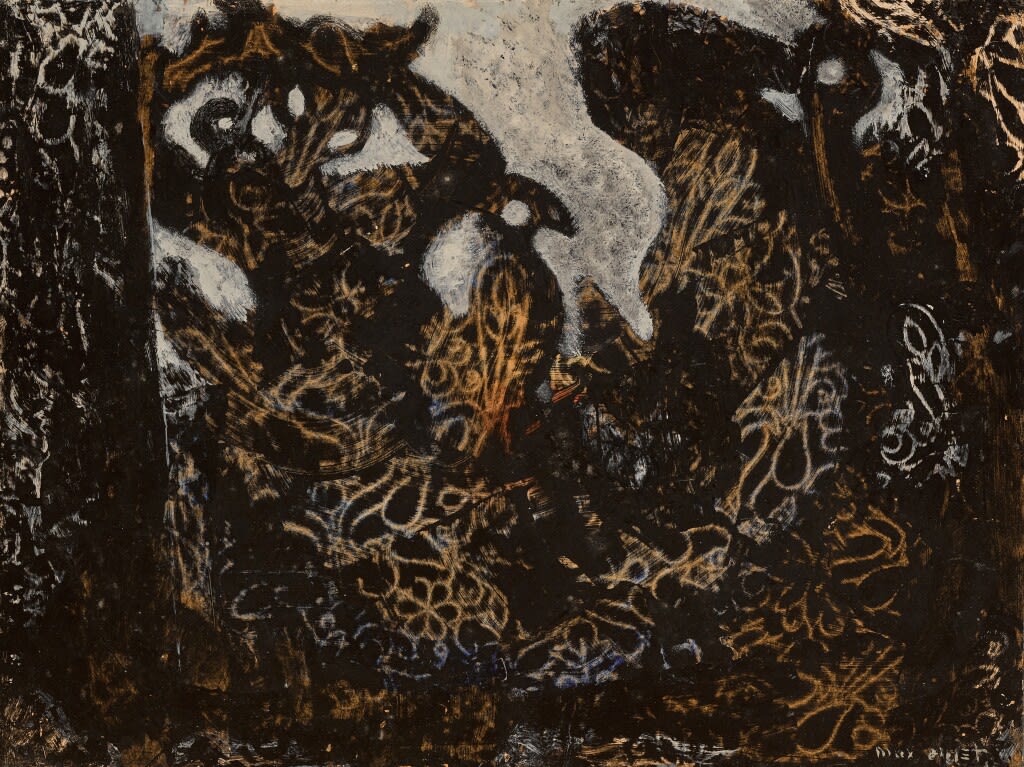
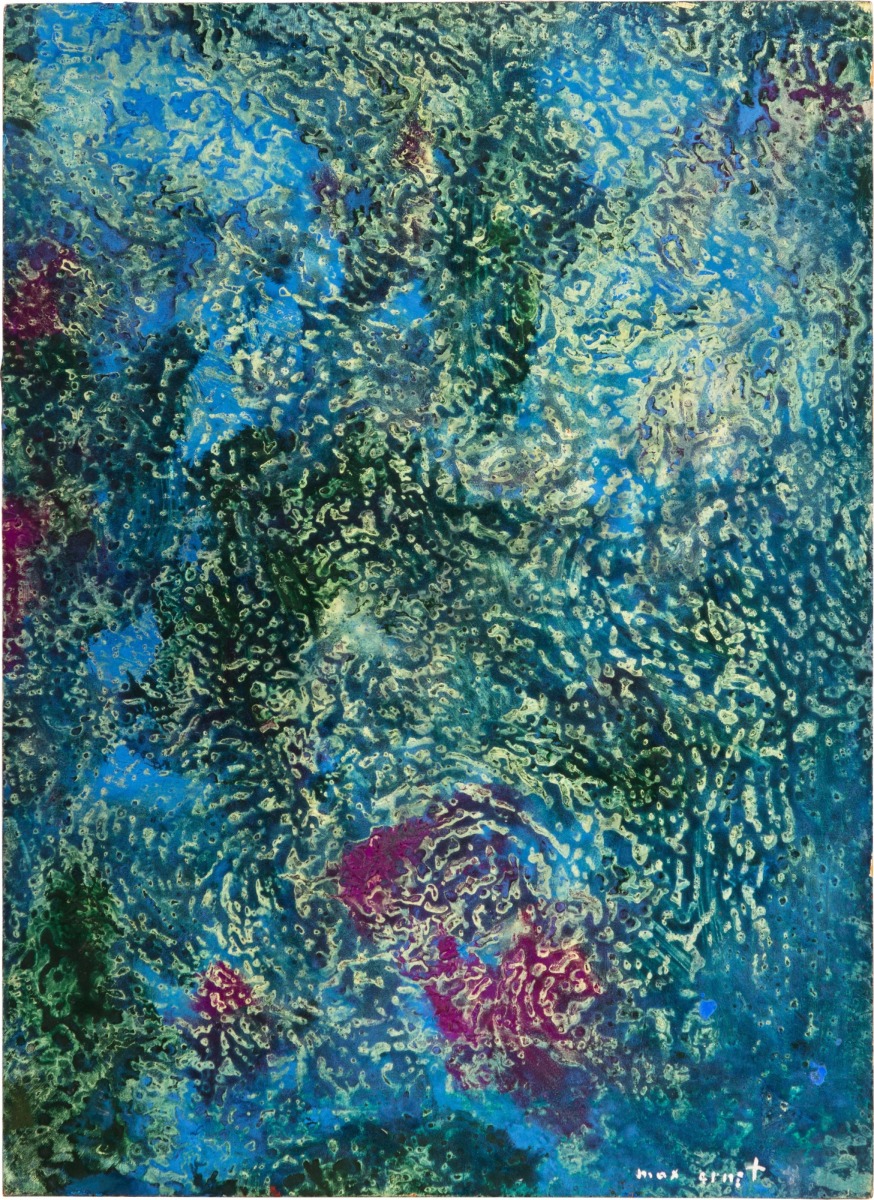
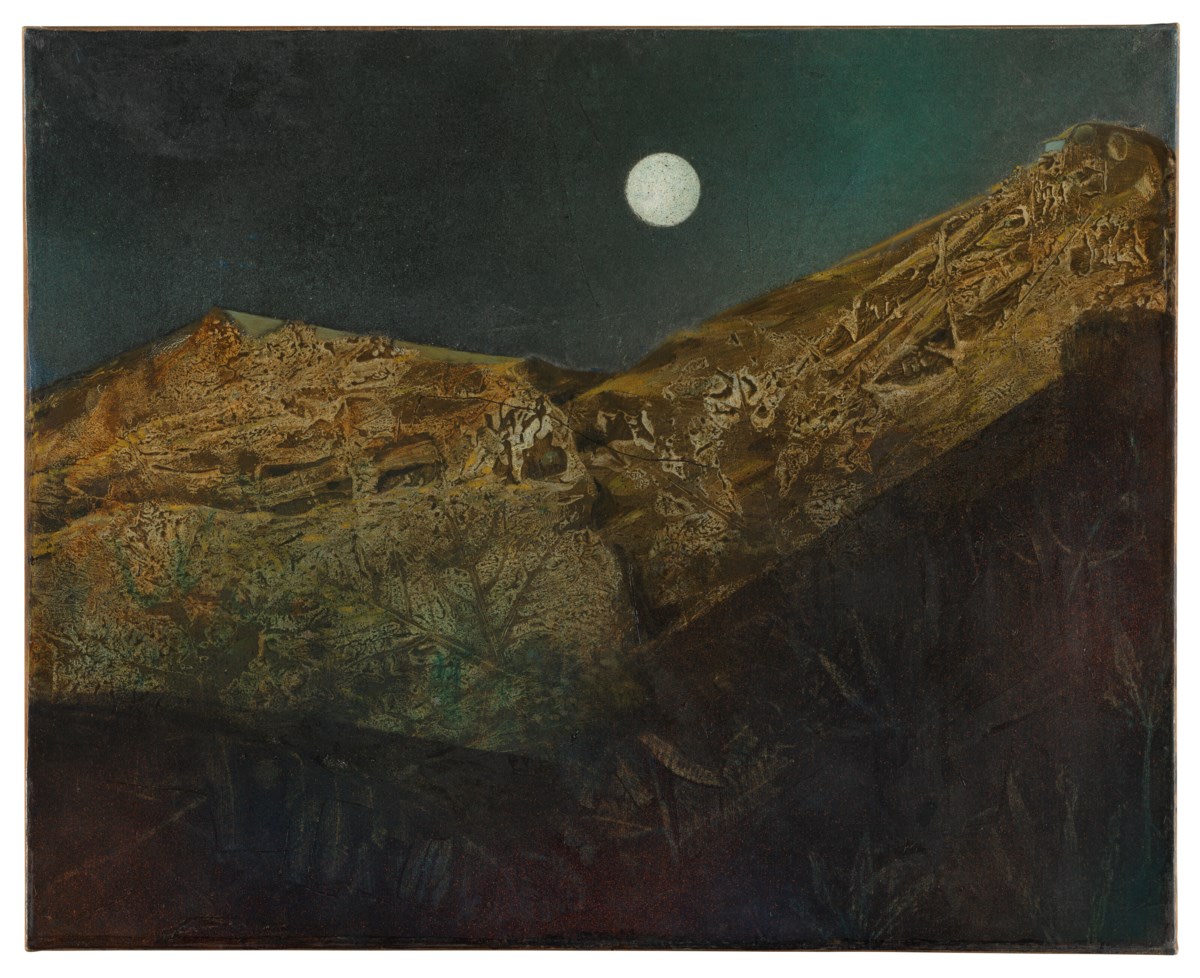
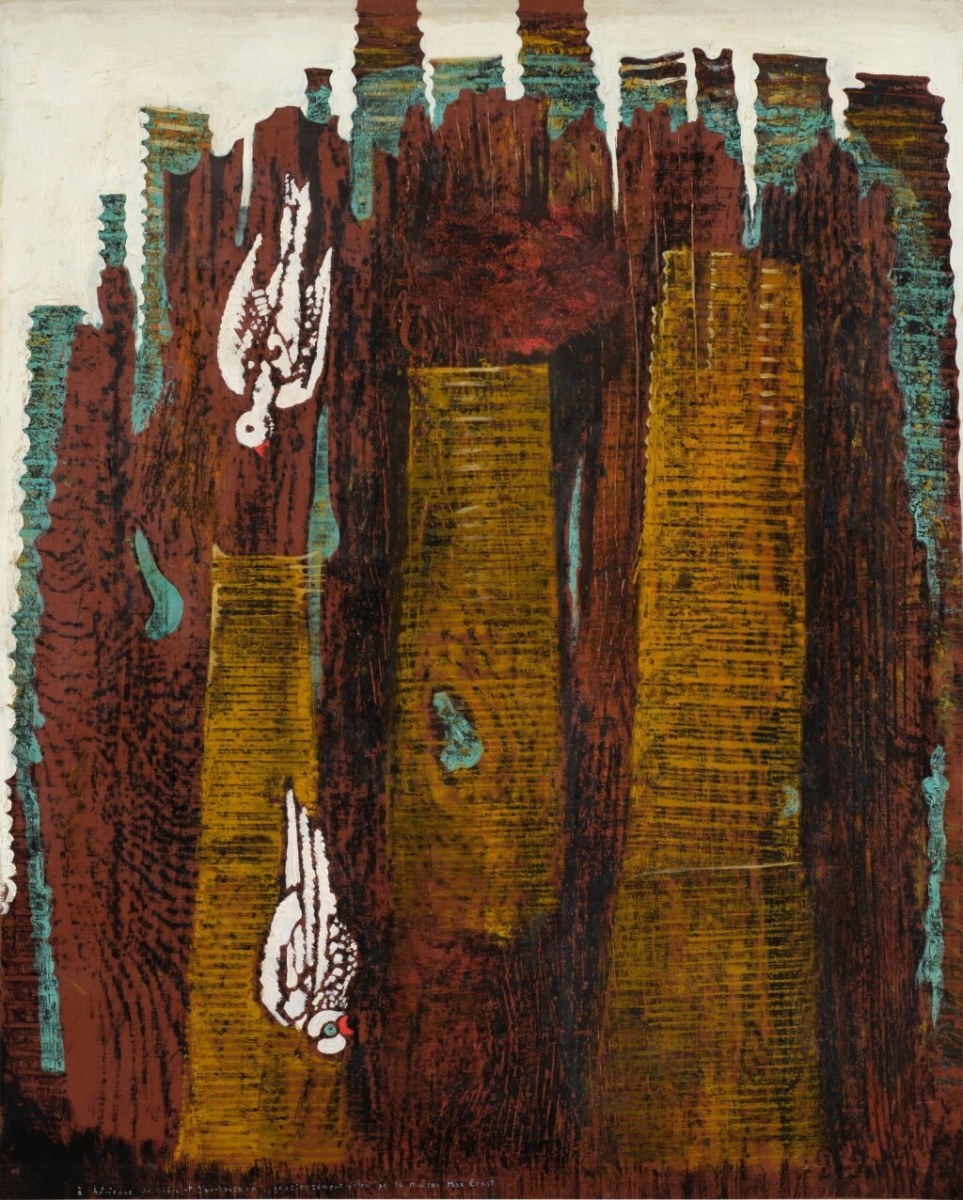
- Method: Scraping paint across canvas to reveal imprints of objects placed beneath; Example: 'Forest and Dove' (1927); Invented: 1926; Significance: Analogous to frottage for painting
- Decalcomania
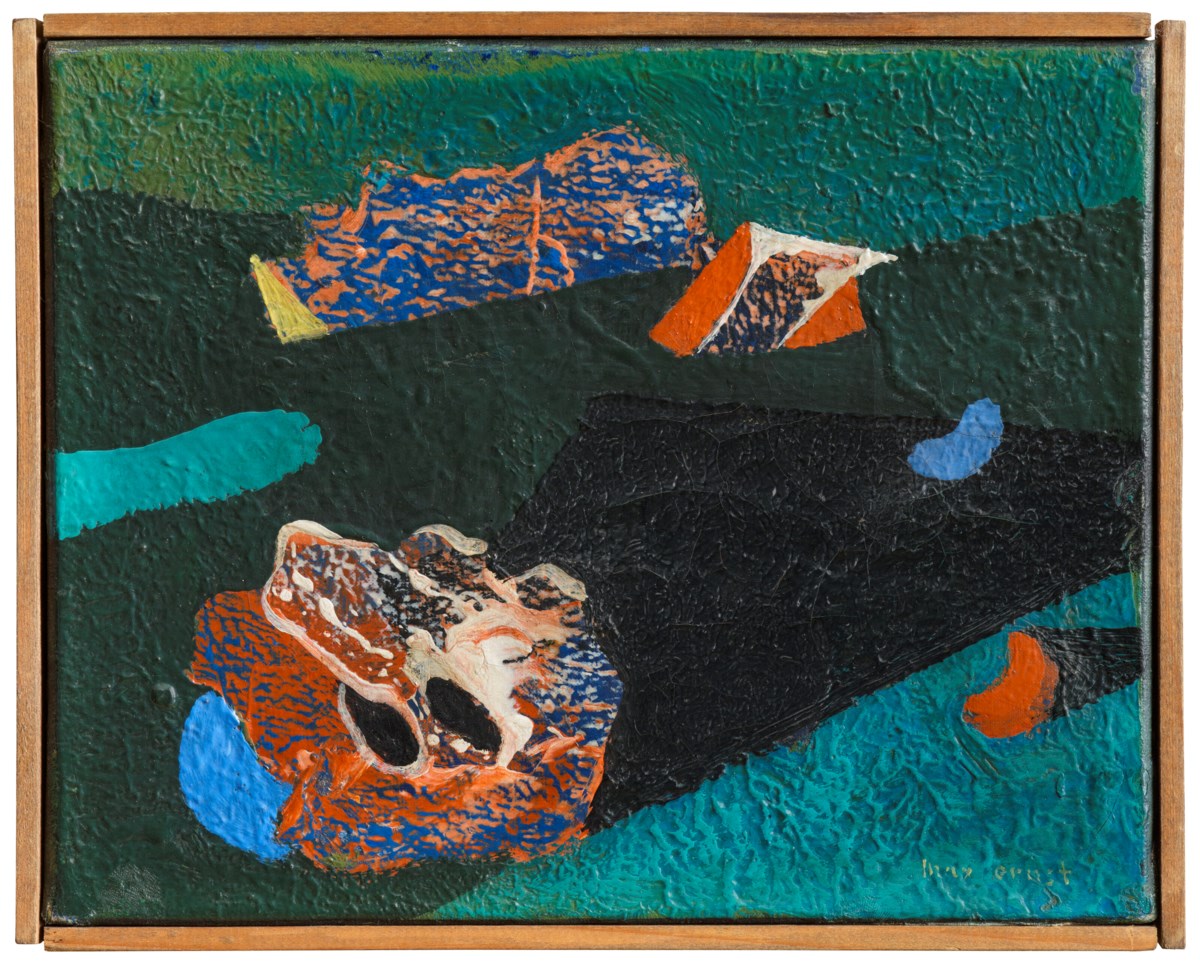
- Method: Transferring paint from one surface to another by pressing surfaces together; contemplating accidental patterns; Adopted: Mid-1930s; Significance: Created abstract formations refined into surreal organic forms
Critical Reception
- Critical Reception
- Assessment
- Extensive and ongoing scholarly interest
- Recent Studies
- 'Portrait of an artist at work: exploring Max Ernst's surrealist techniques' (npj Heritage Science, 2022) - scientific/technical analysis of Peggy Guggenheim Collection paintings
- 'The Man of these Infinite Possibilities: Max Ernst's Cinematic Collages' (Contemporaneity journal, 2011) - examines André Breton's comparison of Ernst's collages to cinema
- CAA Reviews critique of Ralph Ubl's 'Prehistoric Future' - contemporary art historical engagement
- Catalogue Raisonne
- Note
- Complete works being catalogued; supplementary volumes planned
- Editor
- Werner Spies in collaboration with Sigrid Metken and Jürgen Pech
- Status
- In progress
- Critical Consensus
- Recognized as primary pioneer of Dada and Surrealism; acknowledged for revolutionary techniques (frottage, grattage, decalcomania); seen as crucial link between European avant-garde and American Abstract Expressionism
- Major Critical Voices
Contribution Critic — André Breton Decades of scholarship including catalogue raisonné, major exhibition curatorship, interpretive essays Werner Spies Contemporary critical theory approach examining Ernst's 'effects of the unavailable' and dismantling of painting Ralph Ubl Psychoanalytic interpretations of Ernst's work Hal Foster - Critical Reception Evolution
- Initially controversial for blasphemous and subversive content (e.g., 'The Virgin Spanking the Christ Child,' 1926); gradually recognized as major modernist innovator; by 1950s achieved 'glowing reputation and critical following in three countries simultaneously' (Germany, France, USA); posthumous reputation continues to grow with ongoing exhibitions and scholarship; seen as crucial bridge between European Surrealism and American Abstract Expressionism
- Publications and Media
- Market Platforms
- Comprehensive records on Artsy, Artnet, MutualArt, LiveAuctioneers, Artprice
- Dedicated Websites
- Multiple informational sites including max-ernst.com, TheArtStory.org comprehensive profile
- Major Publications
Title Year Significance Author Publisher Max Ernst: Life and Work 1967 Perhaps the most comprehensive and scholarly work on Ernst; draws on conversations with artist John Russell Thames & Hudson Max Ernst: Beyond Painting and Other Writings by the Artist and His Friends 1948 Ernst's own writings on his techniques (frottage, collage); includes recollections by Breton, Éluard, Tzara — Wittenborn, Schultz Max Ernst: Life and Work, an Autobiographical Collage 2006 Source documents including Ernst's letters, poetry, diaries; contextualizes work within Surrealist movement — Thames & Hudson Max Ernst: A Retrospective 2005 Major exhibition catalogue with fresh scholarly insights — The Metropolitan Museum of Art Prehistoric Future: Max Ernst and the Return of Painting between the Wars 2013 Contemporary critical scholarship examining Ernst's dismantling of painting conventions Ralph Ubl University of Chicago Press Max Ernst and Alchemy: A Magician in Search of Myth — Groundbreaking study of alchemical ideas central to Ernst's oeuvre M.E. Warlick University of Texas Press - Scholarly Databases
- Well-represented in art historical databases, JSTOR, ResearchGate, academic publications
- Documentary Coverage
- Year
- 1991
- Title
- Max Ernst
- Format
- 101-minute documentary film
- Content
- Interviews with Ernst, stills of paintings/sculptures, memoirs by Dorothea Tanning and Jimmy Ernst
- Director
- Peter Schamoni
- Availability
- Released on DVD with English subtitles by Image Entertainment
- Dedicated to
- Art historian Werner Spies
- Museum Digital Collections
- Extensive online presence through MoMA, Met, Guggenheim, Tate, and other museum websites
Gallery & Representation
- Fair Presence
- Historically participated in major European and American art fairs through gallery representation; currently estate works appear at major international fairs through Kasmin Gallery and auction previews
- Representation
- Historical Galleries
Year Dates Significance Gallery — 1912-1913 First exhibitions Galerie Feldman, Cologne 1916 — Exhibited during WWI Der Sturm Gallery, Berlin 1921 — First Paris exhibition (Exposition Dada Max Ernst) Galerie Au Sans Pareil, Paris 1932 — First American exhibition Julien Levy Gallery, New York — 1942-1947 Major venue during American exile; personal connection through marriage Peggy Guggenheim's Art of This Century Gallery, New York - Estate Representation
- Note
- Per 2017 Art Newspaper report, Paul Kasmin Gallery represents Max Ernst estate alongside Simon Hantaï and Robert Motherwell estates
- Primary Gallery
- Kasmin Gallery (formerly Paul Kasmin Gallery), New York
- Representation Details
- Estate representation includes exclusive agreements; gallery handles secondary market consultation and authentication
- Secondary Market Galleries
- Christie's (major auction house representation)Sotheby's (major auction house representation)Phillips (regular consignments)BonhamsVarious international auction houses
- Geographic Reach
- Works regularly available through major auction houses; estate carefully manages supply; prints and multiples more readily available; major paintings and sculptures rare and highly sought
This is what the market knows about Max Ernst. What Egon can also tell you: whether Max Ernst fits your portfolio — based on your existing holdings, budget, and investment timeline.
Get Personalized AnalysisActive Market Signals
Signal Timeline & Strength Analysis
Gallery moves, auction records, institutional acquisitions, price milestones — tracked over 90 days
Collector Demographics & Buyer Analysis
Geographic distribution, institutional vs. private buyers, collector profiles, and secondary market activity
Personalized Acquisition Strategy
Optimal entry points, comparable pricing analysis, timing recommendations, and portfolio fit assessment
Go Deeper with Personalized Intelligence
You now have Egon's market assessment of Max Ernst. The next question is personal: does this artist belong in your collection? Egon analyzes collection fit based on your aesthetic thesis, existing holdings, budget, and investment goals — delivering acquisition strategies no public index can provide.