Henri Matisse
Blue-chipEgon research · Artist market profile
The market, in context.
Explore Henri Matisse’s auction history alongside the exhibitions, collections and gallery relationships behind the market.
Institutional research
Collections & exhibitions
Read holdings, exhibition history and their qualifications in context.
Read the institutional research →




































Egon investment scores
Market position
Research updated
Auction record context
Odalisque couchée aux magnolias (1923), oil on canvas — $80,750,000, Christie's New York, 8 May 2018, from the estate of Peggy and David Rockefeller (estimate ~$70m). Still the artist's record as of August 2026. Contemporary reporting noted the prior high had been $48.8m and that the winning bid most likely came from Asia.
Pricing
Temporal context
2010-2017
Top defined by the $48.8m Nu de dos bronze (2010); major Nice-period oils typically $10m–$30m; Shchukin/Morozov-era masterpieces effectively absent from the market.
2018-2023
Record reset at $80.75m (Rockefeller, 2018). The 2021–22 boom favoured contemporary over Modern; Matisse mid-tier oils softened in real terms and the top segment traded thinly.
2024-2026 current
Sharp re-rating at the top: $48.4m for a 1919 still life in May 2026, more than doubling a $25m low estimate; ~$49m for six bronzes in November 2025. Sotheby's Modern various-owner evening total of ~$304m in May 2026 was up 63% year-on-year and the highest Modern various-owner result since 2022, with Matisse the engine of it.
By category current
Caveat
The low end is heavily populated by posthumous editions, facsimiles (e.g. the 2005 Éditions Anthèse Jazz facsimile) and after-the-work lithographic posters selling for hundreds of dollars in regional rooms. These are NOT comparable to lifetime signed impressions and materially distort naive average-price statistics.
Bronzes
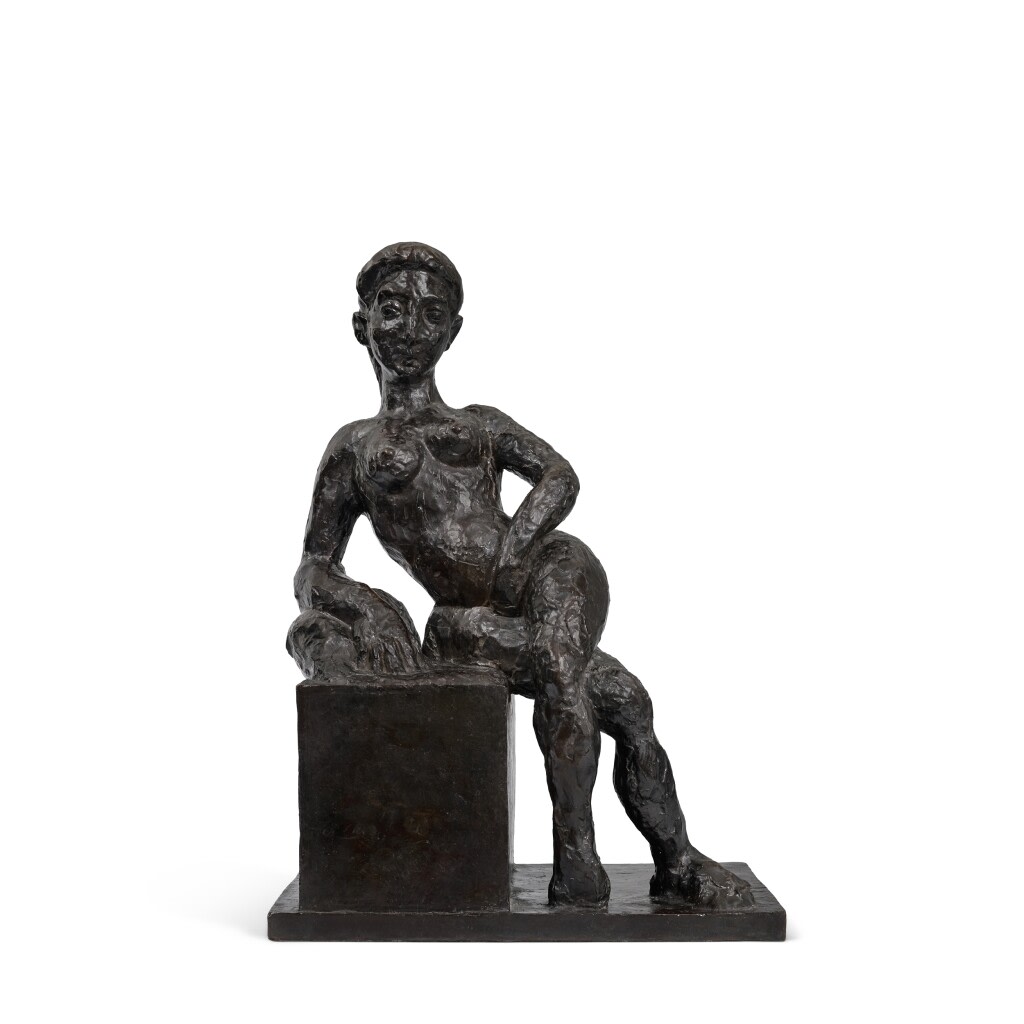
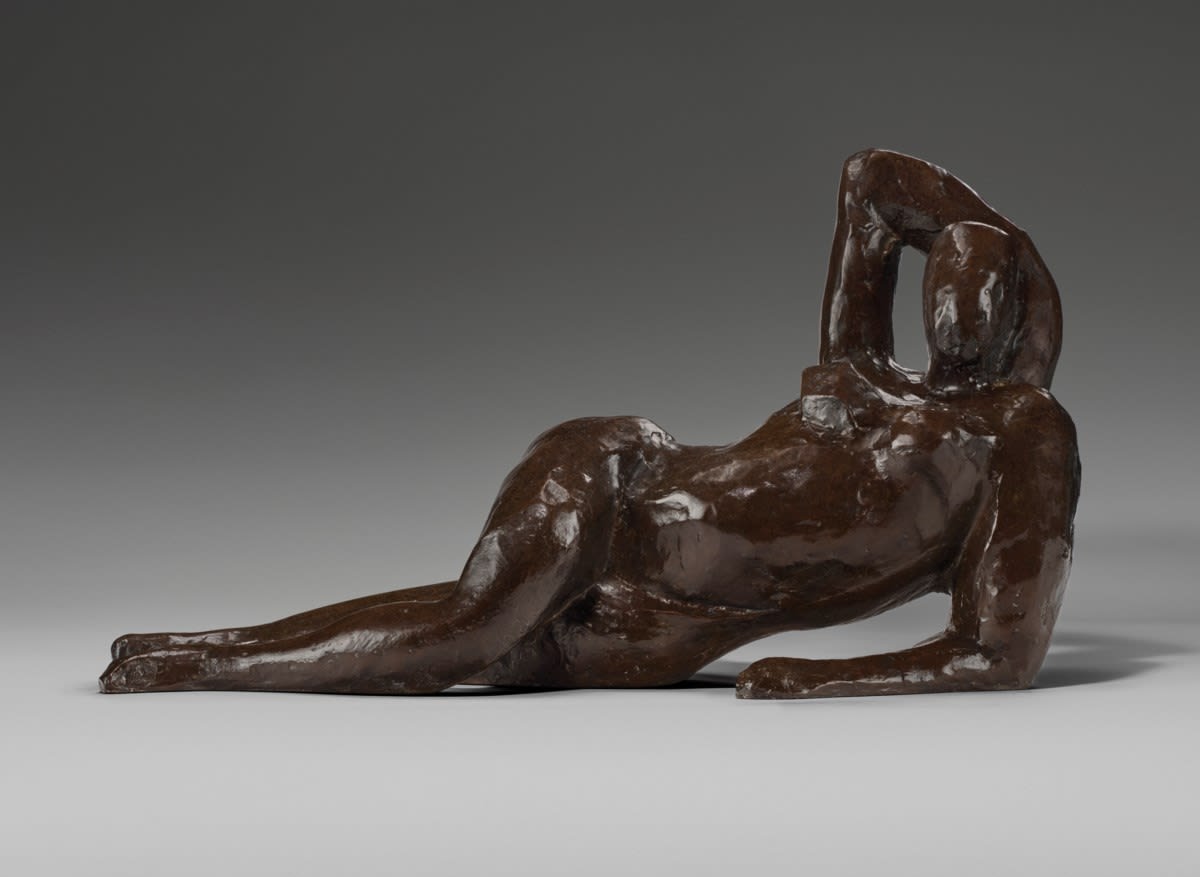
$1m–$17m for canonical subjects (Figure décorative, La Serpentine, the Nu de dos reliefs, the Jeannette heads); smaller nudes and heads $300k–$3m. Segment repriced upward by the November 2025 Lauder result.
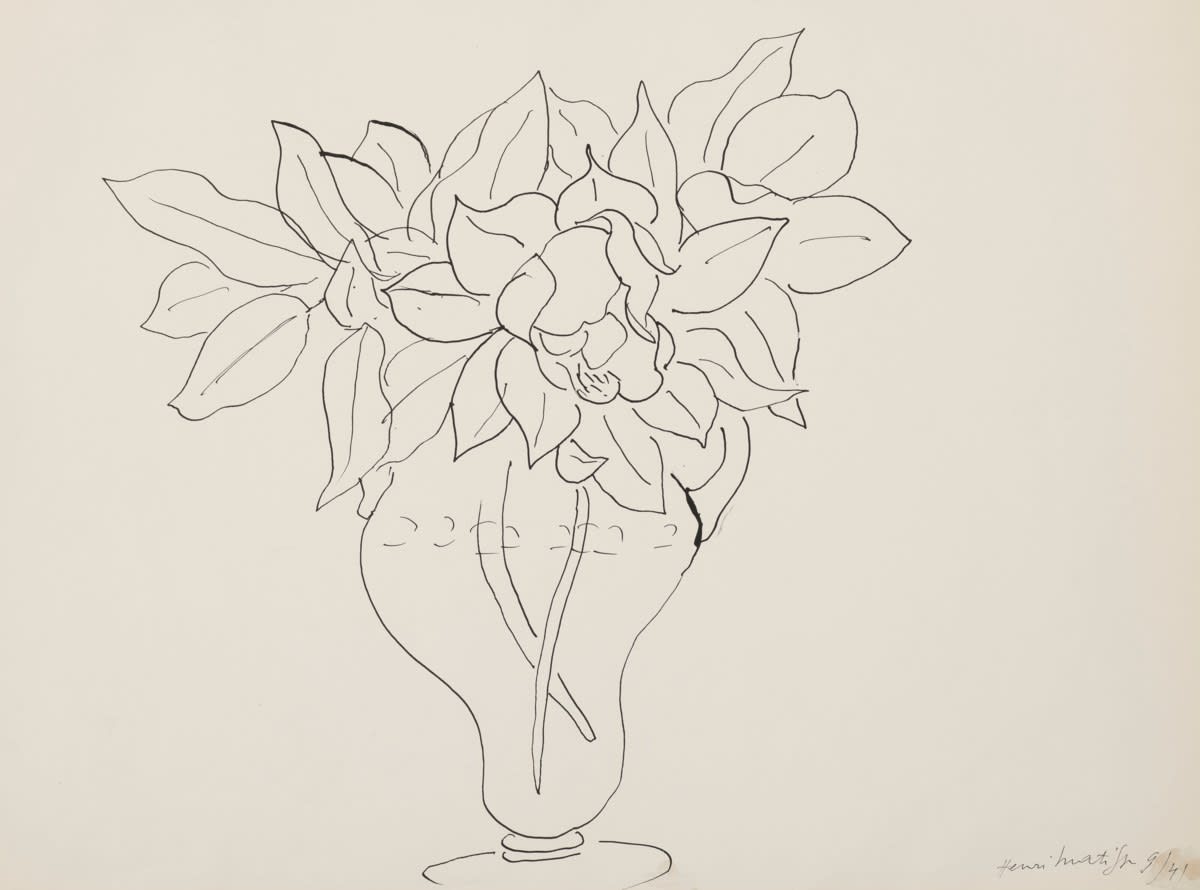
Unique drawings
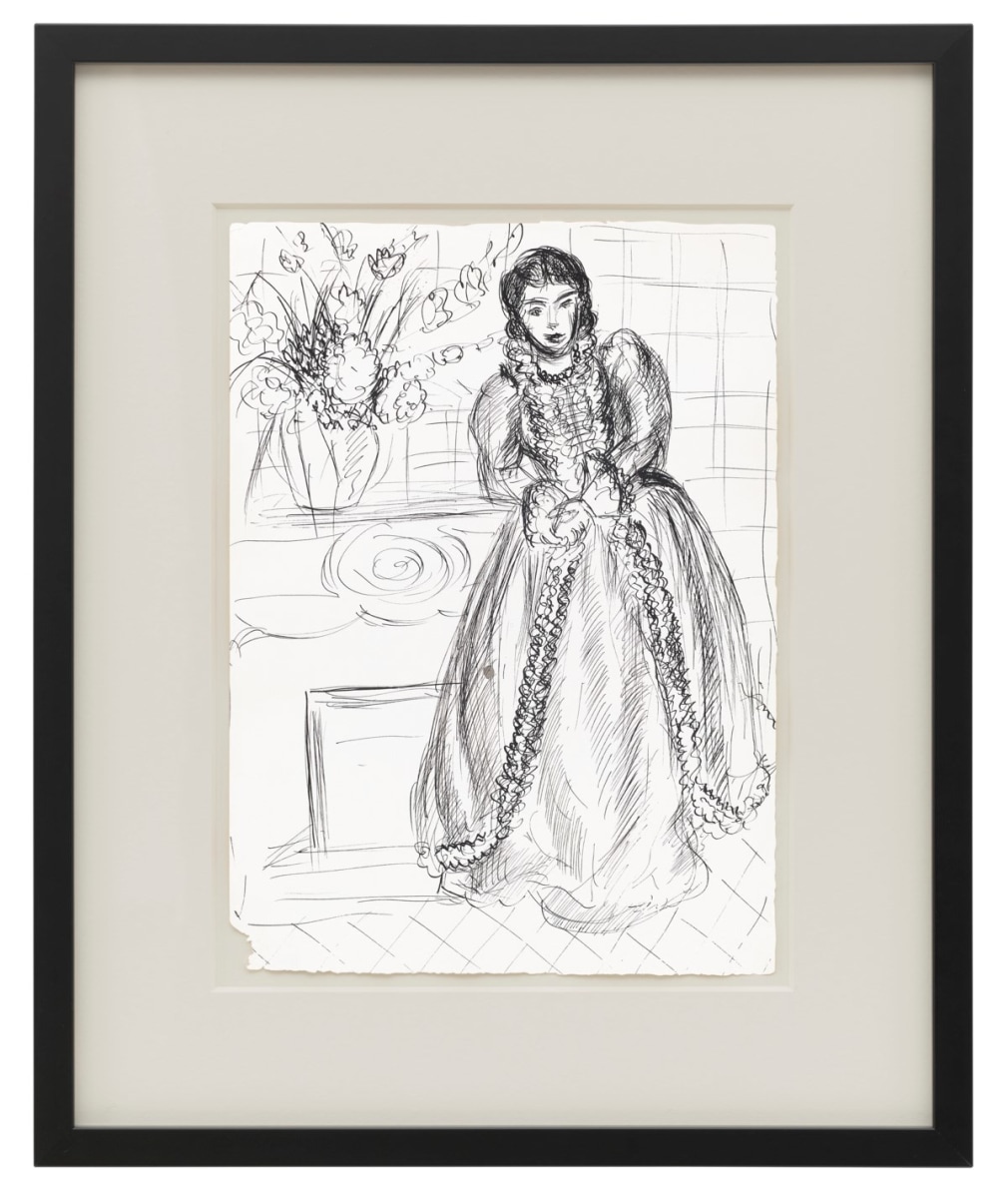
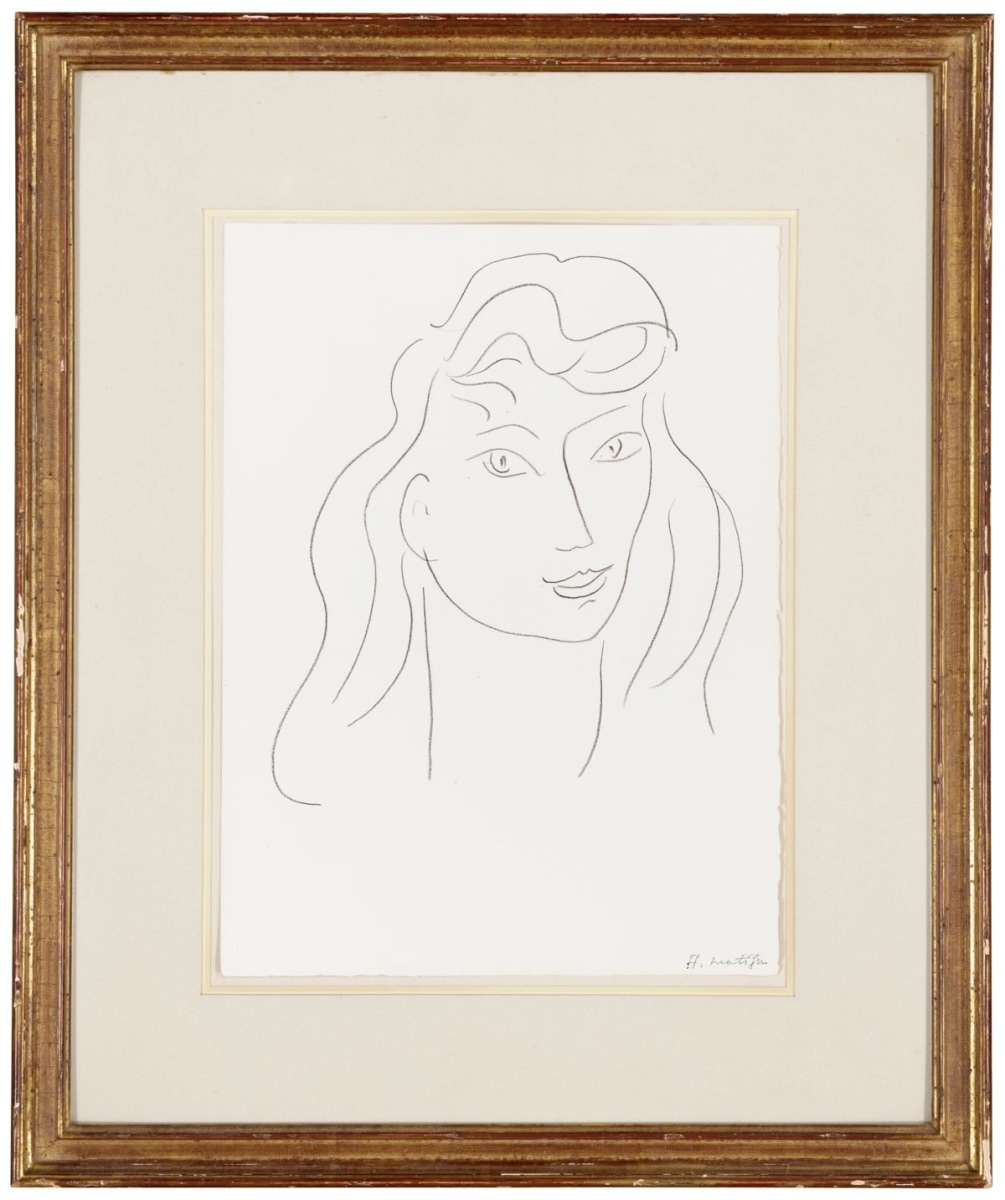
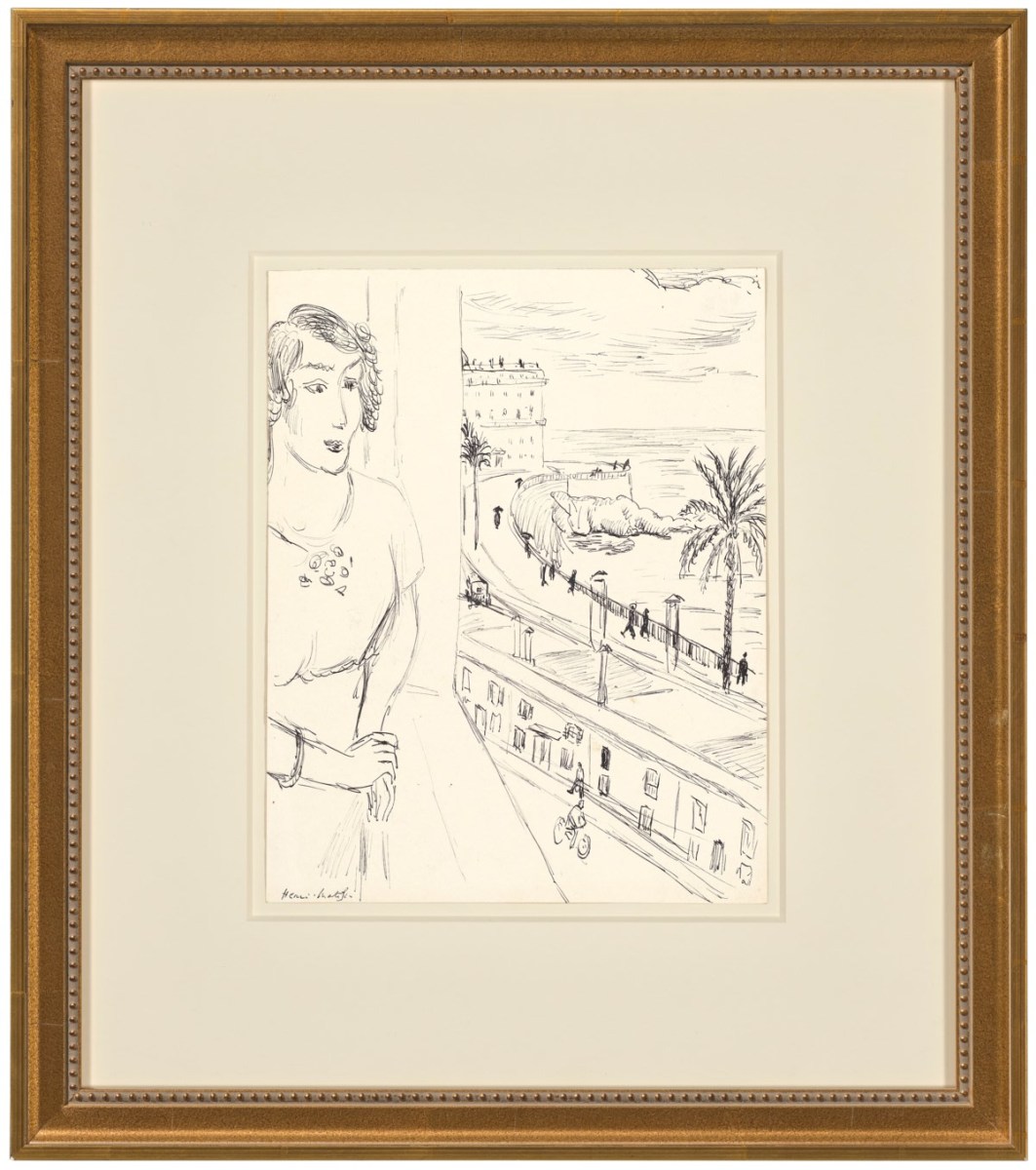
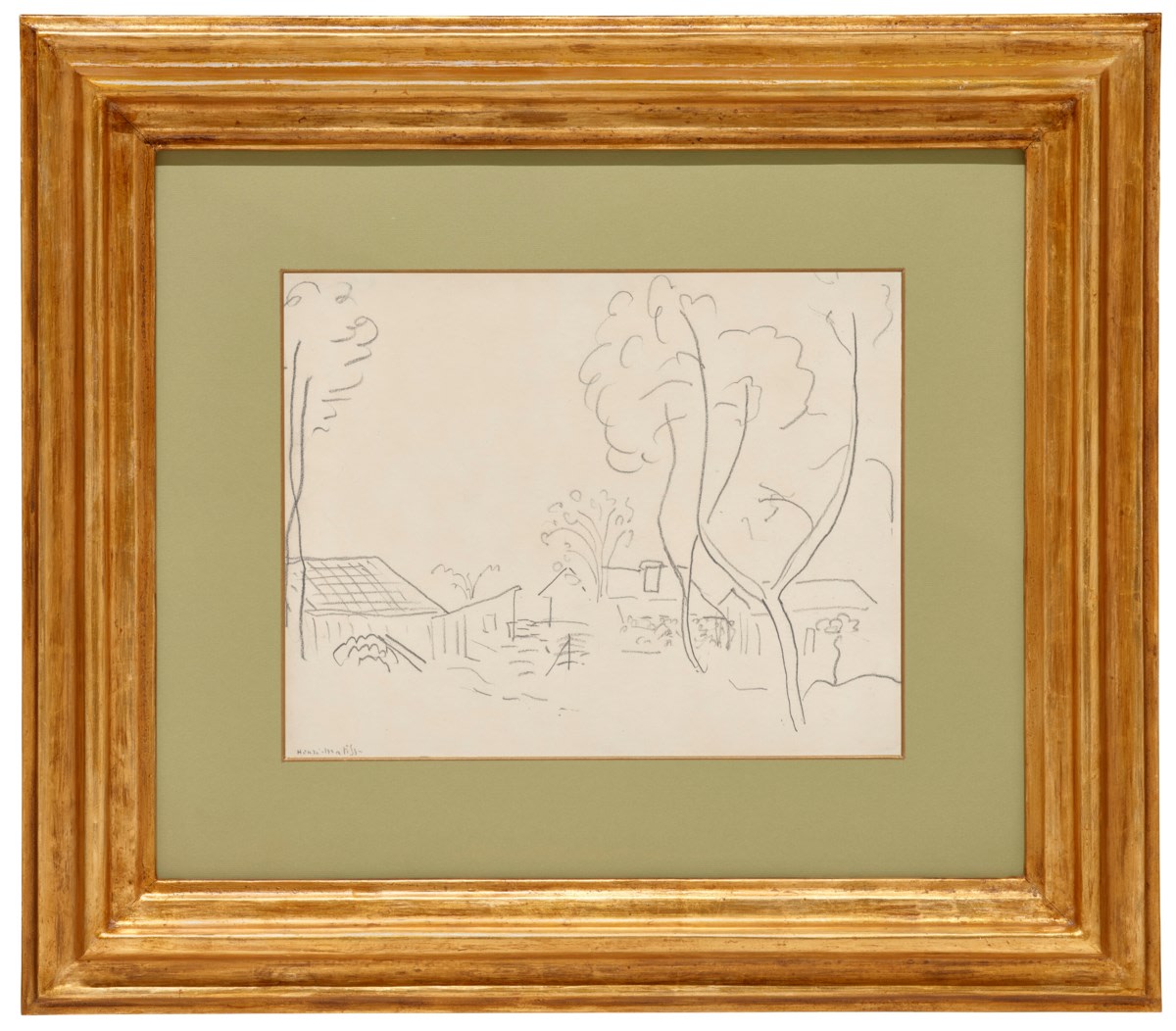
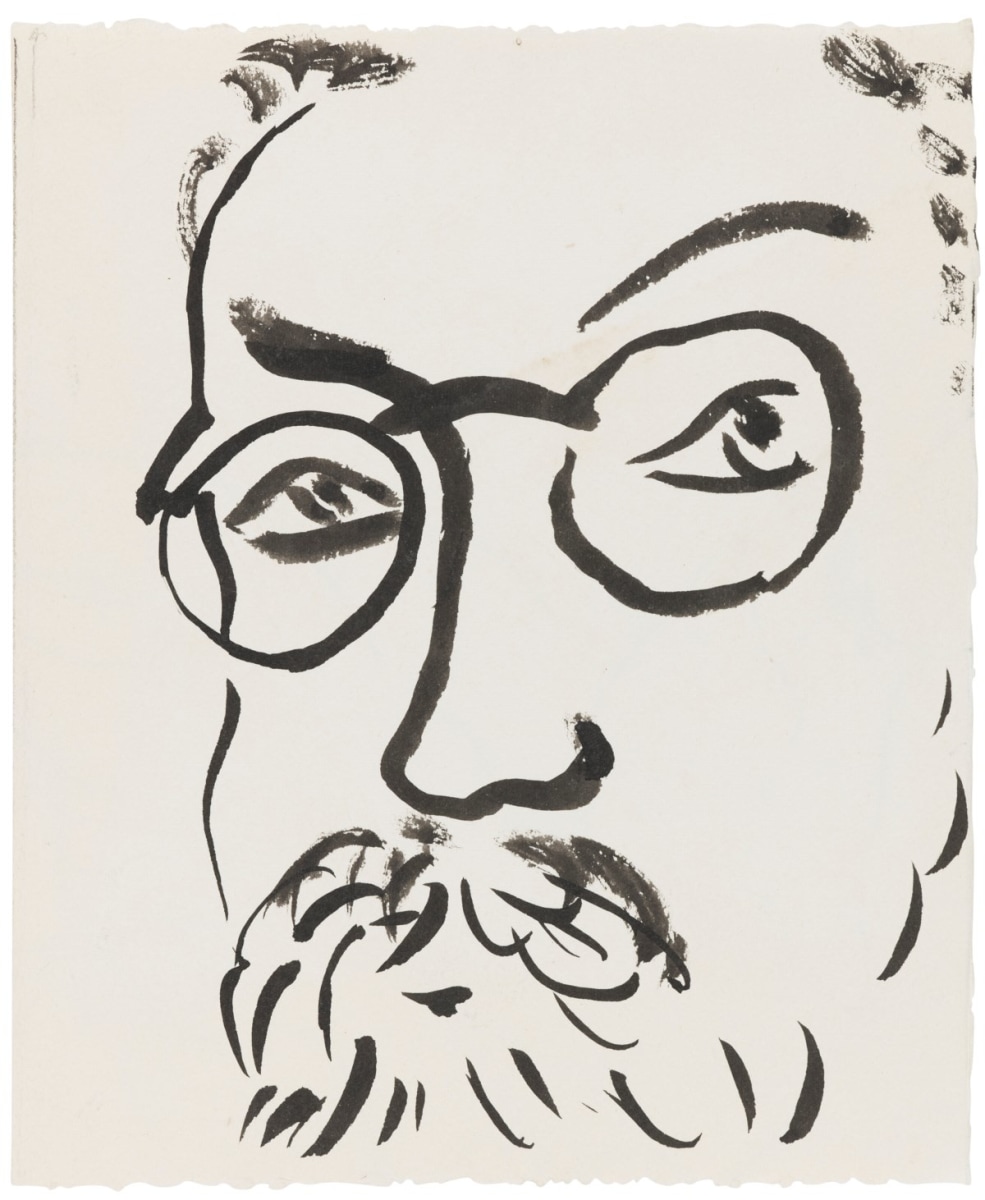
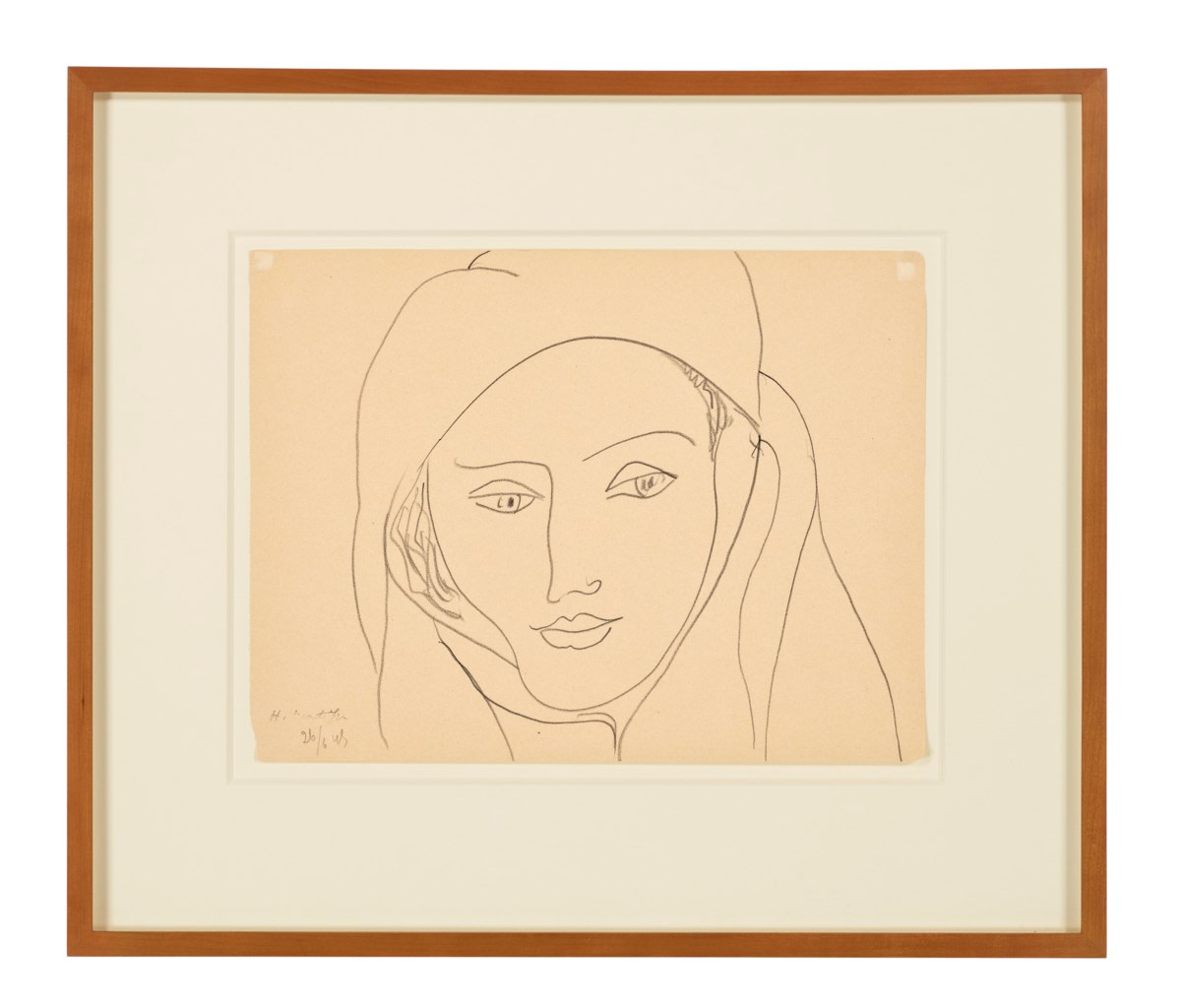
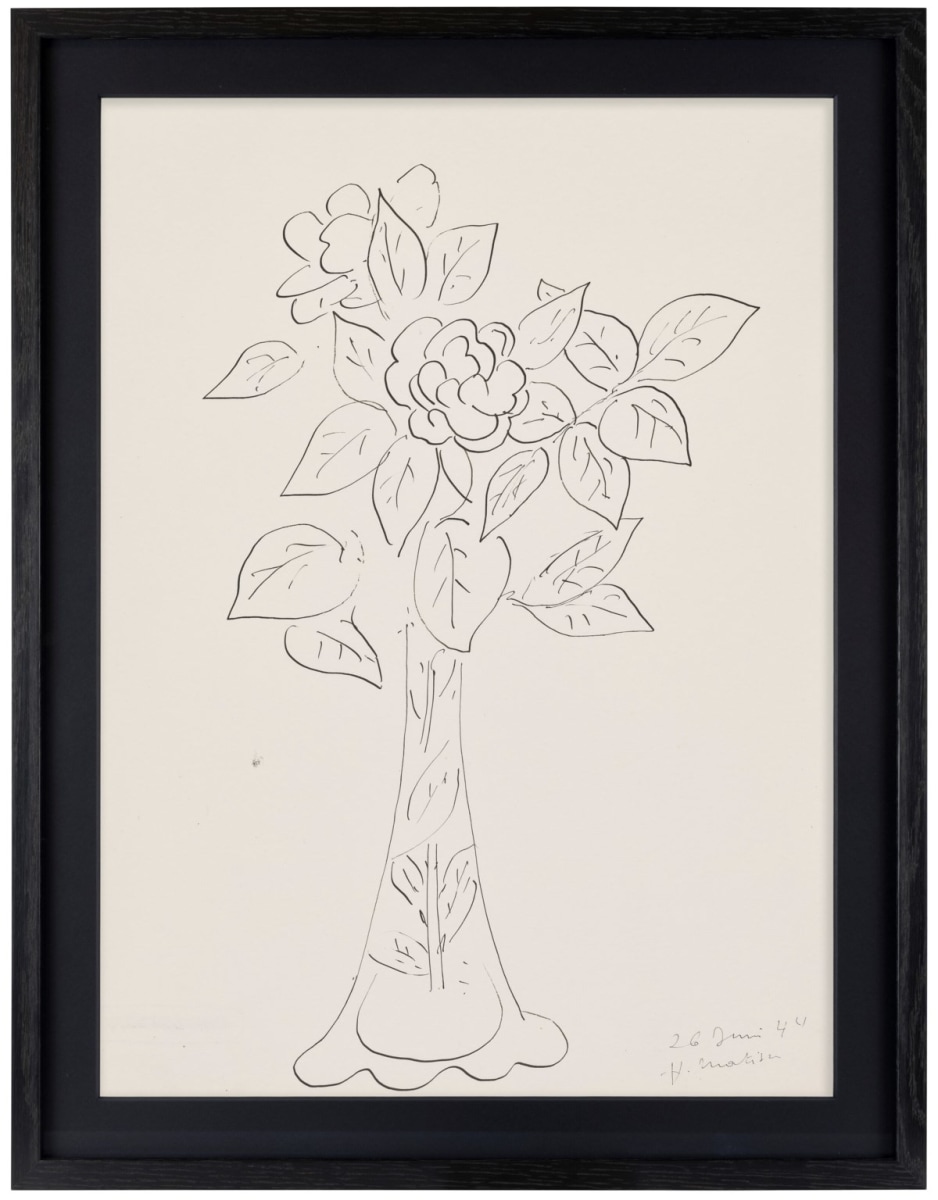
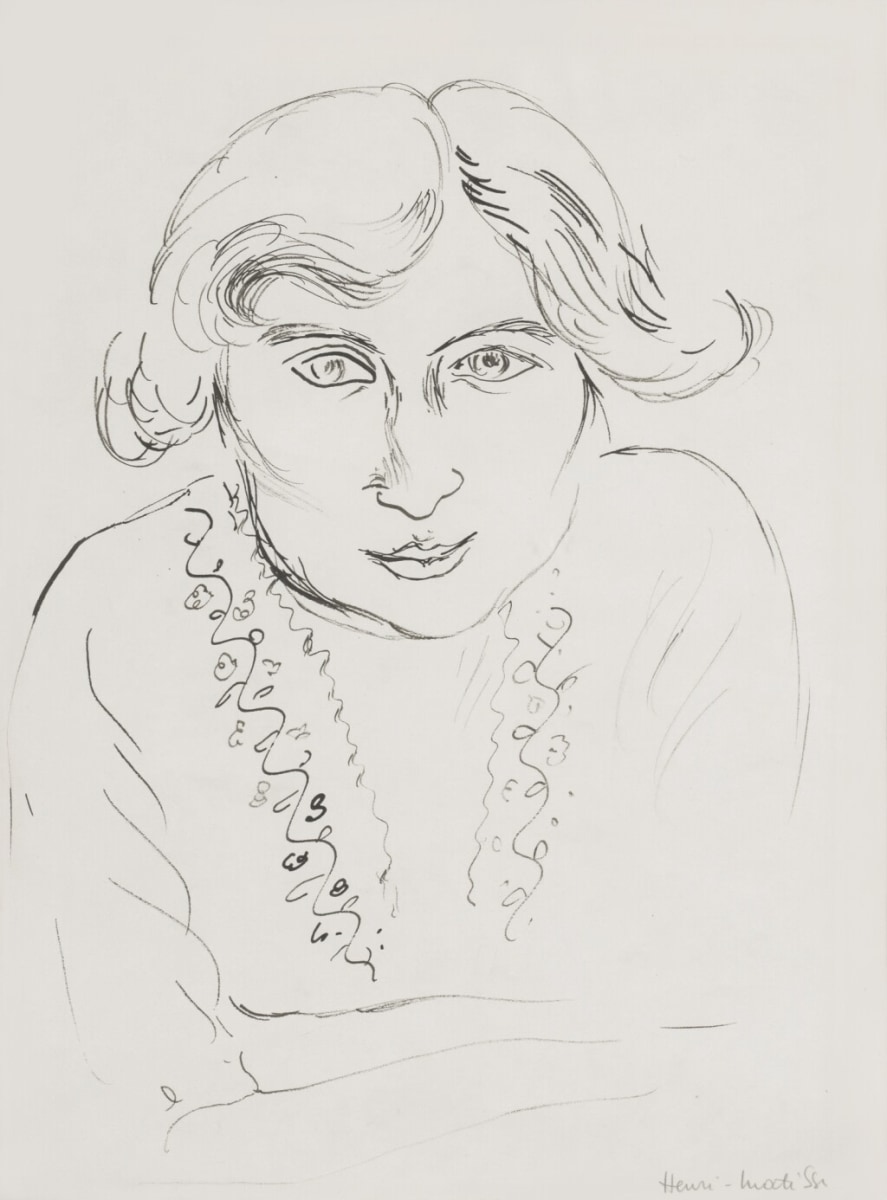
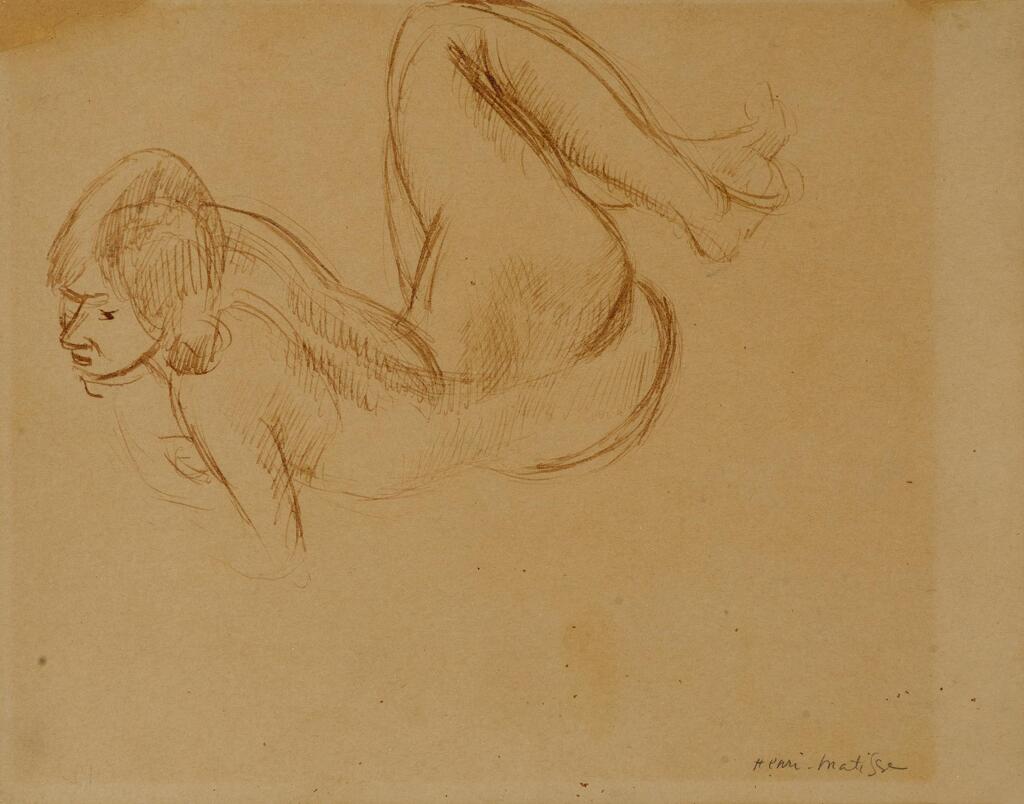
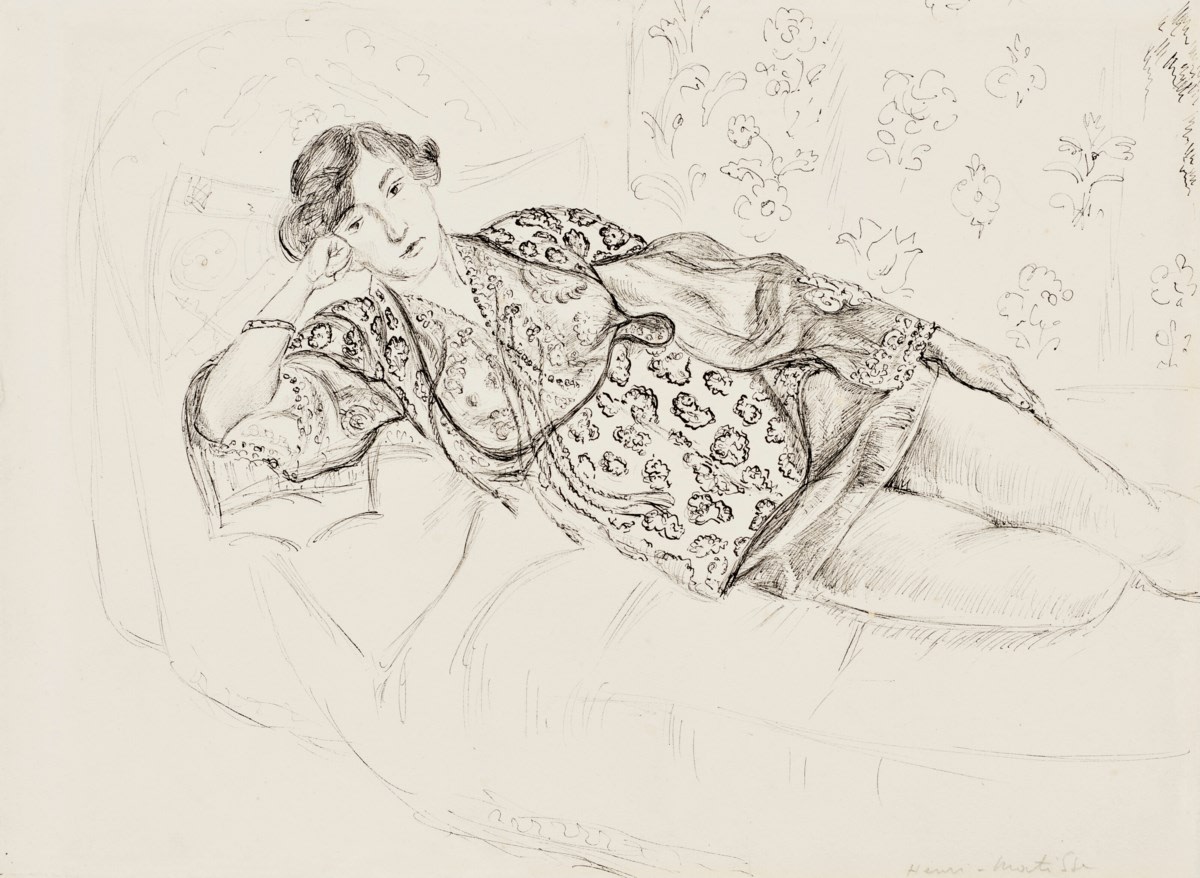
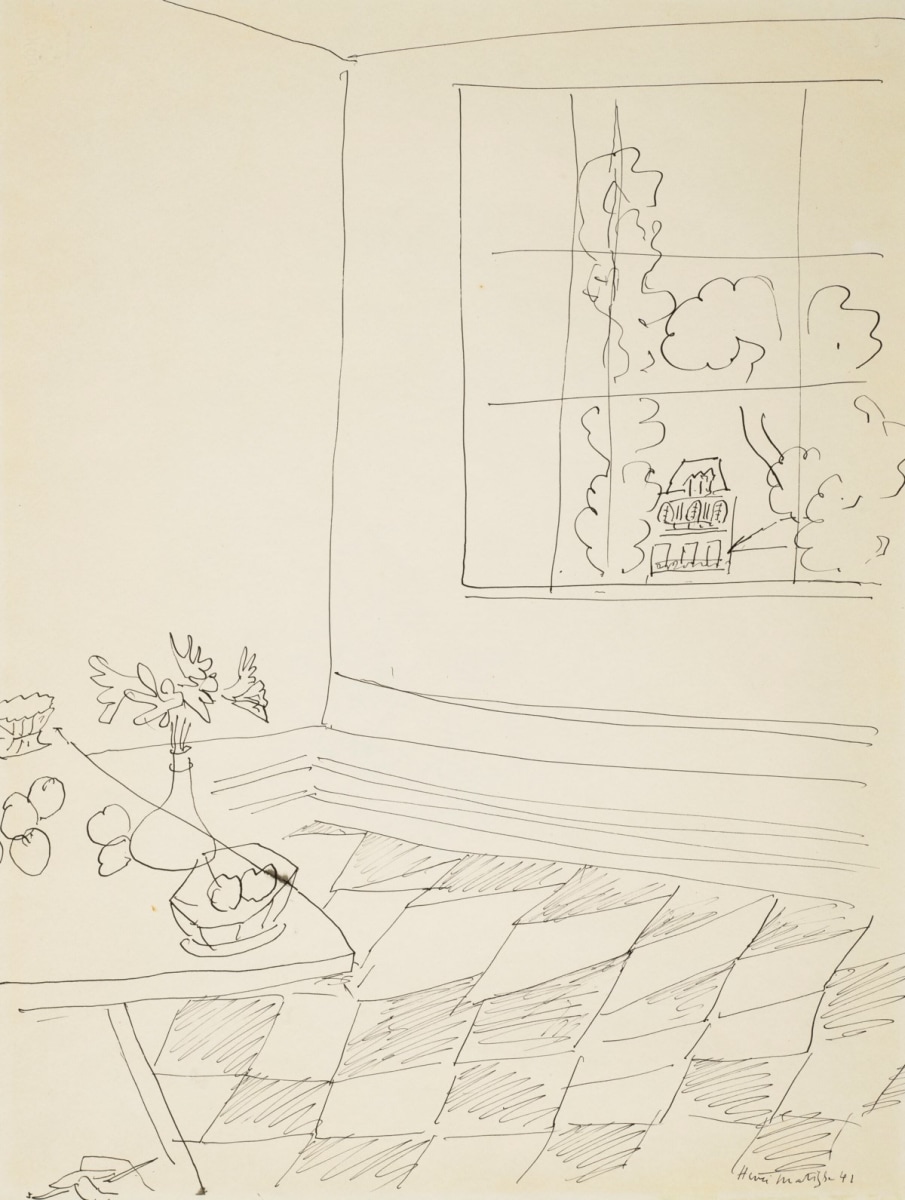
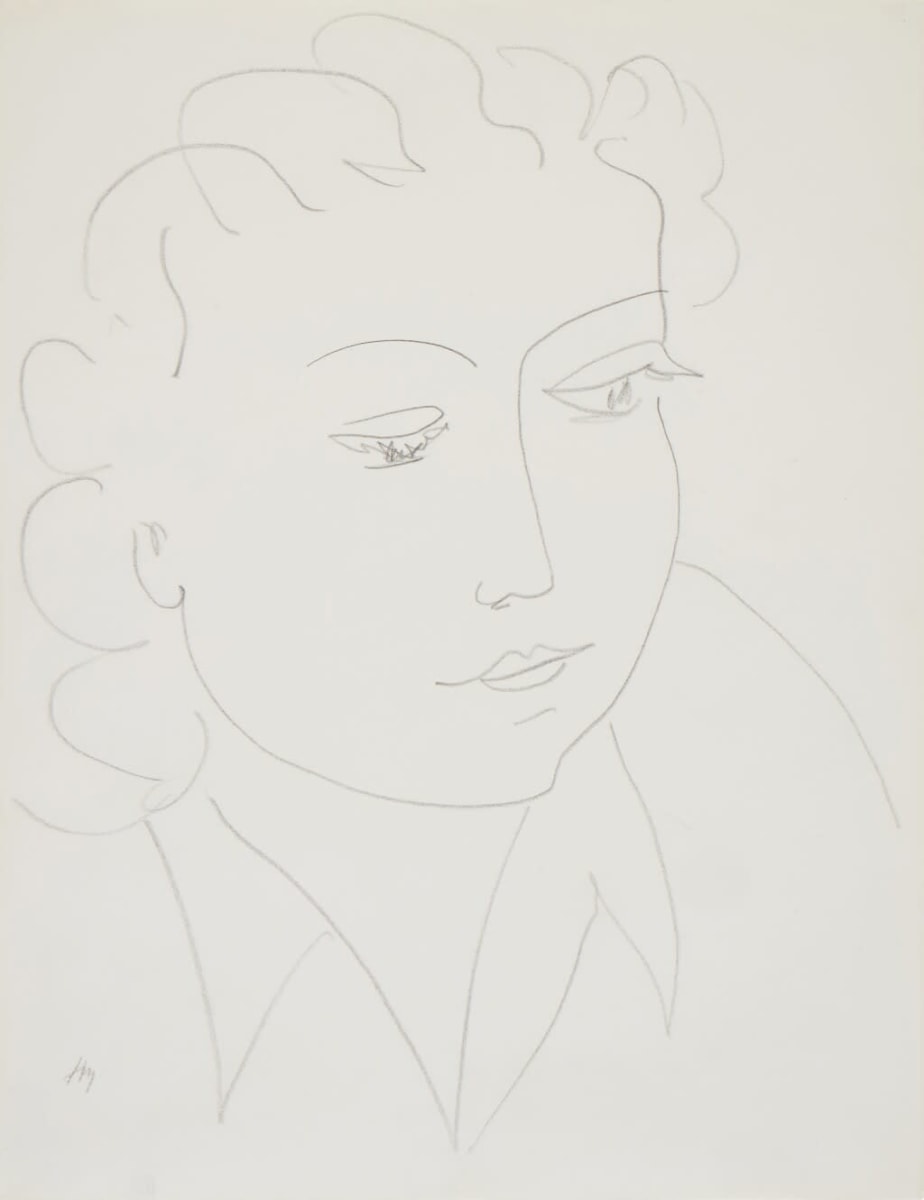
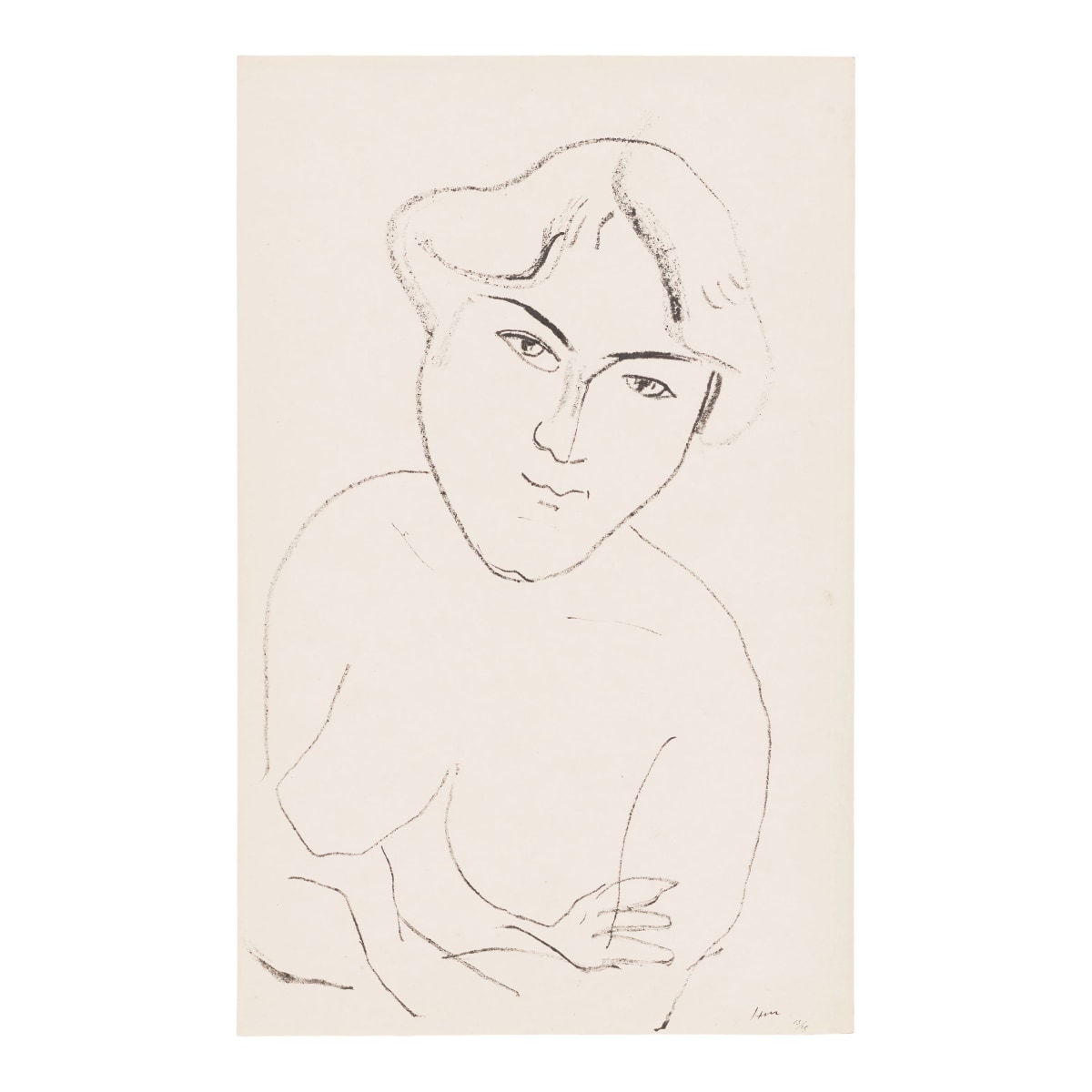
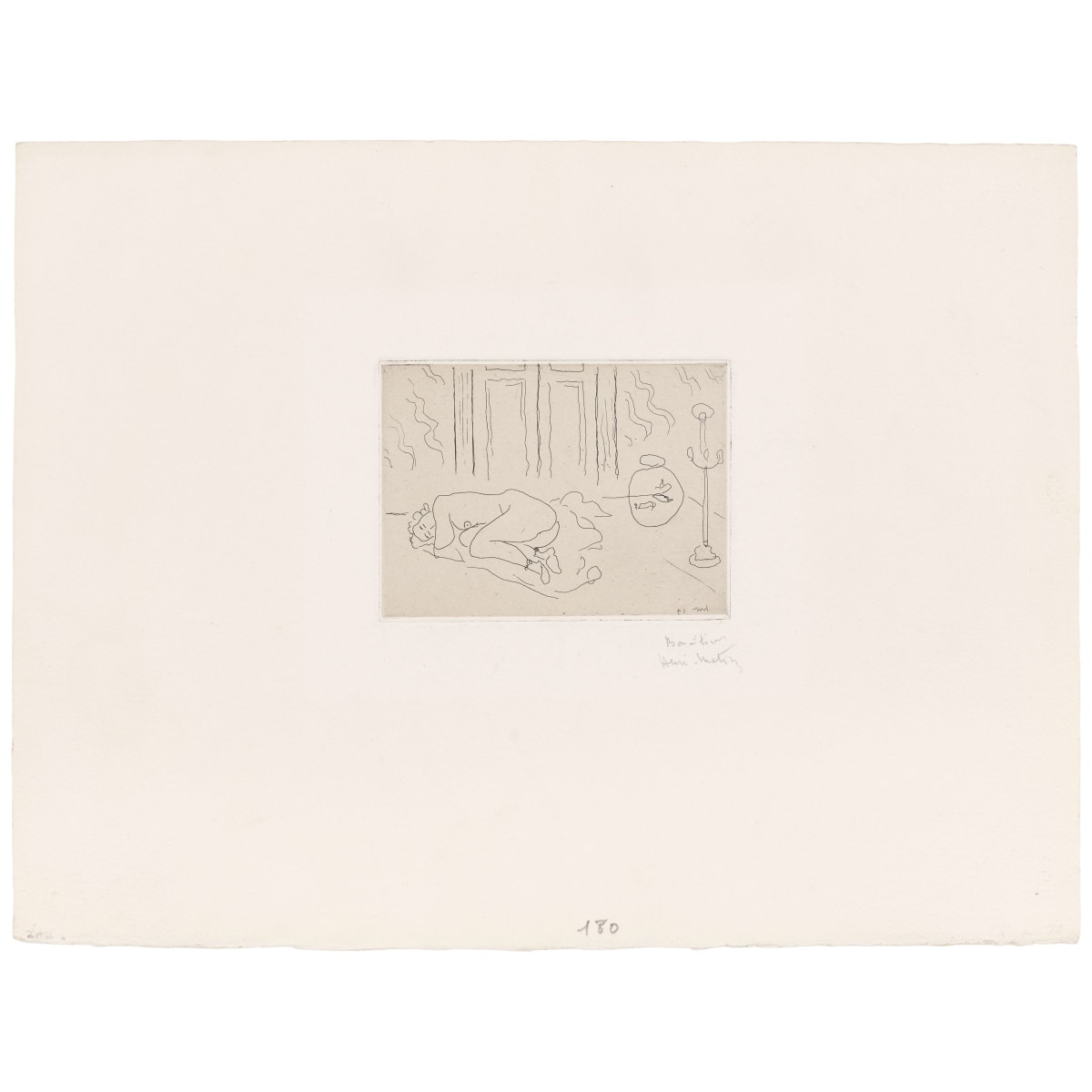
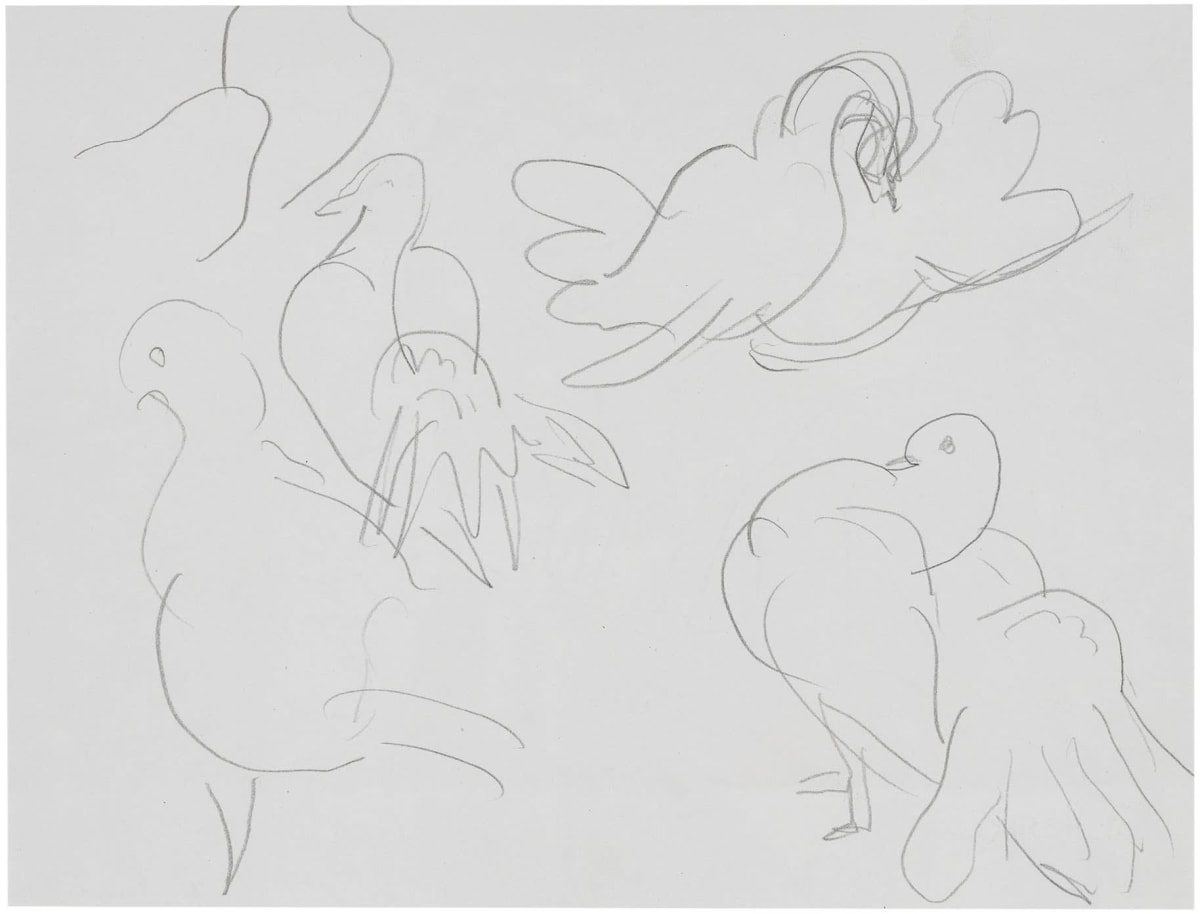
$40,000–$1.5m. The reductive contour heads clear $80k–$500k (Visage, yeux baissés $147,200; Tête de femme au collier $89,600, both May 2026); Femme nue at $512,000 sits at the top of the recent band; weaker or repetitive late sheets $30k–$80k and are where buy-ins occur (Nu debout, $38,303, below estimate).
- Masterpiece oils
- $25m–$80m+ (Fauve works, 1911–17 'radical invention', best Nice interiors and odalisques). Very few reach the market per cycle.
Prints and multiples
Per Artprice data, prints account for approximately 80% of Matisse lots sold at auction, with the majority in the £1,000–£5,000 band and a significant proportion up to £50,000. Individual Jazz pochoir plates typically £5,000–£25,000 (weaker examples under $5,000, best $10,000–$20,000+); a complete Jazz portfolio usually upwards of £50,000, with an exceptional set of printer's proofs at £609,112 (Sotheby's, November 2015). Around twenty Jazz sheets found buyers in Christie's New York autumn 2024 sales.
- Cut outs gouaches decoupees
- Rare at auction; when offered, high seven to eight figures — supply is essentially institutional
- Secondary oils and smaller Nice works
- roughly $2m–$15m depending on date, model, scale and provenance
Recent average context
Egon 2025+ average hammer of ~$334,539 across 88 lots reflects a mixed diet of drawings, prints and bronzes at the four majors; it is not a price level for paintings.
Gallery pricing disclosure
Dealer-level prices are essentially never published. Contact Acquavella Galleries (New York) or the Nahmad family offices (London/Monaco/New York) for current inventory pricing — price on application across all categories.
Liquidity
Market depth
Deep and stratified: an accessible print market under $10k, a broad works-on-paper market $30k–$500k, a bronze market $1m–$17m, and a scarce masterpiece oil market $25m+. Matisse is among the most liquid names in twentieth-century art at every price point.
Sell through
74% across settled lots in the Egon 2025+ window; 100% of catalogued lots older than 90 days have settled. Evening-sale material performs far better — 98% sell-through in the Sotheby's Modern evening auction of 19 May 2026.
Annual volume
Very high by Modern-master standards: hundreds of lots per year globally across all media, with prints alone accounting for roughly 80% of lots per Artprice. Egon's partial four-house database logs 88 lots since January 2025.
- Friction points
- Posthumous-cast and authentication questions in sculpture; the volume of facsimile and after-the-work prints; WWII-era provenance diligence.
Comparables
- Picasso — higher record and deeper volume; Matisse now trading closer to parity at the top lot level
- Giacometti — comparable bronze-market dynamics and estate-cast questions
- Cézanne, Van Gogh, Klimt — masterpiece-tier scarcity comps
- Miró and Léger — comparable works-on-paper and print liquidity at a lower ceiling
Collector base
Current
Global. Bidders from 31 countries participated in the May 2026 Sotheby's Modern evening sale; the 2018 record bid is believed to have come from Asia. Institutional/private-museum buying continues — Acquavella placed a set of Matisse bronze heads with Glenstone. The Nahmad Collection is recorded holding at least 7 works (Wikidata floor).
Historic
- Sergei Shchukin
- Ivan Morozov
- Gertrude, Leo and Sarah Stein
- Claribel and Etta Cone
- Albert C. Barnes
- Peggy and David Rockefeller
- Leonard A. Lauder
- Barbier-Mueller family
Demand pattern
Two distinct buyer pools: a small ultra-high-net-worth group competing for masterpiece oils and canonical bronzes, and a very broad international collector base transacting in drawings, illustrated books and prints under $50k.
Primary market
Note
Reported that the Acquavella family created and still controls the modern Matisse dealer market — a concentration that supports price stability while limiting transparency.
- Structure
- No living-artist primary market. A dealer-controlled secondary market at the top, dominated by a small number of New York/London/Geneva firms.
Auction history
Prior record
Nu de dos, 4 état (Back IV), bronze — $48.8m, Christie's New York, November 2010, against a $25m–$35m estimate; won by Gagosian; the first of the four Back reliefs ever offered at auction.
Second highest
La Chaise lorraine (1919) — $41.5m hammer / $48.4m with fees, Sotheby's New York Modern Evening Auction, 19 May 2026, from the Barbier-Mueller collection; four bidders competed for roughly ten minutes against a $25m low estimate. Independently confirmed as the SECOND-highest price for any Matisse at auction, not a record.
2025 highlights
The Leonard A. Lauder Collection, Sotheby's New York, 18 November 2025: a suite of six Matisse bronzes sold above estimate for a combined ~$49m, led by Figure décorative at $16.7m and La Serpentine at $16.7m — the deepest public test of the Matisse sculpture market in over a decade, and a clear success.
All time record
Odalisque couchée aux magnolias (1923), oil on canvas — $80,750,000, Christie's New York, 8 May 2018, from the estate of Peggy and David Rockefeller (estimate ~$70m). Still the artist's record as of August 2026. Contemporary reporting noted the prior high had been $48.8m and that the winning bid most likely came from Asia.
Note on egon top figure
Egon's 'highest price recorded' of $34,560,000 reflects only its 2025-onward window and is NOT the artist's record; verified record is $80.75m (2018).
2026 recent sales egon db
- Femme nue — $512,000, Sotheby's, May 2026
- Visage, yeux baissés — $147,200, Sotheby's, May 2026 (exceeded high estimate)
- Tête de femme au collier — $89,600, Sotheby's, May 2026 (exceeded high estimate)
- Sans titre — $44,800, Sotheby's, May 2026 (exceeded high estimate)
- Nu debout — $38,303, Christie's, May 2026 (below estimate)
Bought in and failure evidence
Egon partial database (2025 onward, four majors): 88 lots catalogued, 66 sold, 74% sell-through across 86 settled lots — roughly one lot in four fails, concentrated in works on paper and prints where quality, condition and edition status vary widely. Historically, Matisse buy-ins cluster in repetitive late lithographs, posthumous or unsigned impressions and weaker Nice-period sheets; masterpiece-level oils fresh to market rarely fail (both the 2018 and 2026 top lots far exceeded estimate). By contrast the May 2026 Sotheby's Modern evening sale achieved 98% sell-through overall.
Market position
Peer set
- Picasso
- Cézanne
- Van Gogh
- Monet
- Modigliani
- Giacometti
- Klimt
- Miró
- Léger
Supply dynamics
Chronically supply-constrained at the top: the greatest works sit in MoMA, Baltimore, the Barnes, the Hermitage and Pushkin (Shchukin–Morozov, effectively unmarketable) and the Centre Pompidou. Single-owner estate consignments — Rockefeller 2018, Lauder 2025, Barbier-Mueller 2026 — are the mechanism by which top-tier Matisses reach the market.
Relative standing
In the same 19 May 2026 evening sale, Matisse's La Chaise lorraine at $48.4m outperformed Picasso's Arlequin (Buste) at $42.6m and Van Gogh's La Moisson en Provence at $29.4m — a notable reordering of the Modern comp table, since Picasso normally sets the top. Matisse's $80.75m record nonetheless remains roughly half of Picasso's high and about one third of Klimt's $236.4m (November 2025).
Investment outlook
Risks
Top-line results depend on scarce single-owner consignments; the print/multiple stratum (~80% of lots) is flat and diluted by facsimiles and posthumous editions; roughly 26% of lots still fail; the 2018 record is eight years old and untested; macro art-market volatility persists despite 2025 recovery (Christie's/Sotheby's/Phillips global totals of $4.55bn in 2025, +11.1%).
Trajectory
Strongly positive entering H2 2026. Three converging signals: (1) $48.4m in May 2026 at more than double low estimate, beating Picasso and Van Gogh in the same room; (2) ~$49m for six bronzes from the Lauder collection in November 2025, revaluing the sculpture segment; (3) an unusually dense 2026 museum calendar — Grand Palais, SFMOMA, Art Institute of Chicago, Philadelphia, Baltimore, Musée d'Art Moderne de Paris — plus a museum-scale Acquavella selling exhibition, a pattern that historically pulls consignments and lifts estimates in the following two seasons.
Entry points
Signed lifetime prints and Jazz plates ($5k–$25k) for access; reductive contour drawings ($80k–$500k) as the most liquid quality tier and the segment beating estimates in May 2026; bronzes as the most recently repriced category.
Institutional presence
Research updated
Exhibitions
Historic landmarks
- 1904 — first solo exhibition, Galerie Vollard, Paris
- 1905 — Salon d'Automne, Paris: Femme au chapeau and the birth of Fauvism
- 1931 — simultaneous retrospectives in Paris (Galeries Georges Petit), Basel, and at the Museum of Modern Art, New York
- 1951–52 — 'Henri Matisse', Museum of Modern Art, New York (Alfred H. Barr Jr.)
- 1966 — 'Henri Matisse: 64 Paintings', MoMA
- 1992 — 'Henri Matisse: A Retrospective', MoMA (John Elderfield) — the defining modern retrospective
- 2010 — 'Matisse: Radical Invention 1913–1917', Art Institute of Chicago and MoMA (Stephanie d'Alessandro and John Elderfield)
- 2014 — 'Henri Matisse: The Cut-Outs', Tate Modern and MoMA — among the most attended exhibitions in Tate's history
- 2021 — 'A Modern Influence: Henri Matisse, Etta Cone, and Baltimore', Baltimore Museum of Art (160+ works)
- 2022–2024 — 'Matisse: The Red Studio', MoMA, then SMK Copenhagen and Fondation Louis Vuitton, Paris
Current and upcoming 2026
Matisse. 1941–1954
- Dates
- 24 March – 26 July 2026
- Venue
- Grand Palais, Paris
Detail
More than 300 works — paintings, drawings, gouaches découpées, illustrated books, textiles and stained glass — from the Centre Pompidou collection and major international loans; curated by Claudine Grammont, head of the graphic art department at the Musée national d'art moderne – Centre Pompidou. Tickets sold out within days of the opening.
Matisse's Jazz: Rhythms in Color
- Dates
- 7 March – 1 June 2026
- Venue
- Art Institute of Chicago
Detail
First complete presentation of Jazz (20 colour plates plus Matisse's text) since the museum acquired it in 1948, with 50+ additional works from the collection
Matisse's Femme au chapeau: A Modern Scandal
- Dates
- 16 May – 13 September 2026 (long-lead release gave 16 May – 7 September)
- Venue
- SFMOMA (exclusive venue)
Detail
Traces the 1905 Salon d'Automne rupture and the painting's afterlife through Marval, Metzinger, Van Dongen and Vlaminck, the Bay Area Figurative painters (Diebenkorn, Joan Brown, David Park) and contemporary artists including Hockney, Rachel Harrison and Hilary Harkness
Further 2026 museum presentations
- Dates
- 2026
Venue
Philadelphia Museum of Art; Baltimore Museum of Art; Musée d'Art Moderne de Paris; Morris Museum, Morristown NJ (71 Matisse drawings from the Mourlot family archive)
- Detail
- Reported as part of an unusually dense simultaneous museum calendar
Matisse: The Pursuit of Harmony
- Dates
- 9 April – May 2026
- Venue
- Acquavella Galleries, New York (commercial)
Detail
Near-museum-scale gallery survey with loans from MoMA (early sculptures and drawings), the Philadelphia Museum of Art (1910s paintings), the Phillips Collection (Studio, Quai Saint-Michel, 1916), the Metropolitan Museum of Art (Reclining Odalisque, 1926) and the Cleveland Museum of Art; accompanied by an illustrated Rizzoli catalogue with essays by leading Matisse scholars
Publications
- Catalogue raisonné apparatus maintained by the Archives Henri Matisse / Succession H. Matisse (Wanda de Guébriant); Marguerite Duthuit-Matisse and Claude Duthuit, catalogues raisonnés of the prints, illustrated books and sculpture
- Alfred H. Barr Jr., 'Matisse: His Art and His Public' (MoMA, 1951) — foundational scholarship
- Hilary Spurling, 'The Unknown Matisse' (1998) and 'Matisse the Master' (2005) — the standard two-volume biography
- Jack Flam, 'Matisse: The Man and His Art' and 'Matisse in the Cone Collection: The Poetics of Vision' (Baltimore Museum of Art, 2001)
- John Elderfield, 'Henri Matisse: A Retrospective' (MoMA, 1992); d'Alessandro and Elderfield, 'Matisse: Radical Invention 1913–1917' (2010)
- 'Matisse: The Red Studio' (MoMA, 2022) — multi-year X-ray and ultraviolet technical/conservation research
- Acquavella / Rizzoli catalogue, 'Matisse: The Pursuit of Harmony' (2026)
Museum collections
Baltimore Museum of Art
- Tier
- First-rank for this artist — the world's largest public holding
Holdings
More than 1,200 paintings and works on paper. The Cone sisters collected approximately 700 Matisse works, with Etta bequeathing more than 600 to the BMA on her death
Acquisition type
Bequest of individual collectors (Etta Cone, 1949/1950) — offered and accepted rather than curatorial purchase, but historically decisive and the reason the BMA is the world reference collection
- Credit line verbatim
- The Baltimore Museum of Art: The Cone Collection, formed by Dr. Claribel Cone and Miss Etta Cone of Baltimore, Maryland, BMA 1950.
Museum of Modern Art, New York
- Tier
- First-rank
Holdings
Deep holdings across painting, sculpture, drawing and prints; 41 recorded in Wikidata (a floor). Icons include The Red Studio, Dance (I), The Piano Lesson, Memory of Oceania, The Swimming Pool
Acquisition type
CURATORIAL PURCHASE — named acquisition fund. MoMA subsequently mounted 'Masterworks Acquired through the Mrs. Simon Guggenheim Fund' (1952) and the monographic 'Henri Matisse' (1951–52)
- Credit line verbatim
- Mrs. Simon Guggenheim Fund. 8.1949 (The Red Studio, Issy-les-Moulineaux, fall 1911)
Centre Pompidou / Musée National d'Art Moderne, Paris
- Tier
- First-rank
- Holdings
- 52 recorded (Wikidata floor); the French national collection and the lending backbone of the 2026 Grand Palais exhibition
- Acquisition type
- State acquisition / dation — national cultural recognition
Credit line verbatim
credit line not published in sources consulted; French national holdings derive from a mix of state purchase (achat de l'État), dation and Matisse family donations
Metropolitan Museum of Art, New York
- Tier
- First-rank
- Holdings
- Substantial (confirmed via public museum API); includes Reclining Odalisque (1926), lent to the 2026 Acquavella exhibition
- Credit line verbatim
- credit line not published in sources consulted
Art Institute of Chicago
- Tier
- First-rank
- Holdings
- 50+ works including Bathers by a River, Daisies (1939) and the complete Jazz portfolio, acquired by the museum in 1948
- Acquisition type
- Museum acquisition (Jazz, 1948)
- Credit line verbatim
- credit line not published in sources consulted; the Art Institute states Jazz has not been shown in its entirety since its acquisition in 1948
View 12 more records
San Francisco Museum of Modern Art
- Tier
- First-rank
Holdings
Femme au chapeau (Woman with a Hat, 1905) — the Fauve icon, described by the museum as one of the most iconic works in its collection and the subject of a dedicated 2026 exhibition
- Credit line verbatim
- credit line not published in sources consulted (the painting entered SFMOMA via the Elise S. Haas bequest)
Philadelphia Museum of Art
- Tier
- First-rank
- Holdings
- Paintings of the 1910s, lent to Acquavella in 2026; a 2026 Matisse presentation also reported
- Credit line verbatim
- credit line not published in sources consulted
Cleveland Museum of Art
- Tier
- First-rank
- Holdings
- Confirmed via museum API; a late interior lent to Acquavella in 2026
- Credit line verbatim
- credit line not published in sources consulted
The Phillips Collection, Washington DC
- Tier
- Major
- Holdings
- Studio, Quai Saint-Michel (1916)
- Credit line verbatim
- credit line not published in sources consulted
Musée Matisse, Le Cateau-Cambrésis (founded 1952) and Musée Matisse, Nice
- Tier
- Dedicated monographic public museums
- Holdings
- 20 and 12 recorded respectively (Wikidata floors); actual holdings far larger
- Acquisition type
- Artist and family donation — the strongest available marker of state/municipal cultural canonisation
- Credit line verbatim
- credit line not published in sources consulted; core holdings are donations by Matisse himself and by his heirs
Statens Museum for Kunst (SMK), Copenhagen
- Tier
- First-rank national museum
- Holdings
- 20 recorded (Wikidata floor); co-organiser with MoMA and Fondation Louis Vuitton of 'Matisse: The Red Studio'
- Credit line verbatim
- credit line not published in sources consulted
Pushkin Museum of Fine Arts, Moscow and State Hermitage, St Petersburg
- Tier
- First-rank
Holdings
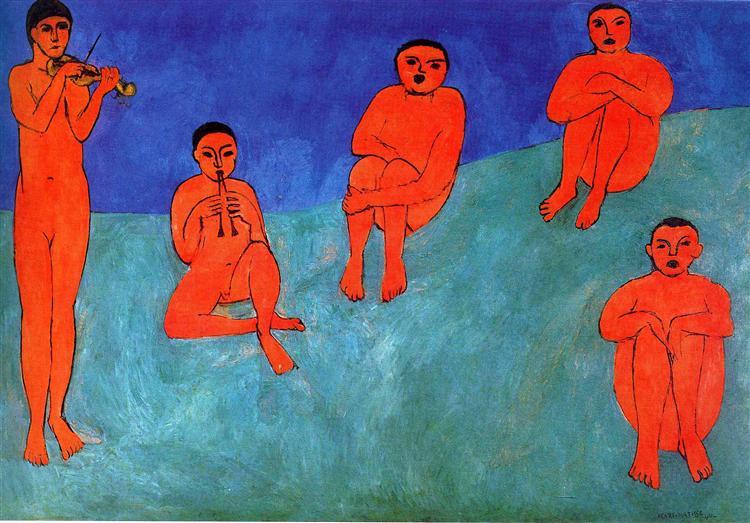
8 recorded at the Pushkin (Wikidata floor); the Shchukin and Morozov holdings, including La Danse and La Musique, are among the greatest Matisse groups in existence and are permanently off-market
- Credit line verbatim
- credit line not published; holdings originate in the 1918 nationalisation of the Shchukin and Morozov collections
Musée d'Art Moderne de Paris
- Tier
- Major municipal museum
- Holdings
- 15 recorded (Wikidata floor), including a version of La Danse mural cycle; 2026 Matisse presentation reported
- Credit line verbatim
- credit line not published in sources consulted
Musée de Grenoble
- Tier
- Major regional French museum
- Holdings
- 10 recorded (Wikidata floor)
- Credit line verbatim
- credit line not published in sources consulted
Victoria & Albert Museum, London; Smithsonian Institution; Europeana member museums
- Tier
- First-rank / major
- Holdings
- Confirmed via public API name-matched search — prints, illustrated books, textiles and design objects
- Credit line verbatim
- credit line not published in sources consulted
Barnes Foundation (Philadelphia), Fondation Beyeler, Glenstone, Nahmad Collection
- Tier
- Private foundations and private collections — NOT counted as public-museum acquisitions on the institutional axis
Holdings
Barnes holds The Dance mural (1932–33) and a major group; Glenstone acquired a set of Matisse bronze heads via Acquavella; Nahmad Collection records at least 7 works
- Credit line verbatim
- not applicable / credit line not published
AGGREGATE NOTE
- Tier
- n/a
Holdings
At least 309 works confirmed via public museum APIs (a name-matched FLOOR, not a holdings total). Matisse is present in effectively every encyclopedic and modern-art museum worldwide. Institutions not directly queried and therefore under-represented here include Tate, the Guggenheim, the National Gallery of Art (Washington), LACMA, the Musée de l'Orangerie and most Asian and Latin American museums.
- Credit line verbatim
- not applicable
Awards and recognition
- Grand Prize for Painting, XXV Venice Biennale, 1950
- Carnegie Prize, Pittsburgh International, 1927
- Légion d'honneur (French state honour)
- Two dedicated public monographic museums in France: Musée Matisse, Le Cateau-Cambrésis (founded 1952 with the artist's own donation) and Musée Matisse, Nice
- Chapelle du Rosaire, Vence (1948–51) — total design commission, now a French heritage monument
Security and provenance events
22–23 March 2026: two masked thieves removed three works from the Magnani-Rocca Foundation, a private museum about 12 miles from Parma, in a raid of roughly three minutes — Renoir's 'Les Poissons', Cézanne's 'Tasse et plat de cerises' and Matisse's 'Odalisque sur la terrasse'. All three were recovered by the Carabinieri art-recovery squad on 14 August 2026 during searches ordered by prosecutors. CORRECTION TO PRESS FRAMING: the Matisse was a colour aquatint valued at approximately €20,000 (~$23,000), not a painting; the Cézanne (€6m) and Renoir (€3m) carried the value.
Career & Biography
Research updated
Identity
- Birth
- 31 December 1869, Le Cateau-Cambrésis, Nord, France
- Death
- 3 November 1954 (aged 84), Nice (Cimiez), France
- Gender
- Male
- Full name
- Henri Émile Benoît Matisse
- Nationality
- French
Current location
Deceased; moral rights and authentication administered by Succession H. Matisse / Archives Henri Matisse (Paris), licensed in the US through Artists Rights Society (ARS), New York
Primary working locations
Paris and Issy-les-Moulineaux (1890s–1917); Nice/Cimiez and Vence, Côte d'Azur (1917–1954); Collioure summers (1905–06); Tangier, Morocco (1912–13)
Personal life
Married Amélie Parayre in 1898 (separated 1939); three children including Marguerite, active in the Resistance and arrested by the Gestapo, and Pierre Matisse, the New York dealer. The Humbert financial scandal implicating his wife's family left him, per Hilary Spurling, sole breadwinner for an extended household early in his career. The 1941 cancer surgery is the pivot of the late work. Lydia Delectorskaya was his model, studio manager and archivist from the 1930s.
Career timeline
- 1896–1903: dark-toned still lifes and interiors under Chardin/Cézanne influence; buys Cézanne's Three Bathers in 1899, a lifelong touchstone
- 1904: first one-man exhibition organised by Ambroise Vollard, Paris; summer with Signac produces Luxe, calme et volupté
- 1905: Salon d'Automne — Femme au chapeau triggers the 'Fauves' scandal; Fauvism launched; painting bought by Leo and Gertrude Stein
- 1906–1910: Bonheur de vivre, Blue Nude, La Danse and La Musique for Sergei Shchukin; Académie Matisse teaching 1908–11
- 1911–1917: 'radical invention' period — The Red Studio (1911), Moroccan journeys (1912–13), austere quasi-Cubist canvases 1913–17
- 1917–1930: Nice period — odalisques and patterned interiors; Henriette Darricarrère principal model 1920–27; designs for Diaghilev's Le Chant du rossignol (1920)
- 1930–1931: travels to Tahiti and the USA; Barnes Foundation mural The Dance; retrospectives in Paris, Basel and at MoMA in 1931
- 1941: near-fatal abdominal surgery in Lyon; largely bedridden thereafter — begins the 'second life' of drawing, illustrated books and cut-outs
- 1943–1948: Vence years; Jazz published by Tériade in 1947; large-scale gouaches découpées
- 1948–1951: Chapelle du Rosaire, Vence — architecture, stained glass, ceramics and vestments, regarded by Matisse as his masterpiece
- 1952: Musée Matisse founded at Le Cateau-Cambrésis with the artist's own donation; monumental Blue Nudes and The Snail (1953)
- 3 November 1954: dies in Nice
Studio practice
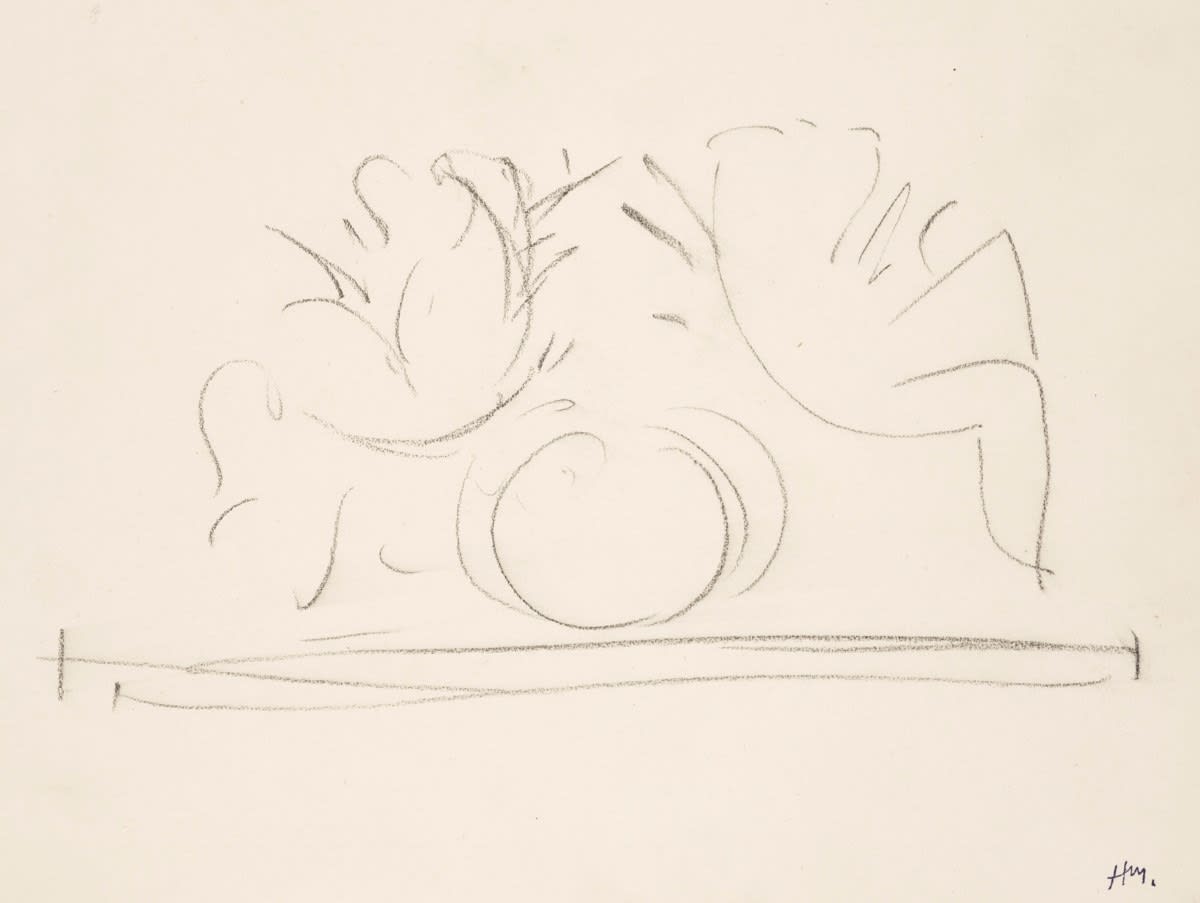
Serial and revisionary: a subject reworked through successive states (photographically documented for the 1913–17 canvases; the four Nu de dos bronze reliefs of 1908–31 are the sculptural equivalent). After the 1941 surgery he worked from bed and wheelchair with assistants who pre-painted gouache sheets that he cut with scissors ('drawing with scissors') and had pinned and repositioned across studio walls; late drawing executed with charcoal fixed to a bamboo pole.
Education and training
- Began a career in law, 1887–1888, before committing to painting (started painting during a convalescence in 1889)
- École des Arts Décoratifs, Paris; Académie Julian under William-Adolphe Bouguereau (from 1891)
- Failed the École des Beaux-Arts entrance examination; joined Gustave Moreau's studio unofficially in 1892 and completed his studies there — Moreau is the decisive pedagogical influence ('Colors must be thought, dreamed, imagined')
- Copyist at the Louvre after Chardin, Poussin, de Heem; exposure to Impressionism/Neo-Impressionism via John Peter Russell (Belle-Île, 1896) and Paul Signac (Saint-Tropez, 1904)
Political social context
Remained in occupied France (Nice/Vence) during WWII while his wife and daughter worked with the Resistance; his modernism was condemned by the Nazi regime, and the market for his work now carries a substantial restitution/provenance dimension (Paul Rosenberg and other looted-art histories).
Patrons and early collectors
- Sergei Shchukin
- Ivan Morozov
- Gertrude, Leo and Sarah Stein
- Claribel and Etta Cone
- Albert C. Barnes
- Ambroise Vollard then Bernheim-Jeune and Paul Rosenberg (dealers)
- Pierre Matisse, his son, dealer in New York from 1931
Influences and contemporaries
Influences
- Chardin and the French still-life tradition
- Cézanne (owned Three Bathers)
- Gauguin
- Van Gogh
- Signac/Seurat neo-Impressionism
- Gustave Moreau
- Islamic art (1910 Munich exhibition)
- Japanese woodblock prints
- African and Oceanic sculpture
- Moroccan light and textiles
Later lineage
- Bay Area Figurative painters (Richard Diebenkorn, Joan Brown, David Park)
- David Hockney
- Ellsworth Kelly
- Contemporary responses: Rachel Harrison, Hilary Harkness
Contemporaries and rivals
- Pablo Picasso — lifelong dialectical rivalry; Picasso was reportedly impressed by Matisse's 1931 Paris retrospective while preparing his own in the same gallery
- André Derain
- Maurice de Vlaminck
- Albert Marquet
- Georges Braque
- Kees van Dongen
- Jean Metzinger
- Jacqueline Marval
Artistic Profile
Research updated
Style
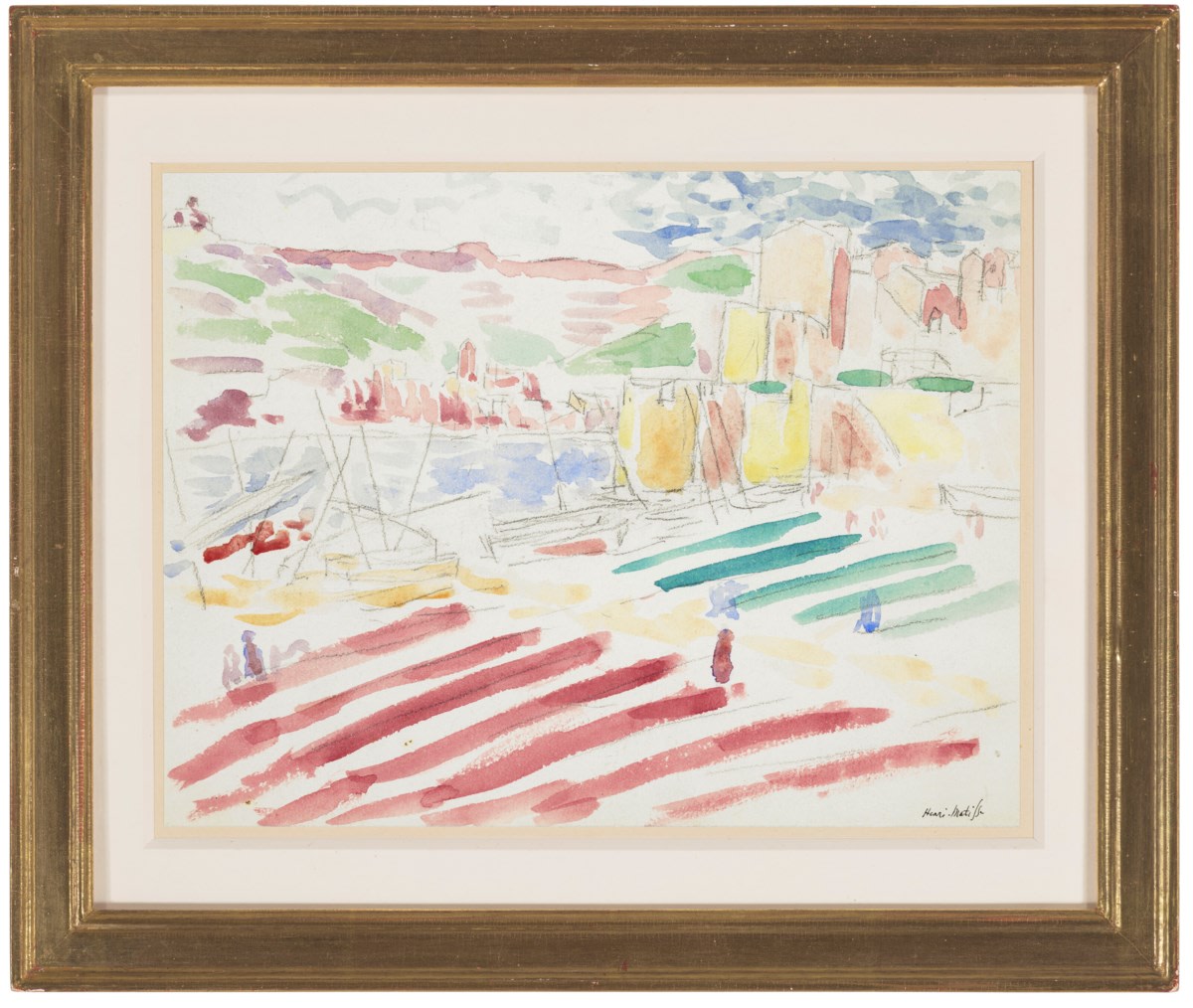
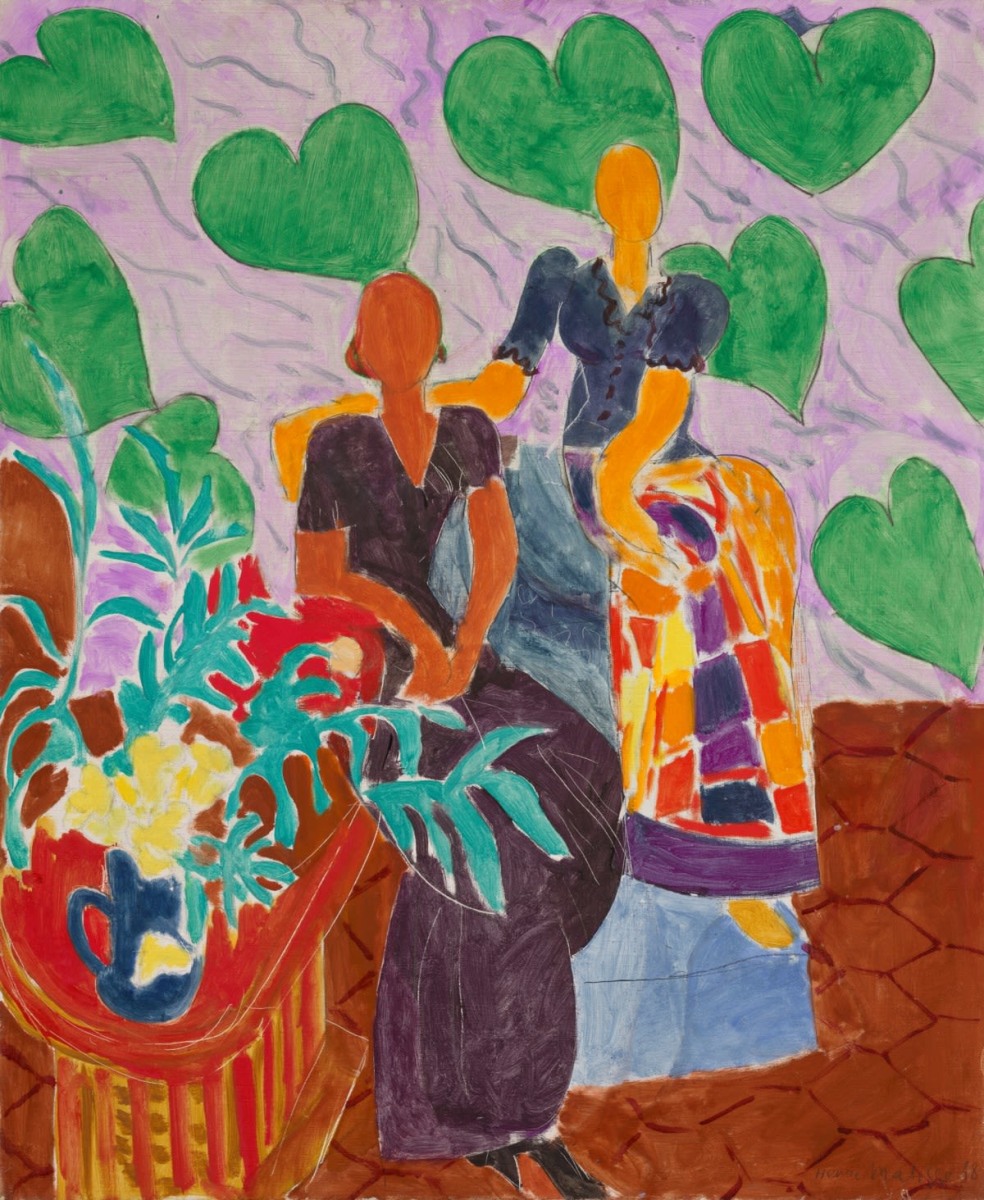
Colour deployed as an autonomous structural and emotional force rather than as description, paired with a radically economical drawn line. Flattened, frontal, decoratively organised pictorial space in which pattern, figure and ground are held in equilibrium — the 'harmony' that gives the 2026 Acquavella survey its title. Two distinct registers coexist across the career and account for the low aggregate coherence in Egon's fingerprint: (a) high-key saturated chromatic painting, and (b) achromatic reductive contour drawing.
Evolution
- 1890s dark tonal realism → 1904 divisionism → 1905–08 Fauve chromatic explosion
- 1908–12 decorative flat monumentality (La Danse, La Musique, The Red Studio)
- 1913–17 austere architectonic 'radical invention' under Cubist pressure
- 1917–30 Nice period: softened, sensuous, patterned interiors and odalisques
- 1930s monumental simplification (Barnes Dance mural) and pure linear illustration
- 1941–54 the late 'second life': cut-outs, illustrated books, the Vence chapel, monumental Blue Nudes and The Snail
Influences
- Chardin and the French still-life tradition
- Cézanne — structural planes; Matisse owned Three Bathers
- Signac and neo-Impressionist divisionism
- Gauguin's flat colour and Van Gogh's chromatic intensity
- Islamic art and Persian miniatures (1910 Munich exhibition); Moroccan textiles and light
- Japanese woodblock prints
- African and Oceanic sculpture
Visual language
Disagreements and gaps
- DISAGREEMENT: the fingerprint's palette tags (achromatic, monochromatic) and its single medium tag ('drawing') are skewed by an auction-lot sample dominated by works on paper. Matisse's defining contribution is CHROMATIC — Venetian red saturating an entire canvas in The Red Studio (1911), ultramarine-on-white in the Blue Nudes, primary-colour pochoir in Jazz. An aesthetic model built only on achromatic contour drawings mis-describes the artist.
- MISSING: the gouache découpée / cut-out as a medium in its own right — gouache-painted paper cut with scissors and pinned, from 1943. This is the late signature body of work, the subject of the 2014 Tate/MoMA blockbuster and the 2026 Grand Palais exhibition, and it is absent from the tag set.
- MISSING: sculpture. Matisse produced roughly 80 bronzes; the Nu de dos reliefs, the Jeannette heads, La Serpentine and Figure décorative are central both art-historically and, per the November 2025 $49m Lauder result, commercially.
- MISSING: the applied and architectural work — stained glass, ceramics, vestments and textiles, culminating in the Chapelle du Rosaire at Vence (1948–51), which Matisse considered his masterpiece.
- MISSING: the 'radical invention' period of 1913–17 — grey, black, architectonic, quasi-Cubist canvases (Bathers by a River, The Piano Lesson) whose severity contradicts the aggregate 'serene/decorative' emotional register entirely.
- MISSING: the illustrated book (livre d'artiste) as a distinct category — Jazz, Mallarmé's Poésies, Pasiphaé, Ronsard's Florilège.
Confirms existing fingerprint
- Centralized composition, frontality and figure-ground tension are genuinely diagnostic
- The single uninterrupted contour describing a female head on unmarked white ground is a real and repeated late-career type — Visage, yeux baissés; Tête de femme au collier; Tête de jeune fille; Portrait de Lydia
- Contemplative and serene affect, and the collector themes of intimacy, the body, the gaze and portraiture as presence, hold across the works on paper
- Achromatic and monochromatic palettes are correct FOR THE DRAWINGS
- The Cézannesque still-life exemplar is well founded and is corroborated by the current top of the market: La Chaise lorraine (1919), a wooden chair topped with a plate of peaches from the pivotal first Nice year, made $48.4m in May 2026
Signature series
- Fauve portraits of Amélie — Femme au chapeau (1905), The Green Line
- La Danse and La Musique (Shchukin commission, 1909–10)
- Nu de dos I–IV bronze reliefs (1908–31)
- Jeannette head series
- The Nice odalisques (1920s)
- Jazz (1947)
- Blue Nudes (1952)
- The Snail, Memory of Oceania, The Parakeet and the Mermaid (1952–53)
- Chapelle du Rosaire, Vence (1948–51)
Themes and subjects
- The odalisque and the model in an interior (Nice period; Henriette Darricarrère, Lydia Delectorskaya)
- The studio as subject and as displaced self-portrait
- Windows and the interior/exterior threshold
- Dance, music and rhythmic bodily movement
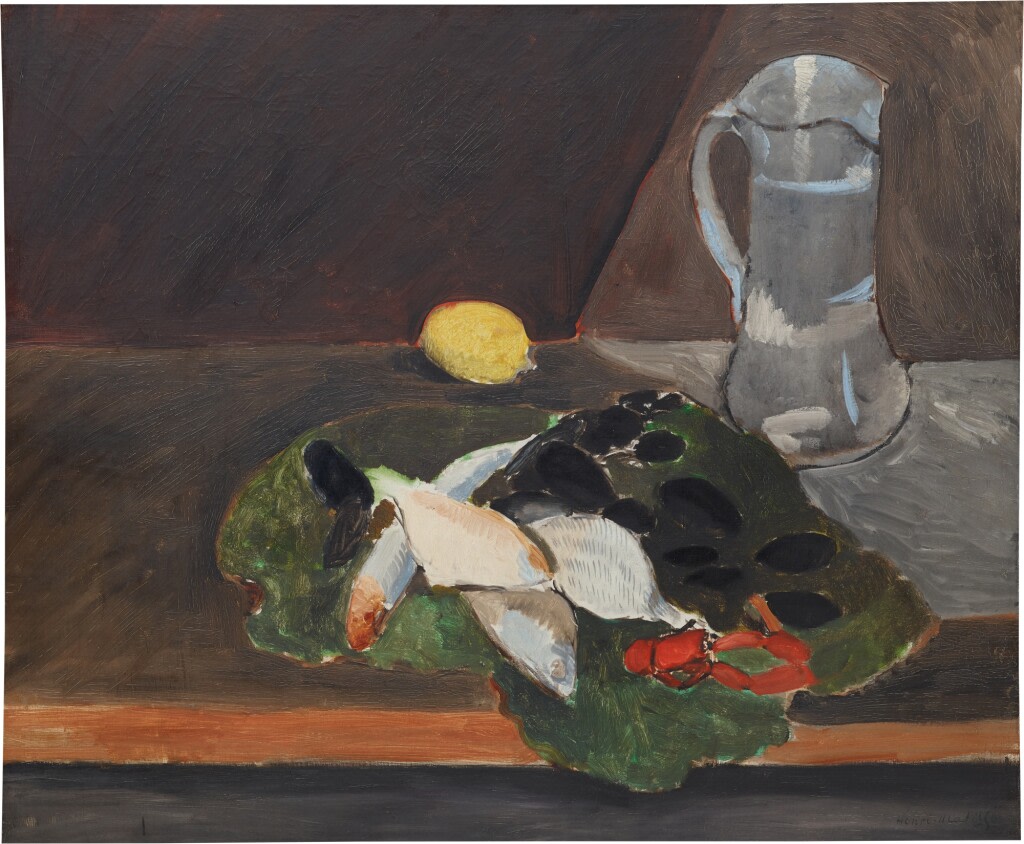
- Still life — tabletop arrangements, goldfish, fruit, fish, patterned cloth
- The decorative, the arabesque and textile pattern
- Bathers and the Arcadian idyll
- Intimacy, portraiture as presence and the returned gaze (the drawings)
- Nature reduced to sign — leaf, algae, coral, star (the cut-outs)
Movements and periods
- Fauvism (founder, 1905–08)
- Post-Impressionism (formative)
- Modernism / Early Modern, 1900–1945
- Proto-abstraction via the cut-outs (1943–54)
- School of Paris
Techniques and mediums
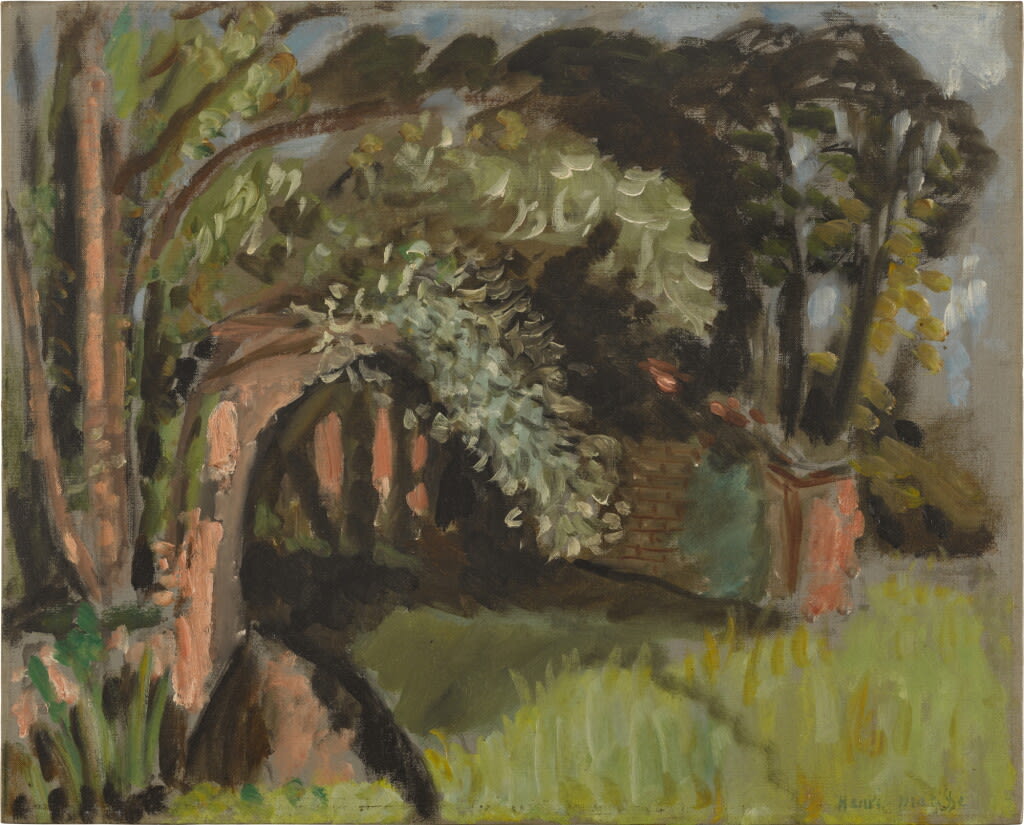
- Oil on canvas, often worked alla prima with broad loaded strokes, scumbling and scraped-back revision, exposed underlayers at edges
- Graphite, charcoal, pen-and-ink and crayon drawing using a single continuous unshaded contour on white wove paper, frequently deckle-edged and signed lower right
- Gouache découpée — hand-cut pre-painted paper, 1943–54
- Bronze sculpture modelled through successive states
- Lithography, etching, drypoint, linocut, aquatint and pochoir/stencil
- Livres d'artiste — Jazz (Tériade, 1947, 20 colour plates with the artist's text), Poésies de Stéphane Mallarmé, Pasiphaé, Florilège des Amours de Ronsard
- Stained glass, ceramic tile, textile and liturgical vestment design (Vence)
Critical Reception
Research updated
Critical reception
Historical arc
From scandal to canon. The 1905 Salon d'Automne debut of Femme au chapeau provoked derision and gave Fauvism its name; SFMOMA frames the painting as central to a defining moment of rupture in the history of modern art whose impact has continued for more than 120 years. By 1931 Matisse held simultaneous retrospectives in Paris, Basel and New York; Alfred Barr's 1951 MoMA monograph fixed his standing in the American canon; Elderfield's 1992 MoMA retrospective and the 2014 Tate/MoMA Cut-Outs exhibition established the late work as the equal of the Fauve period.
Critical debates
- The decorative versus the radical — whether the Nice odalisques are retreat or reinvention
- Orientalism and the politics of the odalisque subject, now a dominant contemporary critical frame
- The ontological status of the cut-outs — painting, sculpture, drawing or a fourth category
- The Matisse–Picasso dialectic as the organising axis of European modernism
- Studio labour and the agency of assistants and models (Lydia Delectorskaya, Henriette Darricarrère) in the late work
Scholarly status
A continuous, market-independent scholarly literature exists across nine decades — Barr, Elderfield, Flam, Spurling, d'Alessandro, Grammont — alongside catalogues raisonnés of the prints, illustrated books and sculpture and multi-year technical research (MoMA's X-ray and ultraviolet study of The Red Studio, which revealed the painting's blue-walled, ochre-furnished first state beneath the Venetian red). Matisse's absence from any survey of twentieth-century art would be conspicuous.
Current 2026 reception
Overwhelmingly positive and unusually intense. Critics describe the Grand Palais 'Matisse. 1941–1954' as a reframing rather than a familiar master survey, arguing that the late work was radical reinvention rather than a graceful coda and that Matisse did not abandon painting for the cut-outs; the show sold out its opening weeks. Puck's market column called Matisse 'inescapable' in 2026 given six simultaneous museum presentations. The New Criterion (June 2026 issue) has published on the Chicago Matisse scholarship.
Academic positioning
Matisse is treated in the standard survey literature as one of the two poles of twentieth-century European modernism alongside Picasso — the colourist and draughtsman against the constructor and destroyer of form. His late cut-outs are now read as a bridge to post-war abstraction (Kelly, colour-field painting) rather than as an epilogue.
Publications and media
- The Art Newspaper, 20 May 2026 — 'Bidding battle for Matisse leads Sotheby's $303.3m Modern art evening sale in New York'
- Artforum, 19 May 2026 — 'Robust Sales at Sotheby's, Phillips Suggest Art Market Upswing'
- Artsy — '17 New Artist Auction Records Set in May 2026' (Matisse named as sale leader, NOT among the records set)
- The Art Newspaper, 23 March 2026 — feature on the Grand Palais late-work exhibition
- ARTnews, 2026 — 'Acquavella to Show Major Matisse Exhibition This Spring'
- Puck, 2026 — 'How the Acquavella Family Controls the Matisse Market'
- Bank of America Private Bank, Art Market Update Spring 2026 — cites the SFMOMA Femme au chapeau exhibition as a season highlight
- The New Criterion, June 2026 — 'Matisse in Chicago'
- Forbes, 2022 — on MoMA's Red Studio conservation research
- Extensive mainstream coverage of the Magnani-Rocca theft and August 2026 recovery (AP, NBC, CBS, ABC, CBC, Reuters)
Egon news record verification
Event 3 grand palais
Egon provisional label 'Retrospective' — SUBSTANTIALLY CORRECT but imprecise. 'Matisse. 1941–1954' is a focused late-period survey of the artist's final thirteen years, not a full-career retrospective. Verified: 24 March – 26 July 2026, 300+ works, curated by Claudine Grammont of the Centre Pompidou.
Event 4 italian heist
Egon provisional label 'Artist Milestone' — INCORRECT. This is a THEFT AND PROVENANCE/SECURITY EVENT with no bearing on the artist's career trajectory. Verified: three works taken from the Magnani-Rocca Foundation near Parma on the night of 22–23 March 2026 in a roughly three-minute raid; all three recovered by the Carabinieri on 14 August 2026. Secondary correction to the press framing: the Matisse was a colour aquatint valued at about €20,000, not a painting, despite widespread reporting of 'three stolen paintings'.
Event 1 la chaise lorraine
Egon provisional label 'Auction Record' — INCORRECT, and we flag it explicitly. Sotheby's-derived reporting, Antiques and Art Ireland, Borro and Artsy all confirm that $48.4m with fees is the SECOND-highest price ever paid for a Matisse at auction. The record remains Odalisque couchée aux magnolias at $80,750,000 (Christie's, 8 May 2018). Correct classification: MAJOR SALE / TOP LOT OF THE SEASON, not an artist record. Artsy's own record round-up for that week lists new records for Krøyer, Passlof and Yaeger — Matisse is cited as the sale's leader, not a record-setter.
Event 2 artforum robust sales
Egon provisional label 'Auction Record' — the underlying Artforum sentence uses the phrase 'record-breaking sale of a $48.4 million Matisse', which is loose journalistic shorthand; verified against primary reporting it was not an artist record. Correct classification: MARKET-SEGMENT SIGNAL (Modern sector upswing) with Matisse as the lead indicator. Note also a small discrepancy in reported sale totals — Artforum and the Art Newspaper give $303.9m and $303.3m respectively, while Sotheby's-derived reporting gives ~$304m at 98% sell-through, up 63% year-on-year and the highest Modern various-owner total since 2022.
Gallery & Representation
Research updated
Fair presence
Matisse material appears every season at TEFAF Maastricht and TEFAF New York, Art Basel (Modern and Kabinett sections) and Frieze Masters via Acquavella, Nahmad, Landau and comparable Modern specialists. The Acquavella survey opened into the May 2026 New York fair week (Frieze, TEFAF, Independent).
Representation
Status
Deceased 1954 — no living-artist representation. Copyright, moral rights and authentication administered by Succession H. Matisse / Archives Henri Matisse (Paris), licensed in the United States through Artists Rights Society (ARS), New York.
Auction houses
Christie's, Sotheby's, Phillips and Bonhams handle the bulk of public supply; Sotheby's carried the top 2025–26 results (the Lauder bronzes and La Chaise lorraine).
Historic dealer lineage
- Ambroise Vollard (1904 debut)
- Bernheim-Jeune (from 1909)
- Paul Rosenberg (interwar)
- Pierre Matisse Gallery, New York, 1931–1989 — founded by the artist's youngest son, a 65-year career in the Fuller Building at 41 East 57th Street
Primary secondary market dealer
- Name
- Acquavella Galleries
- Tier
- Tier 1
Detail
Reported to have created and to still control the modern Matisse dealer market. Staged 'Matisse: The Pursuit of Harmony' (9 April – May 2026), a near-museum-scale survey with institutional loans and a Rizzoli catalogue; has placed material with institutions including Glenstone (a set of bronze heads). Co-owner Nick Acquavella has described the show as a project his father Bill Acquavella had wanted to mount for years.
- Location
- New York (Upper East Side)
Other significant secondary dealers
- Nahmad family — Helly Nahmad (London/New York) and the Nahmad Collection (Monaco), which records at least 7 Matisse works
- Gagosian — historically active in Matisse sculpture; bought Nu de dos, 4 état for $48.8m at Christie's in 2010
- Landau Fine Art, Applicat-Prazan, Lefevre and comparable Modern specialists on the fair circuit
Geographic reach
Fully global. Primary trading centres are New York, London, Paris, Geneva/Monaco and Hong Kong. Bidders from 31 countries participated in the May 2026 Sotheby's Modern evening sale, and the 2018 record bid is believed to have come from Asia.
Representation history
Vollard → Bernheim-Jeune → Paul Rosenberg and the Pierre Matisse Gallery → Acquavella and the Nahmads as the dominant post-1980 secondary-market controllers.
Sources & research notes
Egon’s artist research combines historical auction records, recent sales, institutional history, critical reception and gallery information. Researched auction records and auction highlights are identified separately.
Read prices with their work, sale date, currency and stated basis. Egon’s market assessments are distinct from reported auction results.
Reference: Egon, “Henri Matisse: Market Intelligence & Investment Profile.”
Research bibliography · 45 sources
Sources recorded for this artist’s research. This bibliography does not assign every source to an individual claim.
- Sotheby's Modern Evening Auction Hammers $303.9 Million on May 19 — Matisse's La Chaise lorraine at $48.4M
- 17 New Artist Auction Records Set in May 2026 | Artsy
- Modern Evening Auction at Sotheby's New York Totals $304 Million
- Bidding battle for Matisse leads Sotheby's $303.3m Modern art evening sale in New York
- Robust Sales at Sotheby's, Phillips Suggest Art Market Upswing | Artforum
- Sotheby's on X: La Chaise lorraine sold after 10 minutes of bidding
- The Odalisque That Set Matisse's Auction Record | HENI
- Rockefeller Treasures Set Record at Auction | VOA News
- Rockefeller art collection fetches a record £611 million at auction | ITV News
- Matisse sculpture sold for $48.8m | BBC News
- $236.4 Million Klimt Portrait Sets Records as Sotheby's Inaugurates the Breuer
- Henri Matisse Auction Results | Artnet
- Are works by major 20th century artist Henri Matisse still available at auction? | Artprice
- A Guide to Henri Matisse Prints and Their Value
- Henri Matisse Art Value Price Guide | Invaluable
- Henri Matisse — Guide to Value, Marks, History | WorthPoint
- Art Market Update Spring 2026: Trends and Analysis | Bank of America Private Bank
- At the Grand Palais in Paris, a major exhibition chronicles the last years of Henri Matisse
- Nan Goldin, Matisse: ticket sales for our next exhibitions are now open | Grand Palais
- New Matisse exhibition illuminates Paris in the colors of the artist's final years | Courthouse News
- Matisse at the Grand Palais, Paris: What to See
- Italian police recover stolen Renoir, Cézanne and Matisse artworks worth millions | NBC News
- Thieves steal Renoir, Cézanne, Matisse works in 3-minute Italian museum raid | CBC
- Paintings by Renoir, Cézanne and Matisse stolen in a 3-minute heist recovered | CBS News
- Italian police recover stolen Renoir, Cézanne and Matisse paintings worth millions | ABC News
- Matisse, Renoir, and Cézanne paintings are stolen during a heist at an Italian museum | Artsy
- Henri Matisse. The Red Studio. Issy-les-Moulineaux, fall 1911 | MoMA
- Henri Matisse. The Red Studio | MoMA audio (Ann Temkin)
- MoMA Shows The Backstory Of A Matisse Masterpiece | Forbes
- Matisse, The Red Studio | Fine Art Connoisseur
- BMA Exhibition Captures Significance of the 43-Year Friendship Between Etta Cone and Henri Matisse
- The Cone Collection | Baltimore Museum of Art
- BMA Show on Friendship of Henri Matisse & Collector Etta Cone | Art & Object
- Dr. Claribel and Etta Cone Collection — Major Catalogs | BMA LibGuides
- SFMOMA is Exclusive Venue of Matisse's Femme au chapeau: A Modern Scandal
- SFMOMA Announces 2026 Exhibitions
- Matisse's Jazz: Rhythms in Color | The Art Institute of Chicago
- Matisse's Cut-Outs to Form New Exhibit at Chicago Institute | Invaluable
- Acquavella to Show Major Matisse Exhibition This Spring | ARTnews
- How the Acquavella Family Controls the Matisse Market | Puck
- Henri Matisse | Wikipedia
- Pierre Matisse | Wikipedia
- Henri Matisse Paintings, Bio, Ideas | TheArtStory
- Matisse, Henri (1869–1954) | Encyclopedia.com
- Matisse in Chicago | The New Criterion
Research updates by section
These dates show when Egon’s research sections were updated. Source retrieval dates, where supplied above, refer to individual evidence notes.
Ranking updated . Research sections follow their own update dates.
This is what the market knows about Henri Matisse. What Egon can also tell you: whether Henri Matisse fits your portfolio — based on your existing holdings, budget, and investment timeline.
Get personalized analysisActive market signals
Inside Egon
Signal timeline & strength analysis
Gallery moves, auction records, institutional acquisitions, price milestones — tracked over 90 days
Full signal timeline, strength analysis, and alert configuration for Henri Matisse.
Collector demographics & buyer analysis
Geographic distribution, institutional vs. private buyers, collector profiles, and secondary market activity
Who is collecting Henri Matisse? Geographic distribution, institutional vs. private buyers, and collector profile analysis.
Personalized acquisition strategy
Optimal entry points, comparable pricing analysis, timing recommendations, and portfolio fit assessment
Personalized acquisition strategy for Henri Matisse based on your budget, timeline, and collection goals.
Go deeper with personalized intelligence
You now have Egon's market assessment of Henri Matisse. The next question is personal: does this artist belong in your collection? Egon analyzes collection fit based on your aesthetic thesis, existing holdings, budget, and investment goals — delivering acquisition strategies no public index can provide.