Julio Le Parc
Blue-chipEgon research · Artist market profile
The market, in context.
Explore Julio Le Parc’s auction history alongside the exhibitions, collections and gallery relationships behind the market.
Institutional research
Collections & exhibitions
Read holdings, exhibition history and their qualifications in context.
Read the institutional research →




Egon investment scores
Market position
Research updated
Auction record context
Major early kinetic works and large historic canvases have realized seven-figure / high six-figure results; market intelligence signals classify him as a Blue-chip-tier kinetic/Op pioneer. NOTE: a single precisely verified all-time record figure was not confirmed in the searches conducted — Artprice/Artnet (subscription) hold the authoritative record. Most tracked lots cluster well below this, indicating the top of the market is set by scarce early signature pieces.
Auction highlights
Scroll horizontally if needed →
| Work | Result | Venue and date |
|---|---|---|
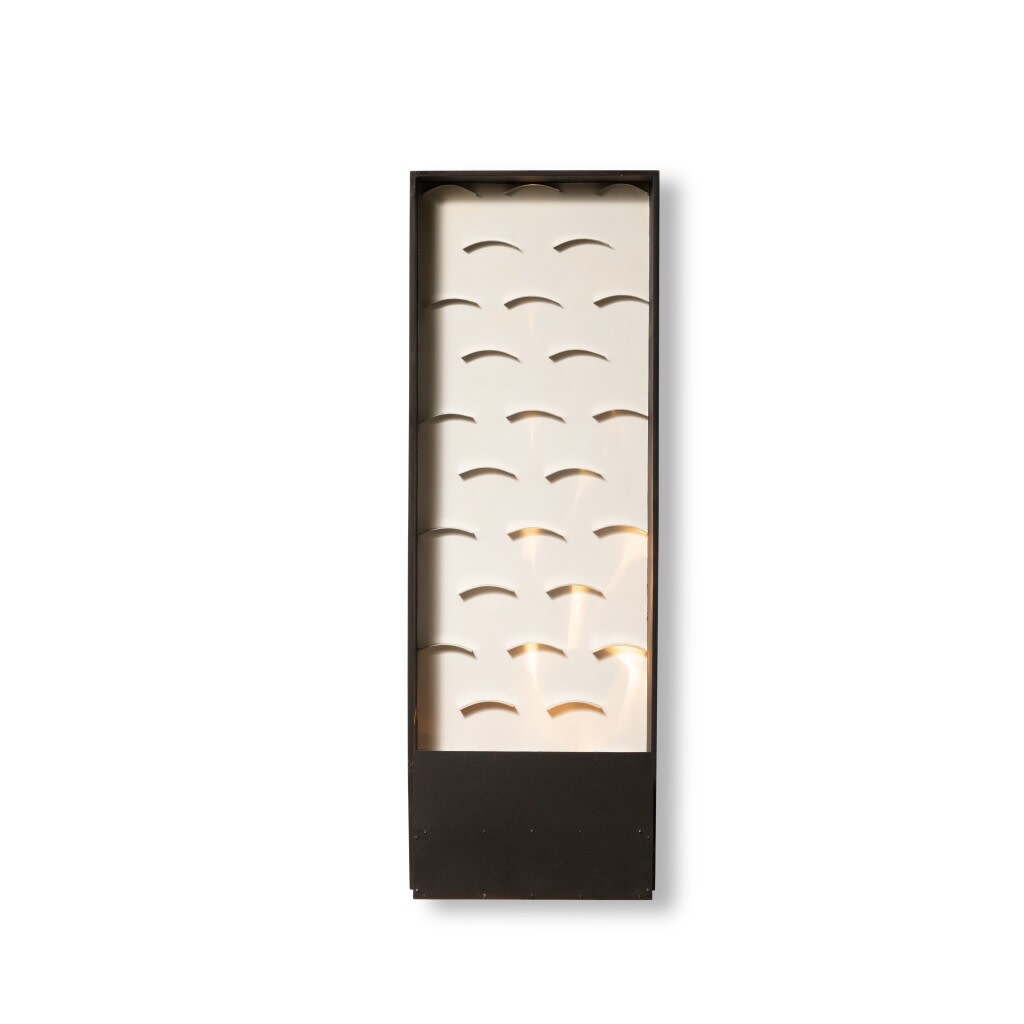
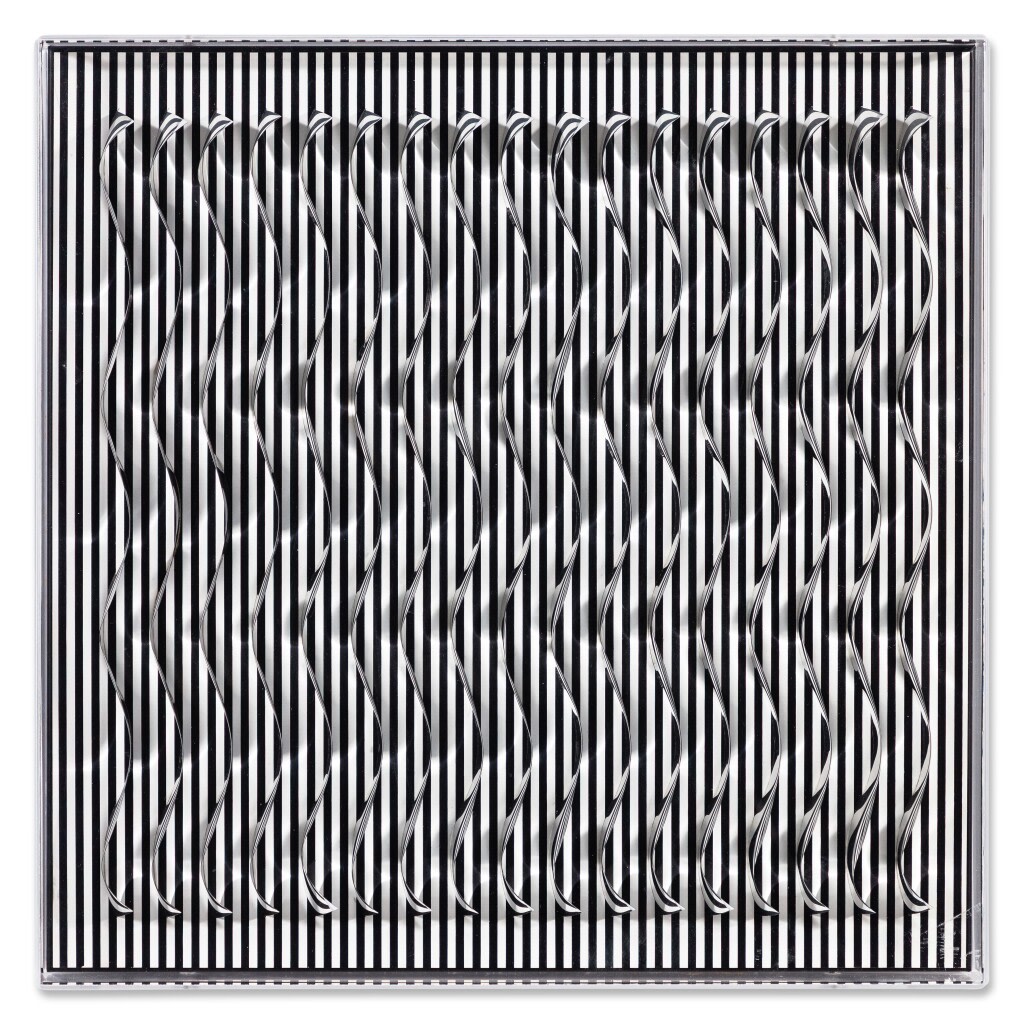
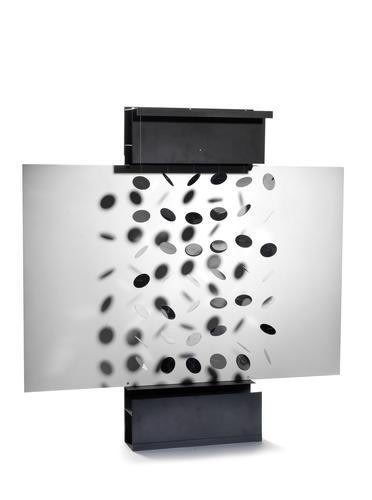
| Relief 9 | $15,240 | Sotheby's, Dec 2025 |
| Relief n°25 | $12,065 | Sotheby's, Dec 2025 |
| Continuel lumière | $10,795 | Sotheby's, Dec 2025 |
2 further auction entries on record for Julio Le Parc — inside Egon.
Pricing
- Primary market
- Gallery-controlled primary pricing via Perrotin and others; contact galleries for current primary pricing (often not publicly disclosed).
Temporal context
Pre-2016 (before Perrotin representation and Palais de Tokyo/PAMM retrospectives): generally lower and more thinly traded. 2016-2024: significant re-rating driven by museum retrospectives and primary-gallery support. 2025-2026: consistent over-estimate performance and posthumous + Tate-retrospective momentum.
- Prints multiples editions
- Roughly $250 - $15,000 depending on medium (serigraphs, embossed Mylar 'Miroirs', small mirror multiples); the bulk of tracked auction lots
- Reliefs small kinetic works
- ~$10,000 - $60,000 (e.g., Relief and Continuel-lumière works in 2025 sold $10k-$15k; small kinetic objects higher)
- Major historic kinetic works
- High six figures to seven figures for scarce 1960s signature installations/mobiles
- Paintings modulations surfaces
- Five to six figures; mid-size acrylic canvases (e.g., 'Progressions', 'Serie' works) ~$60,000+ at 2025 evening/day sales
Liquidity
Assessment
Good liquidity for a kinetic/Op master — high transaction count driven by a large body of prints and multiples, with periodic higher-value unique works. 100% sell-through in the recent (2025) tracked sample.
- Annual volume
- Dozens of lots annually across all media (estimated 30-60+/year including editions)
Comparables
Peers include GRAV co-members and kinetic/Op contemporaries: Victor Vasarely, François Morellet, Carlos Cruz-Diez, Jesús Rafael Soto, Yaacov Agam — Le Parc sits among the top tier of this cohort given the Venice Biennale Grand Prize and institutional depth.
Collector base
International institutional and private collectors with strength in Latin American art, postwar European kinetic/Op art, and immersive/light-based art. Tate's Latin American Acquisitions Committee acquired 'Blue Sphere' (2013) in 2023.
Auction history
Summary
Active and liquid secondary market across major and regional houses (Christie's, Sotheby's, Phillips, Bonhams, and numerous European/Latin American houses). Aggregators (Artnet, Artprice, LiveAuctioneers, Invaluable, LotSearch) list 50+ tracked results, spanning unique paintings/reliefs to a large volume of prints, multiples and editions.
Auction record
Major early kinetic works and large historic canvases have realized seven-figure / high six-figure results; market intelligence signals classify him as a Blue-chip-tier kinetic/Op pioneer. NOTE: a single precisely verified all-time record figure was not confirmed in the searches conducted — Artprice/Artnet (subscription) hold the authoritative record. Most tracked lots cluster well below this, indicating the top of the market is set by scarce early signature pieces.
Egon database 2025 onward
- Sold
- 5
- Range
- $10,795 - $61,722
- Total lots
- 5
- Sell through
- 100%
- Recent average hammer
- $32,060
Investment outlook
Positive. Posthumous status (died May 2026), the imminent Tate Modern retrospective (60+ works, opening June 11, 2026), and consistent over-estimate auction results point to strengthening demand. Scarcity of major early works supports the top of the market; broad edition supply keeps an accessible entry point.
Institutional presence
Research updated
Exhibitions
Upcoming current
- Date
- Opening June 11, 2026
- Note
- Major retrospective featuring 60+ works; opened days after the artist's death on May 30, 2026
- Venue
- Tate Modern, London
Significant group shows
- MoMA at El Museo (El Museo del Barrio, New York)
- Inverted Utopias: Avant-Garde Art in Latin America (MFA Houston)
- Beyond Geometry: Experiments in Form 1940s-70s (LACMA / Miami Art Museum)
- Kinetic/Op art surveys at Grand Palais, Palazzo Grassi, Reina Sofía, Centre Pompidou-Metz, Kunsthaus Graz
Solo and retrospectives
- Note
- Major 2,000 sq m retrospective
- Year
- 2013
- Venue
- Palais de Tokyo, Paris
- Note
- First US museum retrospective
- Year
- 2016
- Venue
- Pérez Art Museum Miami (PAMM)
- Note
- Solo presentation
- Venue
- Serpentine Gallery, London
- Note
- Institutional presentation
- Venue
- The Met / Met Breuer, New York
- Note
- Solo exhibition
- Venue
- Moderna Museet, Stockholm
- Note
- Solo exhibition
- Venue
- Museo de Arte Moderno, Mexico
- Note
- Solo exhibition
- Venue
- Tabakalera, San Sebastián
Publications
Numerous museum catalogues accompanying Palais de Tokyo (2013) and PAMM (2016) retrospectives, and forthcoming Tate Modern (2026) retrospective publication; widely covered in scholarship on kinetic and Op art.
Museum collections
- Note
- Egon museum-data context confirms 37 works across the Met, Smithsonian, and Europeana, corroborating deep multi-institution presence.
Tier 1
- Museum of Modern Art (MoMA), New York
- Tate, London (incl. 'Blue Sphere' 2013, acquired 2023 via Latin American Acquisitions Committee)
- Centre Pompidou / Musée National d'Art Moderne, Paris
- Whitney Museum of American Art, New York (exhibitions/holdings)
- Hirshhorn Museum and Sculpture Garden, Washington
Tier 2 and international
- Musée d'Art Moderne de la Ville de Paris
- Museo Nacional Centro de Arte Reina Sofía, Madrid
- Louisiana Museum of Modern Art, Humlebaek
- Albright-Knox Art Gallery (Buffalo AKG), Buffalo
- New Orleans Museum of Art
- Museo Nacional de Bellas Artes, Buenos Aires
- Museo de Arte Moderno de Buenos Aires
- MACBA, Buenos Aires
- Museu de Arte Moderna do Rio de Janeiro
- Musée d'Art Contemporain, Montréal
- Galleria Nazionale d'Arte Moderna, Rome
Awards and recognition
- International Grand Prize for Painting, 33rd Venice Biennale (1966)
- Konex Award, Argentina (1982 and 2022)
- Founding member, Groupe de Recherche d'Art Visuel (GRAV), 1960
Career & Biography
Research updated
Identity
- Based
- Cachan/Paris, France (from 1958 until death)
- Birth
- September 23, 1928, Mendoza, Argentina
- Death
- May 30, 2026, Paris, France (aged 97)
- Gender
- Male
- Full name
- Julio Le Parc
- Nationality
- Franco-Argentine (Argentine-born, long resident in Paris)
- Getty ulan ID
- 500086043
Career timeline
- 1928
- Born in Mendoza, Argentina
- 1958
- Relocates to Paris on a French government scholarship
- 1960
- Co-founds Groupe de Recherche d'Art Visuel (GRAV)
- 1966
- Wins the International Grand Prize for Painting at the 33rd Venice Biennale
- 1968
- GRAV dissolves; expelled from France in May 1968 after participating in the Atelier Populaire during the May uprisings
- 2013
- Major retrospective at Palais de Tokyo, Paris (2,000 sq m)
- 2016
- First US museum retrospective at Pérez Art Museum Miami; begins representation with Perrotin
- 2026
- Dies May 30 in Paris, days before Tate Modern retrospective opening (June 11, 2026)
- Late 1940s
- Moves to Buenos Aires, studies at Escuela de Bellas Artes
- 1982 & 2022
- Receives the Konex Award (Argentina)
Education and training
Notes
Moved to Buenos Aires in the late 1940s; attended the School of Fine Arts where he engaged with the Argentine avant-garde, including the Arte Concreto-Invención group and Lucio Fontana's Spazialismo. In 1958 he received a French government scholarship to study in Paris, relocating there with fellow artist Francisco Sobrino.
- Institution
- Escuela de Bellas Artes (School of Fine Arts), Buenos Aires
Influences and context
- Early influences
- Arte Concreto-Invención movement, Lucio Fontana's Spazialismo, Victor Vasarely, and Constructivist/geometric abstraction
- Art historical context
- Central figure in the Paris-based Kinetic and Op art scenes of the 1960s; precursor to immersive and interactive art
- Contemporaries and collaborators
- Francisco Sobrino, François Morellet, Horacio García Rossi, Hugo Demarco, Joël Stein, Yvaral (Jean-Pierre Vasarely) — co-members of GRAV
Getty relationships note
Getty ULAN lists him as student of (ID 500031629), colleague of (ID 500006302), and member of a group/firm (ID 500490151) — consistent with his GRAV membership and Paris training.
Political social engagement
Politically engaged throughout his life; participated in the Atelier Populaire during May 1968 (leading to his expulsion from France) and consistently linked the liberation of the spectator to broader social emancipation. Notably declined certain honors he viewed as elitist.
Studio practice and philosophy
Le Parc rejected the notion of the solitary artistic master, emphasizing collective authorship and the active participation of the spectator. His practice spans painting, sculpture, light installations, mobiles and immersive environments using mirrors, Plexiglas, motorized elements and programmed light.
Artistic Profile
Research updated
Style
Systematic, experimental, and perceptual abstraction emphasizing movement, light, optical vibration, and viewer participation. Rejects the static, singular art object in favor of dynamic, often programmed or motorized experiences.
Evolution
Began with geometric/concrete painting in Buenos Aires; in Paris (post-1958) pivoted to systematic optical experiments and light/movement within GRAV; expanded into immersive environments and large installations from the 1960s; in later decades returned prolifically to large-scale chromatic painting (Alchimie, Modulations) alongside continued kinetic/light work, with a major late-career revival from 2013 onward.
- Influences
- Arte Concreto-Invención, Lucio Fontana (Spazialismo), Victor Vasarely, Constructivism and concrete art.
Visual language
Chromatic, often spectral color palettes; grids and sequential progressions; mirrored and reflective surfaces; suspended Plexiglas elements; pulsing/projected light; geometric forms arranged to produce apparent vibration and instability.
Themes and subjects
- Perception and optical instability
- Movement and light
- The active, participatory spectator
- Anti-elitism and democratization of art
- Social/political emancipation linked to perceptual liberation
Movements and periods
- Kinetic Art (precursor/pioneer)
- Op Art (precursor)
- Postwar geometric abstraction
- Participatory / interactive / immersive art
- Groupe de Recherche d'Art Visuel (GRAV), 1960-1968
Techniques and mediums
- Painting (acrylic on canvas — Modulations, Surfaces, Alchimie, Progressions, Serie works)
- Light installations and projections (Continuel-lumière, Lumière en Vibration)
- Mobiles and suspended kinetic sculpture (Mobile Transparent, Continuel-mobile)
- Mirror works and reflective reliefs (Relief, Miroirs, Lames réfléchissantes)
- Motorized/programmed kinetic objects
- Prints, serigraphs and editioned multiples
Signature series and works
- Mobile Transparent (1960)
- Light in Movement / Continual Light Cylinder (1962)
- Lumière en Vibration (1968)
- Continuel-mobile / Continuel-lumière series
- Surfaces, Modulations, Alchimie, Progressions, Serie (numbered) painting cycles
- Ensemble of Eleven Surprise Movements (1967)
- Lames réfléchissantes
Critical Reception
Research updated
Critical reception
Universally regarded as a pioneer and 'grandfather' of interactive and immersive art. Tate's official statement called him a visionary and 'the grandfather of interactive art' and a key figure in immersive art. Critics emphasize his reframing of the viewer as active participant rather than passive observer, and his fusion of optical experimentation with social/political conviction.
Scholarly attention
Subject of major museum catalogues (Palais de Tokyo 2013, PAMM 2016, Tate 2026) and extensive inclusion in kinetic/Op art scholarship and Latin American avant-garde surveys.
Art historical positioning
Positioned at the intersection of European Kinetic/Op art and Latin American geometric abstraction; credited as a precursor whose 1960s light works (e.g., Lumière en Vibration, 1968) anticipated today's immersive installation art. His GRAV-era anti-individualist stance remains a touchstone in discussions of participatory and collective art practice.
Obituaries and coverage 2026
Scroll horizontally if needed →
| Publication | Headline theme |
|---|---|
| Hyperallergic | 'Maestro of Light, Movement, and Defiance, Dies at 97' (obituary, June 2, 2026) |
| The Art Newspaper | Obituary noting he had hoped to attend his Tate Modern retrospective opening (June 5, 2026) |
| ARTnews | 'Pioneer of Kinetic Art and Venice Biennale Prize Winner, Dies at 97' |
| Artsy | 'Julio Le Parc, pioneer of kinetic art, has died at 97' |
| Ocula | 'Grandfather of Interactive Art, Dies at 97' |
Gallery & Representation
Research updated
Fair presence
Presented by Perrotin and others at major international fairs (Art Basel, Frieze, FIAC/Paris+, Art Basel Hong Kong), supporting broad geographic reach.
Representation
Primary
Perrotin
Note
First NY solo since 1973 in 2016 (inaugural show); subsequent 'Bifurcations' (Paris, 2017), 'LIGHT-MIRROR' (Hong Kong, first Asia show), 'Color and Colors' (NY, 2020)
- Tier
- Tier 1 international
- Since
- c. 2016
- Locations
- Paris, New York, Hong Kong, Seoul, Tokyo, etc.
Secondary and regional
Albarrán Bourdais
- Tier
- Tier 2
- Locations
- Madrid / Menorca
Andréhn-Schiptjenko
- Tier
- Tier 2
- Locations
- Stockholm / Paris
Galerie Denise René (historic)
- Note
- Historic representation associated with kinetic/Op art editions
- Geographic reach
- Global — Europe (Paris base), North America (New York, Miami), Asia (Hong Kong), and Latin America (Argentina, Brazil, Mexico).
Sources & research notes
Egon’s artist research combines historical auction records, recent sales, institutional history, critical reception and gallery information. Researched auction records and auction highlights are identified separately.
Read prices with their work, sale date, currency and stated basis. Egon’s market assessments are distinct from reported auction results.
Reference: Egon, “Julio Le Parc: Market Intelligence & Investment Profile.”
Research bibliography · 28 sources
Sources recorded for this artist’s research. This bibliography does not assign every source to an individual claim.
- Julio Le Parc - Wikipedia
- Julio Le Parc | Artnet
- Julio Le Parc born 1928 | Tate
- Julio Le Parc, pioneer of kinetic art, has died at 97 | Artsy
- Julio Le Parc: A Pioneer of Kinetic and Optical Art
- Julio Le Parc Art Value Price Guide | Invaluable
- Julio Le Parc - lots in our price database - LotSearch
- Julio Le Parc Prices - Auction Price Results | LiveAuctioneers
- Julio Le Parc - Albarrán Bourdais
- Julio Le Parc | Andréhn-Schiptjenko
- Julio Le Parc - Art & Prints for Sale | Artsy
- Expositions | Julio Leparc (official site)
- Julio Le Parc | MoMA
- Julio Le Parc | Perrotin
- Julio Le Parc, 'Color and Colors' at Perrotin, New York | Ocula
- Julio Le Parc, 'BIFURCATIONS' at Perrotin, Paris Marais | Ocula
- Julio Le Parc - LIGHT-MIRROR | Perrotin Hong Kong
- Julio Le Parc | Meer
- Artist Julio Le Parc, Maestro of Light, Movement, and Defiance, Dies at 97 | Hyperallergic
- Julio Le Parc (1928–2026) – Press Release | Tate
- Remembering Julio Le Parc, a pioneer of kinetic art | The Art Newspaper
- Julio Le Parc, Grandfather of Interactive Art, Dies at 97 | Ocula
- Julio Le Parc, Pioneer of Kinetic Art and Venice Biennale Prize Winner, Dies at 97 | ARTnews
- Julio Le Parc | I-M Magazine
- Julio Le Parc - Palais de Tokyo
- Julio Le Parc - Phillips Auction
- Julio Le Parc (1928) Value, Worth, Auction Prices | Artprice
- Julio Le Parc | Performance at Auction | MutualArt
Research updates by section
These dates show when Egon’s research sections were updated. Source retrieval dates, where supplied above, refer to individual evidence notes.
Ranking updated . Research sections follow their own update dates.
This is what the market knows about Julio Le Parc. What Egon can also tell you: whether Julio Le Parc fits your portfolio — based on your existing holdings, budget, and investment timeline.
Get personalized analysisActive market signals
Inside Egon
Signal timeline & strength analysis
Gallery moves, auction records, institutional acquisitions, price milestones — tracked over 90 days
Full signal timeline, strength analysis, and alert configuration for Julio Le Parc.
Collector demographics & buyer analysis
Geographic distribution, institutional vs. private buyers, collector profiles, and secondary market activity
Who is collecting Julio Le Parc? Geographic distribution, institutional vs. private buyers, and collector profile analysis.
Personalized acquisition strategy
Optimal entry points, comparable pricing analysis, timing recommendations, and portfolio fit assessment
Personalized acquisition strategy for Julio Le Parc based on your budget, timeline, and collection goals.
Go deeper with personalized intelligence
You now have Egon's market assessment of Julio Le Parc. The next question is personal: does this artist belong in your collection? Egon analyzes collection fit based on your aesthetic thesis, existing holdings, budget, and investment goals — delivering acquisition strategies no public index can provide.