K.K. Hebbar
Blue-chipEgon research · Artist market profile
The market, in context.
Explore K.K. Hebbar’s auction history alongside the exhibitions, collections and gallery relationships behind the market.
Institutional research
Collections & exhibitions
Read holdings, exhibition history and their qualifications in context.
Read the institutional research →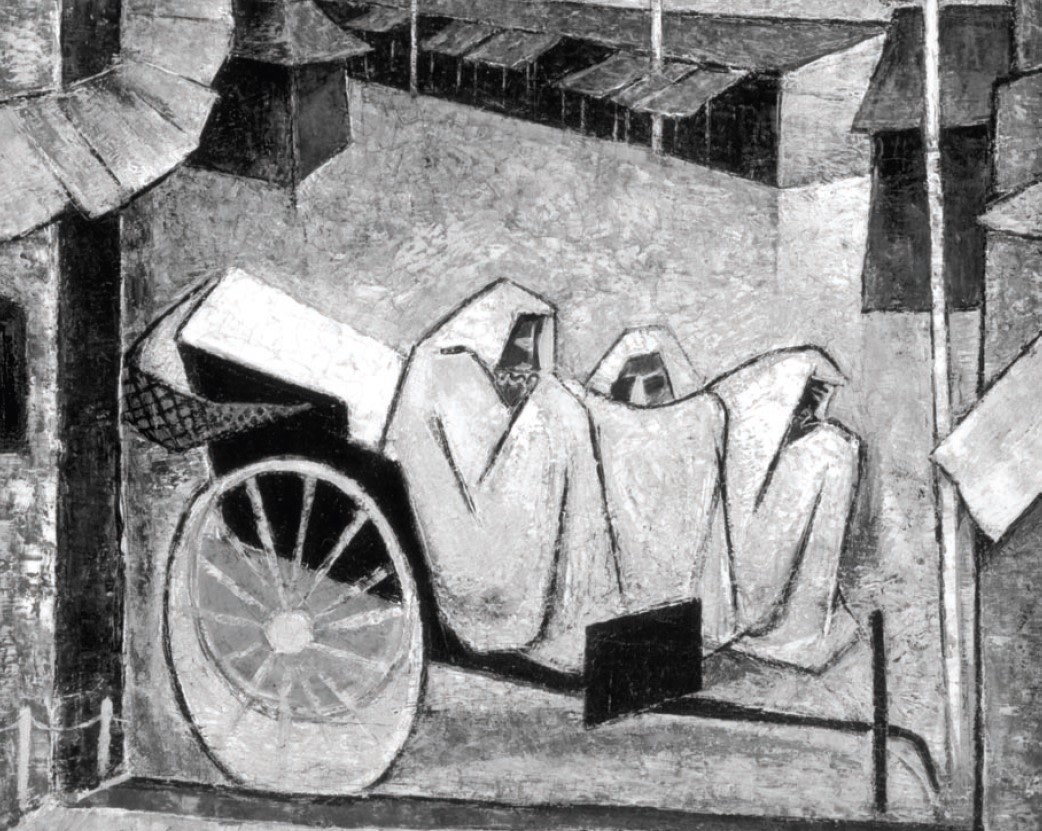




Egon investment scores
Market position
Research updated
Auction record context
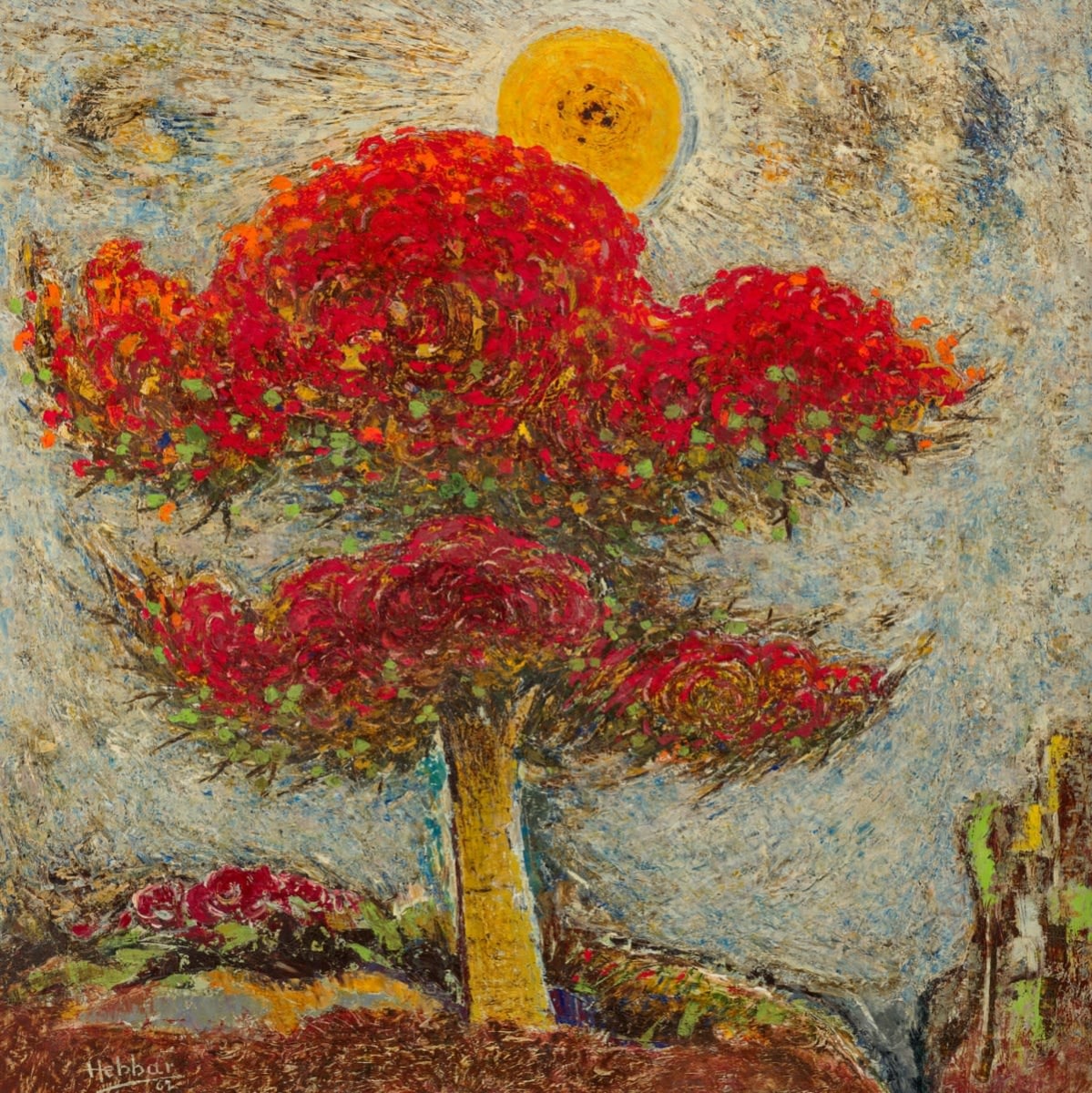
GBP 698,500 / c.USD 933,475 (with fees) for 'Untitled (Gulmohar Tree)', 1962, Christie's London, 'Sublime Shadows: South Asian Art From a Distinguished Collection', 11 June 2026 - a world auction record for the artist, reported by The Art Newspaper (15 June 2026) and Artnet News (12 June 2026)
Pricing
By work type
- Prints multiples
- Not a meaningful market segment for this artist
- Small oils on paper and board
- $10,000-$50,000
- Major 1950s 60s figurative oils
- $200,000-$935,000 (2026 levels)
- Ink and brush line drawings illustrations
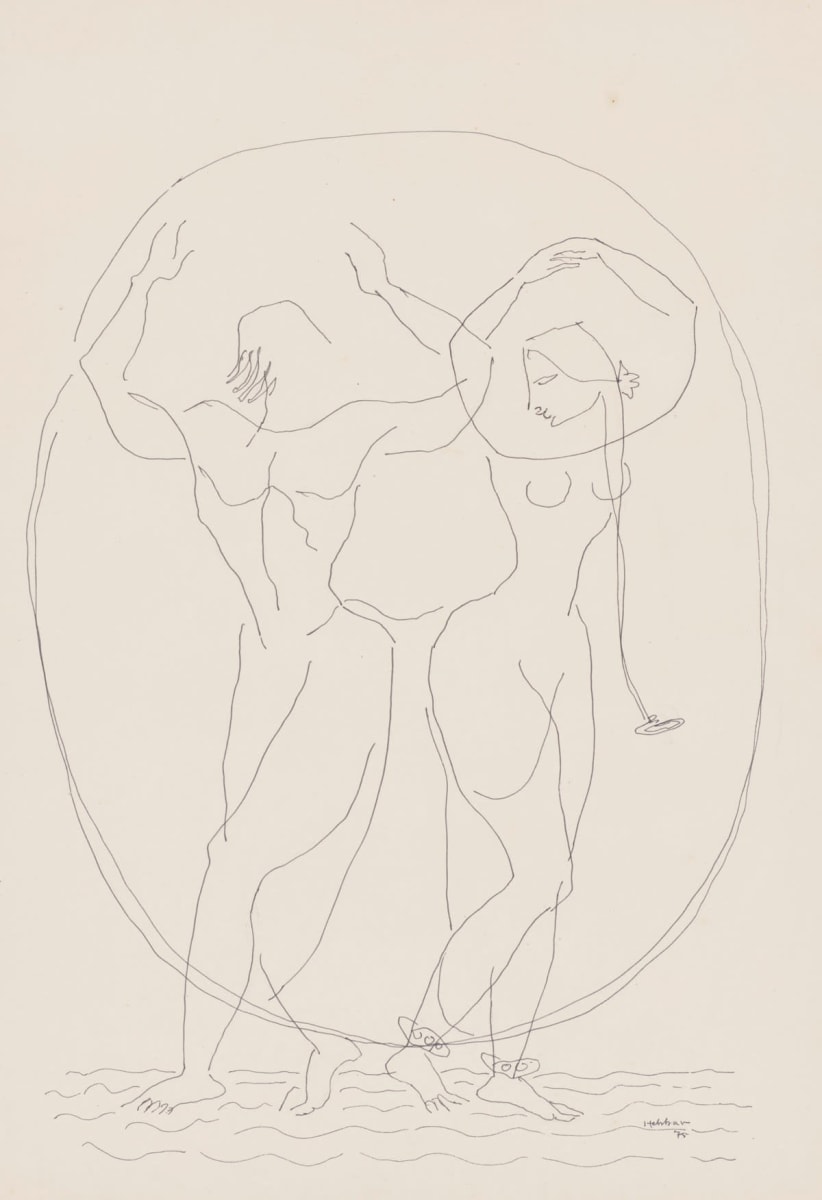
- $1,500-$15,000 - most accessible entry point, most abundant supply
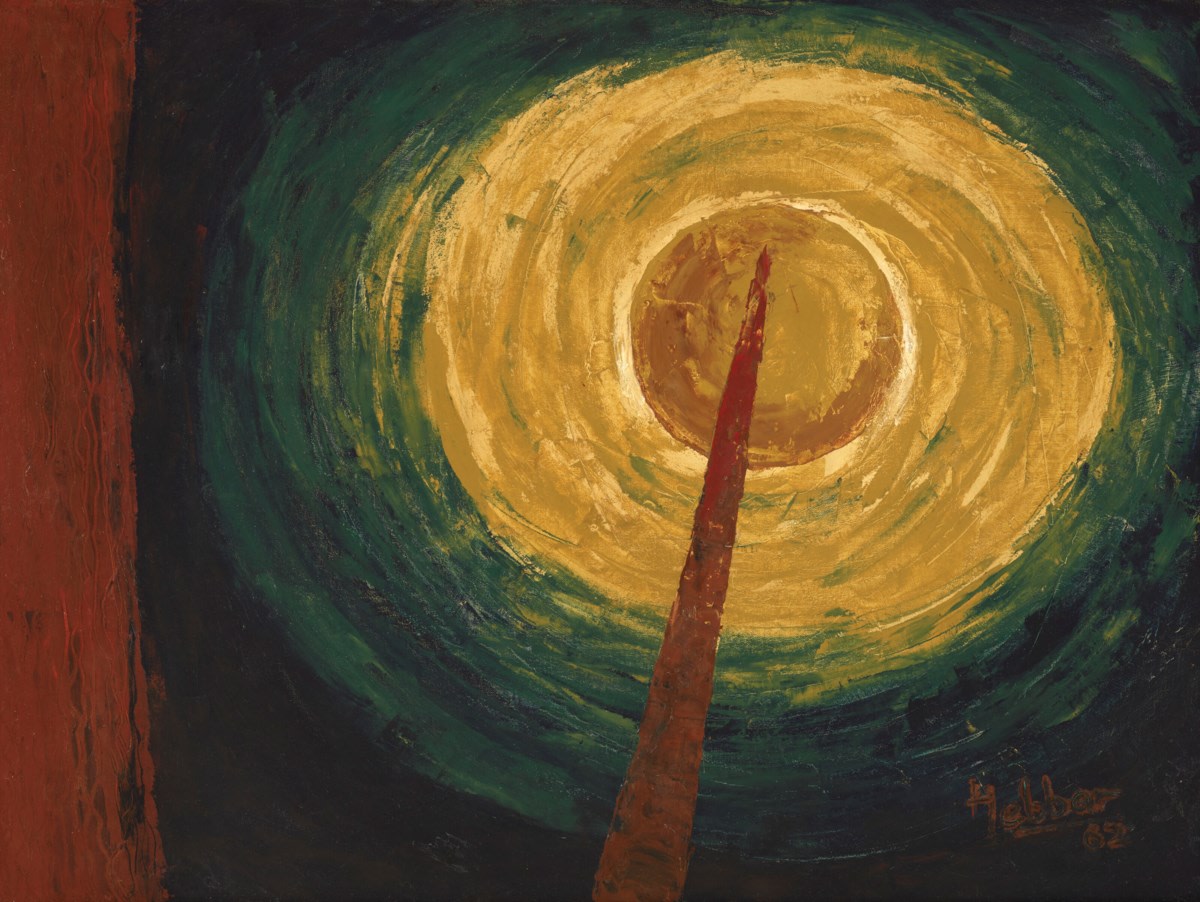
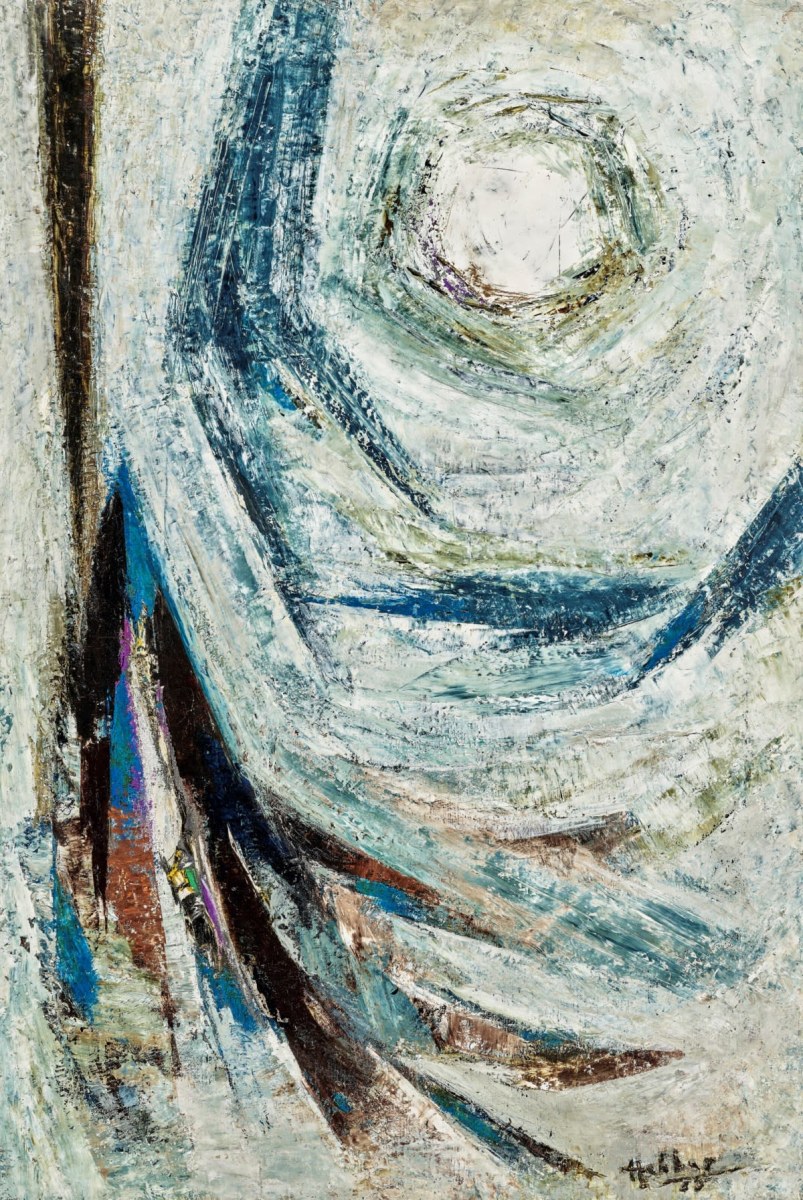
- Late abstract cosmic series oils rocket into space holi
- c.$150,000-$250,000 (2026)
Primary market
Deceased 1996 - no living primary market. Estate-adjacent supply sits with the K.K. Hebbar Art Foundation/Trust; dealer market led by DAG (Delhi/Mumbai/New York) and Vadehra Art Gallery (New Delhi) on a price-on-request basis. Contact DAG or Vadehra Art Gallery for current retail pricing - not publicly disclosed.
Temporal context
- 2010-2019
- Broadly $10,000-$120,000 for oils depending on period and scale; drawings and small oils on paper $2,000-$15,000
- 2020-2024
- Firming with the wider Indian modern boom; mid-size oils commonly $30,000-$150,000; works on paper $3,000-$25,000
- 1990s-2000s
- Entry-level modern-master pricing; oils typically low tens of thousands USD; works on paper often four-figure
2025-2026 post-repricing
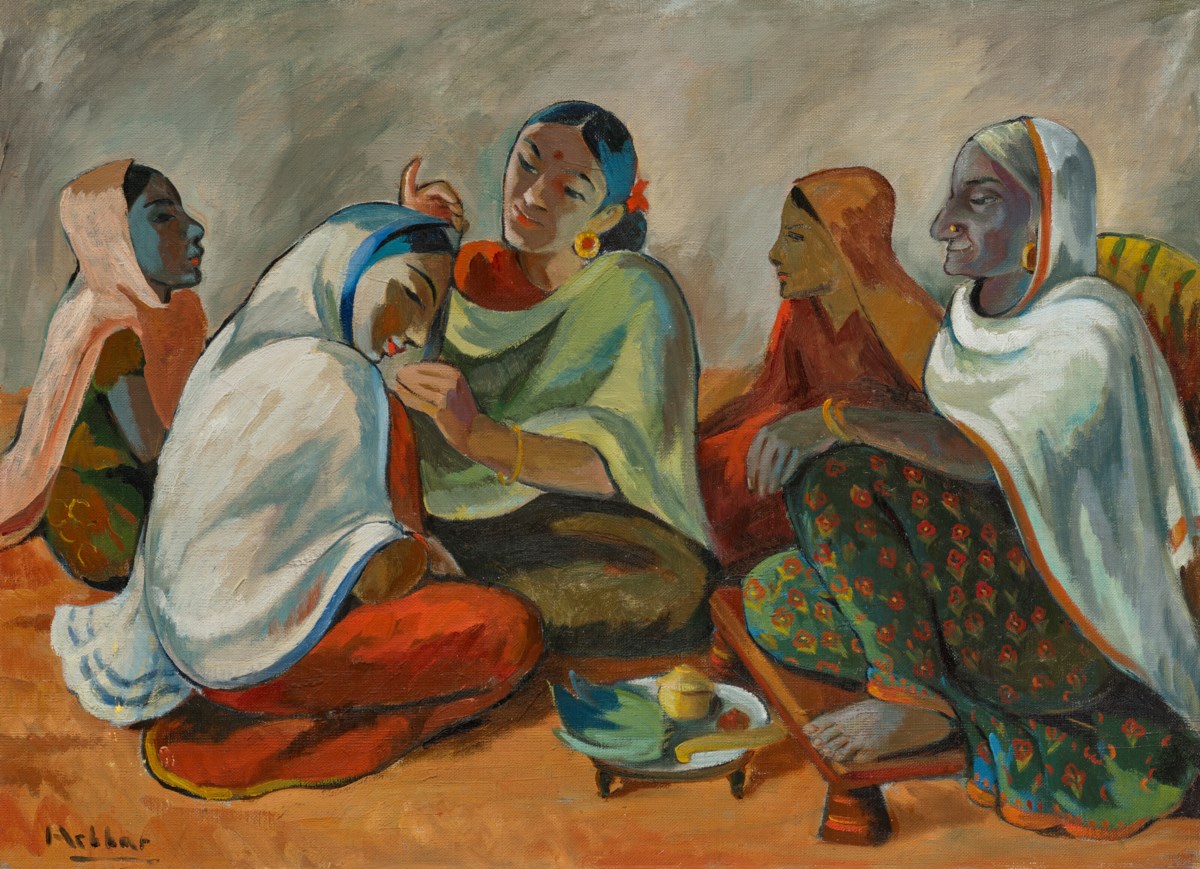
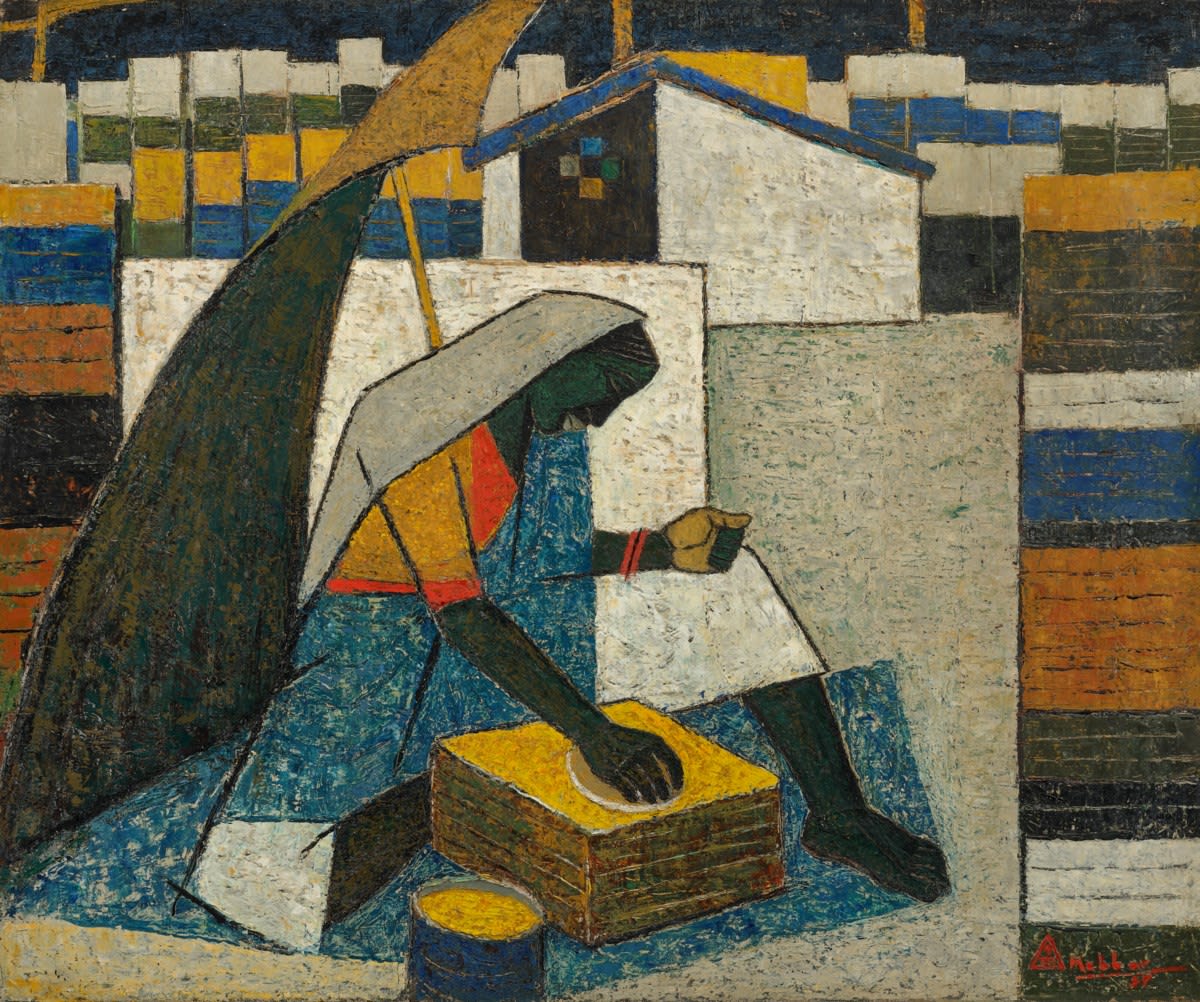
Step-change: major 1950s-60s oils now $200,000-$935,000 (Gulmohar Tree $933k; Woman Making Chapatis $543k; Into Space $204k), while smaller/lesser works still transact at $14,000-$40,000 - the ladder has widened rather than lifted uniformly
Liquidity
Depth
Good depth in the sub-$50,000 works-on-paper band; improving depth at $200k+ as of 2026; the $500k+ band rests on only two data points, both from one June 2026 session
- Sell through
- 100% across the 12 catalogued 2025-26 lots; historically a reliably saleable but modestly priced name
Annual volume estimate
Estimated 25-50 lots per year globally including Saffronart, AstaGuru, Pundole's and DAG-linked sales; roughly 8-12 lots per year across Christie's/Sotheby's/Phillips/Bonhams (12 lots in the Egon database from 2025 onward)
Collector base
Composition
Indian HNW collectors and family offices, NRI/diaspora buyers in London, the Gulf and North America, plus a small institutional layer. Christie's has publicly noted competitive pressure from collectors aware that museum acquisitions permanently remove works from circulation.
Named collectors and provenance patterns
- June 2026 record works came from a single anonymous private collection formed in the 1990s-2000s, reported by The Art Newspaper as an Indian tea company's collection
- Swiss private-collection provenance for 1962 oils sold at Koller (The Tambourine Player; Saga in Stone)
- Chester and Davida Herwitz Collection at the Peabody Essex Museum is the principal US institutional collection of Hebbar's generation - Hebbar-specific holdings NOT verified in this research
- Kiran Nadar (KNMA) and Cyrus Poonawala are the dominant Indian collector forces in the category generally; no Hebbar-specific purchases verified
- K.K. Hebbar Art Foundation / Hebbar Trust holds the deepest single body of work
Auction history
Bought in data
No specific bought-in lots identified for 2025-26; the 2026 sales cited were 100% sold. Historical buy-in rates are not published in accessible sources - the 100% sell-through should be read as sale-specific (single-owner, conservatively estimated), not as a durable structural figure.
Current record
GBP 698,500 / c.USD 933,475 (with fees) for 'Untitled (Gulmohar Tree)', 1962, Christie's London, 'Sublime Shadows: South Asian Art From a Distinguished Collection', 11 June 2026 - a world auction record for the artist, reported by The Art Newspaper (15 June 2026) and Artnet News (12 June 2026)
Record context
Set inside a white-glove single-owner sale of 93 lots totalling GBP 18,909,996 (c.USD 23.9m), 100% sold by lot and by value against a pre-sale estimate of GBP 2.9m-4.3m; more than a dozen artist records fell in the same session (Abanindranath Tagore GBP 1m+, Biren De GBP 120,600, plus Ganesh Pyne, Meera Mukherjee, K. Ramanujam). Every Hebbar lot exceeded its high estimate. Untitled (Gulmohar Tree) carried an estimate of GBP 70,000-100,000 and was the sale's cover lot.
Prior record reset 2026
A Hebbar record had already been set weeks earlier in the March/April 2026 South Asian spring cycle (Saffronart USD 30.78m; Christie's New York USD 27.1m - highest South Asian total ever outside India; Sotheby's USD 22.1m; Pundole's USD 12.1m), where press grouped Hebbar with Vivan Sundaram as artists 'ranked below the top masters' now gaining prominence. The June London result reset it again. Specific spring figure not published in accessible sources.
Egon database 2025 onward
- Lots
- 12
- Sold
- 12
- Range
- $14,426 - $933,475
- Average
- $322,412
- Sell through
- 100%
Recent lots june 2026 christies
- Untitled (Gulmohar Tree), 1962 - $933,475 (record, exceeded high estimate)
- Untitled (Woman Making Chapatis) - $543,113 (exceeded high estimate)
- Untitled - $237,612 (exceeded high estimate)
- Into Space - $203,667 (exceeded high estimate)
- Untitled (Dancing Couple) - $14,426 (exceeded high estimate)
Historical activity pre 2025
Continuous secondary-market presence since the mid-1990s emergence of Indian art auctions. Recurrent offerings at Christie's (Untitled (Peacock), oil, July 2022; Untitled (Construction), oil 30x40 in., Dec 2019), Sotheby's (Untitled, oil, Dec 2009; Untitled (Versova Beach), oil on paper, Mar 2022), Koller Zurich (The Tambourine Player, 1962 and Saga in Stone, both ex-Swiss private collection, Dec 2009), Tate Ward (works on paper, 2022), and regularly at Saffronart (Untitled (Market Place), 1959, oil, bearing an NGMA label verso, Evening Sale Sept 2023; Winter Online Dec 2023 and Dec 2024), AstaGuru and Pundole's.
Market position
- Segment
- South Asian / Indian Modern - second rank, immediately below the Progressive Artists' Group top tier
Macro context
Category-wide boom: Christie's New York March 2026 South Asian sale totalled $27.1m (highest single Indian art sale outside India); Saffronart $30.78m same cycle; Christie's returned to London after a seven-year gap. Christie's specialist Damian Vesey frames the market as moving beyond the established modernist canon toward provenance, rarity and scholarship - precisely the mechanism repricing Hebbar.
Peer comparables
- M.F. Husain - category record $13.8m (Christie's New York, 2025); Hebbar trades at roughly 7% of that level
- S.H. Raza - Kalliste (1959) $5.6m at Sotheby's; Satpura (1984) Rs 18.4 crore / $1.99m at Pundole's 2026
- F.N. Souza - The Lovers c.$4.9m
- Tyeb Mehta - Trussed Bull (1956) Rs 61.8 crore / $7.27m, Saffronart
- Abanindranath Tagore - GBP 1m+ record in the same June 2026 sale
- Closest structural comparables by price level and re-rating pattern: Vivan Sundaram, Ganesh Pyne, Biren De, K. Ramanujam, Meera Mukherjee
Investment outlook
Sharply positive momentum on a very recent and narrow base. The 2026 re-rating multiplied top-end Hebbar prices roughly 5-8x against 2020-2024 comparables in a single season, inside an exceptional white-glove single-owner sale where all 93 lots beat estimate - a structure that systematically flatters results. The durable signal is that Hebbar has moved from a $50k-$150k artist to one with demonstrated $200k-$935k capacity for prime 1950s-60s canvases; the risk is that the $500k+ band has only two observations. Supply of prime early oils is genuinely scarce; supply of drawings is abundant and unlikely to reprice at the same rate. Christie's New York South Asian sale of 16 September 2026 is the first independent test of the new level.
Institutional presence
Research updated
Upcoming
Christie's South Asian Modern + Contemporary Art, New York, 16 September 2026 (Hebbar was also included in the March 2026 New York sale). No announced museum retrospective for 2026-27 found.
Exhibitions
Solo and retrospective
- 'Hebbar - Drawings and Paintings', Jehangir Art Gallery, Bombay (per DAG chronology)
- 'K.K. Hebbar: Retrospective', Jehangir Art Gallery, Bombay, 1980
- 'K.K. Hebbar: Exhibition of Paintings', Vadehra Art Gallery, New Delhi, 1993
- Memorial/estate presentation, The Fine Art Company, Mumbai, 1999
- 'Hebbar - Paintings, Drawings, Publications', organised by the K.K. Hebbar Art Foundation
- 'An Artist's Quest: K.K. Hebbar - A Retrospective', National Gallery of Modern Art, Bengaluru (birth-centenary exhibition initiated and organised by NGMA; curators Rajani Prasanna and Rekha Rao), travelling to NGMA New Delhi, 22 November - 22 December 2011 - the strongest institutional endorsement in the record
Group and international
- Venice Biennale, 1955
- Sao Paulo Biennale, 1959
- Tokyo Biennale (participation cited in biographies)
- India Triennale, New Delhi
- 'Art Now in India', London and Brussels, 1965 - first major international exposure
- All India Exhibition of Paintings and Sculptures, travelling to the USSR, Poland and Western Europe
- 'Drawings and Paintings', AIFACS, New Delhi
- 'Indian Drawing Today', Jehangir Art Gallery, Mumbai, 1987
- 'Long Gone & Living Now', Gallery Mirchandani + Steinruecke, Mumbai, 2009
- Extensive exhibiting across Europe, 1964-1975
Publications
- 'The Singing Line' - drawings by Hebbar with text by Mulk Raj Anand; the title supplied the phrase now used for his signature line
- 'An Artist's Quest: K.K. Hebbar - A Retrospective', NGMA exhibition catalogue, 2011
- Hebbar's own writings on art and autobiographical texts (Kannada and English)
- DAG artist chronology and gallery publications
- No catalogue raisonne identified
Museum collections
National Gallery of Modern Art (NGMA), New Delhi
- Tier
- First-rank national museum (India's premier modern art collection, state-run, permanent accessioning)
- Country
- India
Holdings
Paintings in the permanent collection; NGMA exhibition labels appear verso on works later at auction (e.g. Untitled (Market Place), 1959, Saffronart 2023)
- Credit line
- credit line not published - NGMA does not publish acquisition credit lines
National Gallery of Modern Art (NGMA), Mumbai
- Tier
- First-rank national museum (branch)
- Country
- India
- Holdings
- Oil paintings in the permanent collection, listed alongside Husain, Padamsee, Palsikar, Chavda
- Credit line
- credit line not published
National Gallery of Modern Art (NGMA), Bengaluru
- Tier
- First-rank national museum (branch)
- Country
- India
- Holdings
- Initiated and organised the 2011 centenary retrospective; works in collection
- Credit line
- credit line not published
Venkatappa Art Gallery (Venkatappa Chitrashaala), Bengaluru
- Tier
- Karnataka state government modern art museum - regional
- Country
- India
- Holdings
- A dedicated group of Hebbar works housed as a permanent display within the museum
- Credit line
- credit line not published; commentary indicates placement occurred with the artist's involvement rather than through competitive purchase
Hebbar Gallery and Art Centre, Manipal Centre for Philosophy and Humanities, Manipal University
- Tier
- University art centre - NOT a first-rank collecting museum
- Country
- India
- Holdings
- Twenty-six portraits by the artist
- Credit line
- Explicitly LOANED by the K.K. Hebbar Art Foundation - a loan, not an acquisition; not counted as institutional collecting
Lalit Kala Akademi (national academy collection), New Delhi
- Tier
- National academy
- Country
- India
- Holdings
- National award-winning works (1956, 1957, 1958) entered academy holdings
- Credit line
- credit line not published
Awards and recognition
- Padma Bhushan, Government of India, 1989
- Padma Shri, Government of India, 1961
- Fellow of the Lalit Kala Akademi, 1976; Chairman, Lalit Kala Akademi, 1980; President, Lalit Kala Akademi Karnataka
- Lalit Kala Akademi National Awards 1956 ('Rhythm'), 1957 ('Song of the Field'), 1958 ('Mahim Darga')
- First Bombay State Art Award; Bombay State Art Exhibition Award
- Gold Medal, Bombay Art Society, 1947; President, Bombay Art Society, 1990
- Gold Medal, Academy of Fine Arts, Calcutta
- Honorary doctorate, Mysore University
- Varnashilpi Venkatappa Award, Government of Karnataka
- Maharashtra Shasan 'Gaurav Puraskar', 1990
- Soviet Land Nehru Award
- Chairman, Artists' Centre, Bombay, 1953-1973
Museum collections caveat
No holdings verified in first-rank international (non-Indian) museums - Tate, MoMA, Centre Pompidou, V&A and Peabody Essex were checked without confirmation of Hebbar-specific works. Indian public collections publish no machine-readable accession records or credit lines, so the absence of API data is not evidence of absence. This is the largest gap in the record and the main constraint on the institutional score.
Career & Biography
Research updated
Identity
- Born
- 15 June 1911, Kattingeri, near Udupi, South Kanara / Karnataka, British India
- Died
- 26 March 1996, Mumbai, Maharashtra, India (aged 84)
- Family
- Tulu-speaking Brahmin family; father made Ganesha idols for festivals; married Shusheela Hebbar (1935), three children
- Gender
- Male
- Full name
- Kattingeri Krishna Hebbar (K.K. Hebbar)
- Nationality
- Indian
- Note on dates
- Some auction catalogues (e.g. Koller) and older texts erroneously give 1912 birth or 1992 death; Wikipedia/DAG/NGMA confirm 1911-1996
- Primary working location
- Bombay/Mumbai (from 1933 until death); roots in coastal Karnataka
Career timeline
- 1933: arrives in Bombay; begins formal art study
- 1938: graduates Sir J.J. School of Art
- 1940-1945: art teacher at Sir J.J. School of Art; paints extensively in Kerala
- 1947: Gold Medal, Bombay Art Society
- 1949-50: Paris - Academie Julian and Ecole Estienne
- c.1946-1956: the decade widely regarded as his most art-historically influential
- 1953-1973: Chairman of the Artists' Centre, Bombay
- 1955: participates in the Venice Biennale
- 1956: Lalit Kala Akademi national award for 'Rhythm'; awards again 1957 ('Song of the Field') and 1958 ('Mahim Darga'); first Bombay State Art Award
- 1959: participates in the Sao Paulo Biennale; also shown at Tokyo Biennale
- 1961: Padma Shri
- 1964-1975: travels and exhibits across Europe
- 1965: first significant international exposure via 'Art Now in India', London and Brussels
- 1976: Fellow of the Lalit Kala Akademi; honorary doctorate, Mysore University
- 1980: Chairman, Lalit Kala Akademi; 'K.K. Hebbar: Retrospective', Jehangir Art Gallery, Bombay
- 1989: Padma Bhushan
- 1990: President, Bombay Art Society; Maharashtra Shasan 'Gaurav Puraskar'
- 1993: solo 'K.K. Hebbar: Exhibition of Paintings', Vadehra Art Gallery, New Delhi
- 1996: dies in Mumbai
- Posthumous: K.K. Hebbar Art Foundation established; Hebbar Gallery and Art Centre at Manipal Centre for Philosophy and Humanities, Manipal University, holding 26 portraits LOANED by the Foundation; NGMA centenary retrospective 2011
Education and training
- Chamarajendra Technical Institute, Mysore (early training)
- Nutan Kala Mandir, Bombay, from 1933 (school founded by G.S. Dandavatimath); commercial retouching/enlargement work at Koparde Studio
- Sir J.J. School of Art, Bombay - G.D. Art diploma, 1938; further specialisation in mural painting under director C.R. Gerrard
- Academie Julian, Paris, 1949-50 - studied under the painter Prof. Jules Cavailles
- Ecole Estienne, Paris - graphics/printmaking
Influences and context
Context
Independent India's nation-building generation; aligned a humanist figuration with an egalitarian post-independence social vision while holding senior roles in the state art infrastructure (Lalit Kala Akademi, Bombay Art Society, Artists' Centre)
Influences
- Amrita Sher-Gil (decisive - eastern sensibility via western technique)
- Paul Gauguin
- Ananda Coomaraswamy's writings
- Indian miniature painting
- Yakshagana folk theatre and Tulu ritual/festival culture of coastal Karnataka
- School of Paris/post-Impressionism absorbed 1949-50
Contemporaries and peers
- Bombay Progressive Artists' Group circle (Husain, Raza, Souza, Ara) - a contemporary and fellow Bombay modernist, not a PAG member
- Laxman Pai, D.G. Kulkarni, Mohan Samant, Baburao Sadwelkar, Shiavax Chavda
- Shankar Palsikar, Akbar Padamsee
Studio practice and philosophy
Primarily oil on canvas, with a sustained parallel practice in ink/brush line drawing, watercolour and tempera. He learned Kathak in order to internalise rhythm, which fed the 'singing line' that is his signature. His stated position was fidelity to the self - combining Western elements 'as and when required'; he also held that technical resolution plus expressed mood makes communication meaningful.
Public and institutional engagement
Art educator (J.J. School of Art 1940-45); Chairman, Artists' Centre Bombay for two decades; Chairman, Lalit Kala Akademi 1980; President, Bombay Art Society 1990; President, Lalit Kala Akademi Karnataka - an unusually institution-embedded modernist.
Artistic Profile
Research updated
Style
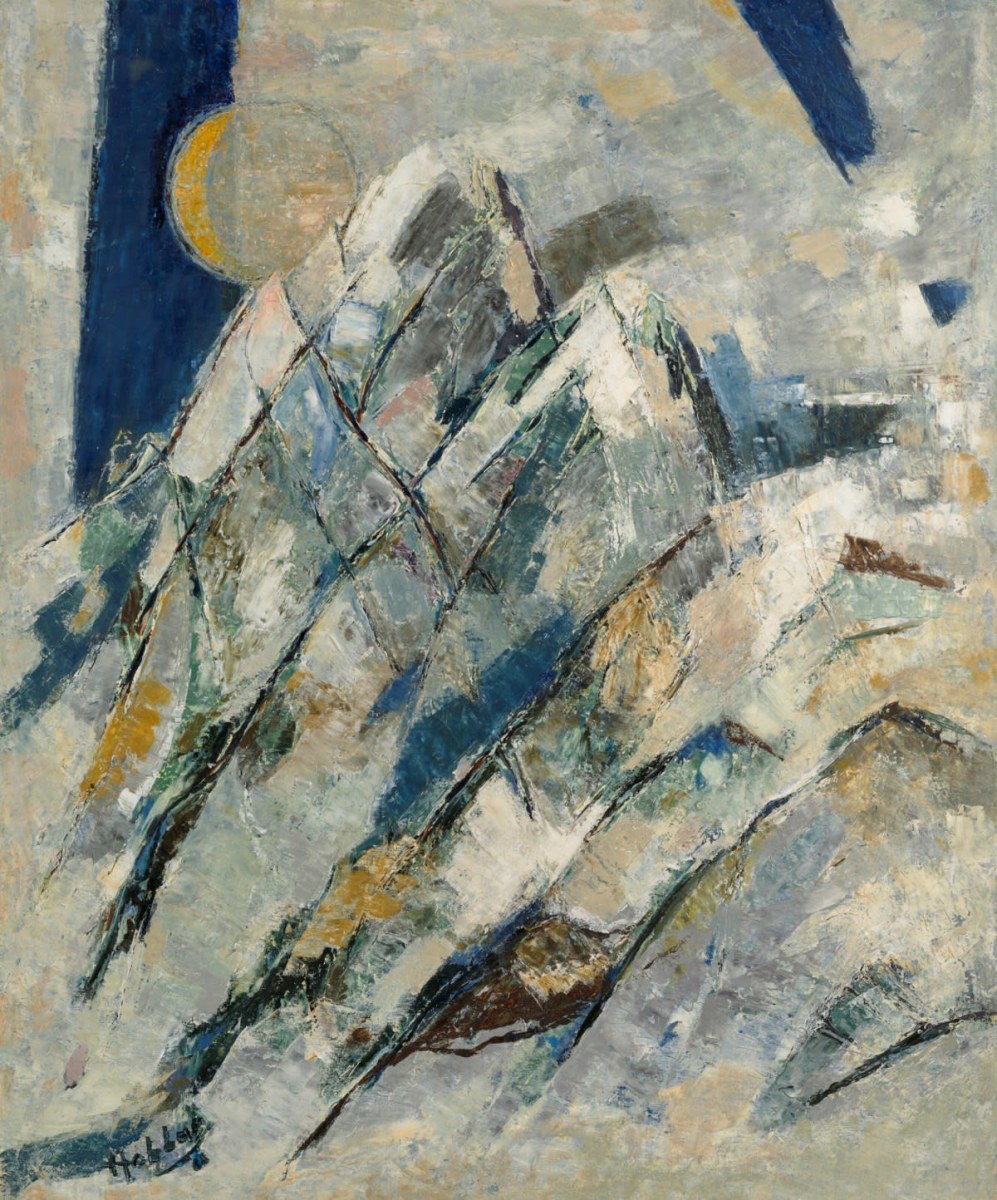
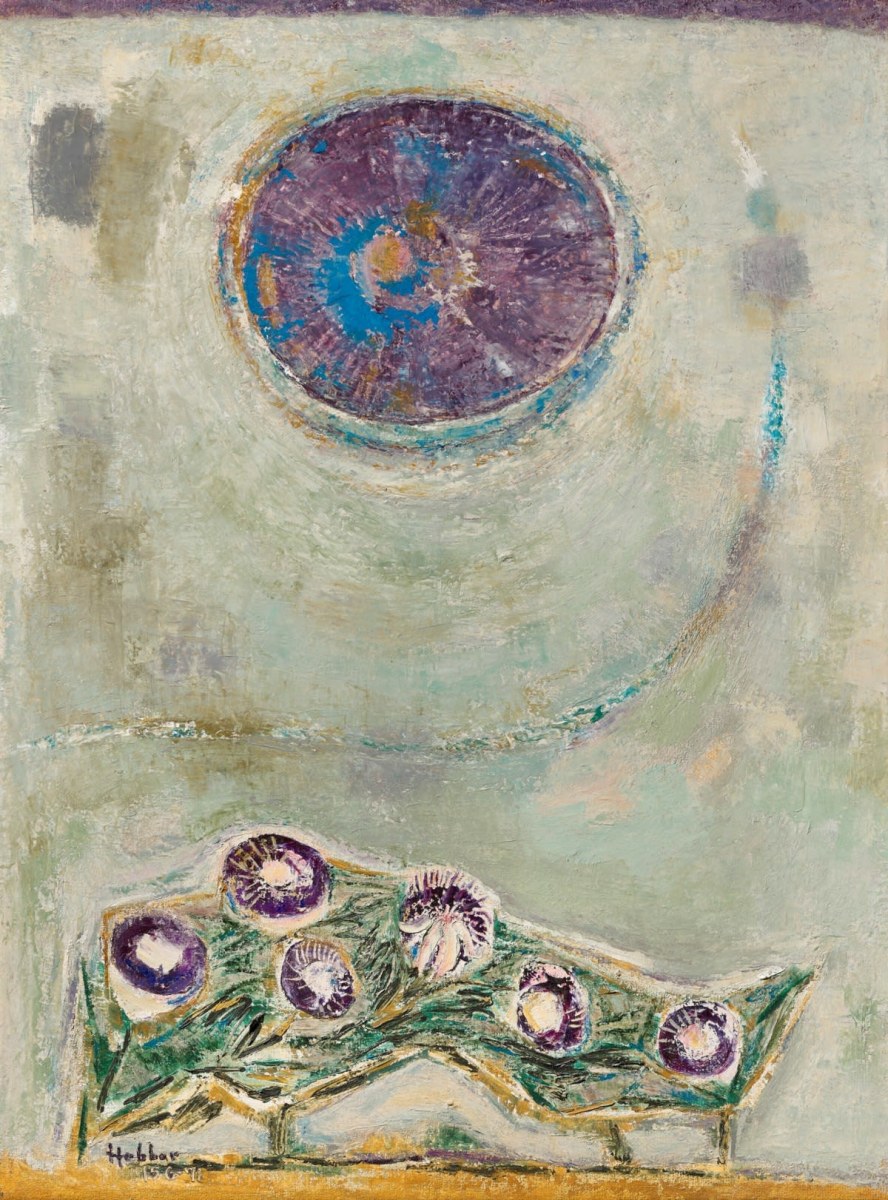
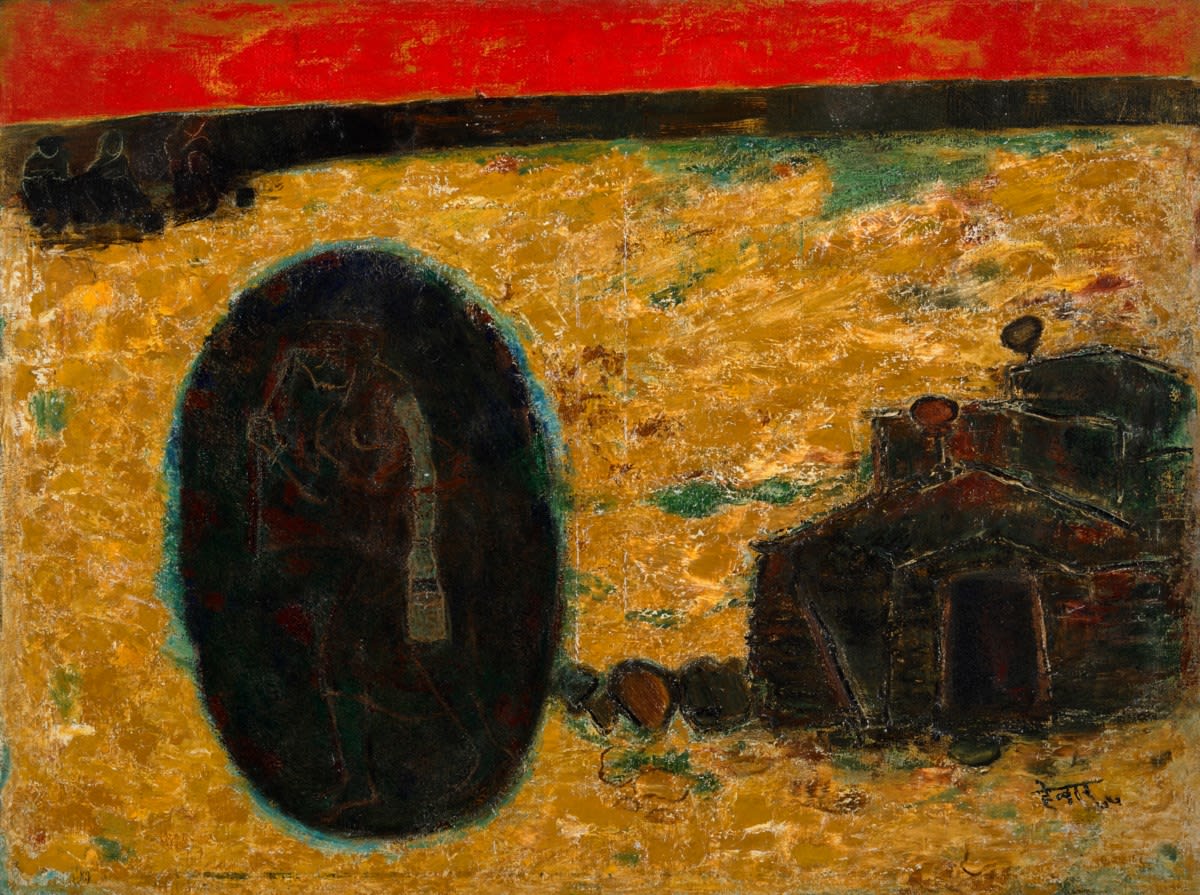
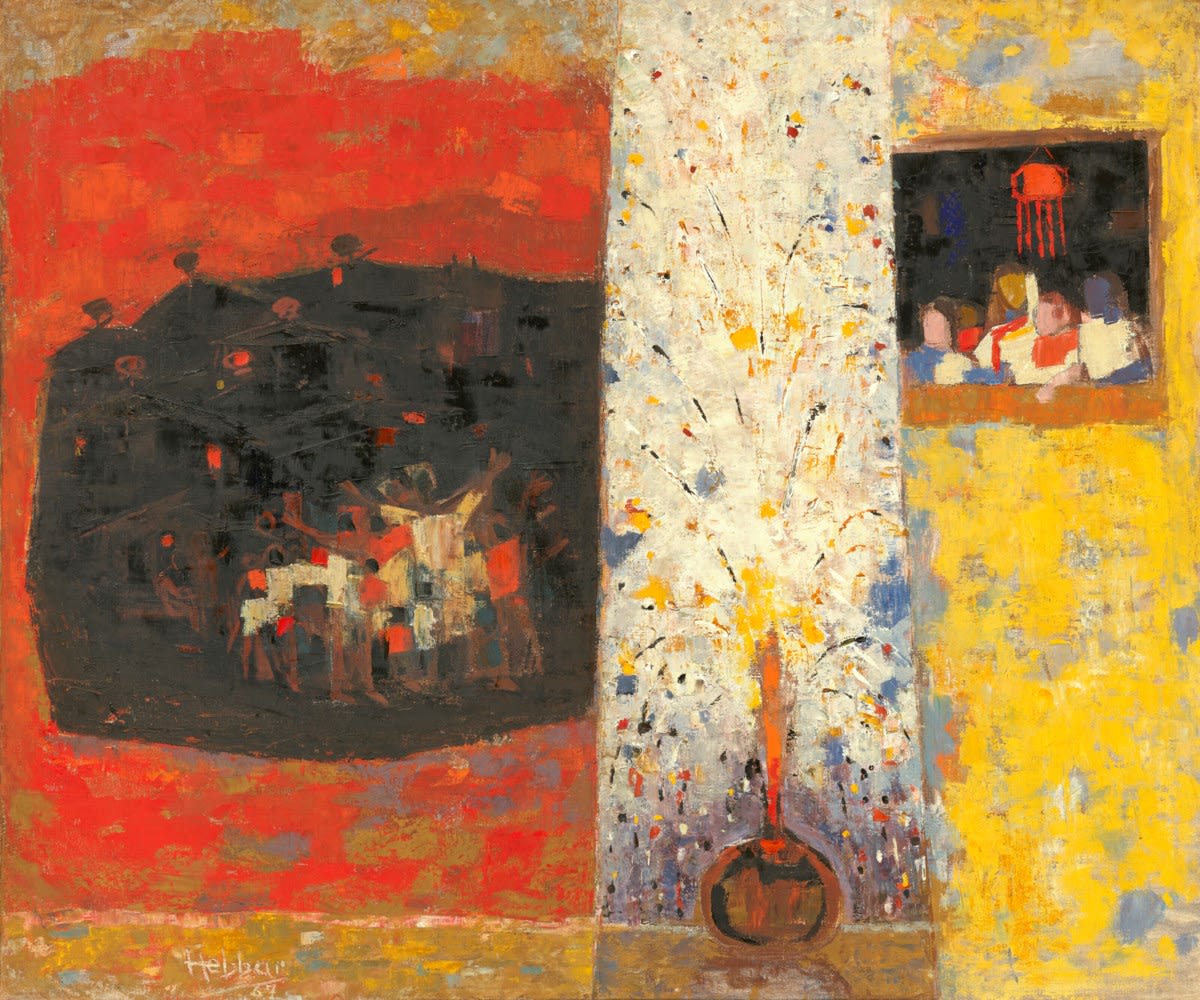
A rhythmic, linear modernism. Figures are simplified, elongated and stylised, contour-led rather than modelled, set in flattened, decoratively organised space. Colour is saturated and warm - ochre, gold, vermilion, viridian, teal. Later work dissolves figuration into concentric, radiating and spiral structures while retaining the same rhythmic pulse.
Evolution
- 1938-1948
- Academic and realist training; Kerala and Bombay landscape; commercial retouching work feeding a strong drawing hand
- 1946-1956
- The formative decade - social-realist humanism synthesised with miniature linearity; award-winning works Rhythm, Song of the Field, Mahim Darga
1949-1960s
Post-Paris consolidation - Gauguin-inflected colour, flattened space, Sher-Gil's east-through-west model fully absorbed; the 1962 Gulmohar Tree canvas that now holds his record sits in this band
- 1960s-1970s
- Increasing abstraction; Rocket/space series; Holi and festival abstractions; concentric and centrifugal compositional systems
- 1980s-1990s
- Late lyrical abstraction with residual figures; continued drawing practice; the 'quest' framing used by the NGMA retrospective
Influences
- Amrita Sher-Gil
- Paul Gauguin
- Indian miniature painting
- Yakshagana folk theatre and Tulu ritual culture
- Ananda Coomaraswamy's writings
- Post-Impressionism / School of Paris via Academie Julian, 1949-50
Visual language
Flatness and assertive figure-ground play; frieze-like horizontal registers; concentric ellipses and spirals radiating from a centre; a tapered vertical wedge as compositional axis in the late abstractions; decorative bordering; a naive/folk register deployed knowingly rather than untrained.
Signature device
The 'singing line' - a continuous, musical, dance-derived contour informed by his study of Kathak and by Yakshagana theatre; equally central to his ink/brush drawings and to the drawn armature beneath his oils.
Signature series
- Rocket / Into Space series
- Holi and festival paintings
- Working-women and labour subjects
- Gulmohar and flowering-tree canvases
- Morning Glory
- The Singing Line drawings
Themes and subjects
- Everyday social life of ordinary Indians - workers, fisherfolk, market scenes, women at domestic labour (Woman Making Chapatis), construction labourers
- Festival, ritual and the sacred - Holi, temple and darga subjects, sacred bull/cow motifs
- Nature and the organic - flowering trees (Gulmohar), Kerala and coastal Karnataka landscape, peacocks, Versova beach
- Music, dance and rhythm as both subject and structure
- Cosmic/space-age aspiration in the late Rocket and 'Into Space' works - technological ascent fused with mandala cosmology
- Humanist social conscience: celebration and suffering in a developing India
Movements and periods
- Indian modernism / Bombay School, post-independence
- Contemporary of but not member of the Progressive Artists' Group
- Postwar (1945-1970) figurative modernism moving toward lyrical abstraction
- Neo-Indian synthesis: folk and miniature sources with School of Paris technique
Techniques and mediums
- Oil on canvas - the primary medium, mastered by 1941
- Heavy impasto applied alla prima with a loaded brush; sweeping curved directional strokes; palette-knife wedges; scumbling and stippled pigment constellations over scraped-back grounds
- Egg tempera on board (e.g. 'Workers', 1954)
- Watercolour and oil on paper laid on card at small scale
- Ink and pencil line drawing and illustration - a major independent body of work
- Mural painting (specialist study under C.R. Gerrard) and graphics/printmaking (Ecole Estienne)
Fingerprint verification
Confirmed
Egon's fingerprint tags are corroborated by the documentary record: oil/impasto, saturated warm palette, flatness and figure-ground, decorative and naive registers, ritual/spirituality/nature themes, and Postwar period labelling all match published descriptions of Hebbar's practice. The 'varied' dispersion (coherence 0.47) reflects genuine breadth, not attribution noise - Hebbar deliberately moved between social-realist figuration, folk-decorative work and late cosmological abstraction across a 55-year career.
Disagreements
- The 'Naive' register tag should be read as knowing folk stylisation, not untrained naivety - Hebbar was academically trained at J.J. School of Art and the Academie Julian and chaired the national academy.
- The narrative's 'Abstract Expressionist surface handling' overstates the American lineage: the surface derives more directly from post-Impressionist / Gauguin-inflected School of Paris practice absorbed in 1949-50, plus Indian miniature and folk sources.
- 'Bombay Progressive Artists' Group lineage' should be qualified - Hebbar was a Bombay contemporary of the PAG, not a member, and his humanist continuity with pre-independence Indian art distinguishes him from the PAG's programme of rupture.
Extensions not in fingerprint
- The 'singing line' - the rhythmic contour is the artist's and his critics' primary descriptor and is under-weighted by tags focused on impasto and colour
- Kathak dance study and Yakshagana folk theatre as the literal structural source of that rhythm
- The ink/brush drawing corpus - a large, commercially distinct body of work absent from the oil-centric fingerprint
- Egg tempera on board and mural training as additional media
- The social-humanist subject register (labour, markets, urban poor) is as central as the ritual/sacred register the tags capture - and it is the register that produced the 2026 record-adjacent result for Woman Making Chapatis
Critical Reception
Research updated
Critical reception
Summary
Hebbar's critical standing has always been high in India and thin internationally. He is treated as the humanist of the Bombay modern generation - the artist of the 'singing line' who translated Yakshagana rhythm and miniature linearity into a modernist idiom without adopting the Progressives' rhetoric of rupture. Mulk Raj Anand's text for 'The Singing Line' is the foundational critical framing.
Critical gap
No Artforum, frieze, Art in America or e-flux reviews found; 'artists to watch' style editorial signals are not applicable to a deceased 20th-century master. Anglophone art-historical literature on Hebbar remains sparse relative to Husain, Raza, Souza and Gaitonde - the principal reason his prices lagged those peers until 2026.
Recent market framing
Artnet News (12 June 2026) describes him as known for blending Western and Indian techniques in depictions of ordinary people, and reports his auction record alongside Abanindranath Tagore's. The Art Newspaper (15 June 2026) names him among the 'prominent' artists whose records fell in Christie's white-glove London sale, situating the result within a three-year pattern of price escalation for South Asian 20th-century art and a broadening of a previously narrow market toward lesser-known Indian modernists.
Revisionist scholarship
H.A. Anil Kumar's essay 'The Subversive Modernist: K.K. Hebbar' argues Hebbar was under-represented in the mainstream Indian art-historical narrative while revered in Karnataka, and examines the regional-language versus English asymmetry in how Indian modernists were canonised - the clearest instance of independent, non-commercial scholarly attention.
Publications and media
- Artnet News, 'Christie's London Sale Confirms Growing Appetite for South Asian Art', 12 June 2026
- The Art Newspaper, 'Indian tea company's art collection soars at Christie's London', 15 June 2026
- The Art Newspaper, 'Christie's to hold its first South Asian Modern art sale in London in seven years', 31 March 2026
- Riding the Elephant / South Asia Times, April 2026 - records set for Vivan Sundaram and K.K. Hebbar in the spring cycle
- ARTnews, 'The Market for South Asian Modern and Contemporary Art Keeps Growing'
- Mulk Raj Anand, text for 'The Singing Line'
- NGMA catalogue 'An Artist's Quest', 2011
- Aakriti Art Gallery journal essays on Hebbar's centenary and museum situation
News record verification
Egon's provisional label 'Auction Record' for the 12 June 2026 Artnet item is CORRECT and independently confirmed by The Art Newspaper, which supplies the figure Artnet's summary omits (GBP 698,500 with fees for Untitled (Gulmohar Tree), 1962). One refinement to Egon's record: this was Hebbar's SECOND record reset of 2026 - an earlier record fell during the March/April spring cycle in India (Riding the Elephant / South Asia Times). The event is therefore better classified as 'record reset within an ongoing category-wide re-rating' than as an isolated record.
Academic discourse and positioning
A bridge figure: post-Bengal School, parallel to the Bombay Progressives, whose 1946-56 output is regarded as formative for modern Indian painting. Institutionally he was more central than the PAG in his lifetime (Akademi chairman, three national awards) but less central in later canon-formation - an inversion the 2026 market is partially correcting.
Gallery & Representation
Research updated
Fair presence
No dedicated Hebbar booth presence documented; works surface via DAG and Vadehra at India Art Fair, Art Mumbai and modern-master fair presentations. The Art Newspaper notes Indian art is increasingly represented at international fairs as of 2026.
Representation
Estate
K.K. Hebbar Art Foundation / K.K. Hebbar Trust (Mumbai/Manipal) - controls the largest single body of work and lends to the Hebbar Gallery and Art Centre at Manipal University
- Status
- Deceased 1996 - no exclusive living representation; the market is intermediated by the artist's foundation and modern-master dealers
Principal dealers
Scroll horizontally if needed →
| Role | Tier | Gallery | Locations |
|---|---|---|---|
| Maintains a full Hebbar artist chronology; holds and trades inventory | Tier 1 within Indian modernism - the dominant dealer-scholar operation in the segment | DAG (Delhi Art Gallery) | New Delhi, Mumbai, New York |
| Held Hebbar's 1993 solo exhibition; continues to handle secondary-market works | Tier 1 India (est. 1987; handles Husain, Raza, Ram Kumar, Tyeb Mehta, Padamsee) | Vadehra Art Gallery | New Delhi |
| Included Hebbar in 'Long Gone & Living Now', 2009 | Tier 2 India | Gallery Mirchandani + Steinruecke | Mumbai |
| 1999 memorial presentation | Tier 2/3 | The Fine Art Company | Mumbai |
- Auction intermediaries
- Christie's (London/New York), Sotheby's, Saffronart, AstaGuru, Pundole's, Koller (Zurich); Indian houses supply most annual volume
Geographic reach
Primary demand in India (Mumbai, Delhi, Bengaluru) plus the London/New York/Gulf diaspora; Swiss and other European private-collection provenance reflects historical placement during his 1964-75 European exhibiting years.
Representation history
In his lifetime Hebbar was institutionally rather than commercially represented - his platform was the Artists' Centre, the Bombay Art Society, Jehangir Art Gallery and the Lalit Kala Akademi, with Vadehra entering only in 1993. Commercial stewardship passed posthumously to the Foundation, DAG and Vadehra.
Sources & research notes
Egon’s artist research combines historical auction records, recent sales, institutional history, critical reception and gallery information. Researched auction records and auction highlights are identified separately.
Read prices with their work, sale date, currency and stated basis. Egon’s market assessments are distinct from reported auction results.
Reference: Egon, “K.K. Hebbar: Market Intelligence & Investment Profile.”
Research bibliography · 30 sources
Sources recorded for this artist’s research. This bibliography does not assign every source to an individual claim.
- K. K. Hebbar - Wikipedia
- Kattingeri Krishna Hebbar | Artnet
- K. K. Hebbar - Indian Painter and Art Educator | Itihaas
- Christie's London Sale Confirms Growing Appetite for South Asian Art | Artnet News
- Indian tea company's art collection soars at Christie's London | The Art Newspaper
- Christie's Revives South Asian Art Auction in London | Abir Pothi
- Christie's South Asian Art Auction Sets GBP 18.9M Record
- Kattingeri Hebbar sold-at-auction prices | Invaluable
- Saffronart Evening Sale: Modern Art, Sep 2023, Lot 43 - K K Hebbar, Untitled (Market Place)
- Saffronart Winter Online Auction, Dec 2024, Lot 76 - K K Hebbar
- Saffronart Winter Online Auction, Dec 2023, Lot 163 - K K Hebbar
- Artist's Quest: K K Hebbar A Retrospective | National Gallery of Modern Art
- Hebbar - An Artist's Quest (NGMA retrospective catalogue)
- National Gallery of Modern Art Mumbai - collection overview
- A Museum, a Retrospect & a Centenary for K.K. Hebbar
- The Subversive Modernist: K.K. Hebbar - H.A. Anil Kumar
- K. K. Hebbar | DAG
- K K Hebbar profile | Indian Art Ideas
- K K Hebbar | Gallery Dotwalk
- Vadehra Art Gallery | Artsy
- K. K. Hebbar | Boloji
- The Singing Line - drawings by Hebbar, text by Mulk Raj Anand
- Christie's to hold its first South Asian Modern art sale in London in seven years | The Art Newspaper
- Christie's March 2026 Asia Week New York Auctions | Asia Week New York
- What's next for South Asian art? Christie's Damian Vesey | Luxebook India
- The Market for South Asian Modern and Contemporary Art Keeps Growing | ARTnews
- $18m record auction price for Ravi Varma's 'Mona Lisa of Indian Art' | Riding the Elephant
- $18m record auction price for Ravi Varma's 'Mona Lisa of Indian Art' | South Asia Times
- It's raining records in India's art market | Business Today
- Peabody Essex Museum's 'Midnight to the Boom: Painting in India after Independence'
Research updates by section
These dates show when Egon’s research sections were updated. Source retrieval dates, where supplied above, refer to individual evidence notes.
Ranking updated . Research sections follow their own update dates.
This is what the market knows about K.K. Hebbar. What Egon can also tell you: whether K.K. Hebbar fits your portfolio — based on your existing holdings, budget, and investment timeline.
Get personalized analysisActive market signals
Inside Egon
Signal timeline & strength analysis
Gallery moves, auction records, institutional acquisitions, price milestones — tracked over 90 days
Full signal timeline, strength analysis, and alert configuration for K.K. Hebbar.
Collector demographics & buyer analysis
Geographic distribution, institutional vs. private buyers, collector profiles, and secondary market activity
Who is collecting K.K. Hebbar? Geographic distribution, institutional vs. private buyers, and collector profile analysis.
Personalized acquisition strategy
Optimal entry points, comparable pricing analysis, timing recommendations, and portfolio fit assessment
Personalized acquisition strategy for K.K. Hebbar based on your budget, timeline, and collection goals.
Go deeper with personalized intelligence
You now have Egon's market assessment of K.K. Hebbar. The next question is personal: does this artist belong in your collection? Egon analyzes collection fit based on your aesthetic thesis, existing holdings, budget, and investment goals — delivering acquisition strategies no public index can provide.