David Teniers The Younger
Blue-chipEgon research · Artist market profile
The market, in context.
Explore David Teniers The Younger’s auction history alongside the exhibitions, collections and gallery relationships behind the market.
Institutional research
Collections & exhibitions
Read holdings, exhibition history and their qualifications in context.
Read the institutional research →





Egon investment scores
Market position
Research updated
Recent auction highlight
A result from Egon’s tracked auction sales; historical auction records are researched separately. Price including buyer’s premium.
Pricing
Historical context
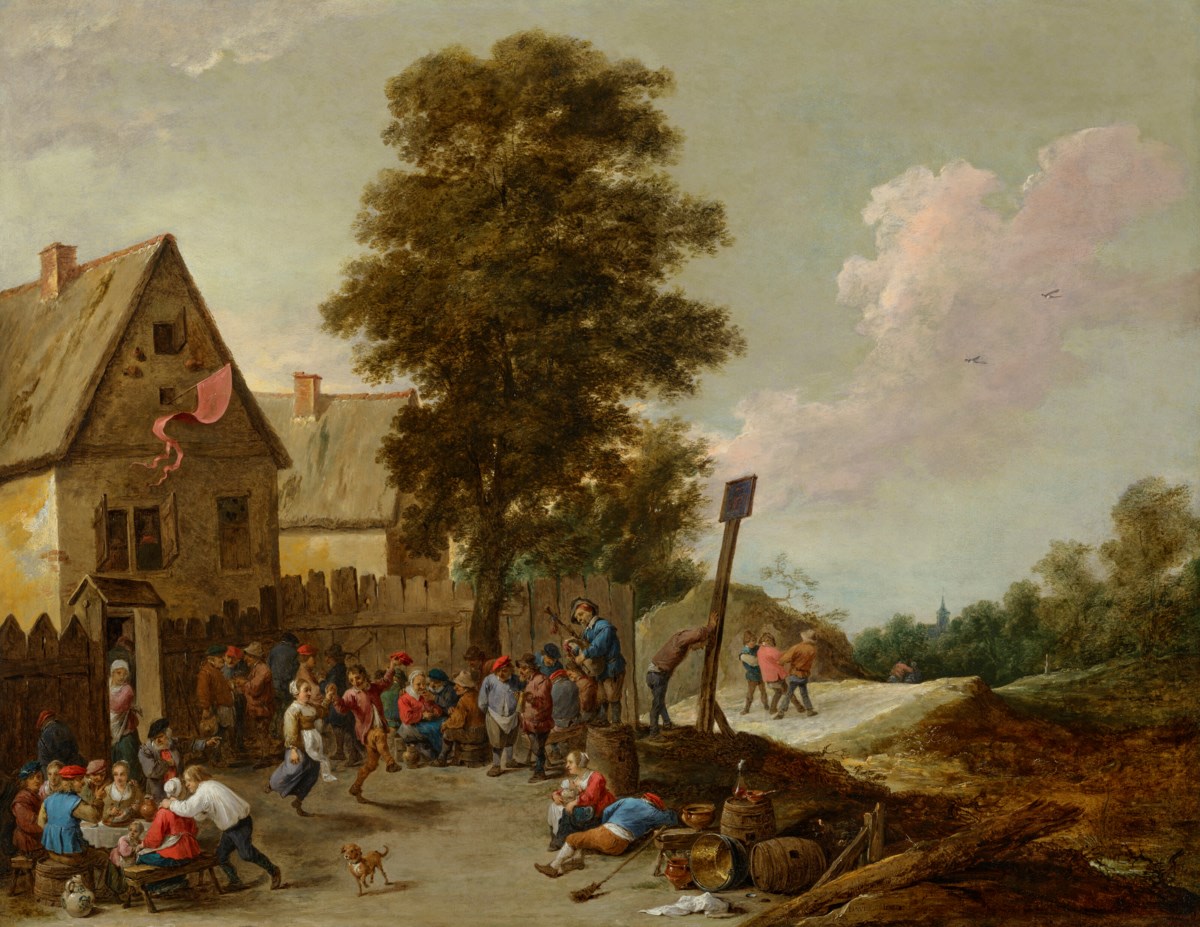
Pre-2000 benchmark: $935,500 for The Potters' Fair at Ghent (Sotheby's, 1996) — top autograph panels were already seven figures thirty years ago. A Hermitage-provenance landscape moved from $230,000 at auction (1980) to CHF 780,000 privately the same year.
Attribution premium
Autograph status is the dominant price variable: signed, published panels with aristocratic provenance sell at 50-150x 'follower of' material of comparable size, so catalogue wording ('David Teniers the Younger' vs 'attributed to' vs 'circle of' vs 'follower of') effectively sets the price band.
Primary market note
No primary market exists (died 1690); no gallery-controlled pricing and no 'contact the gallery for pricing' channel. Prices are set at auction and, in the dealer trade, are typically undisclosed.
Current market 2025 2026
Prints and multiples
Etchings (e.g. The Rat Catcher from The Beggars, 1632, Hollstein 21) and Theatrum Pictorium engravings trade from the low hundreds to low thousands of dollars, frequently in mixed lots — must not be blended with painting data
- Decorative arts under the name
- reported up to $247,938 and averaging c. $55,289 over twelve months (MutualArt) — largely tapestries/objects after his designs; a separate market
- Circle of follower of school of
- typically $1,000 - $30,000 at regional European houses (Koller, Lempertz, Hampel, Im Kinsky, Setdart, Dominic Winter)
- Modest autograph and small panels
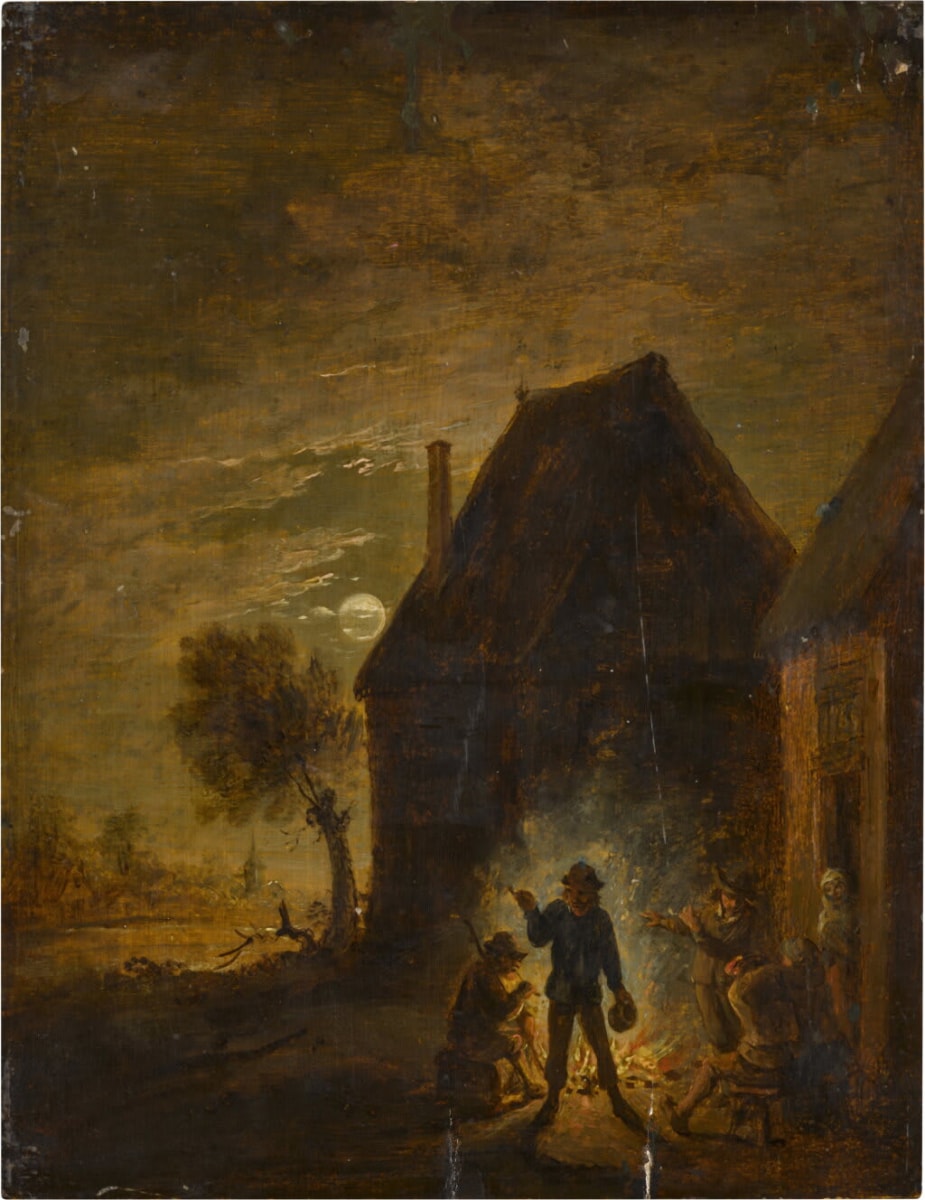
- c. $25,000 - $55,000 (Moonlit farm $27,251; river landscape $51,095, both Sotheby's Jul 2026)
- Strong mid tier landscape and genre panels
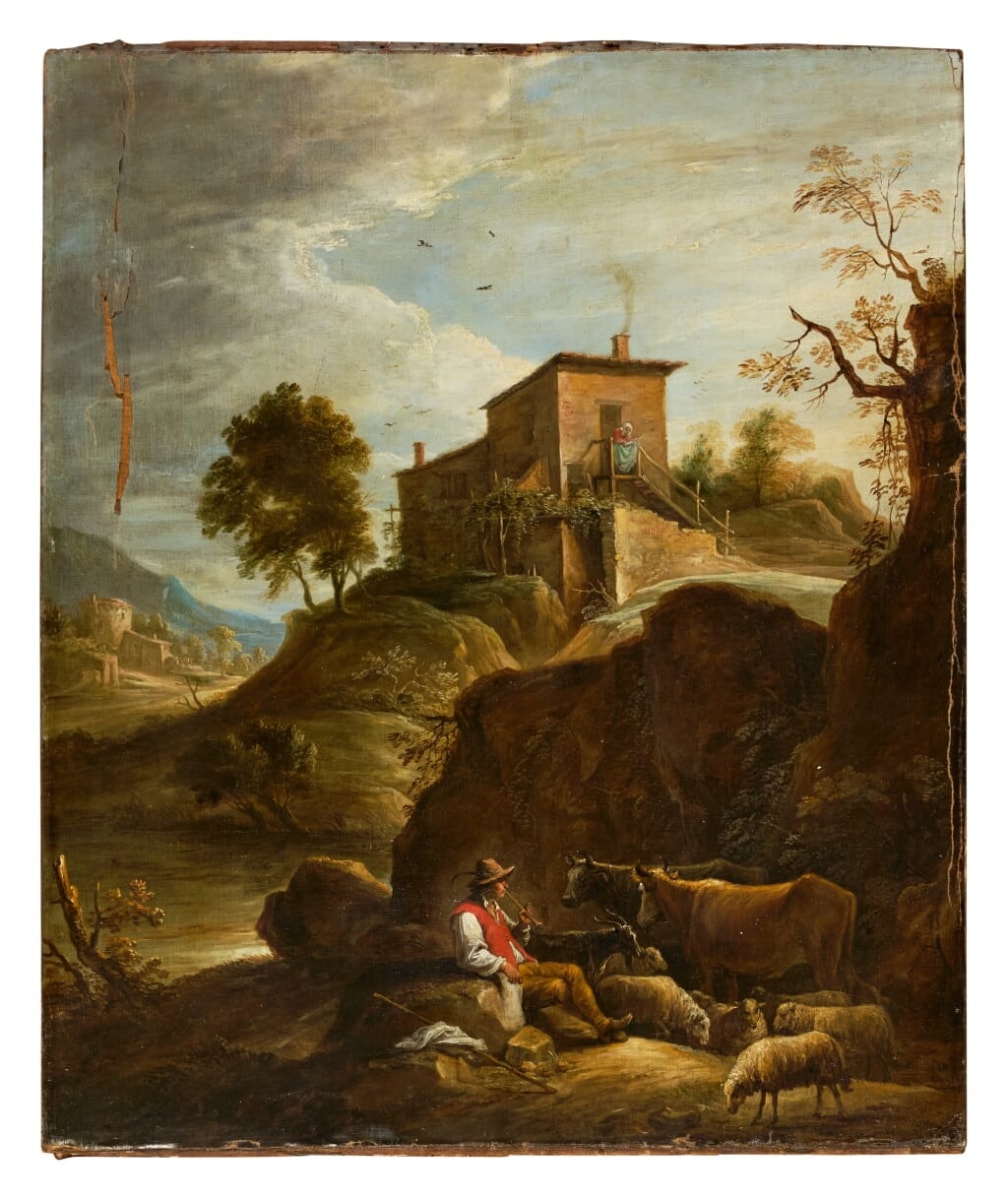
- c. $250,000 - $300,000 (Village landscape with herdsmen and a milkmaid, $287,384, Sotheby's Dec 2025)
Masterpiece tier signed multi figure panels
$600,000 - $1.65m at auction (The Potters' Fair at Ghent, $1,636,000 premium-inclusive, Sotheby's Feb 2026); indicative all-time high c. $5.97m per MutualArt
- Small cabinet pieces and weaker attributions
- c. $6,000 - $15,000 (Italianate Landscape With a Shepherd Smoking, $10,880, Sotheby's Jun 2026)
Liquidity
Depth
Four distinct price tiers from four figures to seven figures, giving unusually good exit liquidity for a 17th-century artist; the top tier is thin and event-driven (single-owner consignments such as the Weindling collection).
Volume
Very deep by Old Master standards: MutualArt logs 4,222 lifetime auction lots under the name. Our internal database records 9 lots at the four major houses from 2025 onward, all sold — a floor that excludes the larger volume at Dorotheum, Koller, Lempertz, Hampel, Im Kinsky, Artcurial, Setdart and Heritage.
- Estimated annual lots
- Dozens per year across all attribution levels; roughly 3-8 fully autograph works annually
Sector sell through context
In the February 2026 New York Old Master week all but seven of Sotheby's 52 lots sold and all but seven of Christie's 45 (Doerr Valuations) — sector context, not artist-specific.
Collector base
Modern
- Lester L. Weindling ('Light and Life', Sotheby's New York, Feb 2026)
- Dr Axel Wenner-Gren, Stockholm
- Jane and Raphael Bernstein (donors, Middlebury College Museum of Art)
- Robert H. and Clarice Smith, Nell V. Weidenhammer and Mr and Mrs John Ely Pflieger (donors, National Gallery of Art)
- Edith Neuman de Végvár (donor, Metropolitan Museum)
Historical
- Archduke Leopold Wilhelm
- Spanish Habsburg royal collection
- Dukes of Marlborough
- William III (1713 sale)
- Catherine II of Russia
- Alfred de Rothschild and Almina, Countess of Carnarvon
- Rodolphe Kann collection, Paris
- Sedelmeyer Gallery, Paris
Demand pattern
Traditional Old Master collectors in Europe and the US plus museum curators filling Flemish genre gaps; the February 2026 sales also showed occasional crossover bidding from buyers better known for contemporary art on fresh, well-provenanced material.
Restitution sensitivity
Several works carry Nazi-era histories — the Met's Guardroom was seized from Baron Karl Neuman in Paris and restituted by 1947, and a 2016 Sotheby's lot passed through the Sonderauftrag Linz. Provenance due diligence is material in this market.
Auction history
Web sourced records
- The Potters' Fair at Ghent, oil on oak panel, 82.9 x 112.7 cm, signed lower right: sold for $1.64m at Sotheby's New York on 5 February 2026, more than two and a half times the low estimate; it had last sold at auction in 1996 for $935,500 at Sotheby's, an improvement of $700,500 equal to roughly a 1% annualised return (HENI News). It led the 'Light and Life: The Lester L. Weindling Collection' section, whose twelve lots totalled $16.75m (Doerr Valuations).
- MutualArt records 4,222 works offered at auction under the name, with realised prices reported up to $5,971,570 for paintings and $247,938 for decorative arts, and decorative-art lots averaging $55,289 over the preceding twelve months — the c. $5.97m figure (aggregator-reported, not verified to a single sale) rather than the internal $1.64m high is the indicative all-time market top.
- A signed and dated 1654 pastoral landscape with Hermitage provenance (Catherine II; Hermitage inv. 1607; Fischer, Lucerne, 1931; Wenner-Gren, Stockholm; Sotheby's London 1965, £5,000) sold at Sotheby's New York on 9 January 1980 for $230,000 to the dealer David Koetser, and was acquired from Koetser in May 1980 for CHF 780,000, returning to Sotheby's London in the December 2014 Old Master & British Paintings Evening Sale.
- Bought-in history is documented to the 18th century: a Teniers offered at Christie's London on 3 May 1806, lot 3 went unsold and was sold three weeks later for £3.3s to Woodburn (Sotheby's provenance for lot 18, Old Masters Evening Sale 2016 — a mid-to-late 1640s Boy Blowing Bubbles vanitas with a Sonderauftrag Linz wartime provenance).
- Current lower-tier activity (Invaluable listings): The Fortune Teller, monogrammed 'DT', oil on panel 17.1 x 25.2 cm, Bonhams, 30 June 2026; The Four Seasons, four small panels, Christie's, 27 June 2026; The Temptation of Saint Anthony, oak panel, Artcurial Paris, 30 April 2025; plus continuous 'circle of' / 'follower of' lots at Koller, Lempertz, Hampel, Im Kinsky, Setdart, Dominic Winter and Heritage.
Internal egon database 2025 onward
- Sold
- 9
- Range
- $10,880 - $1,636,000
- Average
- $244,445
- Highest
- $1,636,000 — The Potters' Fair at Ghent, Sotheby's, Feb 2026
- Total lots
- 9
Recent lots
- Moonlit farm with figures around a fire — $27,251, Sotheby's, Jul 2026 (est. $6,653-$9,314; price basis unknown vs hammer-basis estimate, not directly comparable)
- A river landscape with fishermen and shepherd — $51,095, Sotheby's, Jul 2026 (est. $39,918-$53,224; bases not directly comparable)
- Italianate Landscape With a Shepherd Smoking — $10,880, Sotheby's, Jun 2026 (est. $6,000-$8,000; bases not directly comparable)
- The Potters' Fair at Ghent — $1,636,000, Sotheby's, Feb 2026 (est. $600,000-$800,000; premium-inclusive price vs hammer-basis estimate, not directly comparable)
- Village landscape with herdsmen, a milkmaid, cattle, sheep and a dog, a city beyond — $287,384, Sotheby's, Dec 2025 (est. $106,488-$159,732; bases not directly comparable)
Provenance note
These figures come from the EGON internal database (Christie's, Sotheby's, Phillips, Bonhams, 2025 onward). They are not web-sourced and have not been merged with any web-sourced price.
Sell through caveat
Sell-through rate not stated: 92% of this artist's lots have settled in our data (min 95%), and unsettled lots skew toward passes, so any computed rate would be inflated.
Market position
Segment
Upper-middle of the Old Master field: the leading Flemish genre painter of his generation, but priced far below Rubens, Van Dyck, Rembrandt, Canaletto and Vermeer-tier names.
Comparables
- Adriaen Brouwer (rarer, higher per work)
- Jan Steen
- Adriaen and Isack van Ostade
- Jan Brueghel the Younger
- Joos de Momper
- Gonzales Coques
- Frans Francken the Younger
Relative read
A high-volume, high-name-recognition Old Master: liquid at every level, but a long tail of workshop and follower material caps averages and rewards connoisseurship.
Sector backdrop
The Art Basel & UBS Global Art Market Report 2026 put the global market up 4% to c. $59.6bn, with Old Master dealers recording 9% growth. The Art Newspaper reported combined New York Old Master totals just over $185m in early 2026, with Christie's $54m paintings sale its strongest New York Old Masters result in more than a decade (top lot a Canaletto at $30.5m).
Investment outlook
Risks
- Attribution risk is dominant, given a vast workshop/copy/follower corpus
- Condition risk on 350-year-old oak panels (cradling, joins, thinning)
- Restitution and provenance risk for works with 1933-45 gaps
- Taste risk: peasant genre is less fashionable with new collectors than landscape or portraiture
- Top-tier results depend on episodic single-owner consignments
Trajectory
Stable-to-firm rather than fast-appreciating. The defining datapoint: the Potters' Fair rose from $935,500 (1996) to $1.64m (2026) — c. 1% annualised per HENI — even while selling at 2.5x its low estimate, showing that competitive bidding on the day does not equal strong long-run compounding for this name.
Opportunity
Fresh-to-market, signed, published panels from named collections sharply outperform; mid-tier autograph landscapes at $25k-$300k look reasonably priced against Dutch peers.
Institutional presence
Research updated
Exhibitions
Monographic
- 'David Teniers der Jüngere 1610-1690. Alltag und Vergnügen in Flandern', Staatliche Kunsthalle Karlsruhe, 5 November 2005 - 19 February 2006; catalogue ed. Margret Klinge and Dietmar Lüdke (Heidelberg, 2005) — the standard modern retrospective, routinely cited in auction cataloguing
- 'David Teniers and the Theatre of Painting', The Courtauld Gallery, London (2006), with loans from the Museo del Prado, the Royal Collection, the National Gallery of Ireland, Glasgow Museums and the British Library; catalogue by Ernst Vegelin van Claerbergen with Caroline Campbell, Margret Klinge and James Methuen-Campbell
- 'David Teniers's Theatrum Pictorium', Middlebury College Museum of Art, Vermont (2025) — focus exhibition on the museum's Teniers cabinet painting and the Theatrum Pictorium project
Historical group
- Royal Academy of Arts, London, 'Exhibition of the Works of the Old Masters', 1878 (no. 66) and 1886
- 'Exhibition of 17th Century Art in Europe', London, 1938 (The Potters' Fair at Ghent, cat. no. 101)
- Värmlands Museum, Karlstad, Sweden, 1940
- Moot Hall, Colchester, 'A selection of pictures from private collections', 2-14 July 1951 (cat. no. 11)
Current and upcoming
No further monographic exhibition is announced in the sources consulted as of September 2026. Works are on continuous permanent-collection display at the Prado, KHM Vienna, the Met, the National Gallery of Art and the Oldmasters Museum Brussels and are standing loan candidates for Flemish Baroque and history-of-collecting exhibitions. Near-term market opportunities: the December 2026 London and January/February 2027 New York Old Master weeks (Sotheby's, Christie's, Bonhams) and TEFAF Maastricht 2027, where the Old Master trade habitually offers Teniers panels.
Publications
- Hans Vlieghe, 'David Teniers the Younger (1610-1690). A Biography', Pictura Nova XVI — described in the Historians of Netherlandish Art review as the most comprehensive study of his life and work to date, based on archival research
- Margret Klinge and Dietmar Lüdke (eds.), 'David Teniers der Jüngere 1610-1690. Alltag und Vergnügen in Flandern', Karlsruhe/Heidelberg 2005
- Ernst Vegelin van Claerbergen (ed.), 'David Teniers and the Theatre of Painting', Courtauld 2006, with essays by Klinge, Giles Waterfield and James Methuen-Campbell
- David Teniers the Younger, 'Theatrum Pictorium' (1659-60; 2nd ed. 1673) — the first illustrated printed collection catalogue
- Cornelis de Bie, 'Het Gulden Cabinet' (1661) — earliest biography
- John Smith, 'Supplement to the Catalogue Raisonné', vol. IX, London 1842
- N. de Pauw, 'Les trois peintres de David Teniers et leurs homonymes', Antwerp 1898
- H. Simon, 'Zu Datierung und Ikonographie des Genter Jahrmarkts von David Teniers d. J.', Wallraf-Richartz-Jahrbuch 57 (1996), pp. 195-211
- K. Jonckheere, 'The Auction of King William's Paintings, 1713', Amsterdam
Museum collections
Shepherds and Sheep (after Bassano, for the Theatrum Pictorium)
- Tier
- First-rank
- Institution
- Metropolitan Museum of Art, New York
- Credit line verbatim
- Marquand Collection, Gift of Henry G. Marquand, 1889
The Good Samaritan (after Francesco Bassano; model for a Theatrum Pictorum plate)
- Tier
- First-rank
- Institution
- Metropolitan Museum of Art, New York
- Credit line verbatim
- Marquand Collection, Gift of Henry G. Marquand, 1889
Guardroom with the Deliverance of Saint Peter, ca. 1645-47 — seized by the Nazis from Baron Karl Neuman in Paris and restituted to him by 1947
- Tier
- First-rank
- Institution
- Metropolitan Museum of Art, New York
- Credit line verbatim
- Gift of Edith Neuman de Végvár, in honor of her husband, Charles Neuman de Végvár, 1964
Landscape with Thatched Cottages (Workshop of David Teniers the Younger), obj. 22.47.3
- Tier
- First-rank
- Institution
- Metropolitan Museum of Art, New York
- Credit line verbatim
- Bequest of John Henry Abegg, 1921
Peasants Celebrating Twelfth Night, 1635, acc. 1972.10.1
- Note
- Named acquisition fund — a curatorial purchase rather than a donor offer
- Tier
- First-rank
- Institution
- National Gallery of Art, Washington DC
- Credit line verbatim
- Ailsa Mellon Bruce Fund, 1972.10.1
View 14 more records
Tavern Scene, 1658, acc. 1975.77.1
- Tier
- First-rank
- Institution
- National Gallery of Art, Washington DC
- Credit line verbatim
- Gift of Robert H. and Clarice Smith, 1975.77.1
Two Peasants with a Glass of Wine, c. 1645, acc. 1992.27.1
- Tier
- First-rank
- Institution
- National Gallery of Art, Washington DC
- Credit line verbatim
- Gift of Nell V. Weidenhammer, 1992.27.1
Peasants in a Tavern, c. 1633, acc. 1991.140.1
- Tier
- First-rank
- Institution
- National Gallery of Art, Washington DC
- Credit line verbatim
- Gift of Mr. and Mrs. John Ely Pflieger, in Honor of the 50th Anniversary of the National Gallery of Art, 1991.140.1
Deep holdings including The Archduke Leopold Wilhelm in his Painting Gallery in Brussels (oil on copper, 1647-51, 104.8 x 130.4 cm) and numerous peasant/kermis subjects sent to Spain in the artist's lifetime; the Prado also adjudicates school-of-Teniers attributions in its catalogue
- Tier
- First-rank
- Institution
- Museo Nacional del Prado, Madrid
- Credit line verbatim
- credit line not published (Spanish Royal Collection provenance; the Prado does not publish US-style credit lines)
Gallery of Archduke Leopold Wilhelm in Brussels, c. 1650, oil, 123 x 163 cm; the Archduke's collection forms the core of the museum
- Tier
- First-rank
- Institution
- Kunsthistorisches Museum, Vienna
- Credit line verbatim
- credit line not published (Habsburg imperial collection provenance)
Gallery of Archduke Leopold Wilhelm in Brussels, 1651, 96 x 129 cm, inv. 2569
- Tier
- First-rank national museum
- Institution
- Royal Museums of Fine Arts of Belgium / Oldmasters Museum, Brussels
Credit line verbatim
credit line not published — the museum records that the painting was purchased for the collection in 1873 from J. Nieuwenhuys, Brussels (i.e. a museum purchase)
The kitchen interior, signed and dated 1644 (cited in Sotheby's cataloguing as a dating comparison)
- Tier
- First-rank
- Institution
- Mauritshuis, The Hague
- Credit line verbatim
- credit line not published
Historic holdings acquired by Catherine II; a signed 1654 landscape (inv. 1607) left the museum and appeared at Fischer, Lucerne, in 1931
- Tier
- First-rank
- Institution
- State Hermitage Museum, St Petersburg
- Credit line verbatim
- credit line not published (imperial acquisition)
Holdings confirmed via public-API name-matched records supplied in the research context
- Tier
- First-rank
- Institution
- Art Institute of Chicago
- Credit line verbatim
- credit line not published in the sources consulted
Holdings confirmed via public-API name-matched records supplied in the research context
- Tier
- First-rank
- Institution
- Cleveland Museum of Art
- Credit line verbatim
- credit line not published in the sources consulted
Holdings confirmed via public-API name-matched records (paintings/prints/decorative material)
- Tier
- First-rank
- Institution
- Victoria & Albert Museum, London
- Credit line verbatim
- credit line not published in the sources consulted
'Cabinet Painting' of Titian's Rest on the Flight into Egypt of c. 1510, 1650s, oil on canvas, 6 3/4 x 9 1/4 in., acc. 2016.379
- Tier
- University museum
- Institution
- Middlebury College Museum of Art, Vermont
- Credit line verbatim
- Gift of Jane and Raphael Bernstein, 2016.379
All lent Teniers material to the Courtauld's 'David Teniers and the Theatre of Painting', confirming permanent holdings
- Tier
- Mixed first-rank and national
- Institution
- Royal Collection Trust; National Gallery of Ireland; Glasgow Museums; British Library
- Credit line verbatim
- credit line not published
Numerous further name-matched records across European public collections; a floor, not a holdings count
- Tier
- Aggregator
- Institution
- Europeana aggregate (European museums)
- Credit line verbatim
- not applicable
Awards and recognition
- Appointed 'pintor de camara' (court painter) to Archduke Leopold Wilhelm, Brussels, 1651, and keeper of the archducal gallery
- Ennobled; granted a coat of arms only after a contested claim, subsequently prohibited following his brother-in-law Jan Baptist Borrekens's complaint
- Leading figure of the Antwerp Guild of St Luke and credited with founding the Antwerp Academy
- Canonised as a major Flemish painter as early as Cornelis de Bie's biography of 1661 (identified by Vlieghe as the start of his critical reception)
- Commemorated among the 'hommes illustres' with a marble bust commissioned in 1820 for the Grande Galerie of the Louvre (a portrait of the artist, not by him)
Museum holdings summary
Dozens of public collections across Europe and North America. The supplied museum-API scan returned at least 52 name-matched works across the Met, Art Institute of Chicago, Cleveland, the V&A and Europeana; web research adds the Prado, KHM Vienna, the Royal Museums of Fine Arts of Belgium, the Mauritshuis, the National Gallery of Art, the Hermitage, the Royal Collection, the National Gallery of Ireland and Glasgow Museums. For a 17th-century artist the decisive evidence is depth of national-institutional holding and state cultural recognition rather than modern acquisition credit lines.
Career & Biography
Research updated
Identity
- Birth
- 15 December 1610, Antwerp, Habsburg/Spanish Netherlands (now Belgium)
- Death
- 25 April 1690, Brussels
- Gender
- Male
- Status
- Historical Old Master — died 1690; no living-artist studio or primary-market activity
- Full name
- David Teniers the Younger (David Teniers II; Dutch: David Teniers de Jonge)
- Nationality
- Flemish (Habsburg Netherlands)
Name variants
- David Teniers II
- David Teniers d. J.
- David Teniers le Jeune
- Teniers the Younger
- monogram 'DT'
- signed 'D. TENIERS F.'
Note on getty
The absence of Getty ULAN data in the supplied context is a pipeline gap, not a reflection of standing: Teniers is a fully canonical 17th-century Flemish master documented by the Prado, the Met, the National Gallery of Art, the Kunsthistorisches Museum and the Royal Museums of Fine Arts of Belgium.
Career timeline
- c. 1620s-1632: workshop training under David Teniers I in Antwerp; earliest works in the manner of Adriaen Brouwer
- 1633: master in the Antwerp Guild of St Luke; begins signing and dating works
- 1637: marries Anna Brueghel, daughter of Jan Brueghel the Elder and goddaughter of Rubens — a decisive social and commercial step (Prado; Vlieghe)
- 1640s: peak period of kermis, tavern, guardroom and kitchen subjects (kitchen interior, signed 1644, Mauritshuis; Guardroom with the Deliverance of Saint Peter, c. 1645-47, Met)
- 1647: Archduke Leopold Wilhelm becomes Governor General of the Southern Netherlands and an important patron
- c. 1650: moves to Brussels as 'pintor de camara'; acquires a large house/studio beside the government palace
- 1651: appointed court painter and keeper (in effect curator) of the archducal picture gallery; paints the celebrated gallery pictures (Prado, KHM Vienna, Oldmasters Museum Brussels)
- 1650s: produces small 'cabinet painting' modelli after the Archduke's Italian pictures, employing c. 12 engravers
- 1658-1660 (2nd ed. 1673): publishes the Theatrum Pictorium, the first illustrated printed catalogue of a major collection (229-243 Italian pictures); brother Abraham Teniers assisted with publication
- 1660s: ennoblement and international reputation; coat-of-arms controversy after claiming descent from the arms-bearing Taisnier family — reported by brother-in-law Jan Baptist Borrekens and prohibited from using the arms
- 1670s-1690: slight artistic decline after the court years; active as picture dealer and organiser of auctions; final years marked by poverty caused by changing taste and his children's debts (Vlieghe)
Education and training
- Guild
- Entered the Antwerp Guild of St Luke in 1633, the year he began signing and dating his paintings
- First master
- His father, the painter and dealer David Teniers the Elder (1582-1649), was his first teacher
- Formal degrees
- Not applicable — 17th-century guild/workshop training rather than academic degrees
- Later institutional role
- Credited with a founding role in the Antwerp Academy, where young artists were trained to draw
Social political engagement
No modern-style activism; engagement was courtly and corporate — guild and academy institution-building in Antwerp, Brussels court service, and the pursuit of noble status (the coat-of-arms episode).
Artistic context and influences
Influences
- Adriaen Brouwer (peasant genre)
- David Teniers the Elder (training)
- Joos de Momper and Paul Bril (landscape)
- Jan Brueghel the Elder and the Brueghel dynasty
- Rubens's agrarian landscapes
- Utrecht Caravaggisti / Honthorst and Seghers (nocturnal chiaroscuro)
- Titian, Bassano and the Venetians, absorbed directly by copying the archducal collection
Contemporaries
- Adriaen Brouwer
- Adriaen and Isack van Ostade
- Jan Steen
- Gonzales Coques
- Gillis van Tilborgh
- Jan Brueghel the Younger
- Adriaen van de Velde
Period patrons
- Archduke Leopold Wilhelm of Austria
- the Spanish Habsburg court (many works sent to Spain — hence Prado depth)
- Dukes of Marlborough (owned 120 Theatrum Pictorium panels by 1740)
- William III (works in the 1713 sale of King William's paintings)
- Catherine II of Russia / the Hermitage
Pupils and followers
- Thomas van Apshoven
- Aert van Waes
- Ferdinand van Apshoven the Younger
- David Teniers III (son)
- a very large corpus of copyists, 'circle of' and 'follower of' painters that materially shapes today's auction market
Studio practice and working methods
Prolific cabinet-scale production on oak panel and copper with workshop replication of successful compositions; small modelli made as engravers' models; an unusually commercial and administrative practice combining painter, court keeper/cataloguer and art dealer.
Artistic Profile
Research updated
Style
Small-scale, silvery-toned, minutely finished cabinet painting with a light, fluid touch — cooler and more refined than Brouwer's coarser handling. Compact anecdotal figures are disposed across shallow foregrounds against airy, atmospheric distances; the mood is observational and good-humoured rather than moralising, with legible, well-ordered narrative.
Evolution
- Early (c. 1630-1640): Brouwer-derived low-life tavern and peasant subjects on small panels — Peasants in a Tavern (c. 1633, NGA), Peasants Celebrating Twelfth Night (1635, NGA)
- Mature (1640s): the strongest and most sought-after phase — large kermises, guardrooms, kitchen interiors and vanitas subjects in silvery tonality with refined finish (Guardroom, c. 1645-47, Met; kitchen interior, 1644, Mauritshuis)
- Court period (1647-1660s): gallery pictures for Leopold Wilhelm, cabinet copies after Italian masters, the Theatrum Pictorium, more courtly staffage; the signed 1654 pastoral landscapes belong here
- Late (1670s-1690): repetition of established formulae with heavy workshop involvement and weaker invention, alongside commercial difficulty as taste shifted (Vlieghe)
Influences
- Adriaen Brouwer — decisive early source for peasant genre
- David Teniers the Elder — training
- Joos de Momper and Paul Bril — landscape structure
- Jan Brueghel the Elder and the Brueghel dynasty — kermis precedent, and family connection through the 1637 marriage
- Rubens's agrarian landscapes; Adriaen van de Velde's pastoral staffage
- Utrecht Caravaggisti / Honthorst and Seghers — nocturnal chiaroscuro
- Titian, Bassano and the Venetians, absorbed directly through copying the archducal collection
Visual language
Earth-toned, warm-to-muted palettes of umber, ochre and grey-green; clear foreground / middle-ground / background construction with atmospheric perspective and a high luminous sky; diffuse daylight without heavy shadow drama in the pastoral and kermis works; in the nocturnes, torchlit tenebrism with crimson and ochre accents in deep darkness.
Signature series
- Kermis / village fair compositions
- Theatrum Pictorium modelli and the archducal gallery paintings
- Guardroom pictures
- Alchemist and physician subjects
- Pastoral landscapes with resting herdsmen
Themes and subjects
- Peasant kermises, village fairs and outdoor festivities (The Potters' Fair at Ghent)
- Tavern and smoking/drinking interiors, card and dice players
- Guardroom (corps de garde) scenes with heaped armour and still-life passages
- Kitchen interiors and domestic life
- Alchemists, physicians, urine-flask examinations, surgeons, rat-catchers, fortune tellers
- Picture-gallery / kunstkammer paintings of the archducal collection
- Pastoral landscapes with herdsmen, milkmaids, cattle and sheep and distant city silhouettes
- Religious and mythological narrative in cabinet format — Temptation of Saint Anthony, Deliverance of Saint Peter, Passion subjects
- Vanitas allegory (boy blowing bubbles), the Four Seasons, and small copies (modelli) after Italian masters
Movements and periods
- Flemish Baroque
- Dutch/Flemish Golden Age genre painting
- Antwerp school; Brussels court painting
- pre-1700 / 17th century
- fijnschilder cabinet-picture tradition
Techniques and mediums
- Oil on oak panel (dominant support), oil on canvas, oil on copper for prestige gallery pictures
- Layered glazing and scumbling; thin transparent darks over light grounds; built-up opaque and semi-transparent foliage masses
- Fine detail in armour, earthenware and fabric; translucent flesh modelling
- Etching (The Rat Catcher from The Beggars, 1632; Hollstein 21)
- Design for and supervision of reproductive engraving — Theatrum Pictorium, c. 12 engravers
- Workshop replication of successful compositions at small scale
Fingerprint verification
Extended
Additions from this research: (1) oak panel and copper as the characteristic supports, not merely 'oil/painting'; (2) the picture-gallery / kunstkammer subject, absent from the fingerprint yet his most art-historically consequential body of work; (3) the guardroom and alchemist/physician subject types; (4) etching and reproductive engraving as media; (5) very small cabinet scale (many works under 25 cm) as a defining formal parameter; (6) the Antwerp-to-Brussels court trajectory and the Theatrum Pictorium modelli as a distinct series.
Confirmed
The stored fingerprint's core holds: Baroque, pre-1700, representational; oil with glazing and scumbling; earth-toned warm-to-muted palettes; foreground/middle-ground/background structure with atmospheric recession and diffuse light; themes of domestic life, landscape, narrative and the everyday. The Potters' Fair at Ghent is correctly flagged as a signature work — Sotheby's records it as signed lower right, oil on oak panel, 82.9 by 112.7 cm.
Disagreements and cautions
The fingerprint's low coherence (0.51, n=14) is probably inflated by attribution noise as much as by genuine breadth: several contributing lots ('Italianate Landscape With a Shepherd Smoking', 'A river landscape with fishermen and shepherd') sold at $10,880-$51,095, levels consistent with attributed/workshop/follower material rather than autograph Teniers, and the market carries a very large 'circle of' and 'follower of' corpus. The nocturnal Caravaggesque Kiss of Judas exemplar is stylistically atypical of his core output. Recommendation: compare to the nearest exemplar and down-weight sub-$60k lots in the fingerprint pool.
Critical Reception
Research updated
Academic discourse
Three active strands: (1) attribution and workshop studies separating autograph work from the vast follower corpus; (2) history of collecting and museology via the Theatrum Pictorium and the gallery paintings; (3) provenance and restitution research, given documented Nazi-era seizures (the Met's Guardroom, restituted by 1947) and Sonderauftrag Linz / Schloss-collection contexts.
Critical reception
No gaps note
No adverse or revisionist critical position was found in the sources consulted; the principal live critical question is attribution rather than reputation.
Modern scholarship
Scholarship is independent of the market and ongoing. Hans Vlieghe's archival biography in the Pictura Nova series is described by Historians of Netherlandish Art as the most comprehensive study to date, revising the account of his artistic choices, his social ascent from the 1637 Brueghel marriage through court appointment to ennoblement, a slight artistic decline after the court years, and final poverty as taste changed. Margret Klinge is the other principal modern authority (Karlsruhe 2005; Courtauld 2006), with specialist literature on individual pictures (H. Simon on the dating and iconography of the Ghent fair, Wallraf-Richartz-Jahrbuch 1996).
Period and historical
Teniers was canonised early: per Vlieghe, Cornelis de Bie's 1661 biography was the first to treat him as a major Flemish painter, and his reputation was such that in 1651 Archduke Leopold Wilhelm appointed him court painter. He was collected continuously through the 18th century — by the Dukes of Marlborough, William III, Catherine II and the Spanish crown — and remained a touchstone for 19th-century genre painting, with the Prado noting his influence on Alenza and on painters working in Goya's wake.
Art historical positioning
Consistently described as the leading Flemish genre painter of his day and an innovator across history, genre, landscape, portrait and still life, credited with developing the peasant genre, the tavern scene, the picture-gallery painting and the alchemist/physician subject. The Theatrum Pictorium is treated as foundational for the modern collection catalogue, giving him standing in the history of collecting and museology as well as of painting.
Contemporary market commentary
Doerr Valuations' review of the February 2026 New York sales highlighted the Weindling 'Light and Life' group containing The Potters' Fair at Ghent and observed that fresh masterpieces soar while 'second division' material lags; The Art Newspaper judged the same round of sales evidence that the Old Master market is in excellent health, with combined totals just over $185m.
Publications and media
- Historians of Netherlandish Art Reviews — review of Vlieghe's Teniers biography (Pictura Nova XVI)
- HENI News, 5 February 2026 — analysis of the $1.64m Potters' Fair result and its c. 1% annualised return since 1996
- Doerr Valuations, 11 February 2026 — New York Old Master auction review naming The Potters' Fair at Ghent
- The Art Newspaper, 5 March 2026 — comment piece on Old Master market health
- ARTnews 2026 — New York Old Masters records report (Michelangelo, Rembrandt, Gentileschi) as sector context
- Art Basel & UBS Global Art Market Report 2026 (Clare McAndrew) — 9% growth for Old Master dealers
- Wallraf-Richartz-Jahrbuch 57 (1996) — Simon on the Ghent fair picture
- Sotheby's and Christie's catalogue essays (2006, 2014, 2016, 2026) form a substantial ongoing body of connoisseurship literature
Editorial recognition note
Contemporary 'artists to watch' / 'new talent' signals are inapplicable to a 17th-century master; the analogous editorial signals — museum catalogue essays, retrospective catalogues, specialist journal articles and auction-house scholarship — are all present.
Gallery & Representation
Research updated
Fair presence
Old Master rather than contemporary fairs: TEFAF Maastricht, Frieze Masters, BRAFA Brussels and the Salon du Dessin circuit are where Teniers panels reach collectors via dealers. No specific fair offering was verified in the sources consulted.
Representation
- Status
- No living-artist gallery representation — the artist died in 1690. Market access is exclusively secondary.
Dealer trade
- David Koetser Gallery, Zurich — documented buyer/seller of a signed 1654 Teniers landscape in 1980
- Daan Cevat, London — handled a Teniers from 1953
- Sedelmeyer Gallery, Paris, and the Rodolphe Kann collection — historic 19th/early-20th-century trade
- The broader Old Master trade (specialists such as Johnny Van Haeften, Rafael Valls, Salomon Lilian) handles Flemish genre panels of this type, though no current Teniers stock was verified in the sources consulted
Tier assessment
Top-tier international auction distribution (Sotheby's/Christie's Old Master evening and day sales) plus a specialist dealer trade — the Old Master equivalent of blue-chip gallery representation.
Auction houses active in the name
- Sotheby's, New York and London — dominant venue for top-tier Teniers, including the February 2026 Weindling 'Light and Life' sale
- Christie's, New York / London / Paris
- Bonhams
- Dorotheum, Koller, Lempertz, Hampel, Im Kinsky, Artcurial, Setdart, Heritage Auctions, Dominic Winter (lower tiers and follower material)
Geographic reach
Global with a European centre of gravity — sales and holdings across Spain, Austria, Belgium, the Netherlands, the UK, Germany, France, Switzerland, Sweden, Russia and the United States.
Representation history
Not applicable in modern terms; in his own lifetime Teniers managed his own distribution, acting as a picture dealer and organiser of auctions alongside his court appointment.
Sources & research notes
Egon’s artist research combines historical auction records, recent sales, institutional history, critical reception and gallery information. Researched auction records and auction highlights are identified separately.
Read prices with their work, sale date, currency and stated basis. Egon’s market assessments are distinct from reported auction results.
Reference: Egon, “David Teniers The Younger: Market Intelligence & Investment Profile.”
Research bibliography · 31 sources
Sources recorded for this artist’s research. This bibliography does not assign every source to an individual claim.
- David Teniers the Younger - WikiArt
- David Teniers The Younger - Artvee
- Review: Hans Vlieghe, David Teniers the Younger (1610-1690). A Biography — Historians of Netherlandish Art
- Gallery of Archduke Leopold Wilhelm in Brussels (Brussels)
- Gallery of Archduke Leopold Wilhelm in Brussels (Vienna)
- Archduke Leopold Wilhelm in his Painting Gallery in Brussels (Prado)
- Theatrum Pictorium
- David Teniers II Work Sells for $1.64m to Deliver a 1% Annualized Return — HENI News
- The Potters' Fair at Ghent | Light and Life: The Lester L. Weindling Collection | Sotheby's 2026
- Old Master Auctions New York — Doerr Valuations
- David Teniers the Younger | 4,222 Artworks at Auction | MutualArt
- David (1610) Teniers Sold at Auction Prices — Invaluable
- David Teniers the Younger, lot 1, Old Master & British Paintings Evening Sale, Sotheby's 2014
- David Teniers the Younger, lot 18, Old Masters Evening Sale, Sotheby's 2016
- David Teniers the Younger, lot 85, Old Master Paintings, Sotheby's 2006
- David Teniers the Younger — Shepherds and Sheep — The Metropolitan Museum of Art
- David Teniers the Younger — The Good Samaritan — The Metropolitan Museum of Art
- David Teniers the Younger — Guardroom with the Deliverance of Saint Peter — The Metropolitan Museum of Art
- Workshop of David Teniers the Younger — Landscape with Thatched Cottages — The Metropolitan Museum of Art
- David Teniers the Younger | National Gallery of Art
- David Teniers the Younger — The Collection — Museo Nacional del Prado
- Explore the collection > teniers, david — Museo Nacional del Prado
- David Teniers's Theatrum Pictorium | Middlebury College Museum of Art (2025)
- David Teniers and the Theatre of Painting — The Courtauld
- David Teniers and the Theatre of Painting (exhibition catalogue)
- Comment | Latest auctions prove Old Masters are not 'out of fashion' — The Art Newspaper
- 7 trends shaping the global art market's recalibration — Art Basel & UBS Report 2026
- New York Old Masters Sales Set Records for Michelangelo and Rembrandt — ARTnews
- David Teniers Paintings for Sale | Value Guide — Heritage Auctions
- akg-images — The Potters' Fair at Ghent (Sotheby's, 1996)
- David Teniers (marble bust, 'hommes illustres') — Louvre collections
Research updates by section
These dates show when Egon’s research sections were updated. Source retrieval dates, where supplied above, refer to individual evidence notes.
Ranking updated . Research sections follow their own update dates.
This is what the market knows about David Teniers The Younger. What Egon can also tell you: whether David Teniers The Younger fits your portfolio — based on your existing holdings, budget, and investment timeline.
Get personalized analysisActive market signals
Inside Egon
Signal timeline & strength analysis
Gallery moves, auction records, institutional acquisitions, price milestones — tracked over 90 days
Full signal timeline, strength analysis, and alert configuration for David Teniers The Younger.
Collector demographics & buyer analysis
Geographic distribution, institutional vs. private buyers, collector profiles, and secondary market activity
Who is collecting David Teniers The Younger? Geographic distribution, institutional vs. private buyers, and collector profile analysis.
Personalized acquisition strategy
Optimal entry points, comparable pricing analysis, timing recommendations, and portfolio fit assessment
Personalized acquisition strategy for David Teniers The Younger based on your budget, timeline, and collection goals.
Go deeper with personalized intelligence
You now have Egon's market assessment of David Teniers The Younger. The next question is personal: does this artist belong in your collection? Egon analyzes collection fit based on your aesthetic thesis, existing holdings, budget, and investment goals — delivering acquisition strategies no public index can provide.