Krishen Khanna
Blue-chipEgon research · Artist market profile
The market, in context.
Explore Krishen Khanna’s auction history alongside the exhibitions, collections and gallery relationships behind the market.
Institutional research
Collections & exhibitions
Read holdings, exhibition history and their qualifications in context.
Read the institutional research →
Egon investment scores
Market position
Research updated
Auction record
World auction record for the artist, set in a white-glove sale — all 87 lots sold, INR 1,63,65,61,028 (~USD 18.49m) total — that also set records for Rabindranath Tagore, Sadanand K Bakre and Walter Langhammer.
Pricing
- Prints multiples
- Prints/editions exist but are not a market driver; all bands above refer to unique works unless stated.
- Sculpture bronze
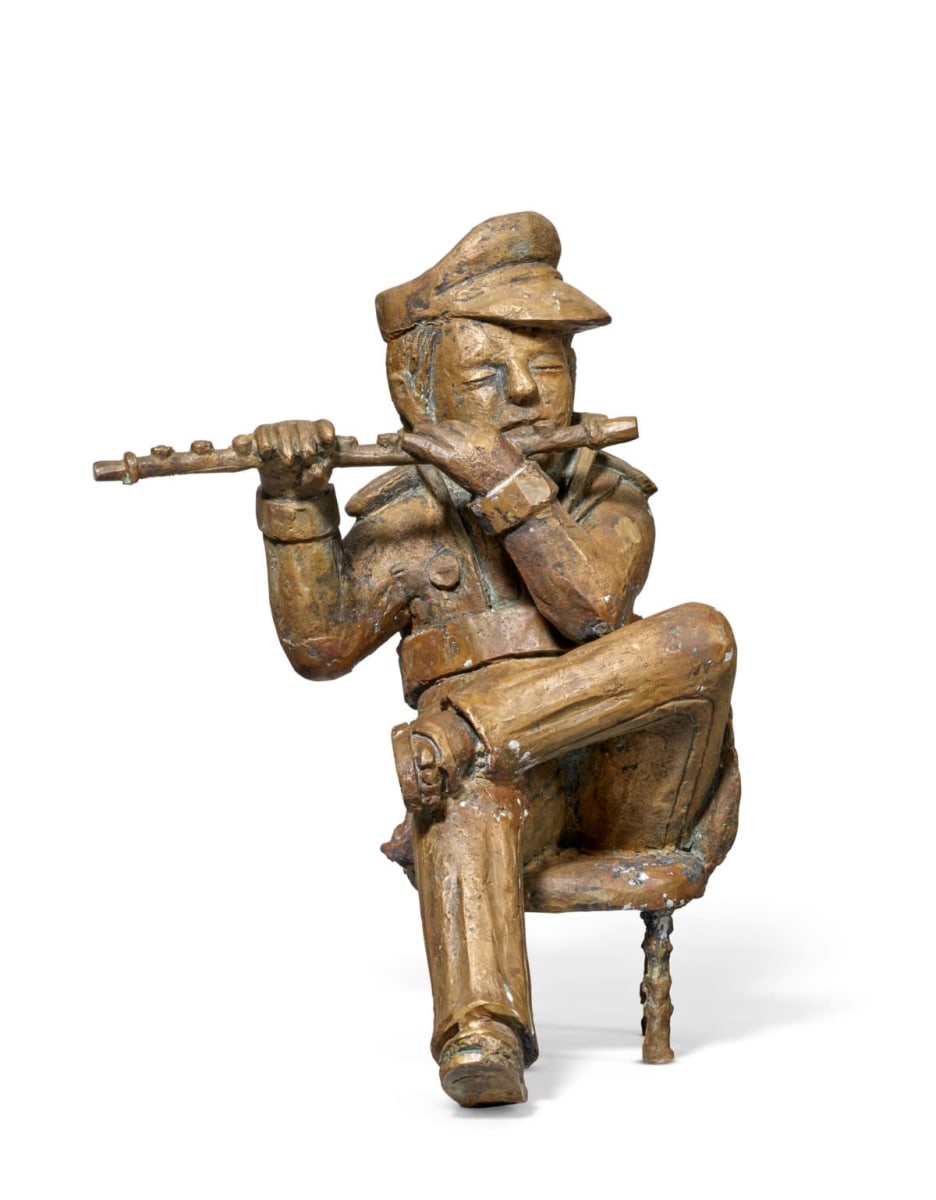
- 12-month average ~$14,007 per MutualArt; sculpture record $117,153. Bandwalla bronzes are the recurring sculptural subject.
Works on paper drawings
USD ~$3,000 - $30,000. Small ink/pencil sheets (14-20 in.) at regional houses cluster $3k-$15k; Christie's paper lots in the Egon set at $13,750-$30,480.
Major canvases iconic subjects
USD $350,000 - $1.13M — large Bandwallah/Truckwallah processions, Christian-theme masterworks (The Last Supper), historically significant early canvases.
- Mid scale oils and mixed media
- USD ~$50,000 - $350,000; the Christie's Sep 2025 result of $330,200 sits at the top of this band.
Twelve month average paintings
USD $84,315 (MutualArt trailing 12 months). NOTE: dragged down by very high volume of small works and drawings; not representative of canvas pricing.
Liquidity
Depth
Genuinely deep and multi-tiered: $3k drawings through $1.1M canvases means the market clears at every price point — an unusual liquidity advantage.
- Sell through
- 100% in the Egon partial database (7/7); 100% white-glove at AstaGuru Dec 2025; 89% category-wide South Asian sell-through in 2025 (Artnet).
Annual volume estimate
High for a modernist. 1,216 lifetime auction lots; multiple lots in essentially every significant Indian modern sale at Christie's, Saffronart, AstaGuru, Pundole's and Bonhams, plus a steady trickle at UK regional houses. Realistic run-rate 40-100+ lots per year across all houses and media.
Collector base
Composition
Overwhelmingly Indian and Indian-diaspora. The Art Newspaper reports the surge is driven by internal buyers in India, with 15-20% of buyers typically new collectors, and Saffronart/Pundole's saleroom attendance (~200 in the room) demonstrating domestic depth Western houses do not see.
Demand pattern
Bandwallahs, Truckwallahs and Christian-theme works command the clearest premiums; the abstract/gestural 1960s Rockefeller-period canvases are the connoisseur's segment and comparatively scarce.
Named collectors
- Piramal Art Foundation, Mumbai — holds 'A Far Afternoon' (22-ft, five-panel, 2015); published in 'Smriti' by Ashvin Rajgopalan and Vaishnavi Ramanathan
- Kiran Nadar Museum of Art (KNMA), New Delhi — listed in the collection index; shown in 'Time Unfolded' (2011), 'Crossings: Time Unfolded Part 2' (2012), 'New Configurations' (2018)
- Abby Weed Grey / Ben and Abby Grey Foundation — historic American patron; collection now at NYU's Grey Art Museum
- ITC Group — corporate patron of The Great Procession ceiling mural (ITC Maurya) and the Chola Sheraton graphite mural
- Adani Corporate Centre, Ahmedabad — 'The Quartet of Life' mural
- TrustPlutus / Trust Group — long-standing private patron, sponsored the 'Krishen at 95' catalogue
Primary market
Access
Still a live primary market — Khanna was producing new work into his late 90s and Grosvenor Gallery showed new paintings as recently as 2021. Primary pricing is not published.
Guidance
Contact Grosvenor Gallery (London), Vadehra Art Gallery (New Delhi) or Saffronart (Mumbai/New Delhi) for current primary and private-sale pricing. Gallery prices are not disclosed publicly — treat any published figure as a secondary-market datapoint only.
Auction history
Record
Note
World auction record for the artist, set in a white-glove sale — all 87 lots sold, INR 1,63,65,61,028 (~USD 18.49m) total — that also set records for Rabindranath Tagore, Sadanand K Bakre and Walter Langhammer.
- Work
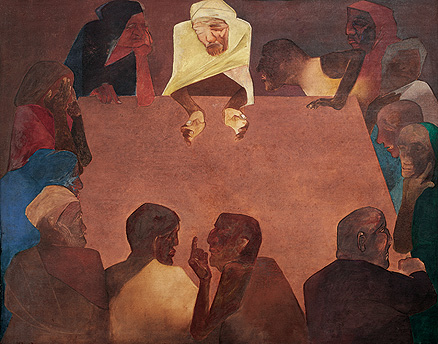
- The Last Supper
- Venue
- AstaGuru Auction House, 'Historic Masterpieces' online sale, 14-17 December 2025
- Price inr
- INR 10,22,43,382
- Price USD
- $1,128,863
Bought in rate
Buy-in data is not systematically published for Khanna. Sector context: Artnet data cited an 89% sell-through for South Asian art in 2025; the December 2025 AstaGuru sale was 100% sold; the Egon partial set is 7/7 sold. Current buy-in risk appears low, but this is a boom-cycle reading and should not be extrapolated to a cooler market.
Aggregate volume
MutualArt lists 1,216 artworks at auction — a deep, decades-long secondary market spanning Christie's, Sotheby's, Bonhams, Saffronart, AstaGuru, Pundole's, Roseberys, Helios, PLAKAS and regional Indian houses.
Other verified lots
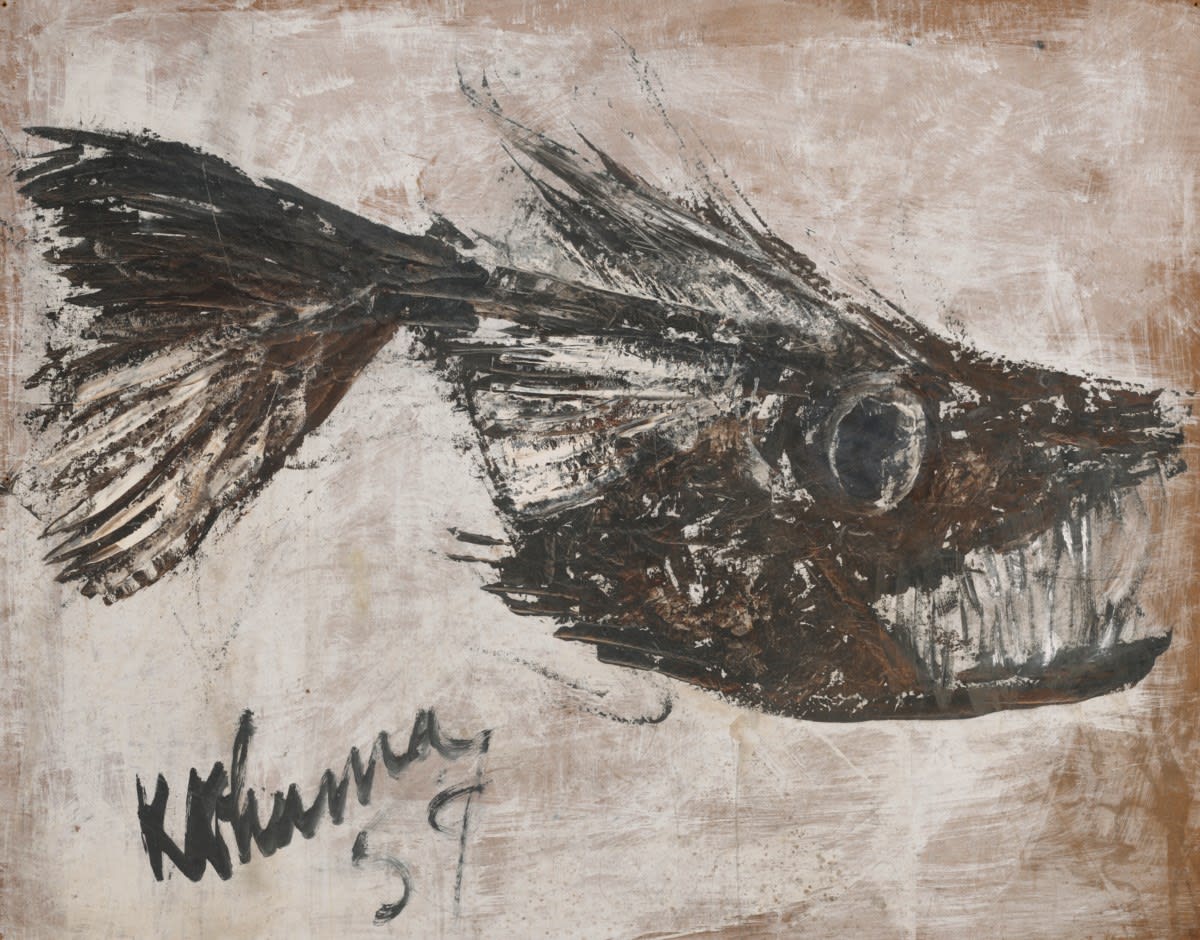
- Untitled (Underwater Predator), mixed media on board, 121 x 151.1 cm — Christie's, 11 June 2026
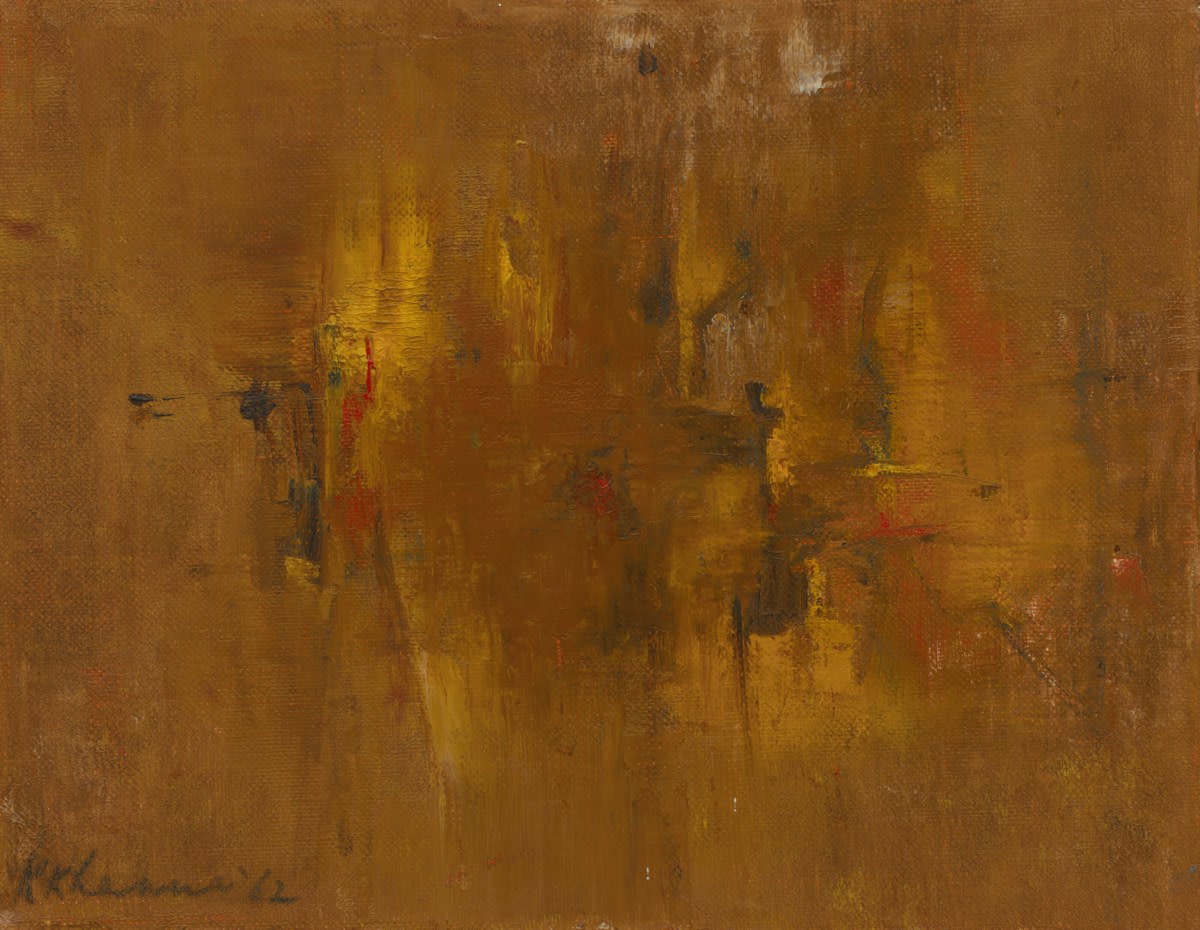
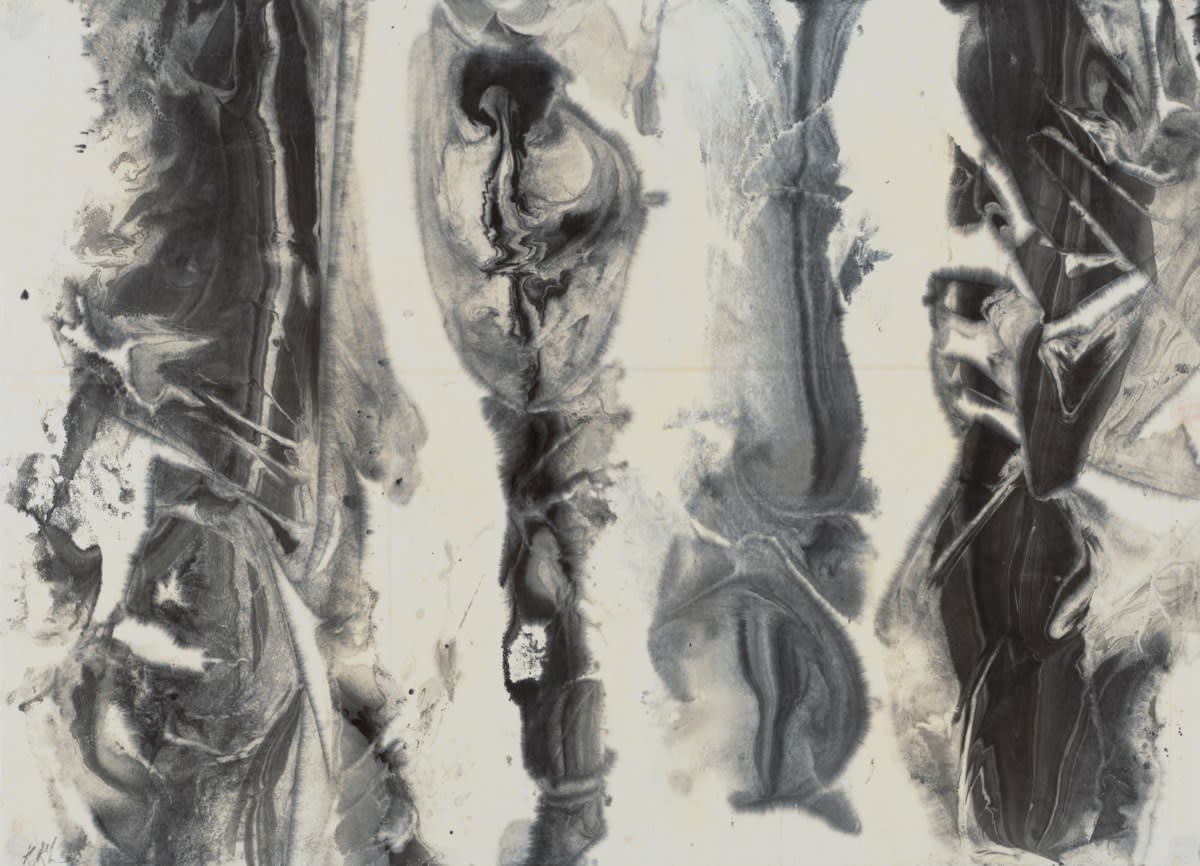
- Untitled (Abstract), ink on paper, 31.4 x 20 cm, signed 'KK 62' — Bonhams, 2 June 2026
- Untitled (Bandwalla), bronze, 31.1 x 22.9 x 26 cm — Christie's, 1 April 2026
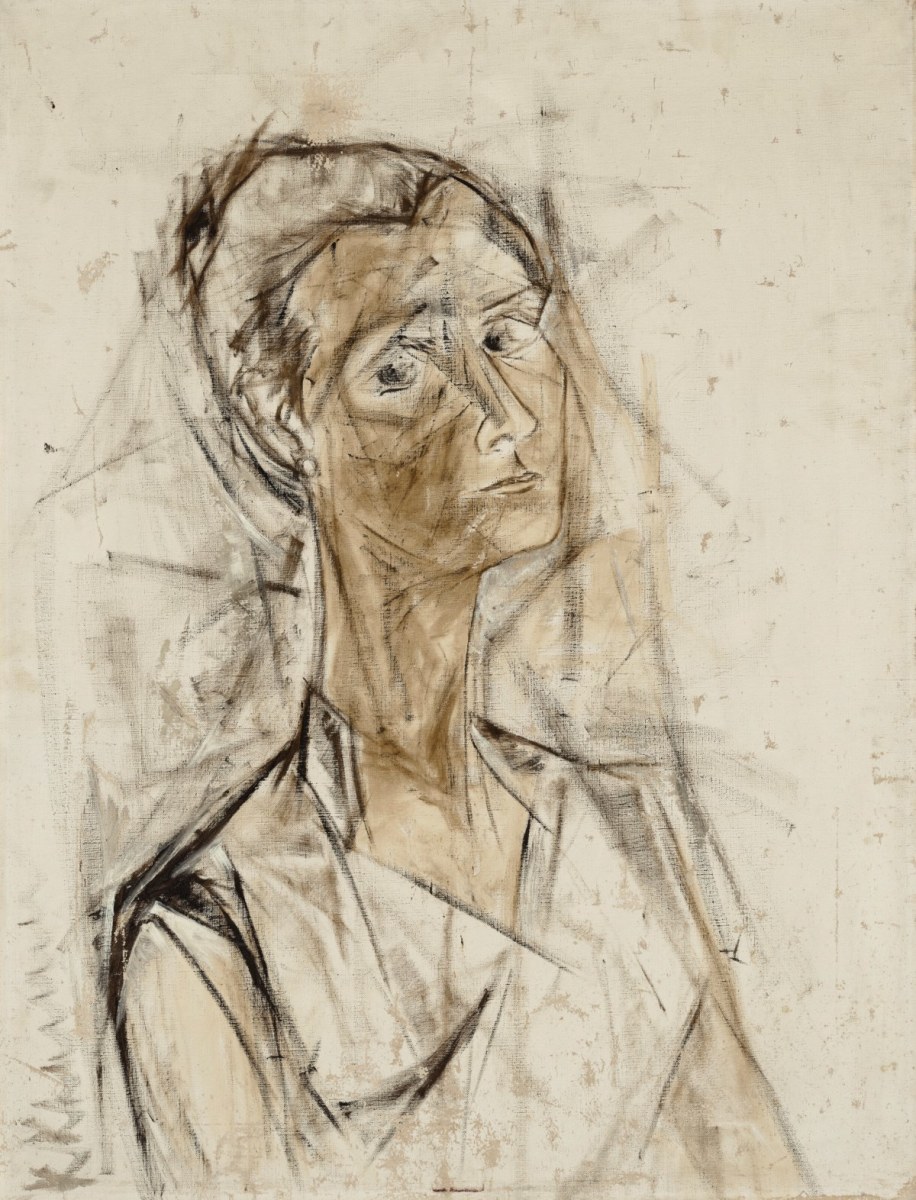
- Untitled (Portrait), oil on canvas, 86.4 x 65.7 cm — Christie's, 17 September 2025
- Untitled, Woman and Dog, 1974, ink on paper — Roseberys, 24 October 2025
- Untitled and 'Figure', c. early 1980s — Saffronart Summer Online Auction, 18-19 June 2025
- Work sold for $3,200 (Rs 2,88,000 incl. premium) — Saffronart 'From Classical to Contemporary', 25-26 February 2026 (entry-level)
Egon database 2025 onward
- Lots
- 7
- Sold
- 7
- Range USD
- 13,750 - 330,200
- Observation
- Every catalogued lot in the partial database exceeded or beat estimate — an unusually clean signal of conservative estimating in a rising market.
Recent lots
- Untitled, lot 39 — $152,751, Christie's, Jun 2026 (exceeded high estimate)
- Untitled, lot 58 — $13,750, Christie's, Mar 2026 (exceeded high estimate)
- Untitled, lot 753 — $30,480, Christie's, Sep 2025 (above estimate)
- Untitled, lot 739 — $330,200, Christie's, Sep 2025 (exceeded high estimate)
- Untitled, lot 717 — $19,050, Christie's, Sep 2025 (exceeded high estimate)
- Sell through
- 100% across 6 settled lots
- Average hammer USD
- 97933
Market position
Segment
Second-generation Indian modernist / Progressive Artists' Group. The Art Newspaper explicitly groups him with Bhupen Khakhar and Ghulam Mohammad Sheikh as the mid-market tier that new and amateur collectors are entering as top-tier Progressives price out of reach.
Comparables
Read
Khanna is the accessible entry point into PAG provenance. His $1.1M record is roughly 8% of Gaitonde's — a large discount for a founder-adjacent member with a national museum retrospective.
Above him
V. S. Gaitonde (record $14m, Saffronart 2013; £2.3m/$3m at Christie's London 2026), Tyeb Mehta, M. F. Husain, S. H. Raza, F. N. Souza — all multi-million-dollar names.
- Peer level
- Bhupen Khakhar, Ghulam Mohammad Sheikh, Ram Kumar, Akbar Padamsee, K. H. Ara, Sadanand Bakre.
Sector backdrop
2025-26 was a record cycle for South Asian modern art: Saffronart New Delhi 27 Sep 2025 sold 85 lots for $40.2m (largest single sale ever held in South Asia); Sotheby's New York 29 Sep 2025 sold 54 lots for $25.5m (Western record for the category); Christie's New York March 2026 realised $27m; Raja Ravi Varma's Yashoda and Krishna made ~$17.97m at Saffronart in April 2026. AstaGuru reported revenue growth of 138% between 2023-24 and 2025-26.
Investment outlook
Bear case
The record is house-specific (AstaGuru, an Indian online house) rather than set at Christie's or Sotheby's, so it is not yet fully corroborated internationally. Very large lifetime output (1,216 auction lots) caps scarcity. Centenary attention is by definition a one-off catalyst, and the artist's very advanced age makes an estate transition a foreseeable near-term event that historically produces a supply surge. The 2025-26 South Asian boom is cyclical.
Bull case
Last surviving Progressive; first museum retrospective only in 2025, so art-historical consolidation is beginning rather than complete; deep liquidity at every price point; large discount to Gaitonde/Mehta/Husain.
Trajectory
Sharply upward. The December 2025 record, the NGMA Mumbai retrospective, the centenary and a once-in-a-generation South Asian market cycle have converged.
Recommendation framing
Quality selection matters more than usual given output volume: iconic-series canvases (Bandwallah/Truckwallah), 1960s abstract-period oils and Christian-theme masterworks are the segments with defensible pricing. Small drawings are liquid but commoditised.
Temporal price context
- 2020 2023
- Steady, liquid, unspectacular — typical canvases $40k-$200k; drawings under $20k.
2024 2026 current
Material repricing. Christie's results Sep 2025-Jun 2026 ($19,050-$330,200) all beat estimate; the December 2025 AstaGuru record of $1,128,863 breached $1M for the first time.
Historical pre 2020
Through the 2000s-2010s Khanna traded as a solid but second-tier Progressive, well behind Gaitonde, Tyeb Mehta, Souza and Husain. Six-figure USD results were exceptional; the bulk of the market sat at $10k-$150k.
Market transition marker
Pre-Dec-2025: no $1M result on record. Post-Dec-2025: $1M+ established. Treat December 2025 as the repricing event, driven by centenary attention, last-surviving-Progressive scarcity and a record South Asian cycle.
Institutional presence
Research updated
Exhibitions
Solo selected
- 1955 — USIS, Chennai (first solo)
- 1990s — Solo exhibition, Royal Academy of Arts, London, inaugurated by Vikram Seth
- 2004 — 'An Airing', Pundole Art Gallery, Mumbai
- 2005 — Saffronart and Berkeley Square Gallery, London
- 2008 — 'The Savage Heart', Cymroza Art Gallery, Mumbai
- 2010 — 'Krishen Khanna: A Retrospective', presented by Saffronart at Lalit Kala Akademi, New Delhi
- 2013 — 'A Celebration of Lines', Sakshi Gallery, Mumbai
- 2015 — 'When the Band Begins to Play...', Grosvenor Gallery, London
- 2016 — 'Krishen Khanna: Drawings & Paintings', Vadehra Art Gallery, New Delhi; charcoal drawings at Saffronart's new Delhi gallery inaugural show
- 2020 — 'Krishen at 95', Grosvenor Gallery and Artoholics Gallery, ITC Maurya Sheraton, New Delhi (3-10 Feb 2020)
- 2021 — 'Krishen Khanna: Paintings from my Sitting Room', Grosvenor Gallery, London (4-13 Aug 2021)
- 2025 — 'KRISHEN KHANNA AT 100: THE LAST PROGRESSIVE', National Gallery of Modern Art, Mumbai — the FIRST museum-based retrospective of his oeuvre; occupied all four floors; curated by Dr Zehra Jumabhoy and Kajoli Khanna; traced the work from the 1940s to the present; ran until 10 December 2025. The single most important institutional event of his career.
Group selected
- 1949 — Progressive Artists' Group exhibition, Bombay (first appearance)
- 1960s — 'One World through Art', Ben and Abby Grey Foundation, St. Paul, Minnesota, USA
- International Triennale, New Delhi (third edition)
- 'Modern Indian Painters', Hirshhorn Museum, Washington D.C.
- 'Myth and Reality', Museum of Modern Art, Oxford, UK (kunsthalle — exhibition, not acquisition)
- 'Modern Asian Art', Fukuoka Art Museum, Japan
- 1996 — 'The Moderns', inaugural exhibition, NGMA Mumbai
- 1997 — 'Tryst with Destiny: Art from Modern India 1947-1997', Singapore Art Museum (organised by CIMA, Kolkata)
- 2011 — 'Roots in the Air, Branches Below: Modern & Contemporary Art from India', San Jose Museum of Art, California
- 2011/2012 — 'Time Unfolded' and 'Crossings: Time Unfolded Part 2', Kiran Nadar Museum of Art, New Delhi
- 2015 — 'Abby Grey and Indian Modernism', Grey Art Gallery, NYU, New York
- 2015 — 'A Far Afternoon', Piramal Art Foundation, Mumbai
- 2018 — 'New Configurations', KNMA, Noida; 'India's Rockefeller Artists'
- 2026 — 'The Fourth Wall', Sakshi Gallery 40th-anniversary exhibition (ArtDaily, Jan 2026)
- Biennial triennial
- International Triennale, New Delhi; second Indian Drawing Biennale, 1994 (special invitee). No Venice or Documenta record.
Publications
- Gayatri Sinha, 'Krishen Khanna: A Critical Biography' — the principal scholarly monograph
- Gayatri Sinha, 'The Embrace of Love', Mapin
- 'Krishen Khanna: Images in My Time' and 'The Great Procession: A Mural by Krishen Khanna', Mapin, Contemporary Indian Artists Series
- Krishen Khanna, 'The Time of My Life: Memories, Anecdotes, Tall Talk' (memoir, 2004)
- Saffronart publication programme: 'The Last Supper', 'The Last Man Standing', 'My Sketchbook in Colour', 'Equus: Paintings and Sculptures', 'Alchemies of Form', 'Krishen Khanna At 100: Legacy of a Modern Master'
- 'Krishen at 95' e-catalogue, Grosvenor Gallery (2020)
- 'Smriti', Ashvin Rajgopalan and Vaishnavi Ramanathan (Piramal Art Foundation collection)
- CAVEAT: a substantial share of the literature is gallery- or auction-house-published (Saffronart, Grosvenor, Mapin trade series) rather than museum or academic. The Sinha critical biography and the 2025 NGMA retrospective are the strongest independent scholarly anchors. No catalogue raisonné exists.
Upcoming current
- 1-8 March 2026 — exhibition listed on the artist's official site (krishenkhanna.in); venue not specified in the source
- 10-11 March 2026 — AstaGuru 'Masters Legacy' auction, 70+ lots incl. Khanna alongside Husain, Raza, Souza, Nandalal Bose, Ramkinkar Baij, Himmat Shah
- Jan-Feb 2026 — 'The Fourth Wall', Sakshi Gallery 40th anniversary, Mumbai (Khanna featured)
- India Art Fair 2026, New Delhi — Khanna featured in fair programming and dealer booths
- No confirmed international touring venue for the NGMA centenary retrospective was found in sources consulted
Museum collections
Smithsonian Institution, Washington D.C. — attributed via public-API name match; the specific Smithsonian unit is most likely the National Museum of Asian Art but this was NOT confirmed in sources consulted
- Tier
- First-rank (national, encyclopedic, international loan standing)
- Works
- at least 3 name-matched records (a floor, not a holdings count)
- Credit line
- credit line not published in sources consulted
National Gallery of Modern Art, New Delhi
- Tier
- First-rank national museum of India
- Works
- 2 recorded (Wikidata floor)
- Credit line
- credit line not published
National Gallery of Modern Art, Bengaluru
- Tier
- National museum (regional branch)
- Works
- 2 recorded (Wikidata floor)
- Credit line
- credit line not published
National Gallery of Modern Art, Mumbai
- Tier
- National museum of India
Works
Holdings not itemised in sources; Khanna was in 'The Moderns', NGMA Mumbai's 1996 inaugural exhibition, and NGMA Mumbai gave him his first museum retrospective in 2025
- Credit line
- credit line not published
Government Art Collection, United Kingdom
- Tier
- National UK state collection (public, non-museum)
- Works
- 1 recorded (Wikidata floor)
- Credit line
- credit line not published
View 4 more records
Grey Art Museum, New York University (New York University Art Collection)
- Tier
- University museum with an accessioning public collection
- Works
- Vijay (Victory), 1965, ink wash on paper, 36 1/2 x 23 3/4 in.
Credit line
credit line TRUNCATED in the source consulted — the collection record reads 'Grey Art Museum, New York University Art Collection. Gift of...' and the holding derives from the Abby Weed Grey collection, but the exact donor wording for this work is not published in sources consulted. Recorded as: credit line not published in full. Not inferred.
Significance
Exhibited in 'Abby Grey and Indian Modernism: Selections from the NYU Art Collection' (2015) and 'Modernisms: Iranian, Turkish, and Indian Highlights from NYU's Abby Weed Grey Collection' (2019).
Kiran Nadar Museum of Art (KNMA), New Delhi
- Tier
- PRIVATE FOUNDATION — named for relevance but explicitly NOT counted as a museum acquisition under the first-rank/accessioning rule
- Works
- Khanna appears in the KNMA collection index
- Credit line
- credit line not published
Piramal Art Foundation, Mumbai
- Tier
- PRIVATE FOUNDATION — not counted as a museum acquisition
- Works
- 'A Far Afternoon' (2015), 22-ft five-panel painting
- Credit line
- credit line not published
Jehangir Nicholson Art Foundation, Mumbai; Bharat Bhavan, Bhopal
- Tier
- Indian public/semi-public institutions cited by Artnet as exhibiting venues; holdings not confirmed
- Works
- unconfirmed
- Credit line
- credit line not published
Awards and recognition
- 1962 — Rockefeller Fellowship (the FIRST Indian artist to receive it)
- 1963-64 — Artist-in-Residence, American University, Washington D.C.; CECA fellowship, New York
- Baghdad International Festival of Art, Iraq — President's Award
- 1990 — Padma Shri, Government of India
- 1997 — Kala Ratna, All India Fine Arts and Crafts Society (AIFACS), New Delhi
- 2004 — Lalit Kala Ratna, conferred by the President of India
- 2011 — Padma Bhushan, Government of India (third-highest civilian honour)
Collection data caveat
Public-API figures are name-matched floors, not holdings counts, and no Getty ULAN record exists. Museum NAMES are the reliable signal. Notably, NO acquisition credit line for any Khanna holding was found published in sources consulted, so the curatorial-initiation vs donor-offer distinction cannot be resolved from available evidence for any single work. For a historical artist of this generation the more probative evidence is depth of national-institutional holding (three NGMA branches) and state cultural recognition (Padma Bhushan, Padma Shri, Lalit Kala Ratna), both of which are strong.
Career & Biography
Research updated
Identity
- Birth
- 5 July 1925, Lyallpur, Punjab Province, British India (now Faisalabad, Pakistan)
- Gender
- Male
- Full name
- Krishen Khanna
- Age status
- Turned 100 on 5 July 2025; centenary year 2025-26
- Nationality
- Indian
- Current location
- Lives and works in New Delhi, India
Career timeline
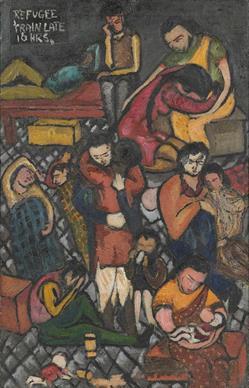
- 1947 — Partition: family flees Lahore 12 August 1947, migrating to Simla/Shimla. Formative trauma for the entire oeuvre.
- late 1940s — Joins Grindlays Bank, Bombay; introduced to the Bombay art scene.
- 1948-49 — Invited into the Bombay Progressive Artists' Group; first exhibited in a PAG group exhibition in 1949.
- 1955 — First solo exhibition, USIS, Chennai (Madras).
- 1961 — Resigns from Grindlays Bank to paint full-time (some sources give 1960 resignation).
- 1962 — First Indian artist awarded the Rockefeller Fellowship; travels to the USA.
- 1963-64 — Artist-in-Residence, American University, Washington D.C.; CECA fellowship in New York, where he engages directly with Abstract Expressionism.
- 1960s-70s — 'One World through Art' (Ben and Abby Grey Foundation, St. Paul, Minnesota); International Triennale, New Delhi; President's Award, Baghdad International Festival of Art, Iraq.
- 1970s-80s — Mural commissions incl. the largest graphite mural for ITC's Chola Sheraton, Madras (later relocated to Gurugram).
- 1980s-90s — 'Modern Indian Painters', Hirshhorn Museum, Washington D.C.; 'Myth and Reality', Museum of Modern Art, Oxford; 'Modern Asian Art', Fukuoka Art Museum, Japan.
- 1990s — Paints The Great Procession, ceiling mural, ITC Maurya, New Delhi. Solo exhibition at the Royal Academy of Arts, London, inaugurated by Vikram Seth.
- 1996 — Included in 'The Moderns', inaugural exhibition of NGMA Mumbai.
- 2004 — Lalit Kala Ratna from the President of India; publishes memoir 'The Time of My Life: Memories, Anecdotes, Tall Talk'.
- 2010 — 'Krishen Khanna: A Retrospective', presented by Saffronart at Lalit Kala Akademi, New Delhi.
- 2015 — Paints 'A Far Afternoon', 22-foot five-panel work over ~9 months at age 90 (Piramal Art Foundation).
- 2021 — 'Paintings from my Sitting Room', Grosvenor Gallery, London — new work at 96.
- 2025 — Centenary; 'Krishen Khanna at 100: The Last Progressive', NGMA Mumbai — FIRST museum-based retrospective of his oeuvre, all four floors, curated by Dr Zehra Jumabhoy and Kajoli Khanna, tracing the work from the 1940s to the present; ran until 10 December 2025.
- Dec 2025 — World auction record set (The Last Supper, AstaGuru).
Education and training
- Note
- Worked briefly as a printer at Kapur Art Press, Lahore before Partition.
Formal
- Imperial Service College, Windsor, England — attended on a Rudyard Kipling scholarship; graduated 1940 (DAG timeline gives 1938-42)
- Government College, Lahore — course in English literature (listed alma mater)
- Mayo School of Art, Lahore — evening classes only (informal art training)
- Status
- Largely SELF-TAUGHT as a painter; no art-school degree. Consistently emphasised across gallery, ICCR and encyclopedic sources.
Political social engagement
The work is explicitly socio-political: Partition memory, the assassination of Gandhi (News of Gandhiji's Death), post-Independence anxieties, and sustained empathy for India's urban working poor. Engagement is pictorial and humanist rather than campaigning.
Personal events shaping work
The 1947 flight from Lahore is the determining event; his earliest works reconstruct the pre-Partition composite world of Lahore. A decade in banking gave him a late, deliberate entry into full-time art at roughly 36.
Studio practice and philosophy
Genre painter and narrativist working from direct observation of Indian street life — band musicians, dhaba waiters, truck drivers, migrant labourers sleeping under trucks. Prolific across media, still producing new canvases into his late 90s. Works in series, returning to the same motifs over decades. A noted reader and memoirist with a strongly literary, allegorical approach to subject matter.
Influences context contemporaries
Influences
- Partition displacement and post-Independence Indian social reality (primary)
- American Abstract Expressionism, absorbed first-hand in New York 1962-64
- Biblical and Christian iconography (Last Supper, Doubting Thomas)
- Indian epic literature, especially the Mahabharata (Gandhari, Vijay)
- East Asian sumi-e ink traditions
- European expressionism / de Kooning-type figural dissolution
- Friendship with Henri Cartier-Bresson, whom he assisted on a Delhi photo series
Contemporaries
- M. F. Husain
- F. N. Souza
- S. H. Raza
- K. H. Ara
- H. A. Gade
- Sadanand Bakre
- Tyeb Mehta
- V. S. Gaitonde
- Ram Kumar
- Mohan Samant
- Bhanu Athaiya
- Akbar Padamsee
Group affiliation
Bombay Progressive Artists' Group (second-wave member, joined after the founding six). Widely described as the LAST SURVIVING member of the Progressives — a scarcity narrative that materially supports his market.
Artistic Profile
Research updated
Style
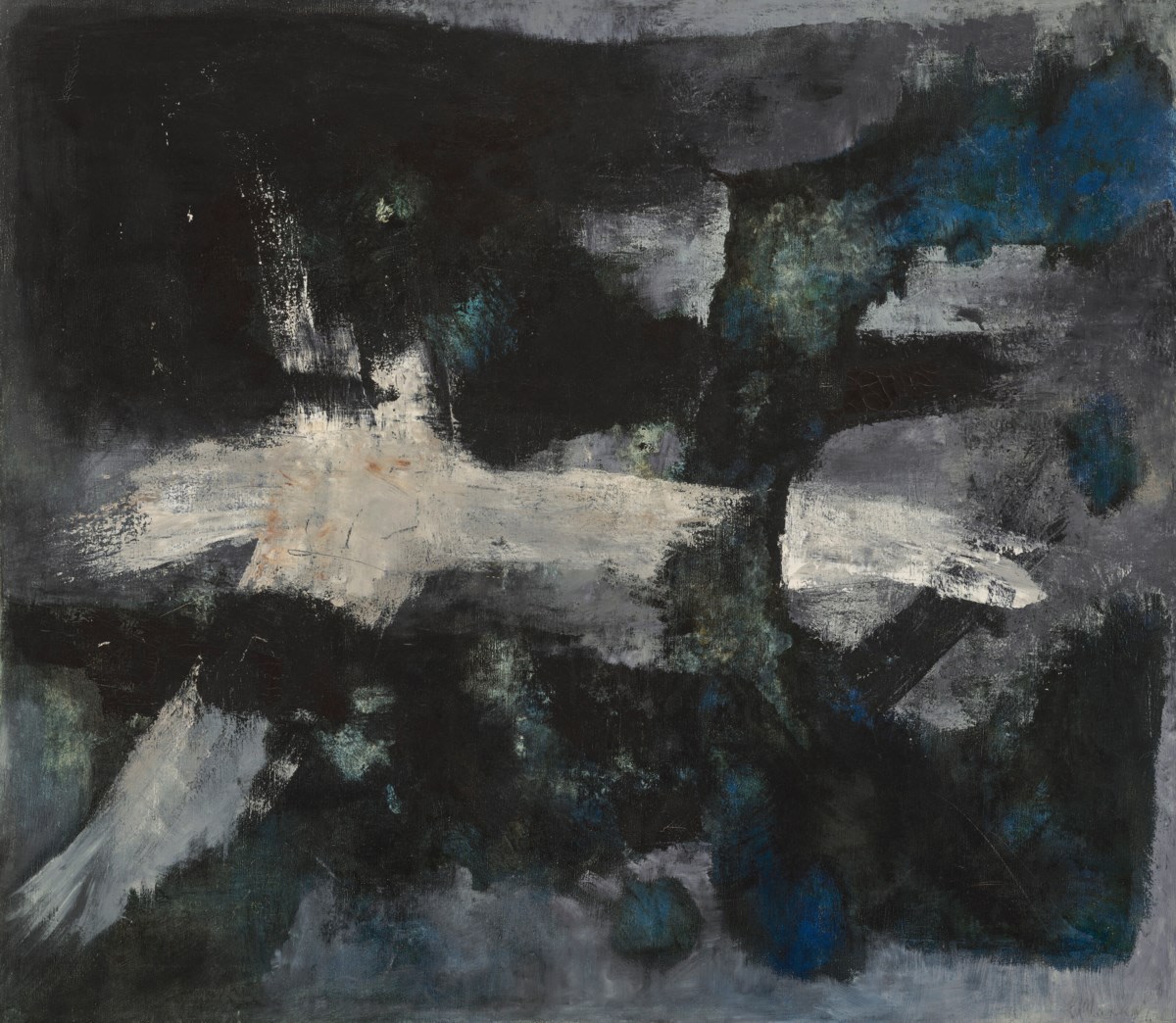
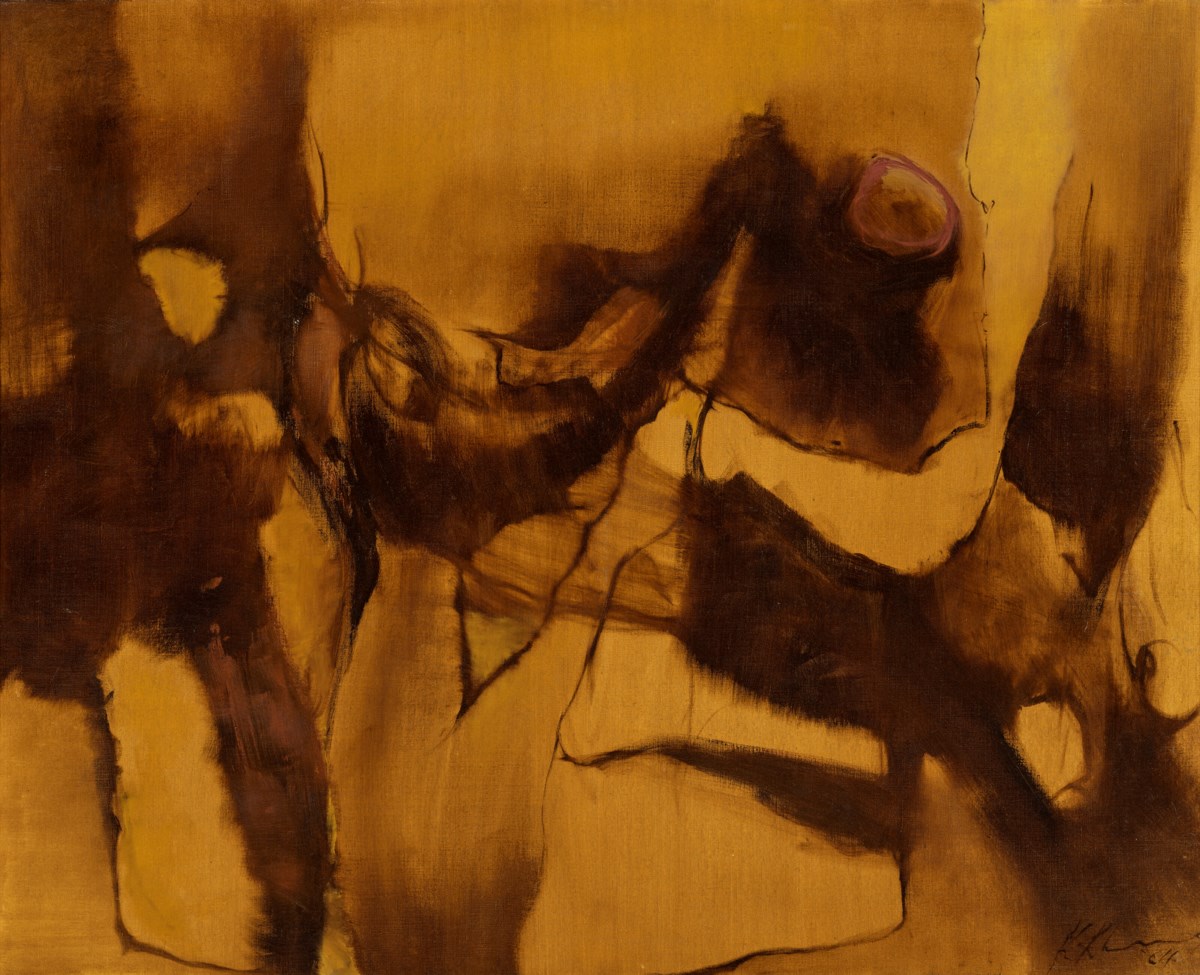
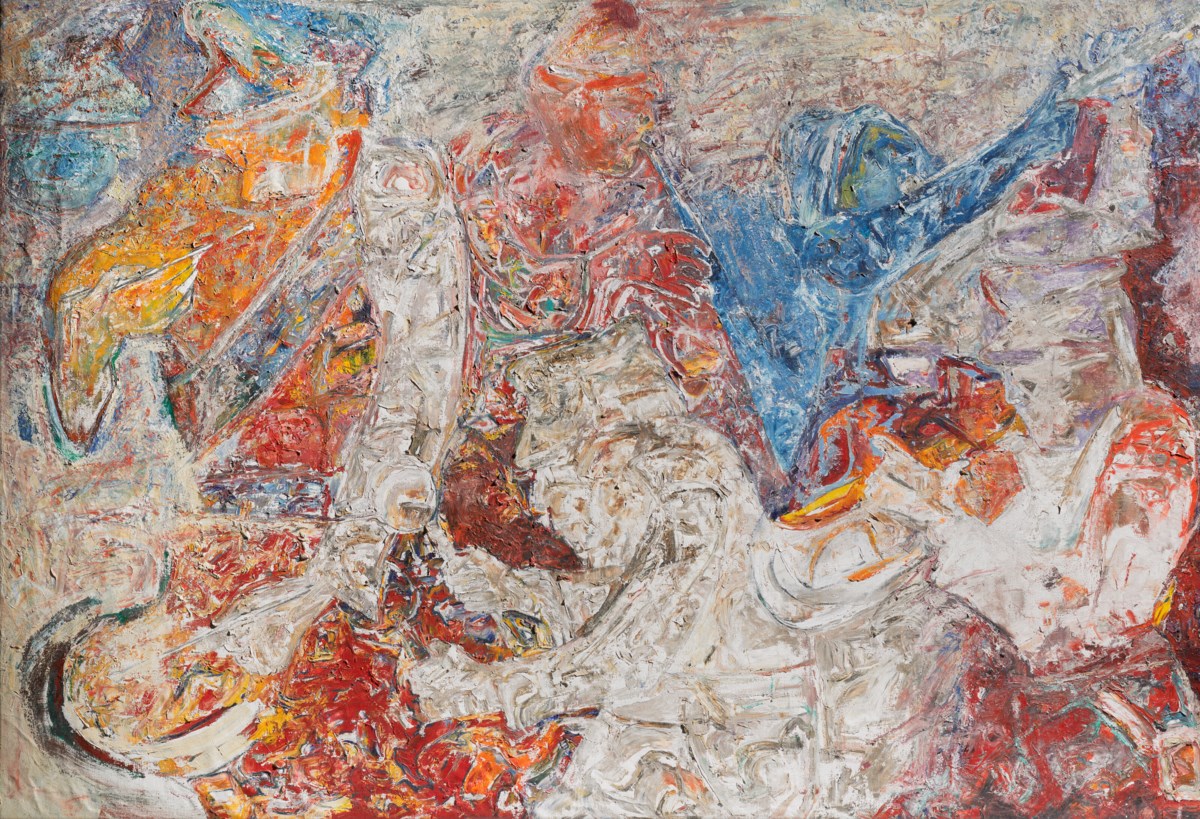
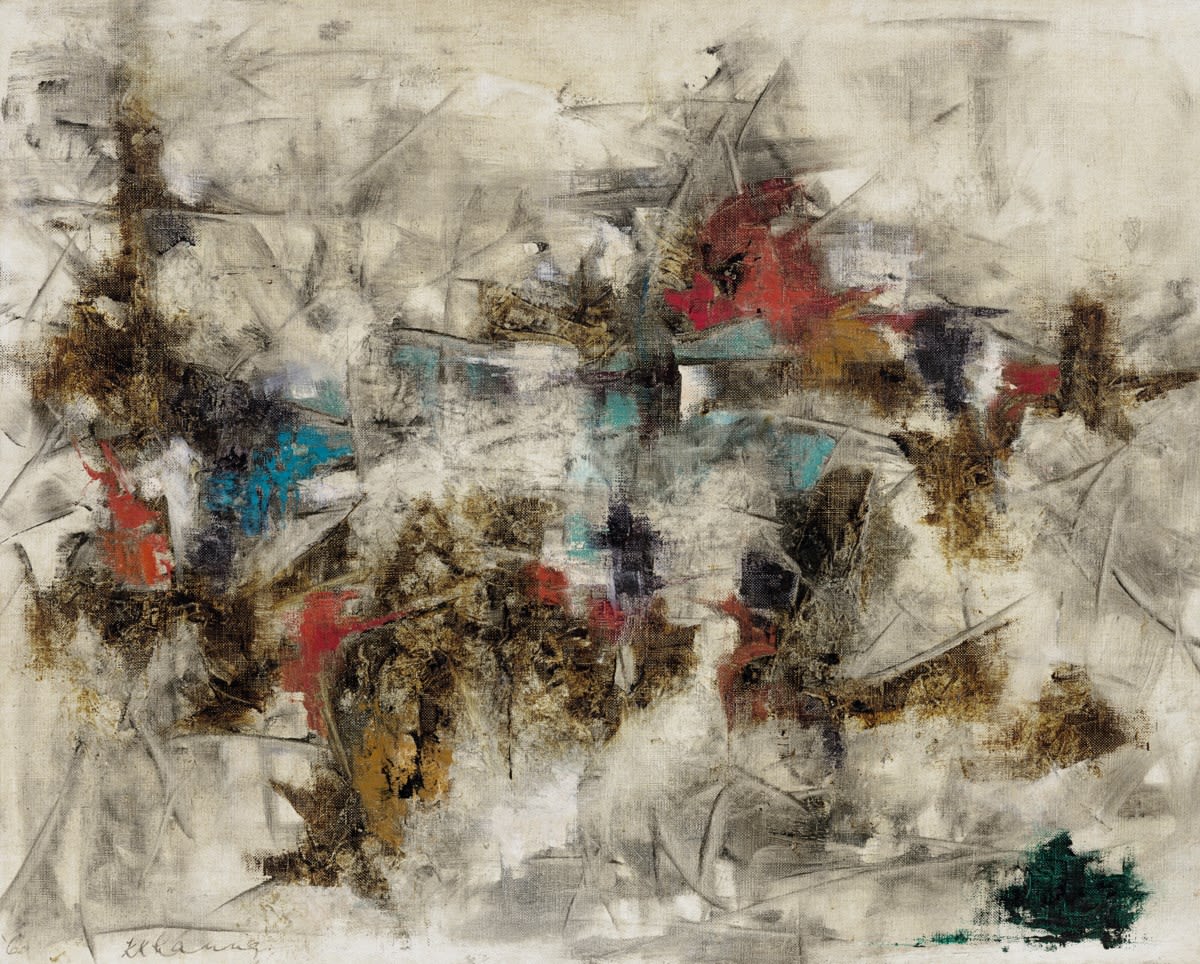
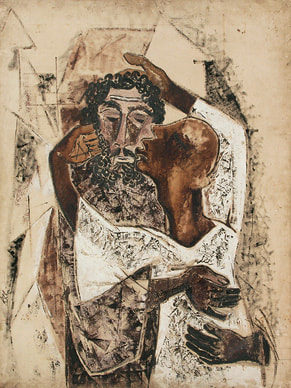
Abstracted figuration: the human figure is never abandoned but is loosened, massed and dissolved into its ground. Across phases the constant is a crowded, processional, frieze-like composition in which anonymous working figures are given monumental dignity. Brushwork is expressionist and spontaneous while representational elements stay legible. In the 1960s abstract phase: turpentine-thinned washes, scumbled passages, exposed canvas weave, lost edges and a compressed earth-tone range. In the mature phase: high-keyed saturated colour — ochres, Indian yellow, reds — and denser figure groupings. A superb and prolific draughtsman; the ink and charcoal drawings are a major independent body of work.
Evolution
- 1947-1955 — Memory phase: Partition and pre-Partition Lahore reconstructed; sombre, tonal, literary. News of Gandhiji's Death (1948) is the anchor.
- 1955-1961 — Bombay/Progressives phase: formal experimentation while still a banker; first solo 1955.
- 1962-1968 — Abstraction phase: Rockefeller Fellowship and New York residency; gestural, earth-toned, near-abstract oils with dissolved figures. THIS IS THE PHASE THE EGON FINGERPRINT CAPTURES. Scarce and connoisseur-favoured.
- 1970s-1980s — Return to narrative figuration; emergence of the Truckwallahs; Christian-theme cycles; large mural commissions.
- 1990s-2010s — Bandwallah maturity: high colour, dense processional crowds, The Great Procession ceiling mural; the phase that defines his public identity and drives the market.
- 2015-2025 — Late phase: monumental works ('A Far Afternoon', 22 ft, at age 90), continued drawing, bronze editions, and intimate 'sitting room' paintings made into his late 90s.
Influences
- Partition and post-Independence Indian social reality
- New York School Abstract Expressionism (de Kooning-type figural dissolution)
- Christian iconography and European religious painting
- Mahabharata and Indian epic literature
- East Asian sumi-e ink practice
- Henri Cartier-Bresson's documentary eye (personal association)
Visual language
Signature devices: dissolved contours and lost edges; massed dark forms against luminous ochre grounds; the procession or crowd as compositional armature; anonymous, often faceless labouring figures; brass instruments and truck bodies as recurring formal motifs; linear incision drawn into wet paint; scattered red and black accents interrupting a warm field.
Signature series
- Bandwallahs
- Truckwallahs
- The Last Supper / Christian cycle
- News of Gandhiji's Death
- Mahabharata (Gandhari)
- Equus
- The Great Procession (ITC Maurya ceiling mural)
- A Far Afternoon (2015)
- The Quartet of Life (Adani Corporate Centre mural)
Themes and subjects
- BANDWALLAHS — brass-band musicians in wedding processions; his signature subject, characterised as always performing, always outside the spotlight
- TRUCKWALLAHS — truck drivers and labourers, often shown sleeping beneath their vehicles
- Dhaba waiters, chai-wallahs, juice sellers, fruit sellers, pavement vendors, migrant labourers — the urban working poor
- Partition, displacement and refugee memory — the foundational trauma
- News of Gandhiji's Death — figures of different faiths, classes and genders reading the news beneath a streetlight, surrounded by darkness
- Christian iconography — The Last Supper (his record work), Doubting Thomas, deposition motifs
- Mahabharata and Indian epic subjects — Gandhari, Vijay (Victory)
- Equus / horses — a distinct later series
- Pre-Partition Lahore reconstructed from memory — the composite world of religious coexistence before nationalism
Attribution guidance
Because the oeuvre spans seven decades and several genuinely distinct sub-styles, compare any work under analysis to the NEAREST phase exemplar, not to an aggregate signature. A low-key earth-toned gestural oil and a saturated yellow Bandwallah procession are both fully characteristic — of different decades. Date and palette together are the primary phase discriminators.
Movements and periods
- Bombay Progressive Artists' Group (second-wave member)
- Indian Modernism / post-Independence modernism
- Postwar figurative expressionism
- Abstract Expressionism (1962-64 New York phase only)
- Art Informel affinities
- Narrative-figurative tendency, anticipating the Baroda School
- Period bracket: 1945-present, canonical core 1947-1990
Techniques and mediums
- Oil on canvas (primary)
- Mixed media on board
- Ink wash, pen-and-ink and brush drawing on paper (sumi-e inflected)
- Charcoal and pencil drawing
- Graphite murals (architectural scale)
- Ceiling murals
- Bronze sculpture (Bandwalla figures)
- Watercolour and gouache
- Turpentine-thinned washes over lightly primed ground; wet-into-wet dark passages; linear incision into wet paint; palette-knife and brush mixing; localised impasto accents
Fingerprint verification
Confirmed
- Postwar / Late Modern period bracket (1945-1970) — CONFIRMED. His New York period 1962-64 places the gestural abstract works precisely in this bracket; the fingerprint's 1962-dated exemplars align with the Rockefeller/CECA fellowship years.
- Gestural register, oil, scumbling, lost edges, earth tones, warm limited monochromatic palette, easel scale — CONFIRMED for the 1960s abstract-figurative body of work.
- 'The body' and 'process and materiality' as themes — CONFIRMED; the figure never fully disappears even in his most abstract passages.
- Contemplative and subdued mood — CONFIRMED for the abstract phase.
- The de Kooning / Art Informel / New York School reading — CONFIRMED by biography: he encountered Abstract Expressionism first-hand in New York in 1963-64 and sources state he began experimenting with it there.
Disagreements and corrections
- DISPERSION IS NOT NOISE — it is chronology. The low coherence (0.51) reflects a 75-year career, not stylistic instability. The tier-1 exemplars are heavily weighted to a single early-1960s abstract phase and are NOT representative of the artist's dominant public identity.
- THE FINGERPRINT UNDER-REPRESENTS HIS DEFINING WORK. Khanna is best known not for earth-toned gestural abstraction but for the BANDWALLAHS and TRUCKWALLAHS — brightly coloured, crowded, processional figurative canvases. Sources describe vibrant hues, Indian Yellow spread like a shimmering blanket, and exuberant expressionist brushwork. The fingerprint's 'monochromatic / low-key / limited palette' signature is accurate ONLY for the 1960s phase and would MISLEAD if applied to a 1980s-2020s canvas.
- MEDIA RANGE IS BROADER than 'oil, painting'. Confirmed: ink wash on paper, pen and ink, pencil, charcoal, mixed media on board, graphite murals (the ITC Chola Sheraton mural, reportedly the largest work in graphite ever created), ceiling murals, and BRONZE SCULPTURE (Bandwalla bronzes, sculpture record $117,153).
- SCALE RANGE IS BROADER than 'easel-scale'. 'A Far Afternoon' (2015) is a 22-foot five-panel painting; The Great Procession is an architectural ceiling mural.
- NARRATIVE is the central axis the fingerprint omits. Sources repeatedly describe him as a genre painter and a narrativist. Christian iconography and Mahabharata subjects are structural, not incidental.
Critical Reception
Research updated
Critical reception
Standing
Khanna is treated in Indian art writing as a canonical figure — the last living member of the Progressive Artists' Group and, per the ICCR, one of the most versatile self-taught modernists of his generation, whose work traverses an Indian idiom of everyday living. The consistent critical frame is humanist narrative realism inflected by expressionism.
Key critical voices
- Gayatri Sinha — author of the critical biography and 'The Embrace of Love'; the principal scholarly interpreter of the oeuvre
- Dr Zehra Jumabhoy — art historian, co-curator with Kajoli Khanna of the 2025 NGMA Mumbai retrospective 'Krishen Khanna at 100: The Last Progressive'; the strongest recent curatorial endorsement
- Vikram Seth — inaugurated the Royal Academy solo, signalling literary-establishment recognition
Publications and media
- The Art Newspaper (6 Oct 2025) — names Khanna, with Bhupen Khakhar and Ghulam Mohammad Sheikh, as the second-generation mid-market tier drawing a broadening collector base
- Artnet News (12 Jun 2026, Richard Whiddington) — Christie's London South Asian sale coverage establishing sector momentum
- The Tribune (India) — reported the new world auction record
- Abirpothi and Caleidoscope — Indian art-press coverage of the AstaGuru record sale
- MutualArt notes coverage in The Hindu, ArtDependence Magazine and ARTnews
- AstaGuru editorial: '100 Years of Krishen Khanna: From Partition to the Bandwallahs' (July 2025)
- STIR World — India Art Fair 2026 must-see listings featuring Khanna
- India Art Fair programme feature on the NGMA centenary retrospective
Editorial recognition gaps
No Artforum, frieze or Art in America review was located in the sources consulted. Western tier-1 art-critical coverage is thin relative to his Indian canonical standing — the critical literature is overwhelmingly Indian and a meaningful share is auction-house or gallery published. This is the clearest weakness in his international validation profile and is recorded as a genuine information gap rather than a negative finding.
Academic and art historical positioning
Positioned as the bridge figure of the Progressives: younger than the founding six, he outlived them all, so his career functions as a live index of Indian modernism from Partition to the present. Art-historically he sits at the junction of the PAG's break with Bengal School revivalism, a direct 1960s encounter with New York Abstract Expressionism via the Rockefeller Fellowship (the subject of the touring project 'India's Rockefeller Artists'), and a return to figurative social narrative that anticipates the Baroda School's narrative-figurative turn. The 2025 NGMA retrospective, subtitled 'The Last Progressive', is the formal art-historical consolidation of that reading, and its lateness — a first museum retrospective at age 100 — indicates scholarly reassessment is beginning, not complete.
Gallery & Representation
Research updated
Fair presence
- India Art Fair, New Delhi — recurrent; Grosvenor Gallery showed Khanna at Booth C11, 1-4 Feb 2024 alongside Souza, Husain, Bakre and Senaka Senanayake; featured again in IAF 2026 programming
- Abu Dhabi Art — Grosvenor South Asian modernist presentations (Khanna within the gallery's stable)
- Consistent presence at Indian fairs; no Art Basel or Frieze primary-market booth presence found
Representation
Primary india
- Name
- Vadehra Art Gallery
- Tier
- Tier 1 within India
- Location
- New Delhi, India
Relationship
Solo 'Krishen Khanna: Drawings & Paintings' (2016); group shows incl. 'The Discerning Eye: Modern Masters' and 'Ideas of the Sublime'; historic Grosvenor Vadehra partnership.
Primary international
- Name
- Grosvenor Gallery
- Tier
- Tier 2 — leading Western specialist in South Asian modern art
- Location
- London, UK
Relationship
Long-standing; multiple solos (2015 'When the Band Begins to Play...', 2020 'Krishen at 95', 2021 'Paintings from my Sitting Room'), plus the Grosvenor Vadehra joint venture. Maintains full artist biography and exhibition pages.
Representation changes
No exclusive single-gallery representation. As a centenarian modernist he operates through a dealer network, with Grosvenor (West) and Vadehra/Saffronart (India) as de facto primary channels. This is the normal structure for senior Indian modernists and is not a sign of instability.
Secondary and historic
- Sakshi Gallery, Mumbai — 'A Celebration of Lines' (2013); featured in its 40th-anniversary show 'The Fourth Wall' (2026)
- DAG (Delhi Art Gallery), New Delhi/New York — full artist page; trades his work
- Art Alive Gallery, New Delhi
- Pundole Art Gallery, Mumbai — 'An Airing' (2004)
- Cymroza Art Gallery, Mumbai — 'The Savage Heart' (2008)
- Kumar Gallery, New Delhi; Dhoomimal Gallery, New Delhi (historic provenance source); Tao Art Gallery, Mumbai; Berkeley Square Gallery, London; Aicon Gallery, London
- AstaGuru — holder of his auction record; publishes artist-profile editorial
Auction house gallery hybrid
- Name
- Saffronart
- Tier
- Tier 1 South Asian auction house with gallery and publishing arms
- Location
- Mumbai, New Delhi, London, New York
Relationship
The most active commercial champion: organised the 2010 retrospective at Lalit Kala Akademi, the 2016 Delhi gallery inaugural show, and a sustained monograph programme culminating in 'Krishen Khanna At 100: Legacy of a Modern Master'.
Geographic reach
Core market India (Mumbai, New Delhi). Secondary markets: London (Grosvenor, Christie's, Bonhams, Roseberys), New York (Christie's, Sotheby's, Saffronart), Gulf (Abu Dhabi), Singapore. Historic institutional exposure in the USA, UK, Japan and Singapore. Buyer base remains predominantly Indian and diaspora.
Sources & research notes
Egon’s artist research combines historical auction records, recent sales, institutional history, critical reception and gallery information. Researched auction records and auction highlights are identified separately.
Read prices with their work, sale date, currency and stated basis. Egon’s market assessments are distinct from reported auction results.
Reference: Egon, “Krishen Khanna: Market Intelligence & Investment Profile.”
Research bibliography · 35 sources
Sources recorded for this artist’s research. This bibliography does not assign every source to an individual claim.
- Krishen Khanna - Wikipedia
- Krishen Khanna - Artist Profile, Biography, Art Style & Paintings (AstaGuru)
- Work of Krishen Khanna - Indian Council for Cultural Relations
- Krishen Khanna Artist | Art Alive Gallery
- Krishen Khanna - Overview | Grosvenor Gallery
- Krishen Khanna - Biography | Grosvenor Gallery
- Krishen Khanna - Exhibitions | Grosvenor Gallery
- Exhibitions | Grosvenor Gallery
- Krishen at 95 - e-catalogue, Grosvenor Gallery
- Krishen Khanna - DAG
- Record sales and a tax break close out blockbuster year for South Asian Modern market - The Art Newspaper
- Christie's London Sale Confirms Growing Appetite for South Asian Art - Artnet News
- Krishen Khanna | 1,216 Artworks at Auction | MutualArt
- Krishen Khanna Paintings & Artwork for Sale | Art Value Price Guide - Invaluable
- Krishen Khanna | Artnet
- Krishen Khanna - Art & Prints for Sale | Artsy
- AstaGuru's 'Historic Masterpieces' Auction Sets Multiple World Records - Abirpothi
- AstaGuru's Historic Masterpieces Auction Sets World Records, Achieves Rs 163 Cr Sale - Caleidoscope
- New auction records for Tagore & Krishen Khanna - The Tribune
- Tyeb Mehta's 1977 Artwork Leads AstaGuru's Historic Masterpiece Auction - Caleidoscope
- Auction - Abirpothi
- Krishen Khanna at 100: The Last Progressive - India Art Fair
- 100 Years of Krishen Khanna: From Partition to the Bandwallahs - AstaGuru
- Krishen Khanna - Grokipedia
- Bombay Progressive Artists' Group - Wikipedia
- Grey Art Museum | New York University Art Collection
- The Collection | Kiran Nadar Museum of Art
- Krishen Khanna Biography | Indian Modern Artist's Life & Achievements
- Exhibitions - Krishen Khanna (official site)
- India Art Fair 2026 and more in Delhi: The STIR list of must-see exhibitions
- Krishen Khanna - Search - Saffronart
- Exhibitions - Saffronart :: Krishen Khanna : Gandhari 2006
- New home for art exhibitions in the national capital hosts modern masters - The Sunday Guardian
- A Far Afternoon - A Painted Saga by Krishen Khanna (Piramal Art Foundation)
- The Smithsonian's National Museum of Asian Art
Research updates by section
These dates show when Egon’s research sections were updated. Source retrieval dates, where supplied above, refer to individual evidence notes.
Ranking updated . Research sections follow their own update dates.
This is what the market knows about Krishen Khanna. What Egon can also tell you: whether Krishen Khanna fits your portfolio — based on your existing holdings, budget, and investment timeline.
Get personalized analysisActive market signals
Inside Egon
Signal timeline & strength analysis
Gallery moves, auction records, institutional acquisitions, price milestones — tracked over 90 days
Full signal timeline, strength analysis, and alert configuration for Krishen Khanna.
Collector demographics & buyer analysis
Geographic distribution, institutional vs. private buyers, collector profiles, and secondary market activity
Who is collecting Krishen Khanna? Geographic distribution, institutional vs. private buyers, and collector profile analysis.
Personalized acquisition strategy
Optimal entry points, comparable pricing analysis, timing recommendations, and portfolio fit assessment
Personalized acquisition strategy for Krishen Khanna based on your budget, timeline, and collection goals.
Go deeper with personalized intelligence
You now have Egon's market assessment of Krishen Khanna. The next question is personal: does this artist belong in your collection? Egon analyzes collection fit based on your aesthetic thesis, existing holdings, budget, and investment goals — delivering acquisition strategies no public index can provide.