Lee Ufan
Blue-chipEgon research · Artist market profile
The market, in context.
Explore Lee Ufan’s auction history alongside the exhibitions, collections and gallery relationships behind the market.
Institutional research
Collections & exhibitions
Read holdings, exhibition history and their qualifications in context.
Read the institutional research →


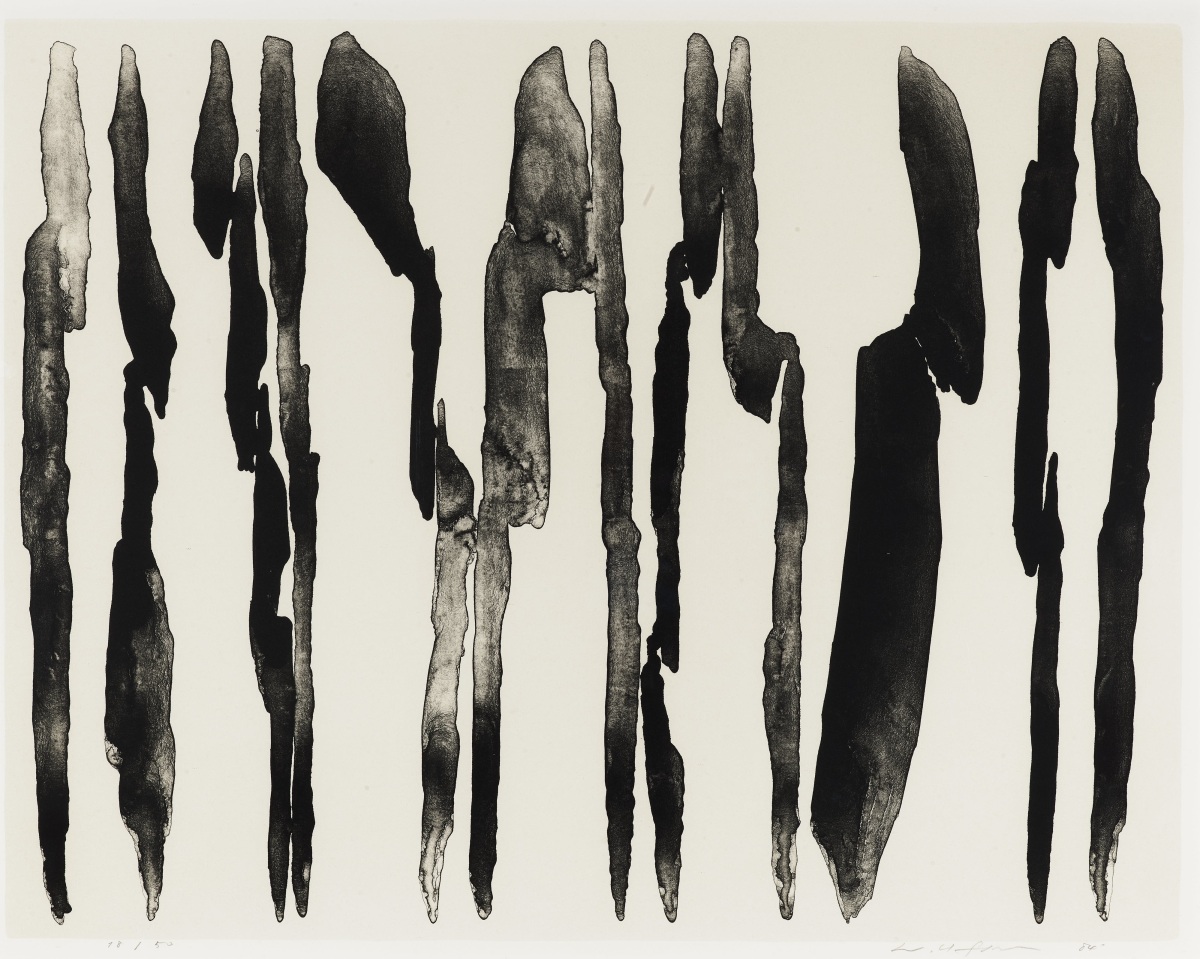


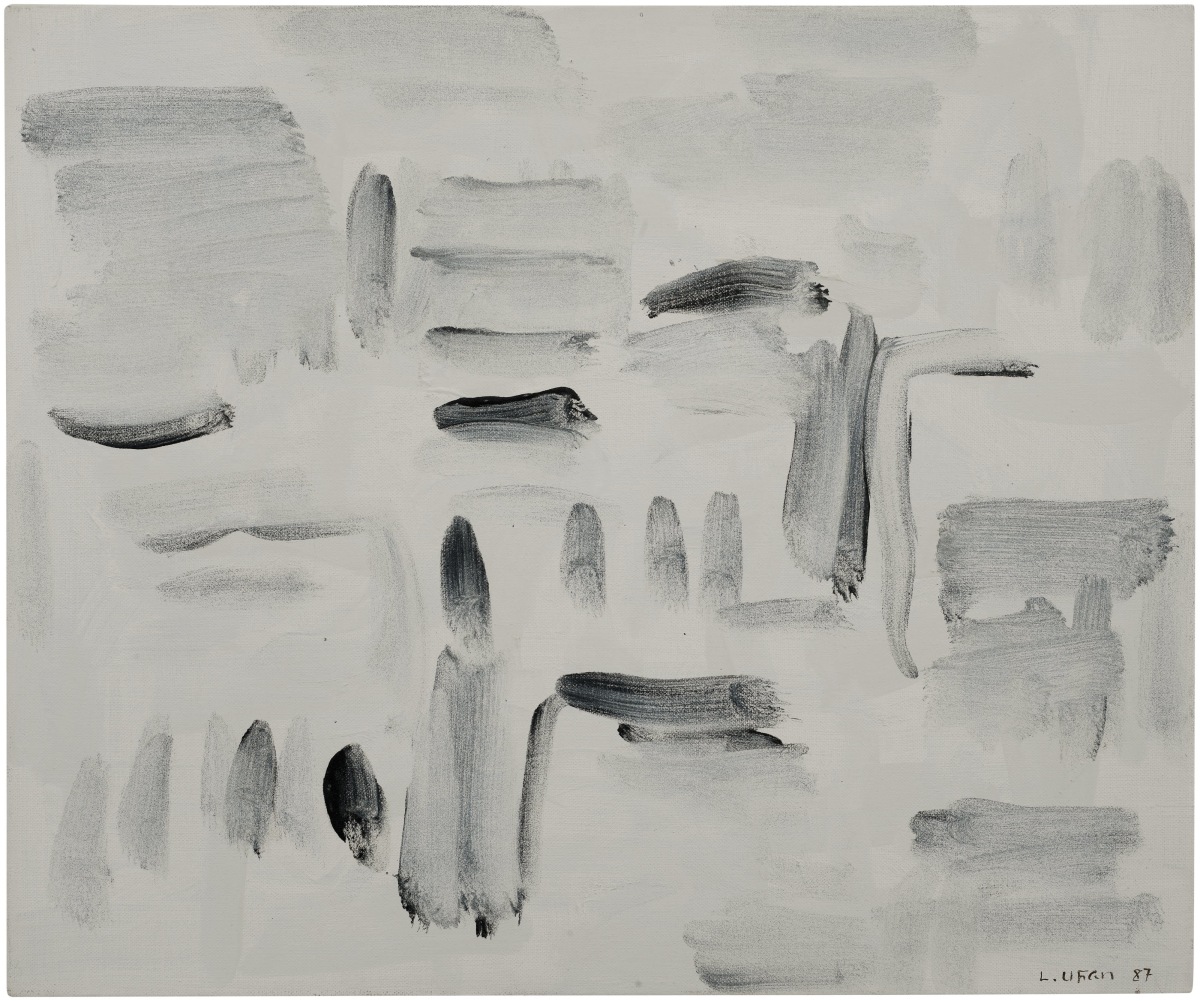
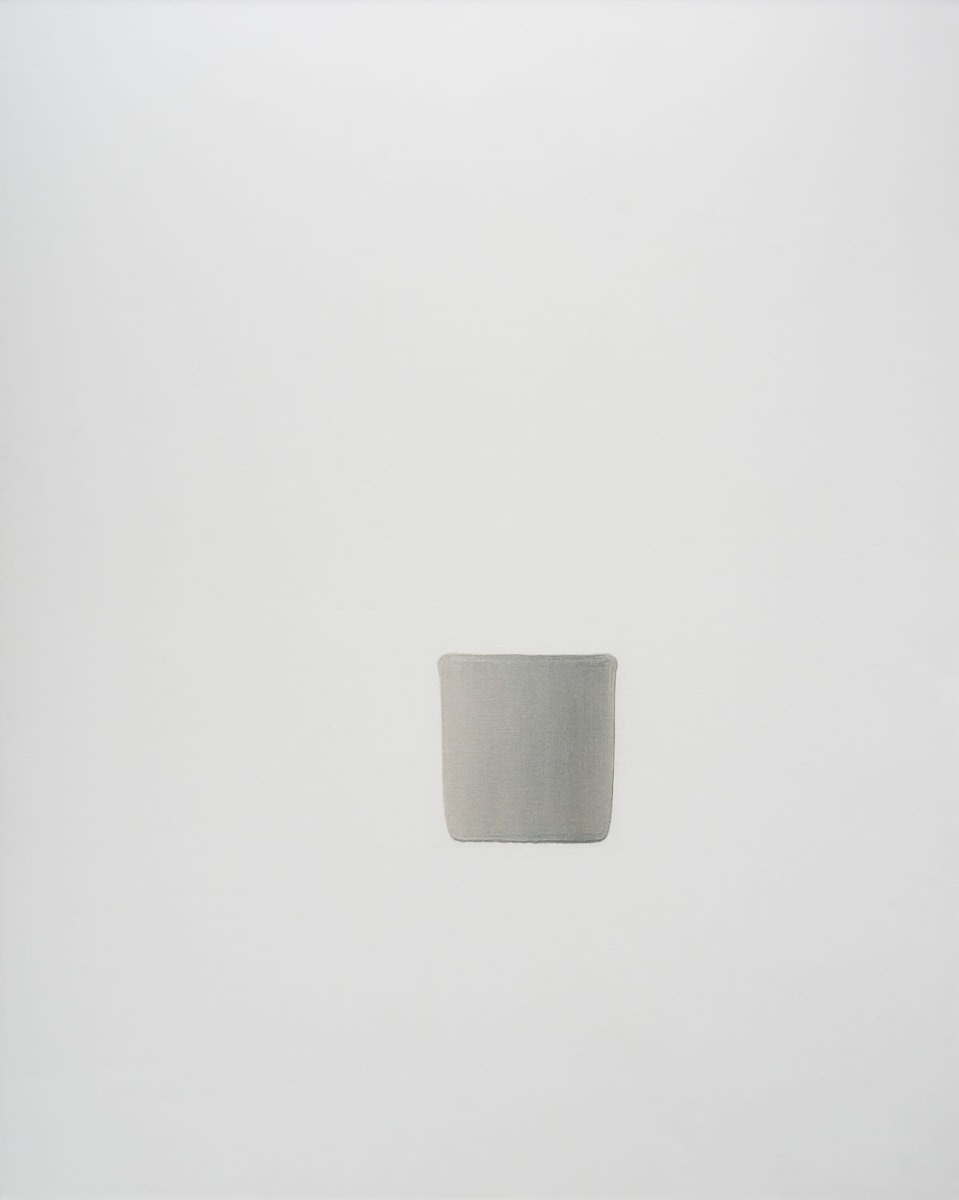
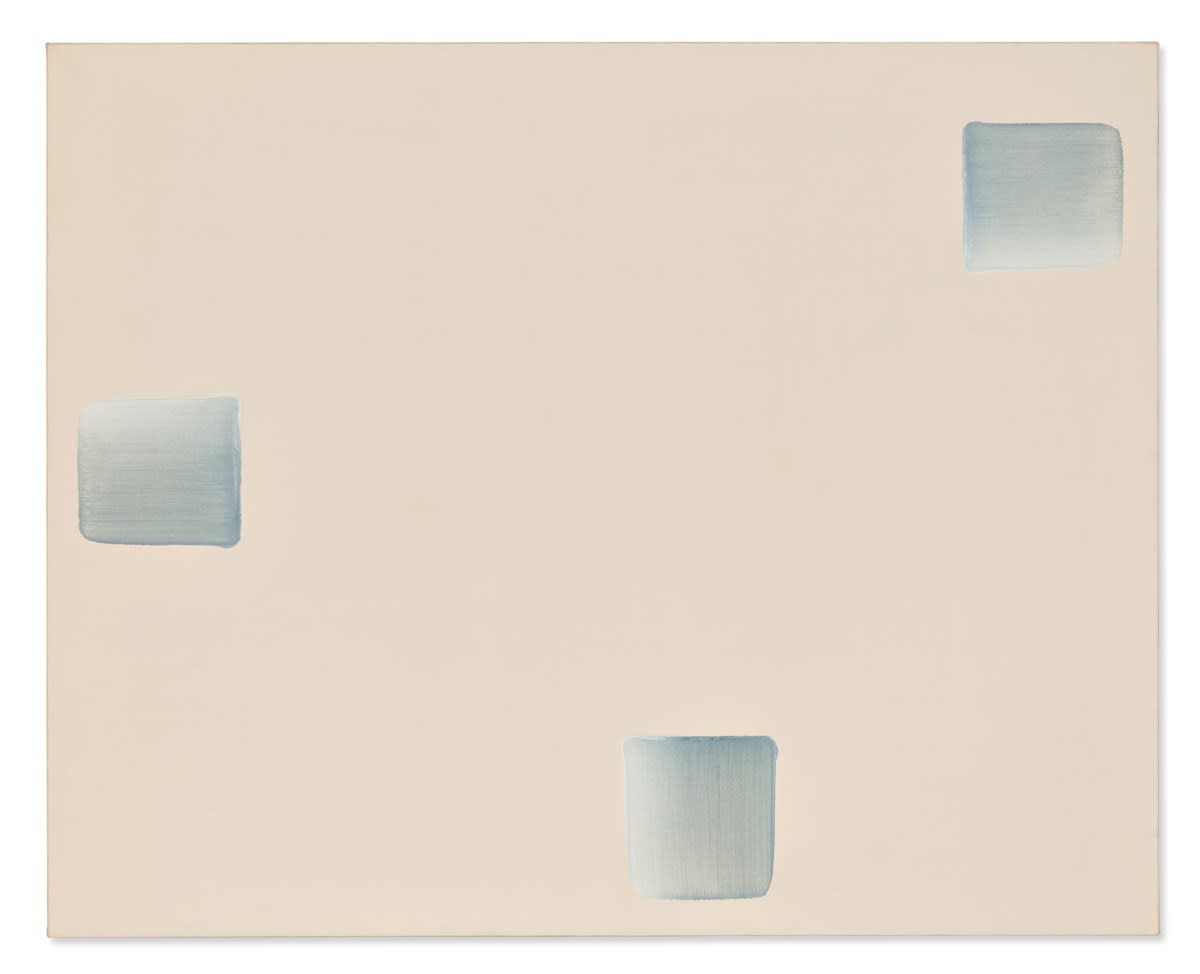


Egon investment scores
Market position
Research updated
Recent auction highlight
A result from Egon’s tracked auction sales; historical auction records are researched separately. Price including buyer’s premium.
Pricing
Temporal context
2019-2021 (peak)
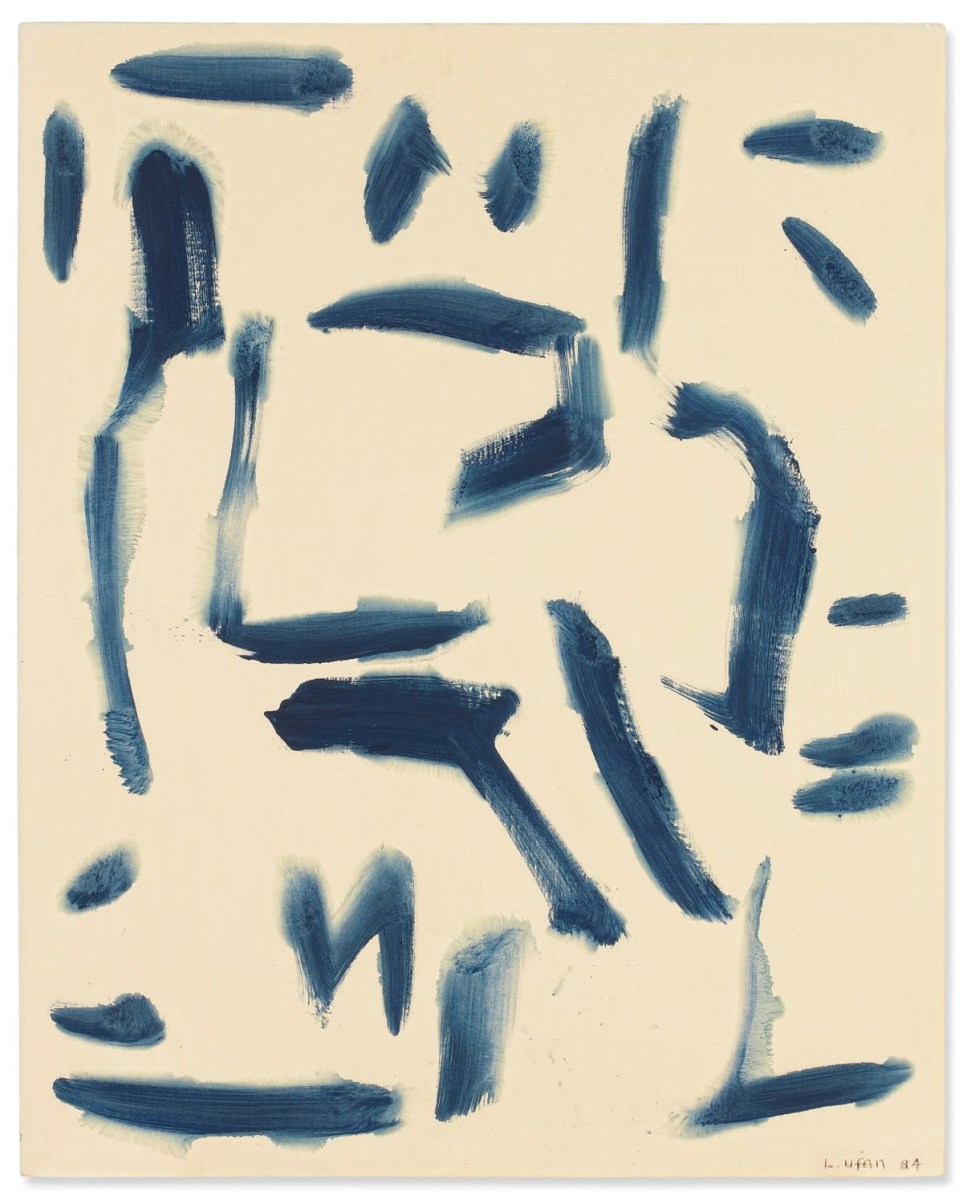
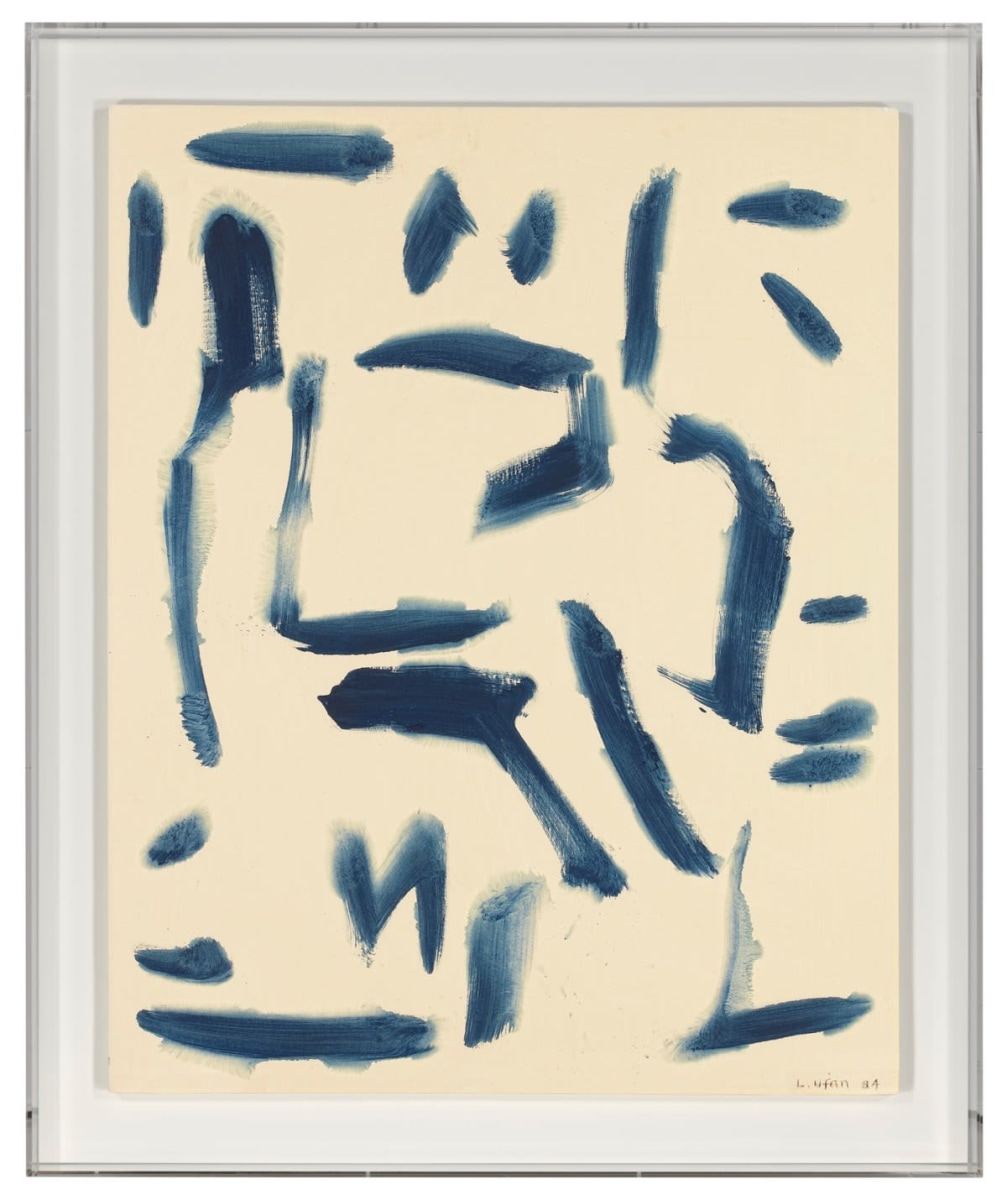
'East Winds' rises from $1.7m (Seoul Auction Hong Kong, 2019) to $2.66m (Seoul Auction, 2021) — roughly 56% appreciation on the same canvas in two years
2022-2024 (consolidation)
Korean market cools; MutualArt trailing 12-month painting average $446,181 vs sculpture average $64,484 — market weight sits decisively in paintings
- 2015-2018 (Dansaekhwa boom)
- Global repricing of Dansaekhwa; Lee enters seven figures consistently
2025-2026 (current, per EGON database)
$40,248 (small 'Work') to $2,012,000 ('From Line', Christie's Oct 2025); average $816,659 across 17 lots, with several 2026 lots exceeding high estimate
By work type and scale
Sculpture ('Relatum')
Auction record $792,500 (MutualArt); trailing 12-month average $64,484 — sculpture is thin at auction because major works go privately or into institutions
Works on paper, prints and multiples
Low four to low five figures; a Dia-partnered limited-edition silkscreen after 'From Line' was released with Avant Arte as a fundraising edition. Editions must never be conflated with unique canvases in price analysis.
- Correspondance / Dialogue, 1990s-present
- Primary-market driven; recent large canvases placed at fairs at $700,000-$1.2m
- From Line / From Point, 1970s, large scale
- The blue-chip core — high six figures to $2m+ at auction; the most historically valorised body of work
- With Winds / From Winds, 1980s-early 1990s
- Mid-to-high six figures ($352,170 and $490,200 for the two Phillips 2026 lots in the EGON database); 'East Winds' (1984) is the $2.66m outlier
Price transparency note
Primary-market prices are disclosed only selectively via fair reporting; most gallery sales are 'price on request'. This is a mature, gallery-managed primary market sitting on an unusually transparent and deep auction record.
Primary market evidence
- Frieze Seoul 2024: Pace Gallery's sales were led by a Lee Ufan painting at $1.2 million (Artsy; Artlyst)
- Frieze Seoul 2024: Almine Rech's sales were led by a Lee Ufan work in the $700,000-$800,000 range (Artsy)
- Frieze Seoul 2025: Mennour's sales were led by a Lee Ufan work at €600,000 (reported as ~$698,000-$700,005 by Artnet News and Artsy; confirmed by Frieze's own end-of-fair report)
- Contact Pace Gallery, Lisson Gallery, Mennour, Kukje Gallery or Tina Kim Gallery for current primary pricing — new-work pricing is gallery-controlled and generally undisclosed outside fair reporting
Liquidity
Market depth
Multi-regional: Seoul Auction and K Auction (Korea), Christie's/Sotheby's/Phillips in Hong Kong, New York and London, plus Japanese houses. Depth is greatest in the $50k-$500k band, with a functioning but narrow seven-figure top
- Sell through
- EGON database sample: 100% of 18 settled lots (2025-26). Broader historical sell-through not retrieved; treat the 100% figure as sample-specific
- Annual volume
- Very high — 3,607 lifetime lots at auction (MutualArt), far above the 20-lots-per-year threshold for the deepest tier
Collector base
Composition
Korean and Japanese institutional and private collectors form the core; European collectors reached via Mennour, Arles and Château La Coste; American museum and foundation collectors via Pace and Dia
Demand patterns
Strongest for 1970s 'From Line'/'From Point' canvases and 1980s 'With Winds'. Kiaf Seoul 2026 (25th edition, 175 exhibitors, announced 31 July 2026) reportedly features 'Wind' series works across multiple galleries — evidence of where dealer inventory depth currently sits.
Named patrons and institutional collectors
- Soichiro Fukutake / Benesse Holdings — commissioned the Lee Ufan Museum, Naoshima (2010) after seeing Lee's 2007 Venice Biennale showing
- Dia Art Foundation — received a gift of eight paintings from the artist (announced 2025); also holds 'Relatum, 1974/2011', credited 'Dia Art Foundation; Gift of Lee Ufan and Pace Gallery'
- Busan Museum of Art (Space Lee Ufan, 2015) and the city of Arles (Lee Ufan Arles, 2022) — public and civic patronage
- Château La Coste, Provence — repeated commissions and exhibitions
Auction history
Scale of market
MutualArt lists 3,607 works by Lee Ufan offered at auction — among the deepest secondary markets of any living Asian artist. askART reports data across 22 mediums with an overall average of $133,672 (all mediums, including works on paper and multiples).
Bought in and unsold
Historical buy-in and unsold-lot data were not retrievable within the search budget — this is a genuine gap, not evidence of a frictionless market. Context: the Korean/Dansaekhwa segment saw materially higher buy-in rates in 2023-2025 than during the 2015-2018 boom, and MutualArt's trailing 12-month sculpture average ($64,484) sits far below the sculpture record ($792,500), indicating sculpture clears mainly at small scale. The EGON 100% sell-through figure covers only its own 17-lot 2025-26 sample and should not be generalised.
Egon database records
- Coverage
- 17 lots, 17 sold; 100% sell-through across 18 settled lots (all catalogued lots at least 90 days old have settled)
Recent lots
- From Point — $217,272, Christie's, Jun 2026 (above estimate)
- With Winds — $352,170, Phillips, Jun 2026 (exceeded high estimate)
- With Winds — $490,200, Phillips, May 2026 (exceeded high estimate)
- Untitled work (lot 32) — $1,287,780, Christie's, Mar 2026
- Work — $40,248, Phillips, Mar 2026 (exceeded high estimate)
Conflict flag
Artsy publishes a 'high auction record €2.0m, Christie's, 2025'; the EGON database separately records $2,012,000 for 'From Line' at Christie's, Oct 2025. Similar magnitudes at the same house and year but DIFFERENT currencies — these are reported with their own provenances and are not assumed to be the same event, nor reconciled as a hammer-versus-premium difference. Neither displaces the externally documented $2.66m Seoul Auction 2021 record.
Provenance note
The following figures come from the EGON internal auction database (coverage 2025 onward; Christie's, Sotheby's, Phillips, Bonhams). They are reported separately from web-sourced figures and are NOT merged with them.
- Highest recorded
- $2,012,000 — 'From Line', Christie's, Oct 2025
- Range and average
- $40,248 - $2,012,000; recent average $816,659
Record prices external
- Auction record (external sources): $2,659,165 / ₩3.1bn for 'East Winds' (1984), Seoul Auction, 2021 — reported by MutualArt as the artist record since 2002 and by Artsy as the most expensive work ever sold at auction by a living South Korean artist
- 'East Winds' prior sale: HK$13.5m (US$1.7m), Seoul Auction Hong Kong, 2019 — at the time the seventh-highest price for the artist (Artsy)
- Artsy artist page (accessed Aug 2026) lists a 'High auction record (€2.0m), Christie's, 2025'
- MutualArt: realized prices up to $2,659,165 for paintings and $792,500 for sculptures; trailing 12-month averages of $446,181 (paintings) and $64,484 (sculptures)
Market position
- Segment
- Postwar East Asian abstraction / Dansaekhwa / Mono-ha — repriced upward from c.2014 and consolidating since 2022
Macro context
The 2026 market is bifurcated, with strength concentrated in trophy material (Christie's May 2026 two-session sale totalled $1.1bn, the S.I. Newhouse collection alone at $630.8m). That structure favours artists with documented, museum-validated bodies of work — a condition Lee meets, though the absence of a catalogue raisonné is a countervailing weakness.
Peer comparables
Within Dansaekhwa/Mono-ha, Lee Ufan is the price and liquidity leader, ahead of Park Seo-bo, Ha Chong-hyun, Chung Sang-hwa and Kwon Young-woo, whose markets Artsy reports as having expanded dramatically over the last decade. Kim Whanki is the Korean modern benchmark (a 1962 Kim Whanki sold at Hakgojae, Frieze Seoul 2025, for ~$1.4m). Internationally he is bracketed with Agnes Martin, Robert Ryman and Arte Povera figures by collectors of reductive postwar abstraction.
Investment outlook
Risks
Concentration in the Korean collector base; segment-wide Dansaekhwa cooling since 2022; the artist is 90, so an estate transition is foreseeable and historically increases supply in the short term; sculpture is illiquid at auction relative to its primary-market and institutional importance; no catalogue raisonné exists for a highly serial, highly repeatable body of work.
Summary
A mature blue-chip market with genuine multi-cycle history, deep liquidity and an exceptional 2026 institutional calendar. Upside is more likely in the 1970s core series than in recent 'Dialogue' canvases, where primary pricing ($700k-$1.2m at fairs) already sits close to secondary levels for comparable works.
Trajectory
A long-established, cycle-tested market. Peak pricing 2019-2021, cooling across the Korean segment 2022-2025, and a 2025-26 firming: the EGON sample shows a $2.012m Christie's result (Oct 2025), a $1.288m Christie's result (Mar 2026) and multiple lots exceeding high estimate.
Catalysts 2026
The Dia Beacon long-run installation (opened 8 May 2026, on view 2026-27) and the Dia-organised SMAC Venice Collateral Event during the 61st Venice Biennale (9 May-22 Nov 2026) together constitute the strongest institutional catalyst of the last decade for this artist — a curator-led, non-commercial re-narration of the whole career by Dia's director Jessica Morgan.
Institutional presence
Research updated
Exhibitions
Current and upcoming 2026
- 'Lee Ufan', Dia Beacon, New York — opened 8 May 2026, on view 2026-27. Paintings from the 1970s to the early 1990s shown alongside three Mono-ha sculptures; occasioned by the artist's gift of eight paintings to Dia
- 'Lee Ufan', SMAC Venice (San Marco Art Centre), Procuratie, Piazza San Marco — 9 May - 22 Nov 2026. Official Collateral Event of the 61st Venice Biennale, organised by Dia Art Foundation, curated by Jessica Morgan (Dia's Nathalie de Gunzburg Director), staged across eight galleries with new and historical paintings, large-scale installations and a new site-specific commission. One of 31 official collateral events.
- Kiaf SEOUL 2026 (25th edition, 175 exhibitors, announced 31 July 2026) — 'Wind' series works shown across multiple galleries (a fair/market event, not an exhibition)
- Jeju Biennale 2026 — Lee named in an August 2026 Artforum report on the final artist lineup, per MutualArt aggregation; requires verification against the primary Artforum item
Biennials and significant group
- São Paulo Biennial, 1969
- Documenta 6, Kassel, 1977
- Venice Biennale, 52nd edition, 2007
- 'Japanese Contemporary Art', Guggenheim Museum SoHo, New York, 1994 (cited by Tate)
- 'The Making of Modern Korean Art: The Letters of Kim Tschang-Yeul, Kim Whanki, Lee Ufan, and Park Seo-Bo, 1961-1982', Tina Kim Gallery, New York, 5 May - 21 Jun 2025
- Yokohama Museum of Art, 'Art between Japan and Korea since 1945', co-organised with MMCA Korea
Solo museum and major institutional
- 'Lee Ufan: Marking Infinity', Solomon R. Guggenheim Museum, New York, 24 June - 28 Sept 2011 (retrospective)
- 'Lee Ufan: Versailles', Château de Versailles, France, 2014
- 'Sculpture in the Courtyard: Lee Ufan. The Cane of Titan', State Hermitage Museum, St Petersburg, 16 Mar - 9 Oct 2016
- Centre Pompidou-Metz, France, 2019
- Hirshhorn Museum and Sculpture Garden, Washington D.C. — commissioned installation
- 'Lee Ufan: Requiem', Alyscamps, Arles, 2021
- 'Lee Ufan', The National Art Center, Tokyo, 2022 (15th anniversary exhibition; described by Benesse as his first major Tokyo retrospective)
- 'Lee Ufan', Hyogo Prefectural Museum of Art, Kobe, 2022
- 'Lee Ufan', Hamburger Bahnhof - Nationalgalerie der Gegenwart, Berlin, 2023
- 'Lee Ufan: Watercolor and Drawing', Sekigahara Ningenmura Quotidian Museum of Art, Gifu, 2023
- 'Lee Ufan', Rijksmuseum, Amsterdam, 30 May - 27 Oct 2024 (catalogue)
- 'Lee Ufan: Quiet Resonance', Art Gallery of New South Wales, Sydney, 31 Aug 2024 - Sept 2025
- 'Silentium (Muksiam)', Hoam Museum of Art, Yongin, 2025
Publications
- Extensive artist-authored theory, criticism and poetry; his Mono-ha essays function as primary art-historical literature
- MoMA Highlights: 375 Works from The Museum of Modern Art, New York (2019) — includes 'From Line' (1974)
- Rijksmuseum exhibition catalogue (2024); Guggenheim 'Marking Infinity' catalogue (2011); The National Art Center, Tokyo catalogue (2022); Pace catalogue with text by Barbara Rose (2015); Pace London 'From Point, From Line, From Wind' catalogue (2015); SMAC Venice brochure (2026)
- NO catalogue raisonné identified — a material gap given 3,600+ auction lots and highly serial imagery, with direct authentication and valuation consequences
Dedicated museums
- Lee Ufan Museum, Naoshima, Japan (2010) — designed by Tadao Ando; the only artist with a dedicated museum on Naoshima; initiated by Soichiro Fukutake after Lee's 2007 Venice Biennale showing
- Space Lee Ufan, Busan Museum of Art, South Korea (2015) — Tadao Ando
- Lee Ufan Arles, France (2022) — Hôtel Vernon, a 16th-century private mansion retrofitted by Tadao Ando
Museum collections
The Museum of Modern Art, New York
- Tier
- First-rank
Holdings
'From Line' (1974), included in MoMA Highlights: 375 Works from The Museum of Modern Art (2019); also 'Work No. 2' (1973), 'Work No. 3' (1973), 'Work No. 4B' (1973)
- Credit line
- credit line not published in sources consulted
Tate, London
- Tier
- First-rank
Holdings
Three paintings: 'From Line' 1977, 'From Winds' 1982, 'Correspondence' 1993 — Tate's press release states these were the first works by Lee Ufan to enter the collection and part of a continuing programme of collecting beyond Europe and North America
Credit line
credit line not published in sources consulted; the Tate release frames this explicitly as an institutional acquisition/collecting initiative rather than a donor offer
The Metropolitan Museum of Art, New York
- Tier
- First-rank (encyclopedic)
Holdings
Named in the EGON museum-API name-match data (floor, not a holdings count); Lee also appears in The Met's 'The Artist Project' discussing an 18th-century Joseon moon jar in the collection
- Credit line
- credit line not published in sources consulted
Solomon R. Guggenheim Museum, New York
- Tier
- First-rank
- Holdings
- 1 recorded in Wikidata (floor); site of the 2011 'Marking Infinity' retrospective
- Credit line
- credit line not published in sources consulted
National Gallery of Art, Washington, D.C.
- Tier
- First-rank
- Holdings
- 'Dialogue' — announced as a 2022 acquisition in an NGA acquisitions press release
- Credit line
- credit line not published in sources consulted (the retrieved NGA acquisition text carried no verbatim credit line); not inferred
View 10 more records
Art Institute of Chicago
- Tier
- First-rank
- Holdings
- Named in EGON museum-API name-match data
- Credit line
- credit line not published in sources consulted
Smithsonian Institution, incl. Hirshhorn Museum and Sculpture Garden
- Tier
- First-rank
- Holdings
- Named in EGON museum-API name-match data; the Hirshhorn also commissioned an installation (per the NGA release)
- Credit line
- credit line not published in sources consulted
Kunsthaus Zürich
- Tier
- First-rank European
- Holdings
- 1 recorded in Wikidata (floor); MutualArt notes work currently on view there
- Credit line
- credit line not published in sources consulted
Kröller-Müller Museum, Otterlo
- Tier
- Major European (modern art and sculpture)
- Holdings
- 1 recorded in Wikidata (floor)
- Credit line
- credit line not published in sources consulted
Dallas Museum of Art
- Tier
- Major U.S. encyclopedic
- Holdings
- 1 recorded in Wikidata (floor)
- Credit line
- credit line not published in sources consulted
The National Museum of Modern Art, Tokyo (MOMAT)
- Tier
- First-rank national
- Holdings
- Cited by Tina Kim Gallery among his institutional collections; not independently verified against the museum database
- Credit line
- credit line not published in sources consulted
National Museum of Modern and Contemporary Art, Korea (MMCA), Seoul
- Tier
- First-rank national
- Holdings
- Cited by Tina Kim Gallery; not independently verified against the museum database
- Credit line
- credit line not published in sources consulted
Dia Art Foundation, Beacon / New York
- Tier
- NOT counted as a first-rank accessioning public museum for institutional scoring (private foundation), but a major permanent commitment
- Holdings
- 'Relatum, 1974/2011' (charcoal, steel, stones); plus a gift of EIGHT paintings from the artist announced 2025, installed at Dia Beacon 2026-27
Credit line
"Dia Art Foundation; Gift of Lee Ufan and Pace Gallery" (verbatim, Dia website, for Relatum 1974/2011). The 2025 gift of eight paintings was made by the ARTIST himself — an artist gift, not a curatorial purchase; Lee described it as entrusting the works to Dia.
Rijksmuseum, Amsterdam
- Tier
- First-rank national
Holdings
Exhibition May-Oct 2024 with catalogue confirmed; MutualArt lists it among institutions that have featured his work. NO permanent-collection acquisition confirmed
- Credit line
- no acquisition confirmed
Further collection presence cited by galleries, unverified against museum databases in this round
- Tier
- mixed
- Holdings
- Centre Pompidou (Paris), Hyogo Prefectural Museum of Art, Busan Museum of Art, Leeum/Hoam (Samsung Foundation), Art Gallery of New South Wales
- Credit line
- credit line not published in sources consulted
Awards and recognition
- Praemium Imperiale for Painting, Japan Art Association, 2001 — confirmed in the National Gallery of Art acquisition release
- Long professorship at Tama Art University, Tokyo (from 1973); Getty records him as a professor of art theory
- Three museums dedicated to his work across three countries (Japan, Korea, France) — an honour almost no living artist holds
- Widely reported but NOT verified in this research round: UNESCO Prize (2000), Officier de l'Ordre des Arts et des Lettres (France)
Credit line methodology note
Only ONE verbatim credit line was recoverable from the sources consulted: 'Dia Art Foundation; Gift of Lee Ufan and Pace Gallery'. Object-page credit lines for MoMA, Tate, the Met, the NGA and the Guggenheim were not surfaced in the retrieved text and have deliberately NOT been inferred or normalised. Where a credit line is unavailable the holding has been weighed on its institution. Note that the Tate press release independently establishes curatorial initiation for its three paintings by describing the acquisition as part of Tate's own collecting programme.
Career & Biography
Research updated
Identity
- Name
- Lee Ufan (이우환 / 李禹煥); Getty ULAN preferred form 'Lee, Ufan', ULAN ID 500061220
- Birth
- Born 1936 (Getty ULAN); secondary sources give 24 June 1936, Haman-gun, Gyeongsangnam-do, Korea, during the Japanese occupation
- Gender
- Male (Getty ULAN)
- Status
- Living, age 90 as of Aug 2026
Nationality
Getty ULAN records nationality as 'British (modern)' — this appears to be a Getty data artefact; all substantive sources describe him as Korean-born, long resident in Japan and France. Getty birth/role data used as foundation and not contradicted.
Current locations
Divides time between Japan (Kamakura), Korea and France (Paris/Arles); Tate's acquisition release notes he lives and works in Japan, Korea and France
Career timeline
- 1967 — first solo exhibition, Sato Gallery, Tokyo
- 1968 — included in 'Contemporary Korean Painting', Tokyo Museum of Modern Art; encounter with Sekine Nobuo's earthwork in Kobe redirects him toward sculpture
- 1969 — ephemeral happening and contingent structures at the 9th Contemporary Art Exhibition of Japan, Tokyo Metropolitan Art Museum; São Paulo Biennial participation; becomes leading theorist of Mono-ha
- 1969-1974 — core Mono-ha period; his essays make him the movement's intellectual voice
- c.1972-73 — 'From Point' and 'From Line' painting series begin; becomes pivotal figure for Korean Dansaekhwa
- 1973 — appointed to teach at Tama Art University, Tokyo (Getty records him as professor of art theory)
- 1977 — Documenta 6, Kassel
- 1980s-1990s — 'With Winds'/'From Winds' and 'Correspondance/Correspondence' series
- 2007 — 52nd Venice Biennale (prompted Soichiro Fukutake to propose the Naoshima museum)
- 2010 — Lee Ufan Museum, Naoshima (Tadao Ando) opens — first museum in the world dedicated to him
- 2011 — 'Lee Ufan: Marking Infinity' retrospective, Solomon R. Guggenheim Museum, New York
- 2014 — solo exhibition/commission, Château de Versailles
- 2015 — Space Lee Ufan, Busan Museum of Art, opens
- 2016 — 'The Cane of Titan', State Hermitage Museum courtyard, St Petersburg
- 2019 — Centre Pompidou-Metz solo; Hirshhorn Museum and Sculpture Garden commission
- 2021 — 'Lee Ufan: Requiem', Alyscamps, Arles
- 2022 — Lee Ufan Arles opens (Hôtel Vernon, retrofitted by Tadao Ando); first major Tokyo retrospective at The National Art Center, Tokyo; National Gallery of Art, Washington acquires 'Dialogue'
- 2023 — Hamburger Bahnhof, Berlin; Kukje Gallery, Seoul
- 2024 — Rijksmuseum, Amsterdam (catalogue); 'Lee Ufan: Quiet Resonance', Art Gallery of New South Wales, Sydney; 'Lee Ufan & Mark Rothko: Correspondence', Pace Seoul
- 2025 — gift of eight paintings to Dia Art Foundation; 'Silentium (Muksiam)', Hoam Museum of Art, Yongin
- 2026 — Lee Ufan opens at Dia Beacon (8 May 2026, on view 2026-27); 'Lee Ufan' at SMAC Venice, official Collateral Event of the 61st Venice Biennale (9 May-22 Nov 2026), organised by Dia, curated by Jessica Morgan
Writing and theory
Prolific theorist, critic and poet; his essays defined Mono-ha's terms and are cited as primary art-historical sources. Getty records him as a professor of art theory; he taught for decades at Tama Art University, Tokyo.
Education and training
- Childhood training in the Confucian arts — calligraphy, poetry, painting — in a traditional Korean household (National Gallery of Art acquisition release)
- Training in traditional ink-brush technique at Seoul National University High School / School of Art, Seoul National University (brief enrolment, 1956)
- Moved to Tokyo 1956/1958; Nihon University, Tokyo — degree in philosophy, 1961 (Artnet, Dia). Learned English, French and German; absorbed phenomenology and structuralism
Studio practice and method
Serial, disciplined mark-making: brush fully loaded with mineral-pigment oil, drawn in a single continuous pull until pigment exhausts, reloaded and repeated ('From Line'); single concentrated deposits repeated in sequence ('From Point'). Sculpture ('Relatum') juxtaposes unworked stone with industrial steel plate, glass, rubber, cotton and charcoal, sited in relation to architecture and viewer. Bases in Kamakura (Japan), Korea and France.
Personal and political context
Born under Japanese colonial rule; formative years spanning Korean liberation and the Korean War. His position as a Korean artist central to the Japanese avant-garde underpins readings of his work as a practice of 'encounter' across national and cultural boundaries.
Influences context contemporaries
Influences
East Asian calligraphy and ink painting; Confucian and Zen thought; Joseon ceramics (he has spoken publicly about the moon jar in The Met's collection); Nishida Kitaro; Western phenomenology and structuralism (Merleau-Ponty, Heidegger); Sekine Nobuo's 'Phase—Mother Earth' as the sculptural trigger
Contemporaries
Mono-ha: Sekine Nobuo, Koshimizu Susumu, Suga Kishio. Dansaekhwa: Park Seo-bo, Ha Chong-hyun, Chung Sang-hwa, Kwon Young-woo, Yun Hyong-keun. Western parallels drawn by critics and by Pace's own programming: Mark Rothko, Agnes Martin, Arte Povera and Postminimalism
Art historical position
Founder-theorist of Mono-ha (School of Things), described as Japan's first internationally recognised postwar contemporary art movement, and simultaneously a pivotal figure for Korean Dansaekhwa
Artistic Profile
Research updated
Evolution
Optical and discrete paintings (mid-1960s) → Mono-ha structures, happenings and contingent installations (1968-74) → serial process painting, 'From Point' and 'From Line' (1972-80) → gestural, wind-driven all-over compositions (1980s) → radical reduction to one or a few strokes on vast grounds, 'Correspondance'/'Dialogue' (1990s-2020s) → environmental and architectural commissions running in parallel throughout, intensifying from 2010.
Signature series
- 'From Point' (from c.1972-73)
- 'From Line' (from c.1973) — the critical and market core; MoMA, Tate and Dia all hold examples; Egon's centroid works ('From Line No. 780231', 'From Line No. 59942') sit here, which the research confirms as correctly central
- 'With Winds' / 'From Winds' / 'East Winds' (1980s-early 1990s) — the record-setting series and, per Kiaf 2026 reporting, the series with the deepest current dealer inventory
- 'Correspondance' / 'Correspondence' / 'Dialogue' (1990s-present) — the single- or few-brushstroke works on vast grounds
- 'Relatum' (from 1968-69) — the sculptural body of work, missing from the current fingerprint
Influences lineage
Upstream: East Asian calligraphy and ink painting; Joseon ceramics; Zen and Confucian aesthetics; Nishida Kitaro; Merleau-Ponty and Heidegger; Sekine Nobuo's earthwork as the sculptural trigger. Downstream: the theoretical framework for Mono-ha, a decisive influence on Korean contemporary abstraction, and the primary vector by which Dansaekhwa entered Western institutional and market discourse.
Themes and subjects
- 'Encounter' and relatum — the work as a relation between made and unmade, object, site and viewer; his own 2026 formulation is about bringing together things that are made and unmade
- Emptiness, ma (interval), silence and the void; the unpainted ground as an active rather than residual element
- Time and bodily duration recorded through repetition and the physical exhaustion of pigment
- Rejection of expressive authorship — Mono-ha's aim, in Lee's own phrase, to set out to make things be as they are
- Nature and industry, East and West, Korea and Japan — encounters staged rather than resolved
Movements and periods
Primary
- Mono-ha (School of Things), Japan, c.1968-1974 — founder and leading theorist
- Dansaekhwa (Korean monochrome painting) — pivotal contributor
- Minimalism, Postminimalism and Arte Povera as the international parallels institutions use (Dia's framing)
Period labels
Late Modern / Contemporary; the core critical and market bracket is 1970-1990 — this CONFIRMS the existing Egon fingerprint's period bracket and period labels
Techniques and mediums
- Painting: mineral pigment ground with glue/oil on canvas, frequently raw or lightly primed; a fully loaded brush pulled in a single continuous stroke until the pigment exhausts; serial repetition at even intervals
- Sculpture: unworked natural stones with cut/rolled steel plate, glass sheets, rubber, cotton and charcoal, left substantially unmanipulated
- Works on paper, watercolour and drawing (e.g. the 2023 Gifu exhibition); prints and silkscreen editions, including a Dia-partnered Avant Arte limited edition after 'From Line'
- Site-specific installation, outdoor commissions and permanent architectural collaborations with Tadao Ando
Style and visual language
Disagreements
No material disagreement found between the fingerprint and the sources. The only corrections are of coverage (sculpture, site-specificity, calligraphic lineage, colour range), not of character.
Extends fingerprint
- SCULPTURE IS ABSENT from the fingerprint, which is painting-only (mediums: oil, painting). The 'Relatum' series (from 1968-69, formerly titled 'System') — unworked boulders juxtaposed with rolled steel plate, glass, rubber, cotton and charcoal — is roughly half the practice and is what Dia, the Hirshhorn, Versailles and Naoshima built their commitments around. This is a coverage gap arising from what trades at auction, not a mischaracterisation.
- SCALE, SITE AND ARCHITECTURE: the work is environmental, not merely pictorial. Dia describes the Venice presentation as reflecting a long-standing dialogue with architectural space and a commitment to environments prompting heightened awareness; his three dedicated museums are Tadao Ando buildings developed in close collaboration with him.
- CALLIGRAPHIC LINEAGE: sources tie 'From Line' and 'From Point' directly to childhood calligraphy practice requiring command of mind, body, brush and breath. The fingerprint's 'crossover appeal to Western minimalism collectors' framing under-weights this East Asian origin, which is what the 2026 curatorial narrative foregrounds.
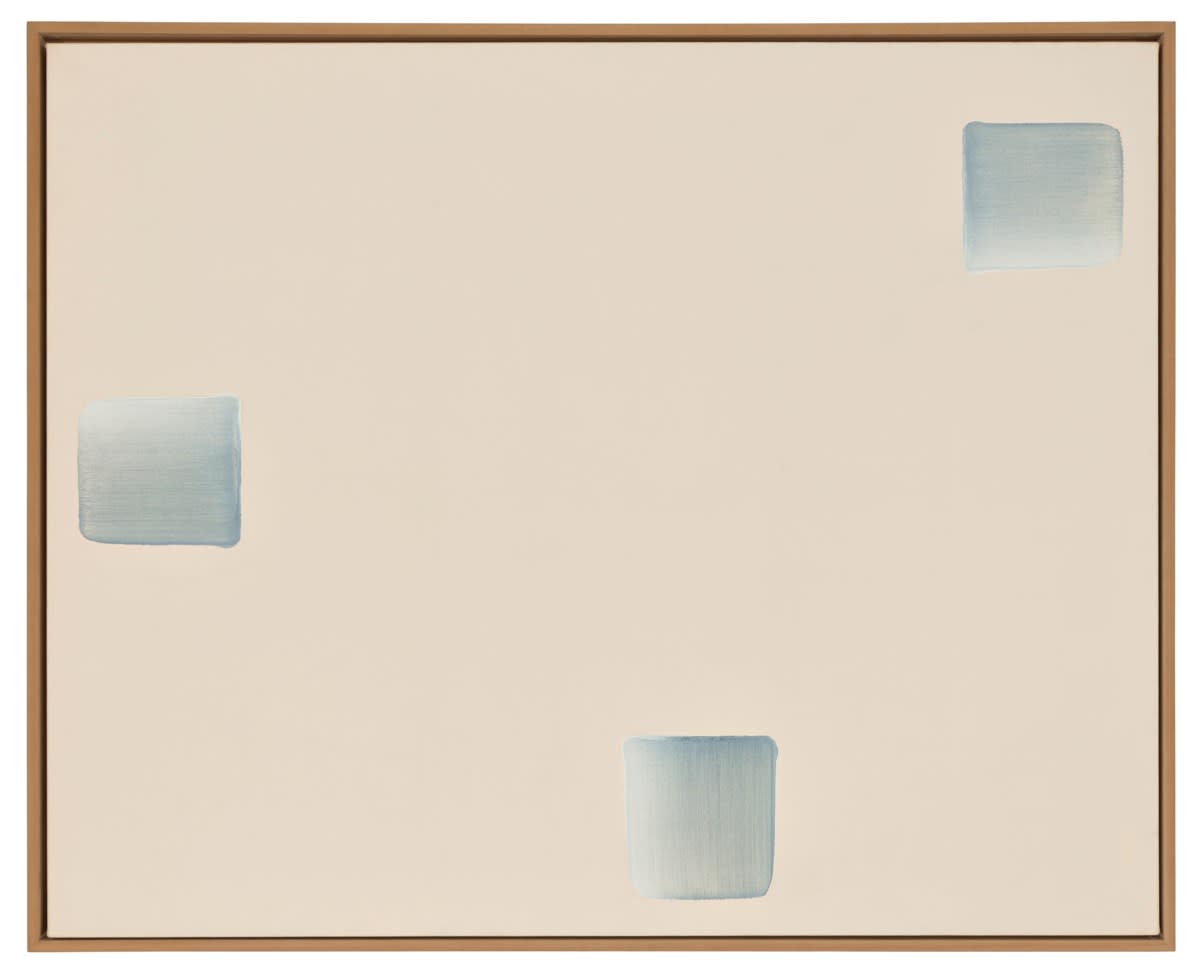
- COLOUR VARIANCE: the desaturated/cool read holds for 'From Line'/'From Point' (cobalt, navy, grey), but 'East Winds' (1984) is described as calligraphic cobalt-blue strokes on RAW stretched canvas — the raw, unprimed support is itself a formal element the fingerprint records only as 'bare cream canvas'. Later 'Dialogue' works introduce warm greys and occasional orange/red accents not represented in the tier-1 sample.
Confirms fingerprint
Research fully supports the fingerprint's read: austere, contemplative, serene mood; desaturated, limited, cool palette; flatness, negative space, planarity, soft edges, all-over composition; mark-as-event within a voided field. MoMA's own collection text on 'From Line' (1974) describes the natural exhaustion of paint pulled down the canvas across successive strokes and a deliberate minimising of skill and expertise — an institutional confirmation of the fingerprint's 'depleting stroke' technical read. The 'tight' dispersion (n=12, coherence 0.61) is consistent with a genuinely serial practice.
Critical Reception
Research updated
Critical reception
Overall
Lee is treated less as a market phenomenon than as an artist-philosopher; criticism consistently foregrounds his theoretical writing alongside the objects. Reception has been unusually stable and largely positive across five decades and across Japanese, Korean, French, German and Anglophone criticism.
Curatorial scholarship
Jessica Morgan (Nathalie de Gunzburg Director, Dia Art Foundation) curated the 2026 Venice exhibition and has publicly framed it as supplying what she considers missing from the literature — a clear account of the trajectory and conceptual development of his painterly series from the late 1960s to the present, describing him as an artist-philosopher. Barbara Rose wrote the text for Pace's 2015 catalogue. Museum catalogues from the Guggenheim (2011), The National Art Center Tokyo (2022) and the Rijksmuseum (2024) constitute scholarship published independently of the trade. MoMA's own collection text on 'From Line' analyses the exhaustion of pigment across successive strokes and his deliberate minimising of skill.
Editorial recognition note
As a 90-year-old canonical figure, Lee does not appear on 'artists to watch' or 'new talent' lists; the equivalent leading indicators here are curator-led institutional commitments — the Dia gift and the Dia-organised Venice presentation are the strongest of these in a decade.
Documented reviews and features
- Art in America / ARTnews — 'Natural Encounters: Lee Ufan at the Guggenheim', feature on 'Marking Infinity' (Guggenheim, 24 June - 28 Sept 2011), which opens with the artist physically lifting a boulder before onlookers days ahead of the opening
- Zachary Small, 'The Quiet Chaos in Lee Ufan's New Paintings', Hyperallergic, 4 Oct 2018 (Pace exhibition review)
- Philippe Dagen, 'Lee Ufan cherche à humaniser Le Corbusier', Le Monde, 21 Sept 2017, p.4 (illustrated review)
- Whitney Jones, 'Exhibition | Lee Ufan's Distorted Meaning and Ruin at Pace Gallery', Cfile.daily, 27 Mar 2017
- Artforum 56, no. 4 (Dec 2017), p.65 — Lee Ufan, 'The Artists' Artists: Cy Twombly'. NOTE: this is Lee writing AS a critic, not a review OF him; it is nonetheless a tier-1 editorial signal of his standing as a thinker
- The Art Newspaper, 6 May 2026 — interview, 'Lee Ufan: I try to bring together those things which are made and unmade', published during his Venice showing
- The Art Newspaper, 5 Mar 2026 — announcement and analysis of the Venice Biennale collateral event
Publications and media
Gaps
No catalogue raisonné identified. For an artist with 3,600+ auction lots and highly repeatable serial imagery this is the most significant documentary gap; the April 2026 Modigliani catalogue raisonné episode is a reminder of how much valuation weight such documents carry.
Trade press
Consistent coverage in The Art Newspaper, ARTnews, Artnet News, Artsy, Artforum, Hyperallergic, Le Monde, Artlyst, plus extensive Korean and Japanese press
Artist as author
Lee's own essays, criticism and poetry form a substantial published body cited as primary sources in Mono-ha scholarship — an unusual interpretive and provenance asset
News record verification
- Conclusion
- 1 of 3 labels defensible with qualification; 2 of 3 wrong. The quotes were treated as governing evidence in each case.
Egon label audit
EGON's news record provisionally labelled all three recent items 'Retrospective'. Verified against independent sources, that label is defensible for only ONE of the three — and even there it requires qualification. Per instruction, the quoted evidence governs over the label.
Item 3 artsy 31 jul 2026
MISLABELLED. This is an ART FAIR PREVIEW (Kiaf Seoul 2026, 25th edition, 175 exhibitors) in which Lee's 'Wind' series is noted as shown across multiple galleries. Reclassify as a primary/secondary MARKET signal, not an exhibition event. It is genuinely useful intelligence — it evidences which series currently carries dealer inventory depth.
Item 1 theartnewspaper 5 mar 2026
PARTIALLY CORRECT. It is a career-spanning survey exhibition, but it is specifically an official COLLATERAL EVENT of the 61st Venice Biennale at the San Marco Art Centre, organised by Dia Art Foundation and curated by Jessica Morgan — not a museum retrospective and not part of the Biennale's central exhibition. Independently confirmed by e-flux, Dia and Pace.
Item 2 theartnewspaper 6 may 2026
MISLABELLED. This is an ARTIST INTERVIEW / editorial profile pegged to the Venice show; the quoted text is the artist speaking, not an exhibition listing. Reclassify as press/editorial feature.
Art historical positioning
Canonical. He is the theorist and leading figure of Mono-ha — described as the first postwar Japanese movement to achieve international recognition — and simultaneously a pivotal contributor to Korean Dansaekhwa. Dia places Mono-ha as formally analogous to Postminimalism and Arte Povera; Pace has staged him in dialogue with Rothko (Seoul, 2024) and critics have read his 2017 project against Le Corbusier. Absence from a survey of postwar East Asian art would be conspicuous.
Gallery & Representation
Research updated
Fair presence
- Frieze Seoul — 2024 (Pace led with a $1.2m Lee Ufan painting; Almine Rech at $700-800k) and 2025 (Mennour led with a €600,000 work)
- Kiaf Seoul — 2026, 25th edition, 175 exhibitors, with 'Wind' series works across multiple galleries
- Art Basel (Basel, Hong Kong, Paris, Miami Beach) via Pace, Lisson, Mennour and Kukje; Artsy covered Art Basel 2026 sales featuring his galleries
Representation
Primary
Pace Gallery
- Tier
- Tier 1 mega-gallery
Evidence
Full artist page with exhibition history and bibliography on pacegallery.com; co-credited on the Dia 'Relatum' gift; publishes the Venice 2026 and Dia Beacon 2026 coverage
- Locations
- New York, London, Hong Kong, Seoul, Los Angeles, Tokyo, Geneva
Lisson Gallery
- Tier
- Tier 1
- Evidence
- Listed as featured representation on Artsy; solo exhibitions incl. 'Lee Ufan: Response', Lisson London, 2021, and Lisson London 2015 (catalogue)
- Locations
- London, New York, Los Angeles, Shanghai, Beijing
Mennour (Kamel Mennour)
- Tier
- Tier 1 European
- Evidence
- Listed on Artsy; 'Lee Ufan: Response', Mennour Paris, 2022; Mennour's Frieze Seoul 2025 sales were led by a Lee Ufan at €600,000
- Locations
- Paris
Kukje Gallery
- Tier
- Tier 1 Korean
- Evidence
- Full artist page and exhibition chronology at kukjegallery.com; solo exhibition Seoul 2023
- Locations
- Seoul, Busan
SCAI The Bathhouse
- Tier
- Tier 1 Japanese
- Evidence
- 'Lee Ufan: Matter in Contact', 2022
- Locations
- Tokyo
Structure note
Lee works through a multi-gallery global structure rather than exclusive representation — characteristic of blue-chip late-career artists, and a driver of both liquidity and price discipline across regions.
Secondary and associated
- Tina Kim Gallery, New York — extensive artist page; organised 'The Making of Modern Korean Art' (2025)
- Almine Rech — sold a Lee Ufan in the $700,000-$800,000 range at Frieze Seoul 2024
- Axel Vervoordt Gallery, Buchmann Galerie, Perrotin, Whitestone Gallery, Tang Contemporary Art, Arario Gallery, Gow Langsford, Wooson Gallery, Mo J Gallery, Dep Art Gallery, Takeda Art Co. — all recorded as having exhibited his work (Ocula, Pace bibliography)
Geographic reach
Genuinely tri-continental: Korea and Japan (primary cultural base, dedicated museums at Naoshima and Busan), France and Europe (Mennour, Lee Ufan Arles, Versailles, Château La Coste, Pompidou-Metz, Hamburger Bahnhof, Rijksmuseum), the United States (Pace, Dia, Guggenheim, NGA, Hirshhorn), plus Australia (AGNSW 2024-25) and Russia (Hermitage 2016).
Representation history
Pace has been the dominant Western dealer since the early 2010s (Pace New York solos 2015, 2017, 2018; East Hampton 2021; Hong Kong 2015-16; London 2015; Seoul 2024). Lisson and Mennour added European depth from c.2015-2016. Kukje and Tina Kim anchor the Korean market. Earlier Japanese representation ran through SCAI The Bathhouse and Takeda Art Co.
Sources & research notes
Egon’s artist research combines historical auction records, recent sales, institutional history, critical reception and gallery information. Researched auction records and auction highlights are identified separately.
Read prices with their work, sale date, currency and stated basis. Egon’s market assessments are distinct from reported auction results.
Reference: Egon, “Lee Ufan: Market Intelligence & Investment Profile.”
Research bibliography · 34 sources
Sources recorded for this artist’s research. This bibliography does not assign every source to an individual claim.
- Lee Ufan | Artnet
- Lee Ufan | 3,607 Artworks at Auction | MutualArt
- Behind Dansaekhwa's Rapid Rise into a Blue-Chip Movement | Artsy
- Lee Ufan - Art & Prints for Sale | Artsy
- Ufan Lee Average Price per Medium | askART
- Lee Ufan. From Line. 1974 | MoMA
- Lee Ufan Works Acquired by Tate Gallery – Press Release | Tate
- Acquisition: Lee Ufan's 'Dialogue' | National Gallery of Art
- Lee Ufan | Exhibitions & Projects | Dia Art Foundation
- Dia Art Foundation Announces Major Gift From Lee Ufan and Exhibition at Dia Beacon in 2026
- Lee Ufan (SMAC Venice, Collateral Event of the 61st Venice Biennale) | Dia
- Lee Ufan on the Moon Jar | The Metropolitan Museum of Art
- Natural Encounters: Lee Ufan at the Guggenheim | Art in America
- Lee Ufan retrospective will be among 2026 Venice Biennale collateral events | The Art Newspaper
- Lee Ufan: 'I try to bring together those things which are made and unmade' | The Art Newspaper
- Lee Ufan—Collateral Event of the 61st Venice Biennale | e-flux
- Lee Ufan | Pace Gallery
- Our Artists in Venice 2026 | Pace Gallery
- Lee Ufan at Dia Beacon | Pace Gallery
- Lee Ufan | Kukje Gallery
- Lee Ufan Exhibitions at leading galleries | Ocula
- 'Lee Ufan' at Dia Beacon, from 8 May 2026 | Ocula
- Lee Ufan | Tina Kim Gallery
- Artist Lee Ufan Opens a Dazzling New Museum in Arles | ARTnews
- Lee Ufan: Outward-bound Spirit / The Road Towards Infinity | Benesse Art Site Naoshima
- Lee Ufan Museum | Japan Experience
- What Sold at Frieze Seoul 2024 and The Armory Show 2024 | Artsy
- What Sold at Frieze Seoul 2025 | Artsy
- Sales Roll In at Frieze Seoul and Kiaf, Beating (Low) Expectations | Artnet News
- Frieze Seoul 2025: End of Fair Report | Frieze Newsroom
- Frieze Seoul 2024: What Sold And What The Dealers Had To Say | Artlyst
- Lot 138, Lee Ufan, From Line (1978) | Sotheby's Hong Kong, 2014
- Lee Ufan, From Line (limited edition silkscreen) | Avant Arte
- Kiaf SEOUL 2026 announces 175 exhibitors for its 25th edition | Artsy
Research updates by section
These dates show when Egon’s research sections were updated. Source retrieval dates, where supplied above, refer to individual evidence notes.
Ranking updated . Research sections follow their own update dates.
This is what the market knows about Lee Ufan. What Egon can also tell you: whether Lee Ufan fits your portfolio — based on your existing holdings, budget, and investment timeline.
Get personalized analysisActive market signals
Inside Egon
Signal timeline & strength analysis
Gallery moves, auction records, institutional acquisitions, price milestones — tracked over 90 days
Full signal timeline, strength analysis, and alert configuration for Lee Ufan.
Collector demographics & buyer analysis
Geographic distribution, institutional vs. private buyers, collector profiles, and secondary market activity
Who is collecting Lee Ufan? Geographic distribution, institutional vs. private buyers, and collector profile analysis.
Personalized acquisition strategy
Optimal entry points, comparable pricing analysis, timing recommendations, and portfolio fit assessment
Personalized acquisition strategy for Lee Ufan based on your budget, timeline, and collection goals.
Go deeper with personalized intelligence
You now have Egon's market assessment of Lee Ufan. The next question is personal: does this artist belong in your collection? Egon analyzes collection fit based on your aesthetic thesis, existing holdings, budget, and investment goals — delivering acquisition strategies no public index can provide.