Lee Krasner
Blue-chipEgon research · Artist market profile
The market, in context.
Explore Lee Krasner’s auction history alongside the exhibitions, collections and gallery relationships behind the market.
Institutional research
Collections & exhibitions
Read holdings, exhibition history and their qualifications in context.
Read the institutional research →




Egon investment scores
Market position
Research updated
Auction record context
The Eye Is the First Circle (1960), an ~20-foot 'Umber' series canvas, sold for $11.65 million (with fees ~$11.7M) at Sotheby's New York on May 16, 2019 — purchased by Emily and Mitchell Rales for the Glenstone Museum, Maryland.
Auction highlights
Scroll horizontally if needed →
| Work | Result | Venue and date |
|---|---|---|
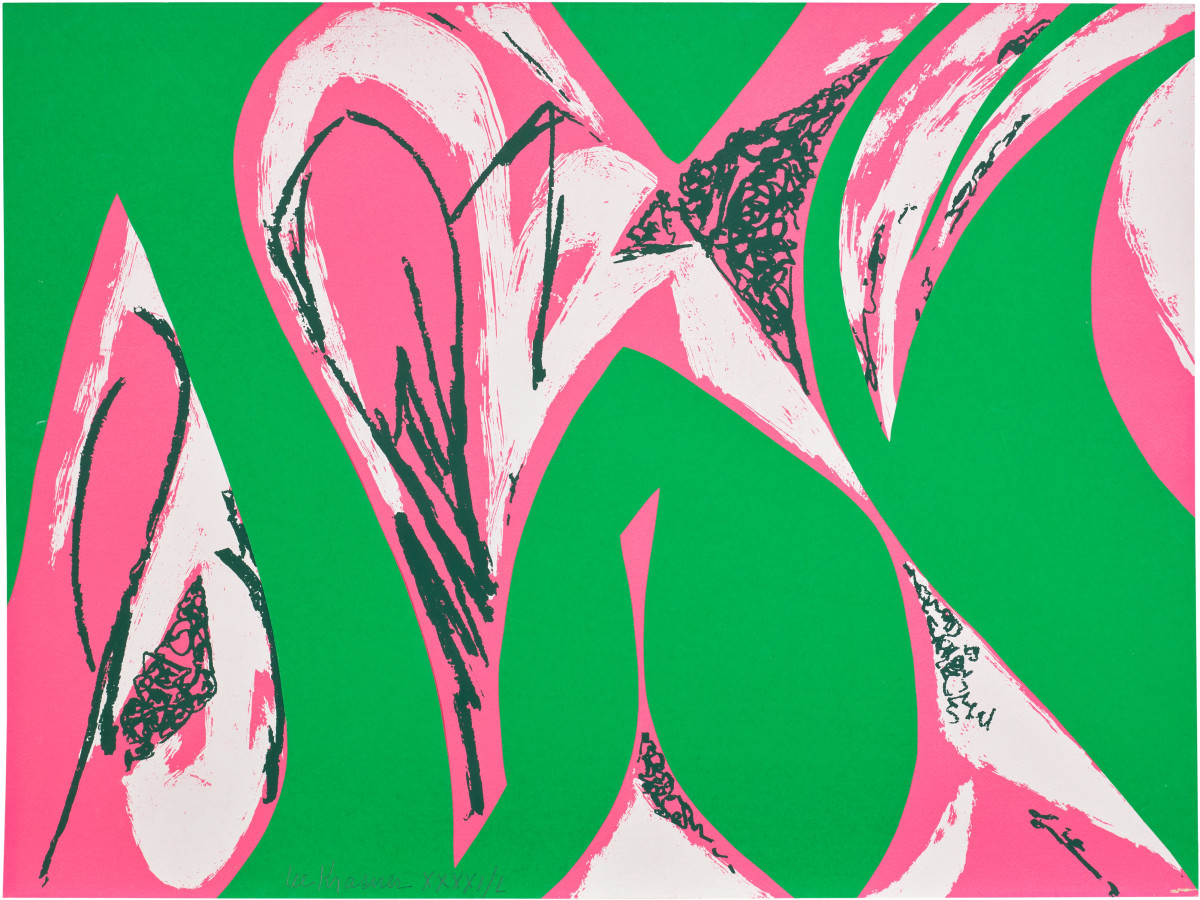
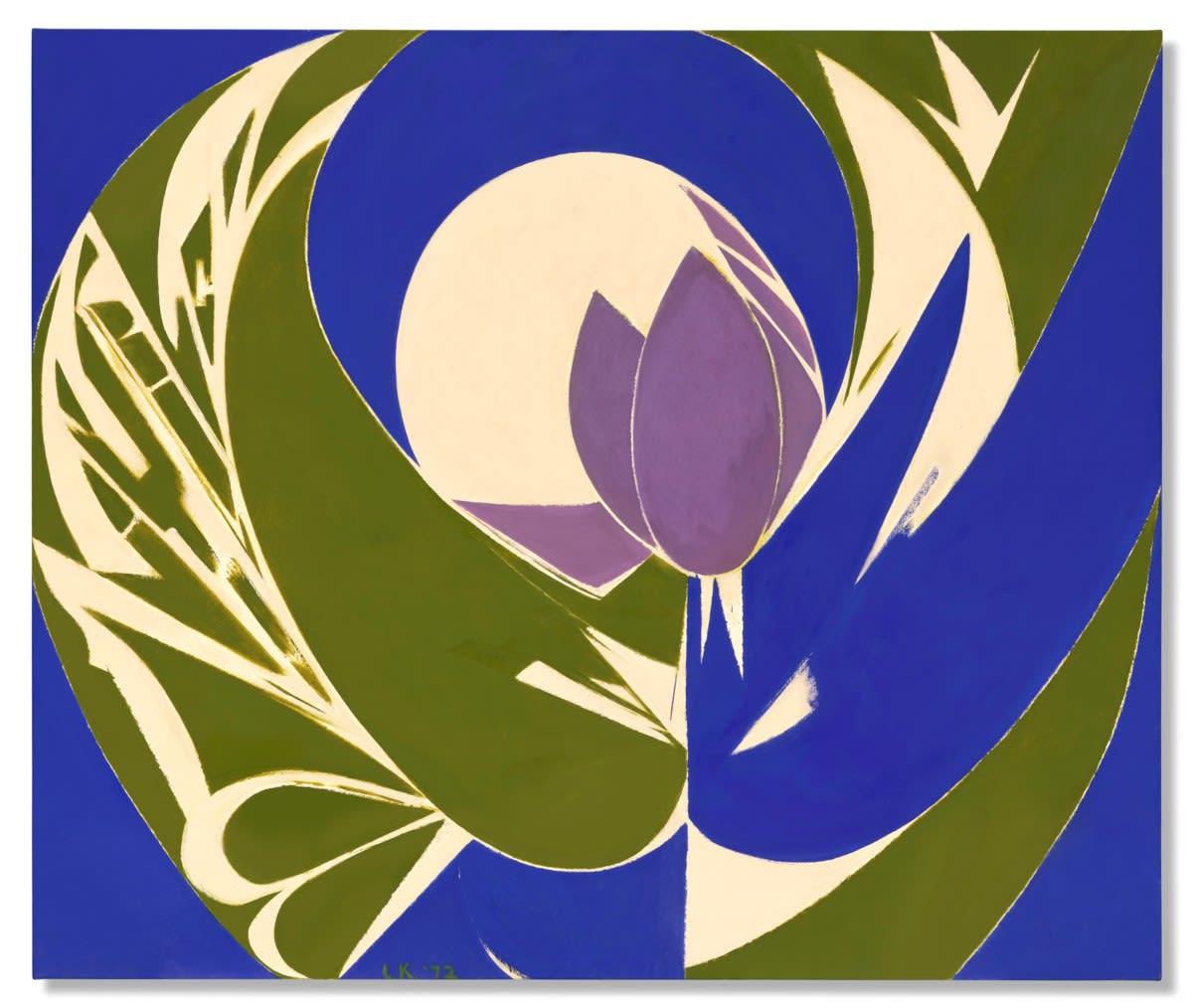
| Lotus | $2,515,000 | Christie's, May 2026 |
| Nude Study from Life | $166,400 | Sotheby's, May 2026 |
| Nude Study From Life (1939) | $40,000 | Bonhams, November 2025 |
2 further auction entries on record for Lee Krasner — inside Egon.
Pricing
By type
- Mid size late abstractions
- Roughly $500K-$3M depending on scale, color and period.
- Works on paper prints multiples
- Low tens of thousands (e.g., Peace Portfolio prints).
- Early figurative and student works
- ~$40K-$200K (e.g., 'Nude Study from Life' works).
- Major mature abstractions 1950s 1960s
- $2M-$12M+ at auction; mural-scale 'Umber' masterworks command the top of the range ($5M-$12M).
Temporal context
Pre-2017 record was $5.5M (Shattered Light, 2017). Post-2019 the record more than doubled to $11.65M (The Eye Is the First Circle). 2025-2026 evening-sale results ($2.5M-$5.2M for strong canvases) confirm a sustained higher plateau.
Primary market pricing
Gallery-controlled and largely private. In 2016 Kasmin brought a major painting to Art Basel Miami Beach asking ~$6M; it sold and multiple sources say it later traded privately for roughly four times that amount. Collectors reportedly seek 'a colorful Krasner under $3 million' — described by specialists as nearly unobtainable. Contact Olney Gleason / Gagosian (and historically Kasmin) via the Pollock-Krasner Foundation for current primary pricing.
Liquidity
Assessment
Moderate-to-thin secondary market typical of a deceased blue-chip with a finite, estate-controlled supply. Auction volume is limited (single-digit to low-double-digit notable lots per year), with the strongest material increasingly transacting privately.
Private market
Specialists at Christie's and Fair Warning report major Krasner works changing hands privately at or above public benchmarks; private sales are now central to the artist's market.
Historical depth
ARTDAI data cited in press: from 2005-2015 Krasner's market totaled ~$14M across 22 lots, versus ~$32M for Helen Frankenthaler over the same period — illustrating historical undervaluation now closing.
Collector base
- Composition
- Top US and international private collectors, institutions, and foundations; demand concentrated on large, colorful, legible canvases.
Named collectors
- Emily & Mitchell Rales (Glenstone Museum) — bought the $11.65M record
- Christian Levett / FAMM (Female Artists of the Mougins Museum)
Auction history
Record
The Eye Is the First Circle (1960), an ~20-foot 'Umber' series canvas, sold for $11.65 million (with fees ~$11.7M) at Sotheby's New York on May 16, 2019 — purchased by Emily and Mitchell Rales for the Glenstone Museum, Maryland.
- Sell through
- ~83% sell-through across recent tracked lots; strong demand for mature mature abstractions, thinner for early figurative/student works.
Outcomes note
Top of market driven by large colorful 1950s-60s abstractions; early figurative 'Nude Study' works and works on paper/prints trade in the tens of thousands.
- Previous record
- Shattered Light (1954) sold for $5.5 million at Christie's New York, November 2017.
Market position
Positioning
Re-rated upward as part of the broader market correction for first-generation Abstract Expressionist women. Still trades at a discount to top male AbEx peers (Pollock, de Kooning, Rothko) and is increasingly mentioned alongside Joan Mitchell and Frankenthaler as the reassessment accelerates.
Peer comparables
- Helen Frankenthaler
- Joan Mitchell
- Grace Hartigan
- Elaine de Kooning
Investment outlook
Risks
Market remains selective (premium concentrated in a narrow band of major colorful works); thin auction liquidity and estate/gallery control can mask true depth; broad macro softness in postwar/contemporary could temper momentum.
Trajectory
Positive / appreciating. The October 2026 Met two-person survey ('Krasner and Pollock: Past Continuous') plus simultaneous Gagosian Paris debut create a rare dual institutional + mega-gallery catalyst. Scholarly reassessment, finite estate supply and rising private benchmarks support continued upward pressure.
Institutional presence
Research updated
Exhibitions
Upcoming
Krasner and Pollock: Past Continuous
- Dates
- October 4, 2026 – January 31, 2027
- Venue
- The Metropolitan Museum of Art, New York
Details
Major two-person survey of 120+ works from 80+ international lenders; first major NY presentation of either artist in over 20 years and their first at the Met. Curated by David Breslin (Leonard A. Lauder Curator in Charge) and Brinda Kumar; catalogue supported by the Pollock-Krasner Foundation.
Lee Krasner (1960s works)
- Dates
- October 2026 (timed to Art Basel Paris)
- Venue
- Gagosian, rue de Ponthieu, Paris
- Details
- Her first exhibition in France; collaboration between Gagosian, Olney Gleason, and the Pollock-Krasner Foundation.
- Group shows
- Extensively represented in canonical Abstract Expressionism and 'women of AbEx' surveys internationally.
Major retrospectives
First retrospective
- Year
- 1965
- Venue
- Whitechapel Gallery, London
Posthumous retrospective
- Year
- 1984
- Venue
- Museum of Modern Art, New York
Lee Krasner: Living Colour
- Year
- 2019
- Venue
- Barbican Art Gallery, London (traveling to Schirn Kunsthalle Frankfurt, Zentrum Paul Klee Bern, Guggenheim Bilbao)
Publications
- Note
- Subject of extensive scholarly literature and feminist art-historical reassessment.
Monographs catalogues
- Lee Krasner: Living Colour (Barbican exhibition catalogue, 2019)
- Krasner and Pollock: Past Continuous (Met catalogue, 2026, Pollock-Krasner Foundation supported)
- Ellen G. Landau, catalogue raisonné and monographs on Krasner
Museum collections
Other
- Cleveland Museum of Art
- Glenstone Museum, Maryland (The Eye Is the First Circle, 1960)
- FAMM – Female Artists of the Mougins Museum, France
Tier 1
- The Metropolitan Museum of Art, New York
- Museum of Modern Art (MoMA), New York
- Whitney Museum of American Art, New York
- Solomon R. Guggenheim Museum, New York
- Tate, London
- Smithsonian Institution (incl. Hirshhorn / Archives of American Art), Washington D.C.
- Art Institute of Chicago
- National Gallery of Art (Glenstone-adjacent loans)
Context data
Museum context API confirms 137 works across the Met, Art Institute of Chicago, Smithsonian, and Cleveland Museum of Art via primary sources; broad blue-chip institutional penetration.
Awards and recognition
Honors
- Multiple honorary doctorates, including Honorary Doctor of Fine Arts, Stony Brook University
- Critic Robert Hughes dubbed her 'the Mother Courage of Abstract Expressionism'
- Legacy institution
- The Pollock-Krasner Foundation (est. 1985 from her bequest) has awarded millions in artist grants (e.g., $3.2M+ across 2024-2025).
Career & Biography
Research updated
Activism
Through her estate she established the Pollock-Krasner Foundation (1985, funded by her bequest), which provides grants to visual artists worldwide.
Identity
- Gender
- Female
- Full name
- Lenore 'Lee' Krasner
- Birth date
- October 27, 1908
- Birth name
- Lena Krassner
- Death date
- June 19, 1984
- Birth place
- Brooklyn, New York City, U.S.
- Death place
- New York City, U.S.
- Nationality
- American
Note on getty
Getty ULAN record (ID 500357030) conflates the historical Abstract Expressionist Lee Krasner with a Guerrilla Girls member who adopted her name; all museum holdings, auction records, and 2026 exhibition signals refer to the historical painter (1908-1984), who is the research subject. Birth year of 1940 in the supplied Getty extract reflects that conflation and is superseded by authoritative biographical sources (1908).
Education
Institutions
- Women's Art School of Cooper Union (from 1926)
- National Academy of Design, New York (1928-1932)
- Hans Hofmann School of Fine Arts (1937-1940), studied under Hans Hofmann
- Training note
- Received rigorous academic training before turning toward modernism under Hans Hofmann, who introduced her to Cubist principles and abstraction.
Honors degrees
- Honorary Doctor of Fine Arts, Stony Brook University (and other honorary degrees)
Personal life
Marriage to and widowhood after Jackson Pollock profoundly shaped both her career trajectory and her later mural-scale 'Umber' works made in grief; suffered a brain aneurysm in 1962 and broke her arm in 1963, after which she re-emerged as a more confident painter.
Career timeline
- 1942
- Included alongside Jackson Pollock in a group exhibition organized by John Graham — the occasion on which the two met.
- 1945
- Married Jackson Pollock; the couple moved to Springs, East Hampton, Long Island.
- 1956
- Pollock died in a car crash; Krasner moved her studio into his former barn and began working at mural scale.
- 1965
- First retrospective at the Whitechapel Gallery, London.
- 1984
- Died in NYC; Museum of Modern Art mounted a posthumous retrospective the same year.
- 1930s
- Worked on the WPA Federal Art Project as a mural assistant; immersed in New York's avant-garde.
- 1946-1950
- Developed her 'Little Image' series — dense, all-over abstractions.
- 1953-1955
- Began major collage paintings, often reworking her own and Pollock's discarded canvases.
- 1959-1962
- Created the monumental 'Umber'/'Night Journeys' series (e.g., The Eye Is the First Circle, 1960).
- 1960s-1970s
- Shifted toward large horizontal canvases with hard-edge lines and bright contrasting color.
Studio practice
Worked in Springs, East Hampton; after 1956 painted in Pollock's converted barn studio, enabling mural-scale work. Known for continual self-revision, cutting up and recombining her own canvases into collage paintings; worked in series and frequently destroyed/reworked earlier output.
Influences and context
Influences
- Hans Hofmann
- Cubism (Picasso, Matisse)
- Piet Mondrian
- Jackson Pollock (mutual exchange)
Contemporaries
- Jackson Pollock
- Willem de Kooning
- Franz Kline
- Helen Frankenthaler
- Barnett Newman
- Mark Rothko
- Movement context
- Core member of the first-generation New York School / Abstract Expressionists; one of the few women central to the movement.
Artistic Profile
Research updated
Style
Restless, continually self-revising abstraction marked by organic, calligraphic, all-over compositions; evolved from dense small-scale 'Little Image' work to expressive gestural canvases and finally large horizontal paintings with hard-edge lines and bright contrasting color.
Evolution
From academic figuration (1920s-30s) to Hofmann-influenced modernism, through Little Image abstraction, collage, the dark mural-scale Umber works of mourning, and finally brash, radiant large-scale color abstractions — a career of continual reinvention.
Influences
- Hans Hofmann (push-pull, Cubist structure)
- Picasso and Matisse
- Mondrian
- Jackson Pollock (reciprocal influence)
Visual language
Sweeping gestural arcs, biomorphic and botanical forms, dense all-over fields, and dramatic shifts between monochrome umber palettes and vivid saturated color; mural-scale ambition.
Signature series
- Little Image paintings (1946-1950)
- Collage paintings (1953-1955)
- Umber / Night Journeys series (1959-1962), incl. The Eye Is the First Circle (1960)
- Large colorful hard-edge canvases (1960s-1970s)
Themes and subjects
- Nature, growth and organic cycles
- Light, color and rhythm
- Grief, memory and renewal (notably the nocturnal 'Umber'/'Night Journeys' series after Pollock's death)
- Self-revision and reinvention
Movements and periods
- Abstract Expressionism
- New York School (first generation)
- Action Painting / gestural abstraction
- roots in Cubism via Hans Hofmann
Techniques and mediums
- Oil on canvas
- Collage painting (cutting and recombining her own and Pollock's discarded canvases)
- Gouache and works on paper
- Mosaic and mural work
- Printmaking (limited)
Critical Reception
Research updated
Academic discourse
Subject of catalogue raisonné scholarship (Ellen G. Landau) and museum publications; positioned as a pioneer of collage-based abstraction and mural-scale gestural painting within AbEx.
Critical reception
Notable assessments
- Robert Hughes called her 'the Mother Courage of Abstract Expressionism.'
- Specialists (Saara Pritchard, Sarah Friedlander) cite intense, supply-constrained collector demand for her colorful mature works.
Feminist reassessment
Central figure in the ongoing critical correction of women's roles in Abstract Expressionism, frequently discussed alongside Frankenthaler, Mitchell and Hartigan.
Art historical standing
Long overshadowed by her marriage to Pollock, Krasner has been decisively re-canonized through decades of scholarship, the 2019 Barbican traveling retrospective, and the 2026 Met survey that presents her as Pollock's equal. Reputation has expanded 'well beyond the old shorthand of being Pollock's wife,' securing her place in the New York School canon.
Publications and media
Coverage
Featured by Art Basel Stories, Art in America, The Art Newspaper, ARTnews, Artnet News, and Artsy; 2026 news cycle dominated by the Met survey and Gagosian Paris debut.
Market commentary
USA Art News (2026) framed the moment as 'The Met is Treating Lee Krasner as Pollock's Equal—Will Market Follow?', detailing the gap between rising institutional esteem and an unevenly developed auction market increasingly driven by private sales.
Gallery & Representation
Research updated
Fair presence
Active at major fairs — e.g., Kasmin's ~$6M Krasner placement at Art Basel Miami Beach (2016); the Gagosian Paris show is timed to Art Basel Paris 2026.
Representation
- Tier
- Tier 1 (estate represented through Pollock-Krasner Foundation with Gagosian/Olney Gleason/Kasmin lineage).
Prior
Kasmin Gallery, New York — secured rights to sell Krasner's work via the Pollock-Krasner Foundation in 2016 (and Pollock's in 2024); long the primary market steward.
Current
Olney Gleason (New York) — a gallery founded by former Kasmin staff that re-secured exclusive representation of both Jackson Pollock and Lee Krasner through the Pollock-Krasner Foundation; presenting the 2026 Paris show with Gagosian.
- Mega gallery collaboration
- Gagosian — first Krasner exhibition with the mega-gallery (Paris, October 2026), a Tier-1 validation event.
Geographic reach
Expanding
Paris (Gagosian debut, October 2026) marks her first French exhibition; institutional reach across US and Europe (UK, Germany, Switzerland, Spain via 2019 tour) and France (FAMM, Mougins).
Primary markets
- New York
- London
Sources & research notes
Egon’s artist research combines historical auction records, recent sales, institutional history, critical reception and gallery information. Researched auction records and auction highlights are identified separately.
Read prices with their work, sale date, currency and stated basis. Egon’s market assessments are distinct from reported auction results.
Reference: Egon, “Lee Krasner: Market Intelligence & Investment Profile.”
Research bibliography · 19 sources
Sources recorded for this artist’s research. This bibliography does not assign every source to an individual claim.
- Lee Krasner - Wikipedia
- Lee Krasner | Britannica
- Lee Krasner 1908–1984 | Tate
- Lee Krasner | MoMA
- Lee Krasner | Whitney Museum of American Art
- Rales Bought Record-Breaking $11.7M Lee Krasner Work | ARTnews
- The Painting That Set Lee Krasner's Auction Record | HENI
- A Lee Krasner Painting Coming to Sotheby's Could Break Her Auction Record | Artsy
- The Met to Present Krasner and Pollock: Past Continuous
- Krasner and Pollock: Past Continuous | The Met
- Lee Krasner Will Make Paris Debut via Gagosian, Olney Gleason | Artnet News
- Gagosian and Olney Gleason to Present Lee Krasner in France | ARTnews
- The Met is Treating Lee Krasner as Pollock's Equal—Will Market Follow? | USA Art News
- Lee Krasner | Artnet
- Lee Krasner | 388 Artworks at Auction | MutualArt
- Olney Gleason Announces Exclusive Representation of Pollock and Krasner | ARTnews
- Pollock Represented by Kasmin through the Pollock-Krasner Foundation
- Lee Krasner | Kasmin Gallery
- Lee Krasner: Living Colour at the Barbican Art Gallery
Research updates by section
These dates show when Egon’s research sections were updated. Source retrieval dates, where supplied above, refer to individual evidence notes.
Ranking updated . Research sections follow their own update dates.
This is what the market knows about Lee Krasner. What Egon can also tell you: whether Lee Krasner fits your portfolio — based on your existing holdings, budget, and investment timeline.
Get personalized analysisActive market signals
Inside Egon
Signal timeline & strength analysis
Gallery moves, auction records, institutional acquisitions, price milestones — tracked over 90 days
Full signal timeline, strength analysis, and alert configuration for Lee Krasner.
Collector demographics & buyer analysis
Geographic distribution, institutional vs. private buyers, collector profiles, and secondary market activity
Who is collecting Lee Krasner? Geographic distribution, institutional vs. private buyers, and collector profile analysis.
Personalized acquisition strategy
Optimal entry points, comparable pricing analysis, timing recommendations, and portfolio fit assessment
Personalized acquisition strategy for Lee Krasner based on your budget, timeline, and collection goals.
Go deeper with personalized intelligence
You now have Egon's market assessment of Lee Krasner. The next question is personal: does this artist belong in your collection? Egon analyzes collection fit based on your aesthetic thesis, existing holdings, budget, and investment goals — delivering acquisition strategies no public index can provide.